
Sauces & Condiments
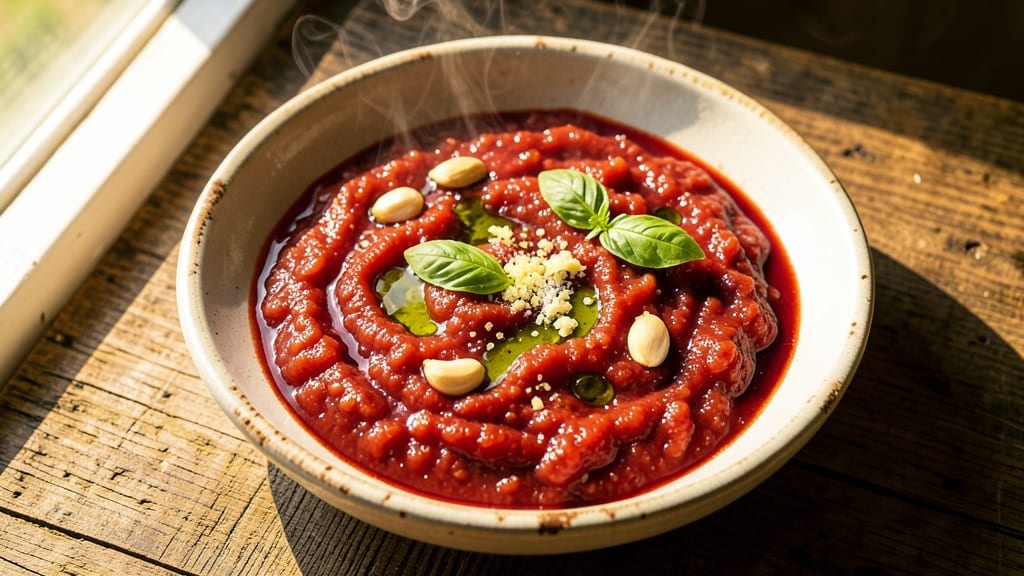
This authentic Italian pizza sauce recipe from scratch transforms simple ingredients into a rich, slow-simmered base that captures the depth of traditional Neapolitan flavors. The secret lies in San Marzano tomatoes, garlic, and olive oil—simmered low and slow to develop complex, caramelized notes that store-bought sauces simply can't match.
I've perfected this method over years of testing, ensuring every batch delivers that perfect balance of sweetness, acidity, and umami that makes homemade pizza unforgettable.
The process is straightforward but requires patience: crushed tomatoes simmer for at least 45 minutes, allowing the flavors to meld and intensify while the sauce reduces to a thick, velvety consistency.
A touch of red wine and fresh basil elevates the sauce beyond basic tomato sauce, while a pinch of sugar and salt balances the natural acidity of the tomatoes. The result is a sauce that clings beautifully to pizza dough, creating a crispy, flavorful crust every time.
What sets this sauce apart is its versatility—use it on classic Margherita pizzas, meat lovers, or even as a pasta sauce. The slow simmering process ensures a smooth texture with no chunks, while the deep flavor profile makes it worth the extra time.
Unlike quick-cook sauces, this one develops layers of complexity that store-bought versions can't replicate, making it the foundation for restaurant-quality pizza at home.
Once you try this sauce, you'll never go back to jarred versions. The process is simple, but the results are undeniably authentic—just like Nonna used to make.
Ready to elevate your pizza game? Let's get started with the ingredients and step-by-step instructions that will change the way you make sauce forever.
Ingredients for authentic italian pizza sauce recipe from scratch
Eight simple ingredients transform into the richest pizza sauce you'll ever make.
| Ingredient | Amount | Notes |
|---|---|---|
| San Marzano Tomato Crushed 🍅 | 28 oz | High-quality canned, no salt added |
| Extra-Virgin Olive Oil 🫒 | ½ cup | Fruity, Italian preferred |
| Garlic Cloves 🧄 | 4 cloves | Fresh, minced finely |
| Red Wine 🍷 | ½ cup | Dry, bold variety |
| Fresh Basil Leaves 🌿 | ½ cup | Packed, stems removed |
| Granulated Sugar 🍚 | 1 tsp | Balances acidity |
| Diamond Crystal Kosher Salt 🧂 | 1 ½ tsp | Fine grain preferred |
| Ground Black Pepper 🌶️ | ¼ tsp | Freshly cracked |
The San Marzano tomatoes are non-negotiable here—Costco or Whole Foods carry the best cans, and you'll taste the difference. Look for the plumper, sweeter varieties with no added salt. If you can't find them, San Marzano brand is widely available online. The olive oil should be Italian extra-virgin—none of that cheap grocery store stuff. Burlap Group or Filippo Berio are my go-tos. Garlic? Fresh is a must—none of that jarred nonsense. Minced finely so it dissolves into the sauce completely.
No red wine? Dry white wine works in a pinch, but you'll lose some depth. Fresh basil wilting? Dried oregano at half the amount keeps the flavor, just not the aroma. The sugar might seem odd, but it rounds out the acidity—trust me, it's essential. Salt to taste is key, but start with the 1.5 tsp and adjust. For extra umami, add 1 tsp fish sauce (if not vegetarian) or a pinch of miso paste. The pepper is subtle but adds warmth.
This sauce tastes even better the next day as flavors meld. Store in an airtight container in the fridge for up to 5 days. For longer storage, freeze in ice cube trays—perfect for single-use portions. Reheat gently on low heat, stirring often. The texture should be smooth and velvety, never chunky. If it thickens too much, add a splash of water or a bit of the cooking liquid from the tomatoes.
Why You'll Love This Recipe
- Here’s what sold me: the red wine doesn’t just cook off—it lingers, adding that rich, slightly tangy backbone that jarred sauce can’t touch. Pair that with fresh basil torn (not chopped) right at the end, and you’ve got a flavor that tastes like you slaved over it for hours. (Between us, I’ve tried shortcuts. This isn’t one of them.)
- No-Fuss Simplicity: I swear by this sauce because it’s literally five ingredients and 20 minutes of hands-off simmering. Crush those San Marzano tomatoes by hand (or just grab a can—no judgment), toss in garlic and wine, and let it work its magic. That’s it. Even my college apartment kitchen could handle it.
- Wine-Infused Depth: Here’s what sold me: the red wine doesn’t just cook off—it lingers, adding that rich, slightly tangy backbone that jarred sauce can’t touch. Pair that with fresh basil torn (not chopped) right at the end, and you’ve got a flavor that tastes like you slaved over it for hours. (Between us, I’ve tried shortcuts. This isn’t one of them.)
- Pantry-to-Party Ready: This sauce doubles as marinara for pasta, a dip for crusty bread, or the star of a quick lasagna. I’ve used it for game nights, last-minute dinner guests, and even as a topping for grilled chicken. The beauty? It tastes intentional every single time, no matter the occasion.
Step-by-step instructions for authentic Italian pizza sauce
Here's the classic method that delivers restaurant-quality depth with just a few simple ingredients.
Bloom the Olive Oil and Garlic
Heat the 0.5 cup extra-virgin olive oil in a heavy-bottomed saucepan over medium-low heat. Add the 4 cloves minced garlic and cook for 3-4 minutes until the garlic is golden and just beginning to brown—this prevents bitterness while building flavor. Stir constantly to avoid burning, as garlic can go from aromatic to bitter in seconds.
This slow blooming step is crucial for authentic flavor. The garlic should smell sweet and nutty, not sharp or burnt. If you notice it darkening too quickly, reduce the heat immediately. The olive oil will help distribute the garlic's flavor evenly throughout the sauce.
Deglaze with Red Wine
Pour in the 0.5 cup red wine and stir vigorously, scraping up any browned bits from the bottom of the pan. This deglazing technique captures all the flavorful fond that would otherwise stick to your pan. Let the wine simmer for 3-4 minutes until it reduces by about half and the alcohol smell dissipates completely.
Don't rush this reduction—the alcohol needs time to cook off. You'll know it's ready when the sauce has thickened slightly and the wine's sharpness has mellowed into a rich, fruity base. This step forms the foundation of the sauce's complexity, balancing the acidity of the tomatoes to come.
Add Tomatoes and Seasonings
Stir in the 28 oz crushed San Marzano tomatoes, 1 tsp granulated sugar, 1.5 tsp Diamond Crystal kosher salt, and 0.25 tsp ground black pepper. Bring to a gentle simmer over medium heat, then reduce to the lowest setting possible while maintaining a steady bubble. This slow simmer is what creates that authentic Italian depth.
The sugar helps balance the tomatoes' natural acidity, while the salt enhances all the flavors. Let the sauce cook uncovered for 45-50 minutes, stirring occasionally. You're looking for a sauce that thickens noticeably but still coats the back of a spoon. The longer it simmers, the more concentrated and flavorful it becomes.
Finish with Fresh Basil
Remove the sauce from heat and stir in the 0.5 cup fresh basil leaves. Let it steep for 10 minutes, then taste and adjust seasoning if needed. The basil should infuse the sauce with its bright, fresh flavor without overpowering the tomato base. You can remove the basil leaves now or leave them in for a more intense flavor.
For best results, let the sauce cool completely before using it on your pizza. This allows the flavors to meld even further. The sauce should be smooth, slightly thick, and packed with tomato flavor—no need for any additional ingredients. This authentic method creates a sauce that's perfect for homemade pizza, with rich depth and balanced seasoning.
Pro Tips For Making Authentic Italian Pizza Sauce Recipe From Scratch
- Simmer Low and Slow: Crushed San Marzano tomatoes release their sweetness when cooked gently—don’t rush this. After adding wine, reduce heat to a bare simmer and let it bubble quietly for at least 20 minutes. The sauce will deepen in flavor and thicken naturally, not turn mushy or bitter like when you speed through it.
- Toast Garlic Until Golden: Raw garlic in pizza sauce tastes like medicine. Heat your olive oil until shimmering, then add minced garlic and cook until it’s fragrant and just turning golden—about 2-3 minutes. Overcooking burns it to ash, which ruins the sauce. (Yes, even if you’re impatient like me.)
- Salt the Tomatoes Early: Add half the salt when you first crush the tomatoes, then adjust at the end. This draws out moisture and balances acidity before the wine and basil overpower it. Skipping this step means your sauce will taste flat or one-dimensional, no matter how fresh the basil.
- Strain for Smoothness: After simmering, strain the sauce through a fine-mesh sieve to remove skins and seeds—this isn’t cheating, it’s tradition. The texture will be velvety, not chunky, and the basil’s brightness will shine without competing with tomato bits. (I was skeptical until I tried it.)
Wine and beer pairings for this dish
Classic Italian Wine
For this authentic pizza sauce, I recommend a Chianti Classico—its bright acidity and cherry notes cut through the richness while complementing the tomato's natural sweetness. A glass of 2018-2020 vintage from Castello di Volpaia or Ruffino elevates the meal perfectly.
The wine's tannins also pair beautifully with the sauce's umami depth, creating a harmonious balance. 🍷
Crisp White Alternatives
If you prefer white wine, a Vermentino from Sardinia or Pinot Grigio from Alto Adige works wonders. These wines offer crisp acidity that refreshes your palate between bites of pizza.
I love Sella & Mosca's Vermentino—its citrus and mineral notes contrast the sauce's richness without overpowering it. For a budget-friendly option, Santa Margherita Pinot Grigio is a reliable choice.
Italian Craft Beers
For beer lovers, a Peroni or Moretti is ideal—their light body and subtle malt sweetness won’t compete with the sauce. If you're feeling adventurous, try a Belgian Witbier like Stella Artois (yes, it's Belgian-style!) or Hoegaarden.
The coriander and citrus notes add a refreshing twist to the meal. Avoid heavy IPAs—they’ll clash with the delicate tomato flavors. 🍺
Seasonal Pairings
In summer, a Prosecco or Lambrusco adds a festive touch. The bubbles cleanse your palate, while Lambrusco’s slight sweetness balances the sauce’s acidity. For winter, a Barolo or Amarone della Valpolicella provides warmth and depth, mirroring the sauce’s slow-simmered richness.
Always let your wine or beer breathe for 10-15 minutes before serving to enhance its flavors.
Non-Alcoholic Options
For a non-alcoholic pairing, try San Pellegrino Aranciata—its blood orange flavor complements the sauce’s sweetness. Alternatively, a sparkling blood orange soda (like Fever-Tree) adds a citrusy brightness. For something simpler, iced hibiscus tea (from Harney & Sons) enhances the tomato’s natural acidity without alcohol. 💧
Nutrition facts
Frequently asked questions
Why do I need to simmer this sauce for so long?
The 45-minute simmer is what develops the sauce's deep, complex flavor. This slow cooking process breaks down the tomatoes' natural sugars and acids, creating a rich, caramelized taste that store-bought sauces can't match. It also helps the sauce thicken naturally without adding cornstarch or other thickeners. Patience pays off with layers of flavor!
Can I make this sauce without red wine?
Yes! If you don't have red wine, use 0.5 cup dry white wine or even 0.5 cup tomato paste mixed with 0.25 cup water as a substitute. The wine adds depth, but the sauce will still be delicious. For a non-alcoholic option, try 0.5 cup vegetable broth with a splash of balsamic vinegar to mimic the acidity. The sauce will just be slightly less complex.
How do I prevent the sauce from getting too thick?
If your sauce thickens too much during cooking, simply add 1-2 tablespoons of water or tomato juice while simmering. The sauce should coat the back of a spoon but still be spreadable. For best results, keep the heat at a gentle simmer rather than boiling. If you prefer a thinner sauce for dipping, reduce the simmer time to 30 minutes instead of 45.
What's the best way to store leftover sauce?
Store your sauce in an airtight container in the fridge for up to 5 days. For longer storage, freeze it in ice cube trays—perfect for single-use portions. Thaw overnight in the fridge and reheat gently on low heat, stirring often. The flavor actually improves after the first day as the ingredients meld together. Never freeze in glass containers as they can crack.
Can I use this sauce for pasta instead of pizza?
This sauce works perfectly as a pasta sauce too. For best results, toss it with al dente spaghetti** and finish with fresh basil, grated Parmesan, and a drizzle of olive oil. The sauce's rich tomato flavor pairs beautifully with pasta, and you can adjust the thickness by adding a splash of pasta water if needed. It's even better the next day when the flavors have fully developed.