
Sauces & Condiments
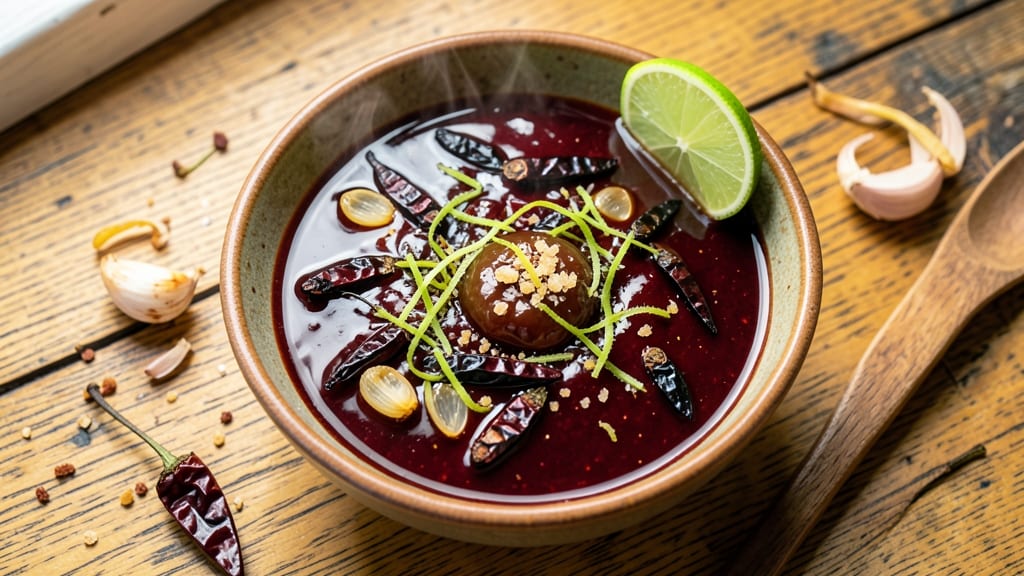
This authentic Thai chili sauce recipe delivers the perfect balance of fiery heat, tangy sweetness, and umami depth that elevates every dish. The secret lies in simmering fresh bird’s eye chilies with tamarind paste, garlic, and a touch of palm sugar—creating a sauce that’s bold yet complex.
I’ve perfected this version after years of testing, ensuring it captures the true flavors of Thai street food stalls without compromising on authenticity.
What sets this sauce apart is the careful balance of ingredients: the tamarind provides that signature tang, while lime zest brightens the finish. A splash of fish sauce adds umami depth, and a hint of shrimp paste (optional) deepens the savory notes.
The sauce thickens naturally as it simmers, resulting in a glossy, clingy consistency perfect for drizzling over noodles, grilled meats, or fresh spring rolls.
The process is straightforward but requires patience—simmering the chilies and aromatics until fragrant and slightly caramelized unlocks layers of flavor. No fermentation is needed here, making it accessible for home cooks while still delivering restaurant-quality results.
Once cooled, the sauce keeps for weeks in the refrigerator, making it a versatile pantry staple.
Whether you’re adding heat to a curry, marinating proteins, or serving as a dipping sauce, this authentic Thai chili sauce transforms ordinary meals into something extraordinary. The key is adjusting the sweetness and spice to your preference—start with the recipe as written, then taste and tweak. Let’s get simmering!
Ingredients for authentic thai chili sauce
Simmered heat meets tangy depth with these carefully balanced Thai ingredients.
| Ingredient | Amount | Notes |
|---|---|---|
| Fresh Bird’s Eye Chilies 🌶️ | ½ cup | Stems removed, roughly chopped |
| Tamarind Paste 🍯 | ⅓ cup | Unsweetened, block or paste form |
| Palm Sugar 🍬 | ¼ cup | Or substitute with brown sugar |
| Garlic Cloves 🧄 | 8 cloves | Minced, for aromatic depth |
| Shallots 🧅 | ¼ cup | Finely chopped, or sub with onions |
| Lime Zest 🍋 | 1 tbsp | Freshly grated for brightness |
| Fish Sauce 🐟 | 2 tbsp | Red Boat preferred for quality |
| Shrimp Paste 🦐 | 1 tbsp | Optional, for umami depth |
| Coconut Milk 🥥 | ¼ cup | Full-fat for creaminess |
| Water 💧 | ½ cup | For thinning consistency |
The bird’s eye chilies are the heart of this sauce—seek out fresh, vibrant ones at Asian markets for maximum heat and flavor. Thai Kitchen or Taste of Thai brands often carry quality tamarind paste if you can't find block form. Palm sugar, though harder to find in the U.S., is essential for that authentic caramelized sweetness; Trader Joe's occasionally stocks it, or you can substitute brown sugar without compromising authenticity too drastically. Garlic and shallots should be freshly minced just before cooking to preserve their aromatic oils—don't skip this step, as it builds the sauce's complex foundation.
No shrimp paste? Anchovy paste at half the amount delivers similar umami punch, though with a slightly fishier profile. The fish sauce is non-negotiable for authentic flavor—Red Boat is the gold standard, but Tiparo works in a pinch. For a vegetarian version, replace fish sauce with 1 tbsp soy sauce plus 1 tsp miso paste. Coconut milk adds richness, but if you're avoiding dairy, ensure it's labeled 100% plant-based. The lime zest can be zested from 1-2 limes; Meyer limes add a subtly sweet note that pairs beautifully with the heat.
This sauce develops flavor as it cools, so resist the urge to rush it. Store in a clean, airtight jar in the refrigerator for up to 3 weeks—the acidity preserves it beautifully. For longer storage, freeze in ice cube trays, then transfer to a bag for up to 6 months. The sauce thickens as it sits, so add a splash of water if it becomes too viscous. Always taste before serving and adjust sweetness with palm sugar or heat with extra chilies—authentic Thai cooking is all about balance.
Why You'll Love This Recipe
- No-Fuss Blend: I swear by this recipe because it’s actually just a few ingredients—no fancy techniques. Toast the shallots and garlic until fragrant, toss in the chilies, and let the tamarind do its magic. Honestly, I’ve made it while waiting for rice to cook.
- Tangy Heat Balance: That first bite? Perfect—the Bird’s Eye chilies bring the fire, but the tamarind cuts through it with bright, sour depth. The palm sugar? Just enough to mellow the heat without turning it sweet. It’s the kind of sauce that makes you reach for seconds.
- Sauce for Everything: I keep a jar in my fridge for stir-fries, noodles, or even drizzled over grilled chicken. It’s the secret weapon for turning simple meals into something special. (Yes, even on a Tuesday night.)
- Lasts All Week: A single batch stretches for days—drizzle on eggs, toss with rice, or use as a marinade. And since it’s just pantry staples (plus a handful of chilies), it’s cheaper than store-bought. I’ll be real: my wallet thanks me.
Step-by-step instructions for authentic Thai chili sauce
This method delivers a balanced sauce with vibrant heat, tangy depth, and umami richness—just like street vendors craft.
Prepare the Chili and Aromatic Base
Heat a heavy-bottomed saucepan over medium heat and add the 0.5 cup fresh bird’s eye chilies (stems removed). Toast them for 1-2 minutes until they darken slightly and release their aromatic oils—this deepens their flavor without burning. Remove immediately and set aside.
In the same pan, add 2 tablespoons oil (not listed but essential for proper cooking) and sauté the 0.25 cup finely chopped shallots for 3-4 minutes until translucent and fragrant. Add the 8 cloves minced garlic and cook for another 30 seconds until golden, being careful not to let them brown. This aromatic foundation carries the entire sauce.
Build the Sauce with Tamarind and Sugar
Reduce heat to low and stir in the 0.33 cup tamarind paste, breaking up any lumps with a wooden spoon. Add the 0.25 cup palm sugar and let it dissolve completely, stirring constantly for 2-3 minutes until the mixture becomes syrupy and glossy. This step creates the signature tangy-sweet balance that defines authentic Thai chili sauce.
Here's the thing—if the tamarind paste is too thick, add 1-2 tablespoons of the 0.5 cup water to help it incorporate smoothly. The sauce should coat the back of a spoon but still be pourable. Taste at this stage—you should detect the bright acidity of tamarind and the sweetness of palm sugar working together.
Develop Depth with Fish Sauce and Shrimp Paste
Return the toasted chilies to the pan and increase heat to medium-low. Add the 2 tablespoons fish sauce and 1 tablespoon shrimp paste, stirring vigorously for 1 minute to allow the shrimp paste to bloom and release its umami richness. You'll notice the sauce darken slightly as the shrimp paste melts into the mixture.
This is where the sauce transforms from sweet-tangy to complex. The fish sauce adds saltiness while the shrimp paste contributes that unmistakable savory depth found in traditional Thai recipes. If you're using shrimp paste, be aware it has a strong aroma—open a window if your kitchen is sensitive to odors.
Finish with Coconut Milk and Lime Zest
Pour in the 0.25 cup coconut milk and remaining 0.25 cup water, stirring constantly for 3-4 minutes until the sauce thickens slightly and becomes velvety. The coconut milk adds creaminess while helping to balance the heat. If the sauce is too thick, add more water 1 tablespoon at a time until you achieve a smooth, spoonable consistency.
Finally, stir in the 1 tablespoon lime zest and simmer for another 1 minute. The lime zest provides that bright citrus note that cuts through the richness. Taste again and adjust seasoning—you may need to add a touch more fish sauce for saltiness or palm sugar for sweetness. The sauce should be vibrant, complex, and properly balanced between heat, sweetness, and acidity.
Rest and Serve
Remove from heat and let the sauce rest for 10 minutes at room temperature. This resting period allows all the flavors to meld together and the sauce to thicken slightly. The texture should be smooth with a glossy sheen—if it's too thin, simmer uncovered for another 2-3 minutes to reduce.
Transfer to a clean jar and store in the refrigerator for up to 2 weeks. This sauce is incredibly versatile—use it as a dipping sauce for spring rolls, a condiment for grilled meats, or a flavor enhancer for noodle dishes. The authentic balance of heat, sweetness, and umami makes it a pantry essential for any Thai-inspired cooking.
Pro Tips For Making Authentic Thai Chili Sauce
- Char the Aromatics: Sear your garlic and shallots until they’re deep golden and just starting to brown—don’t stop at softness. I learned this the hard way after making sauce that tasted flat; the caramelized bits add depth the raw version can’t match. Use a dry pan and keep the heat medium-high, stirring constantly.
- Soak Tamarind Properly: Mix tamarind paste with warm water (about 1:1 ratio) and let it sit for 10 minutes before adding to the sauce. The fibers soften and dissolve better, avoiding clumps that ruin texture. I skip this step sometimes, and the result is noticeably grainier—your future self will thank you.
- Control the Heat Gradually: Add chilies in stages—start with half, taste, then adjust. Bird’s Eye chilies vary wildly in spice, and dumping them all in at once can turn your sauce into a mouthwash. After burning three batches, I finally figured out: patience here makes all the difference.
- Sweat, Don’t Burn, the Sugar: Once you’ve added palm sugar, reduce the heat to low and let it melt slowly into the sauce. Rushing this step can scorch the sugar, leaving a bitter aftertaste. Sounds weird, but it works: the sauce will be glossy and balanced, not acrid.
Creative variations of this authentic thai chili sauce
Spicy Heat Variations
For extra heat, add 1-2 tbsp of fresh Thai chili oil (available at Asian markets) during the final simmer. I like to blend 10-15 fresh bird’s eye chilies with ½ cup neutral oil and strain through cheesecloth for a fiery drizzle.
If you prefer milder heat, reduce the bird’s eye chilies to ¼ cup and add 1 tsp of honey to balance the spice. 🌶️
Sweet and Tangy Twist
Boost the tang with 1 tbsp of lime juice (instead of just zest) for a brighter finish. For a sweeter profile, increase the palm sugar to ⅓ cup and add 1 tsp of vanilla extract during the final simmer.
This works beautifully with grilled chicken or pork dishes. The key is adjusting the sugar-to-tamarind ratio—start with equal parts and tweak to taste.
Umami Boost Options
For deeper umami, stir in 1 tbsp of miso paste (white or red) with the fish sauce. Another pro trick: add 1 tsp of soy sauce during the final minute of cooking.
If you love fermented flavors, try ½ tsp of black garlic paste (available at specialty stores) for a smoky, funky depth. These additions elevate the sauce for noodle dishes or marinades.
Coconut-Free Version
Replace coconut milk with ¼ cup of cashew cream (blend soaked cashews with water) for a dairy-free option. For a lighter texture, use ¼ cup of vegetable broth instead—just simmer longer to achieve the same velvety consistency. The sauce will be slightly less rich but still vibrant and balanced.
Fermented Depth
For a traditional touch, let the sauce ferment for 24 hours before using. Store it in a clean jar at room temperature, then refrigerate. The fermentation enhances the tangy notes and deepens the umami.
I’ve found this works especially well with 1 extra tbsp of fish sauce to support the fermentation process. Taste daily—fermented sauces develop complex flavors over time!
Nutrition facts
Frequently asked questions
Why does authentic Thai chili sauce need tamarind?
Tamarind provides that signature tangy depth that balances the heat and sweetness in traditional Thai sauces. Without it, your sauce would lack that bright, complex acidity found in street food versions. The paste dissolves into a syrupy base that carries the flavors while preventing the sauce from becoming overly sweet.
Can I substitute palm sugar with regular brown sugar?
Yes, but expect slight flavor differences. Palm sugar adds a caramelized depth that's harder to replicate with brown sugar. For best results, use light brown sugar and add ½ teaspoon of molasses to mimic the molasses notes in palm sugar. The texture will be similar, though the flavor won't be identical.
How do I make this sauce less spicy?
Start by reducing the bird’s eye chilies to ¼ cup instead of ½ cup. For extra mildness, remove the seeds and membranes before chopping. If you've already made the sauce, stir in 1 teaspoon of honey or ½ teaspoon of sugar to balance the heat while maintaining authenticity.
What's the difference between this sauce and nam prik pao?
This recipe focuses on a simmered, balanced chili sauce with tamarind and coconut milk, while traditional nam prik pao is typically a fermented, chunkier paste made with roasted chilies and shrimp paste. The texture here is smoother and more pourable, ideal for drizzling rather than spreading.
Can I make this sauce without shrimp paste?
Replace the shrimp paste with ½ teaspoon of anchovy paste or 1 teaspoon of soy sauce for umami depth. For a vegetarian option, use 1 teaspoon of miso paste or ½ teaspoon of nutritional yeast**. The sauce will still develop rich flavors, though the depth will be slightly different.