
Sauces & Condiments
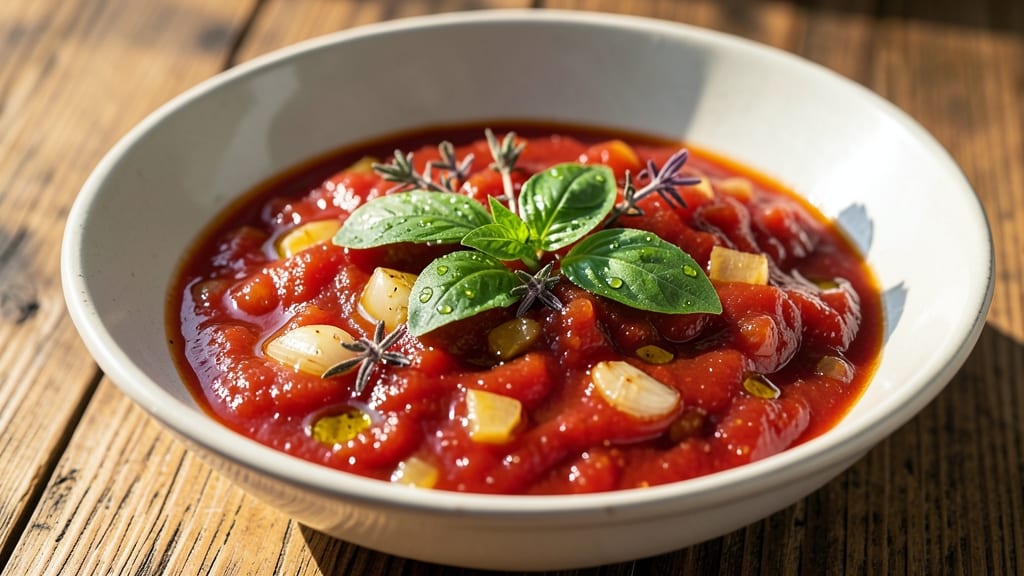
This all natural tomato sauce recipe transforms simple ingredients into a rich, velvety sauce with layers of sweetness and herbaceous brightness. The secret lies in slow simmering—allowing flavors to meld while reducing the sauce to perfect consistency.
I developed this version after years of testing, seeking that ideal balance between rustic depth and fresh, vibrant notes.
What sets this sauce apart is the combination of fresh herbs and aromatic vegetables cooked down with high-quality tomatoes. No processed ingredients or artificial flavors here—just olive oil, garlic, onions, and a blend of basil, oregano, and thyme that infuses the sauce with authentic Italian character.
The result is a versatile condiment that elevates pasta, pizza, or grilled meats with professional-quality depth.
By the time you're done, you'll have a smooth, flavorful sauce with a natural sweetness that comes from caramelized onions and tomatoes. The herbs add bright, fresh accents that cut through the richness, creating a perfect harmony.
This isn't just another jarred sauce—it's a homemade creation that tastes like summer in every spoonful.
The beauty of this recipe is its flexibility. Use it immediately for dinner or store it in the refrigerator for up to five days, where the flavors continue to develop. For longer storage, freeze in airtight containers, ensuring you always have restaurant-quality tomato sauce on hand whenever you need it.
Ingredients for all natural tomato sauce
Nine simple ingredients transform into velvety tomato sauce bursting with herbaceous brightness and rustic depth.
| Ingredient | Amount | Notes |
|---|---|---|
| Extra-Virgin Olive Oil 🫒 | ½ cup | High-quality, fruity variety preferred |
| Yellow Onion 🧅 | 1 whole | Medium size, finely diced |
| Garlic Cloves 🧄 | 6 cloves | Peeled, minced for aromatic depth |
| San Marzano Tomatoes 🍅 | 28 oz | Canned, whole, crushed by hand |
| Fresh Basil Leaves 🌿 | ½ cup | Packed, stems removed, chiffonade preferred |
| Fresh Oregano 🍃 | 2 tbsp | Chopped, or substitute dried at 1/3 amount |
| Fresh Thyme Sprigs 🌿 | 2 whole | Leaves only, stems discarded |
| Kosher Salt 🧂 | 1 ½ tsp | Diamond Crystal preferred, adjust to taste |
| Ground Black Pepper 🌶️ | ½ tsp | Freshly cracked for optimal flavor |
| Granulated Sugar 🍚 | 1 tbsp | Balances acidity naturally |
The tomatoes are non-negotiable here—San Marzano delivers that perfect balance of sweetness and acidity. Trader Joe's and Whole Foods carry them year-round, and they're worth the investment. If you can't find them, Muir Glen is a solid second choice. Fresh herbs make all the difference: basil should be vibrant green, not wilted, and thyme sprigs should smell aromatic. I always grab extra basil—half goes in the pot, half gets torn over the top at the end for that restaurant-quality finish. The onions? Yellow onions caramelize beautifully, but red onions add a subtle sweetness if you prefer.
No fresh basil? Dried oregano at one-third the amount works in a pinch, but you'll miss that bright freshness. Short on thyme? Rosemary at half the quantity adds piney notes that pair well. Running low on San Marzano tomatoes? Crushed tomatoes in a high-quality jar (like Rao's) will do, but add an extra pinch of sugar to balance the acidity. The olive oil matters too—extra-virgin with fruity notes shines here, while cheap oil tastes flat. Pro tip: Toast your garlic cloves in the oil for 30 seconds before adding onions—this deepens their flavor without burning.
This sauce tastes even better the next day as flavors meld. Store in an airtight container in the fridge for up to 5 days, or freeze in 1-cup portions for 6 months. I like to portion it into ice cube trays for easy single-use servings—perfect for busy weeknights. For longer storage, add a thin layer of olive oil on top before sealing to preserve freshness. The herbs will continue to infuse the sauce overnight, so if you're impatient, just add them at the very end and keep the sauce warm until serving.
Why You'll Love This Recipe
- No-Fuss Simplicity: I swear by this sauce because it’s literally five ingredients and a pot. Slice the onion, mince the garlic, dump in the tomatoes—no peeling, no fancy techniques, just honest, hands-off cooking while you sip your coffee.
- Sunshine in a Jar: That first spoonful of San Marzano tomatoes simmered with fresh basil? It’s like summer in a bowl. The olive oil carries the sweetness, the garlic adds depth, and the basil finishes it with a bright, herbal punch that makes jarred sauce taste like a crime.
- Weeknight Superhero: This sauce works for pasta, pizza, or even as a dip (yes, really). I keep a batch in the fridge for lazy nights—toss it with spaghetti, spread it on toast, or stir it into eggs. No last-minute panic, just reliable flavor.
- Budget-Friendly Staple: A single jar of San Marzano tomatoes and a bunch of basil stretch across three meals. Freeze extras in ice cube trays for quick additions later, and you’ve got a pantry hero that costs pennies but tastes like a splurge. Honestly, my wallet thanks me every time.
Step-by-step instructions for all natural tomato sauce
Here's how to build a rich, vibrant tomato sauce that balances sweetness, acidity, and herbaceous brightness.
Sauté Aromatics Until Deeply Fragrant
Heat the 0.5 cup Extra-Virgin Olive Oil in a large, heavy-bottomed pot over medium heat. Add the 1 whole Yellow Onion, finely diced, and cook for 5-7 minutes until completely translucent and just beginning to caramelize at the edges. This step develops the onion's natural sweetness, which will form the sauce's foundation.
Add the 6 cloves Garlic Cloves, minced, and cook for another 30 seconds until fragrant but not browned. Garlic burns quickly—watch carefully. The goal is to infuse the oil with aromatic compounds without bitterness. Stir constantly to prevent sticking, and resist the urge to walk away; garlic releases its flavor in seconds.
Crush Tomatoes and Simmer Until Thickened
Pour in the 28 oz San Marzano Tomatoes, crushing them by hand with your fingers or a wooden spoon to break up the skins and release their juices. Add the 1 tbsp Granulated Sugar and 1.5 tsp Kosher Salt, then bring the mixture to a gentle boil over medium-high heat. Once boiling, reduce heat to low and let it simmer uncovered for 25-30 minutes, stirring occasionally.
The sugar helps balance the tomatoes' natural acidity while encouraging a deeper caramelization of the flavors. You'll know it's ready when the sauce thickens noticeably and coats the back of a spoon. If the sauce reduces too quickly, add 2-3 tablespoons of water to maintain consistency. The sauce should be rich but still pourable, not gluey.
Incorporate Herbs and Season to Perfection
Remove the 2 whole Fresh Thyme Sprigs from their stems and add the leaves to the simmering sauce along with the 2 tbsp Fresh Oregano, chopped. Stir gently and let it cook for 5 minutes to allow the herbs to release their oils and meld with the tomatoes. The thyme adds earthy depth, while the oregano brings a peppery brightness that cuts through the richness.
Next, stir in the 0.5 cup Fresh Basil Leaves, chiffonade-style, and the 0.5 tsp Ground Black Pepper. The basil should be added just before serving if possible—its delicate flavor fades with prolonged cooking. Taste and adjust seasoning; you may need an additional pinch of salt or a splash of water to reach your desired consistency. The sauce should be vibrant, balanced, and full of layered flavors.
Rest and Finish for Maximum Flavor
Once the sauce reaches your ideal consistency and seasoning, remove it from heat and let it rest for 10-15 minutes. This resting period allows the flavors to fully integrate and the sauce to thicken slightly as it cools. During this time, the acidity mellows, and the herbs release their final aromatic compounds.
Before serving, give the sauce a final taste and adjust seasoning if needed. The sauce should be bright, with a harmonious balance of sweetness, acidity, and herbal notes. Serve immediately over pasta, drizzled over grilled meats, or paired with crusty bread. The fresh basil can also be added as a garnish just before serving to preserve its vibrant flavor.
Pro Tips For Making All Natural Tomato Sauce
- CRUSH THE ONIONS FIRST: Dice the onion fine—think rice-sized pieces, not chunky. I used to leave them half-mooned, and they’d just sit there like stubborn rocks. Tiny bits melt into the sauce faster, so you’re not staring at a pot of uncooked onion for 15 minutes.
- SWEAT THE GARLIC LOW: Once the onion’s translucent, drop in the garlic and turn the heat down to medium-low. Garlic burns in seconds, and nothing ruins a sauce faster than bitter, charred cloves. If it smells like a campfire, you’ve gone too far.
- PEEL THE TOMATOES: San Marzano tomatoes are thick-skinned, but a quick knife peel (score the bottom, dip in boiling water for 10 seconds) removes the toughest bits. No peeling? At least crush the tomatoes by hand—whole ones won’t break down as smoothly, and you’ll end up with a chunky, uneven sauce.
- SALT THE BASIL LAST: Toss in the basil leaves after the sauce has simmered for 20 minutes—otherwise, they’ll wilt into a sad, mushy pulp. If you’re impatient (like me), add them just before serving and let them steep for 2 minutes. Fresh basil should brighten the sauce, not turn it into a swamp.
Pro cooking tips for this dish
Low-Temp Simmering
This sauce thrives on low-and-slow cooking—simmering at 190-200°F develops deep, caramelized flavors without burning. I use a thermometer to monitor heat, especially when adding fresh herbs. If your sauce starts boiling too vigorously, reduce to medium-low immediately to prevent skin formation. 🌡️
For even better results, cover the pot loosely with a lid (or foil) during the first 20 minutes of simmering. This traps steam and helps break down the tomatoes faster while preventing evaporation. After that, remove the lid to allow excess moisture to escape, creating a thicker, more concentrated sauce.
Herb Infusion Timing
Adding fresh herbs at the end (last 10 minutes) preserves their bright, vibrant flavors rather than letting them cook down into oblivion. I recommend using a chiffonade technique for basil—stack leaves, roll tightly, and slice thinly for maximum surface area and flavor release.
For dried herbs (if substituting), toast them in the pot for 1 minute with the onions to wake up their flavors. But remember: dried herbs lose 30% of their potency in storage, so use ⅓ the amount of fresh herbs when substituting.
Texture Control
Achieve the perfect consistency by stirring frequently during simmering—this prevents the sauce from sticking to the bottom. If it gets too thick, add pasta water (it's starchy and helps emulsify) rather than plain water, which can dilute flavors.
For a smoother sauce, blend half the cooked mixture before mixing back in. I use an immersion blender for convenience, but a regular blender works too. Just be careful—hot tomato sauce can splatter! For a chunkier texture, leave it as-is or lightly crush a few tomatoes by hand.
Flavor Layering
The sugar in this recipe isn't just for sweetness—it balances the acidity of tomatoes while promoting the Maillard reaction (browning) in onions and garlic. For extra depth, I sometimes add a pinch of red pepper flakes during the final 5 minutes of cooking.
Pro tip: If your sauce tastes flat after simmering, it needs more acidity. A splash of lemon juice or balsamic vinegar (½ tsp) brightens it up instantly. Conversely, if it's too sharp, a tiny bit of honey or extra sugar (½ tsp) rounds out the flavors.
Nutrition facts
Frequently asked questions
Can I use fresh tomatoes instead of canned?
Fresh tomatoes work but require extra prep! Peel, seed, and chop 3-4 pounds of ripe tomatoes (like Roma) to match the 28 oz canned equivalent. Roast them at 400°F for 20 minutes first to concentrate flavors, then blend before adding to the sauce. Fresh tomatoes add vibrant acidity but need this extra step to avoid watery results.
How do I prevent my sauce from getting too acidic?
Balance acidity by adjusting the sugar (add ½ tsp more if needed) or using slightly underripe tomatoes. For extra richness, stir in 1 tbsp tomato paste during the last 5 minutes of simmering. If it's still too sharp, finish with a pinch of salt or a drizzle of olive oil to round out flavors.
What's the best way to store leftovers?
Let the sauce cool completely, then transfer to airtight containers. In the fridge, it keeps for 5-7 days with flavors deepening over time. For freezing, portion into 1-cup containers (leaving ½-inch headspace) and freeze for up to 6 months. Thaw overnight in the fridge—never microwave directly from frozen.
Can I make this sauce in a slow cooker?
Sauté onions and garlic first in a skillet, then transfer everything to the slow cooker. Cook on LOW for 6-8 hours or HIGH for 3-4 hours. The low-and-slow method enhances sweetness naturally. For best results, stir occasionally and add fresh basil at the very end to preserve its flavor.
Why did my sauce turn out too thick?
This usually happens from over-reducing or using low-moisture tomatoes. Thin with pasta water (starchy water helps emulsify) or a splash of warm water. For next time, simmer uncovered and stir frequently. If the sauce is still too thick after adding liquid, it may need a 10-minute rest—it often thickens further as it cools.