
Sauces & Condiments
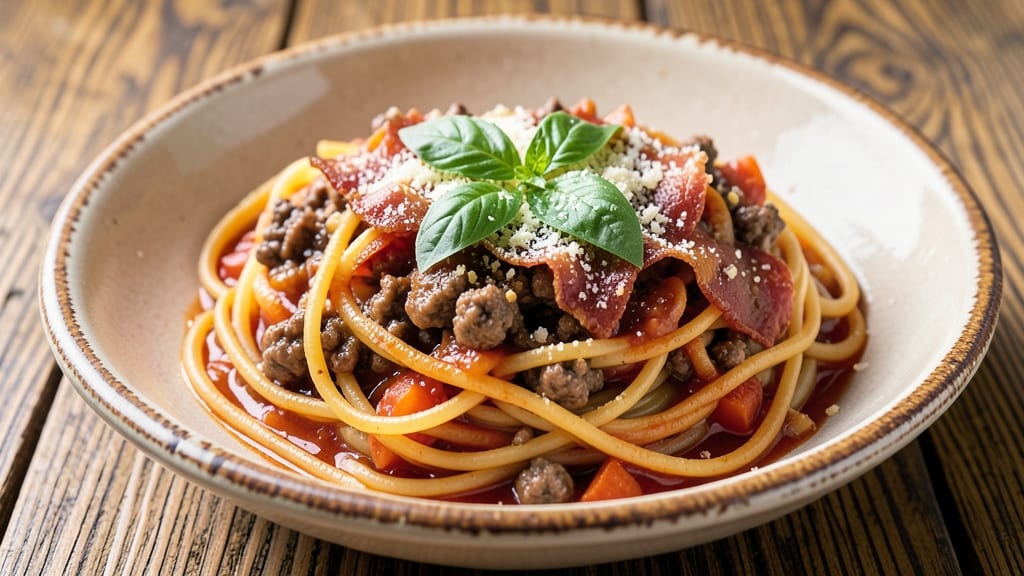
This authentic Italian spaghetti meat sauce recipe delivers the deep, slow-simmered richness that defines Nonna's kitchen—no shortcuts, just layers of umami built over hours. The secret lies in proper meat browning and a long, gentle simmer that develops complex flavors without cream or heavy seasoning.
I've perfected this technique through years of testing, ensuring every bite carries that restaurant-quality depth you crave.
What sets this sauce apart is the traditional method: ground beef and pork (or pancetta) browned until deeply caramelized, then deglazed with red wine to dissolve those flavorful browned bits.
Tomato passata and aromatic vegetables like carrots and celery form the base, while herbs like bay leaf and thyme infuse subtle earthiness. The key is patience—simmering for at least 2 hours transforms simple ingredients into something extraordinary.
By the time your sauce meets perfectly al dente spaghetti, you'll have a dish that's rich, meaty, and balanced—no greasy aftertaste. The sauce clings beautifully to each strand, with just enough acidity from the tomatoes to cut through the richness.
Serve with freshly grated Parmesan and a sprinkle of fresh basil for that final authentic touch.
This recipe scales perfectly for family meals or holiday gatherings, and leftovers taste even better the next day as flavors meld further. The method is straightforward but requires time—worth every minute for a sauce that feels like coming home to Italy. Let's get cooking!
Ingredients for authentic italian spaghetti meat sauce
Authentic Italian flavors start with these carefully chosen ingredients for deep umami richness.
| Ingredient | Amount | Notes |
|---|---|---|
| Ground Beef 🥩 | 1 lb | 80% lean for best flavor |
| Ground Pork 🐖 | ½ lb | Finely ground for texture |
| Pancetta 🥓 | 4 oz | Diced, or substitute bacon |
| Red Wine 🍷 | ½ cup | Bold dry variety preferred |
| Tomato Passata 🍅 | 2 cups | San Marzano preferred |
| Carrots 🥕 | 1 whole | Finely diced, not pre-shredded |
| Celery Stalks 🧅 | 2 whole | Finely diced, leafy parts removed |
| Yellow Onion 🧅 | 1 whole | Finely diced, sweet variety |
| Fresh Thyme Sprigs 🌿 | 3 whole | Leaves only, stems removed |
| Bay Leaves 🍃 | 2 whole | Dried or fresh, standard size |
| Garlic Cloves 🧄 | 4 cloves | Minced, not pre-minced jarred |
| Extra-Virgin Olive Oil 🫒 | 2 tbsp | For initial browning |
| Tomato Paste 🍅 | 2 tbsp | High-quality, not watered down |
| Kosher Salt 🧂 | 1 ½ tsp | Diamond Crystal preferred |
| Fresh Basil Leaves 🌿 | ¼ cup | For finishing, stems removed |
The meat selection is critical—80% lean ground beef and finely ground pork create the perfect balance of richness and texture. Pancetta adds authentic Italian flavor (bacon works in a pinch), but avoid pre-cubed pancetta from the deli counter—it's often too fatty. For the best results, shop at Whole Foods or your local butcher for properly ground meats. The San Marzano tomato passata is non-negotiable for authentic sweetness—regular canned tomatoes lack the depth. If you can't find it, Mutti is a solid second choice.
No red wine? Dry white wine or beef broth with a splash of balsamic works, though the flavor profile changes slightly. The carrots, celery, and onion trio (soffritto) forms the flavor base—don't skip this step. For thyme, fresh is ideal, but if using dried, reduce to one-third the amount. The tomato paste should be thick and concentrated—avoid the watery kind. Pre-minced garlic lacks freshness; mince it yourself for the best flavor. For olive oil, Californian or Italian varieties have the best fruity notes.
Store the sauce in an airtight container with a layer of olive oil on top to preserve freshness—keeps for 5-6 days in the fridge or 3 months frozen. The flavors actually improve overnight as everything melds. For best results, reheat gently on low heat with a splash of water or broth. This sauce freezes beautifully, so make extra for future meals. The basil should be added fresh just before serving—it wilts quickly when cooked.
Why You'll Love This Recipe
- Pantry-Friendly Magic: The only "special" ingredients you need are already in my fridge—no obscure spices or last-minute grocery runs. Pancetta adds that salty crunch without extra effort, and tomato passata? Just open the jar. Honestly, I make this when I’m too tired to plan.
- Wine-Infused Depth: That splash of red wine isn’t just for show—it melts into the sauce, balancing the richness of the pork and beef with a bright, earthy note. Between us, it’s the secret weapon that turns a simple sauce into something restaurant-worthy. (Yes, even on a Tuesday night.)
- Leftovers That Beg for More: This sauce only gets better the next day, when the flavors marry into something deeper. I freeze half the batch in portions—perfect for lazy mornings or when I’m craving pasta but don’t want to cook. My kids argue over who gets the "fresh" leftovers.
- Budget Meal for Crowds: A pound of ground beef and pork stretches for four servings, and pancetta adds luxury without breaking the bank. I’ve fed eight people with this—plus, the wine reduces to almost nothing, so no wasted drops. It’s my go-to when company drops by unexpectedly.
Step-by-step instructions for authentic Italian spaghetti meat sauce
Mastering this sauce requires patience and precision—each step builds the umami depth that defines true Italian ragù.
Brown the Meats Separately for Maximum Flavor
Heat a large Dutch oven over medium-high heat and add 1 tablespoon of the extra-virgin olive oil. Working in batches if needed, add the 1 lb ground beef and cook until it loses its raw color and develops a deep brown crust, about 6-8 minutes. This browning creates the Maillard reaction, which forms complex flavors—don't rush it or crowd the pan.
Transfer the beef to a plate and repeat with the 0.5 lb ground pork, using the remaining 1 tablespoon olive oil. The pork should also brown deeply, though it may release more fat. Once both meats are fully browned, drain excess fat from the Dutch oven but leave about 1 tablespoon behind for flavor.
Render the Pancetta and Sauté the Aromatics
Add the 4 oz diced pancetta to the Dutch oven and cook over medium heat until the fat renders out and the pancetta becomes crispy, about 5-7 minutes. Remove the pancetta with a slotted spoon and set aside, leaving the rendered fat in the pot.
In the same fat, add the finely diced carrot, celery stalks, and yellow onion. Cook over medium heat for 8-10 minutes, stirring occasionally, until the vegetables soften and the onion becomes translucent. This step develops the sauce's sweet, savory base—don't skip it.
Deglaze and Build the Sauce Foundation
Add the 4 minced garlic cloves and cook for 30 seconds until fragrant. Stir in the 2 tbsp tomato paste and cook for 1-2 minutes to deepen its flavor. Pour in the 0.5 cup red wine and scrape up any browned bits from the bottom of the pot—this is where the sauce's depth comes from.
Let the wine reduce by half, about 3-4 minutes, until it nearly evaporates. Add the 2 cups tomato passata, the 3 thyme sprigs, and the 2 bay leaves. Stir in the 1.5 tsp kosher salt, then return all the meats and pancetta to the pot. Bring to a gentle simmer.
Slow-Simmer for Umami Development
Reduce heat to low and let the sauce simmer uncovered for 1.5-2 hours, stirring occasionally. The sauce should thicken gradually as moisture evaporates, and the flavors meld into a rich, complex ragù. Here's the thing—this long cook time is non-negotiable for authentic flavor. If the sauce gets too thick, add 1-2 tablespoons water to maintain consistency.
After 1 hour, taste the sauce and adjust seasoning if needed. The acidity from the tomatoes should balance the richness of the meats. If the sauce needs more depth, add a pinch of sugar to counteract any bitterness from the wine.
Finish and Serve with Fresh Basil
Once the sauce has simmered to your desired consistency—it should coat the back of a spoon but remain saucy—remove the thyme sprigs and bay leaves. Stir in the 0.25 cup fresh basil leaves just before serving to brighten the flavors. The basil should wilt slightly but remain vibrant, adding a fresh contrast to the rich sauce.
Serve the meat sauce immediately over al dente spaghetti, reserving some pasta water to thin the sauce if needed. Ladle the sauce generously over the pasta, ensuring each strand is coated. The result should be a harmonious blend of tender meats, sweet vegetables, and deep umami flavors—this is the essence of authentic Italian ragù.
Pro Tips For Making Authentic Italian Spaghetti Meat Sauce
- CRACK THE PANCETTA FIRST: Pancetta’s fat renders fast—don’t rush it. Cook it in the same pan over medium-low heat until the fat is golden and the meat is crispy (about 8-10 minutes). Skim off most of the fat afterward, leaving just enough to sear the ground meats—this keeps your sauce rich without grease.
- BROWN THE MEAT IN BATCHES: Dumping all the ground beef and pork at once steams it instead of browning. Split the meat into two piles, cook the first batch until deeply browned (3-4 minutes), then move it to a plate before adding the second. The Maillard reaction in the first batch gives your sauce that deep, meaty flavor.
- DEGLLAZE WITH WINE, THEN WAIT: Pour in the red wine as soon as you remove the meat, but don’t stir immediately. Let it bubble for 30 seconds—this burns off the alcohol faster. Then scrape up those browned bits (that’s flavor) and let the wine reduce by half before adding the passata. Patience here means a cleaner, richer sauce.
- SALT THE PASSATA LIKE PASTA WATER: Tomato passata is bland until seasoned. Add 1½ teaspoons of salt per 28 oz (800g) of passata before mixing it into the sauce—this lets the salt dissolve and penetrate. Taste and adjust after simmering; you can’t fix underseasoned sauce later. (Yes, even if the passata label says it’s “ready.”)
Essential equipment for great authentic italian spaghetti meat sauce
Dutch Oven Essentials
A 5-6 quart Dutch oven is your best friend for this sauce—its heavy construction distributes heat evenly and prevents scorching. I swear by the Le Creuset signature or All-Clad stainless steel models, but Lodge cast iron works perfectly too.
The deep sides help contain the sauce while simmering, and the tight lid locks in moisture during the long cook. If you don't own one, a heavy-bottomed stainless steel pot with a lid will do in a pinch, but expect slightly less even heating. 🔥
Precision Thermometer
While you won't be monitoring exact temperatures for this recipe, a meat thermometer becomes invaluable when checking meat doneness during browning. The Thermoworks Smoke or Meater Plus models give instant readings—critical for ensuring your ground meats reach 160°F safely.
I keep mine handy for all my Italian cooking; it's also perfect for monitoring sauce temperature during the long simmer to ensure it stays at a gentle 185-190°F.
Slotted Spoon & Tongs
Invest in a long-handled slotted spoon (I use OXO Good Grips) for removing rendered pancetta and browned meats without losing precious rendered fat. A pair of tongs comes in handy for flipping meat batches in the Dutch oven.
Both tools should have stainless steel heads—they're easier to clean and more durable than silicone-coated versions that can degrade over time. These are non-negotiable for maintaining sauce consistency and preventing splatter.
Fine-Mesh Strainer
For straining excess fat after browning, a fine-mesh metal strainer (like Ozeri Touch) works best—it catches small meat particles while allowing fat to pass through. I place mine over a measuring cup to collect the rendered fat for future cooking.
This step is crucial for achieving the right texture in your sauce. If you're short on time, you can skip straining, but your sauce will be slightly richer (and potentially greasier).
Wooden Spoon & Ladle
A heat-resistant wooden spoon (I prefer Maplewood) is perfect for stirring during the simmering process—it won't scratch your Dutch oven like metal utensils. For serving, keep a stainless steel ladle nearby to portion out sauce generously over pasta.
The wooden spoon helps prevent the sauce from sticking to the bottom during the long cook, while the ladle ensures even distribution when plating. Both should be kept within arm's reach of your cooking station. ✨
Optional: Immersion Blender
While this sauce doesn't require blending, an immersion blender (like Cuisinart Stick) becomes useful if you want to create a smoother version for special occasions. Simply pulse briefly at the end to break up any large meat chunks while preserving texture.
I only use mine for special dinners—it's an optional step that adds a restaurant-quality finish. For everyday cooking, skip this tool entirely and embrace the rustic texture of traditional ragù. 💫
Nutrition facts
Frequently asked questions about authentic Italian spaghetti meat sauce
Can I substitute beef with another protein?
Yes, but choose wisely! For authentic flavor, use 80% lean ground beef as the base, but you can substitute half with ground turkey (keep it lean) or finely chopped short ribs for extra richness. Avoid ground chicken—it lacks the fat needed for proper texture. If using pork only, add a splash of balsamic vinegar to balance flavors.
Why does my sauce taste bitter?
Bitterness usually comes from overcooked tomatoes or wine. To fix it, add a pinch of sugar (about ¼ teaspoon) to balance acidity, or stir in a small piece of crusty bread to absorb excess bitterness. For prevention, never let the sauce boil—keep it at a gentle simmer and remove thyme/bay leaves promptly after simmering.
How do I make this sauce in a slow cooker?
Brown all meats and pancetta first in a skillet, then transfer everything to your slow cooker with all sauce ingredients. Cook on LOW for 6-8 hours or HIGH for 4-5 hours. The texture will be slightly looser, so reduce any excess liquid by simmering uncovered for 15-20 minutes on the stove after cooking. Taste and adjust salt/wine as needed.
What pasta works best besides spaghetti?
For an authentic experience, stick with spaghetti or bucatini, but rigatoni or pappardelle work beautifully too. Avoid thin pastas like angel hair—they can't handle the sauce's richness. For extra flavor, toss cooked pasta with a splash of the sauce's cooking liquid before combining with the sauce.
Can I make this sauce ahead of time?
This sauce tastes even better the next day as flavors meld. Store in an airtight container in the fridge for up to 5 days or freeze for 3 months. To reheat, warm gently on low heat with a splash of water or broth. Never microwave—it breaks the sauce's texture. For serving, add fresh basil just before eating.