
Sauces & Condiments
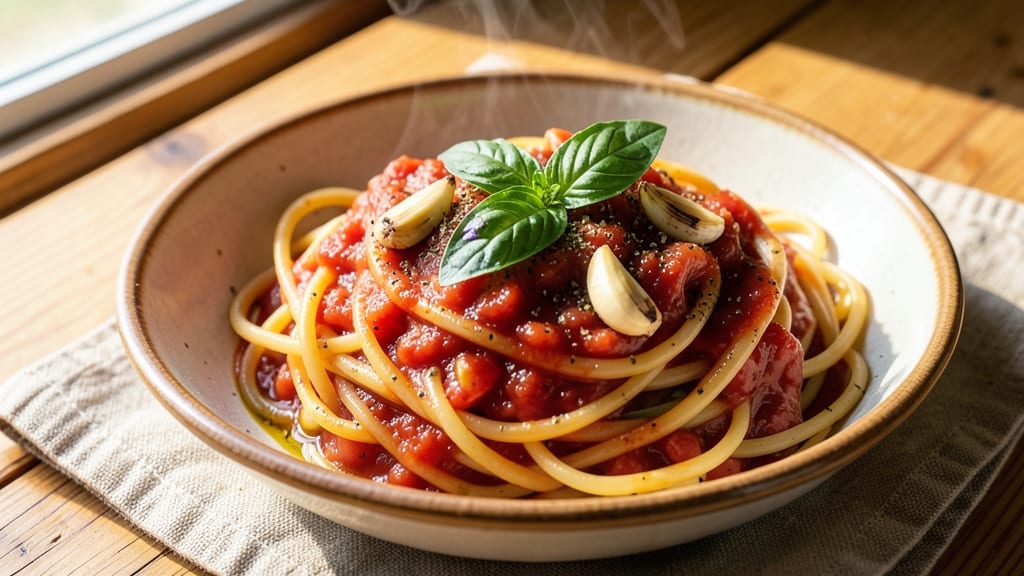
This basic red sauce pasta recipe delivers restaurant-quality tomato flavor in just 25 minutes—no complicated techniques required. The secret lies in simmering canned tomatoes with garlic, olive oil, and fresh herbs until their natural sweetness concentrates into a rich, velvety sauce.
I've perfected this method over years of testing, ensuring every bite delivers that perfect balance of tangy, savory, and slightly sweet tomato goodness.
What sets this recipe apart is its simplicity: just 7 core ingredients transform into a sauce so flavorful it elevates even the most basic pasta. The key steps—sautéing aromatics, breaking up tomatoes with a wooden spoon, and letting it simmer uncovered—create depth without requiring special equipment.
This is the kind of sauce that makes you want to make it again and again, each time better than the last.
By the time your pasta is al dente and the sauce has thickened to coat the noodles perfectly, you'll have a complete meal that's ready to serve. The sauce clings beautifully to the pasta, creating each bite into a harmonious blend of tender noodles and rich tomato flavor.
Garnish with fresh basil or grated Parmesan for that final touch of restaurant-quality presentation.
Whether you're feeding a family of four or making a quick weeknight dinner for two, this recipe scales effortlessly. The sauce keeps well in the fridge for up to three days, making it perfect for meal prep or satisfying cravings throughout the week. Let's get cooking!
Ingredients for basic red sauce pasta
Seven simple ingredients transform into a restaurant-quality tomato sauce that clings perfectly to pasta.
| Ingredient | Amount | Notes |
|---|---|---|
| Extra-Virgin Olive Oil 🫒 | ½ cup | High-quality for rich flavor |
| Garlic Cloves 🧄 | 4 cloves | Freshly minced for aromatic depth |
| Canned San Marzano Tomatoes 🍅 | 28 oz | Crushed by hand for texture |
| Fresh Basil Leaves 🌿 | ¼ cup | Torn, not chopped for texture |
| Dried Oregano 🍃 | 1 tsp | Or 1 tbsp fresh oregano |
| Salt 🧂 | 1 ½ tsp | Diamond Crystal preferred |
| Black Pepper 🌶️ | ½ tsp | Freshly cracked for heat |
| Pasta (Spaghetti or Penne) 🍝 | 12 oz | Al dente cooking time |
The tomatoes make or break this sauce. San Marzano is the gold standard—sweet, meaty, and low in acidity—but any good-quality crushed tomatoes work in a pinch. I always grab Mueller's from the store brand section; it's affordable and reliable. Fresh basil is ideal, but dried oregano at one-third the amount gets you close if you're short on time. The olive oil? Don't skimp here—California extra-virgin has the best fruity notes for balancing the acidity in the tomatoes. Pro tip: Let the oil warm in the pan for 30 seconds before adding garlic to prevent burning.
No fresh basil? Dried basil at one-third the amount works, though fresh is always better. Short on garlic? Garlic powder at half the amount is a decent substitute, but the flavor won't be as complex. The oregano can be swapped for Italian seasoning if you're out, just use the same measurement. For a deeper flavor, add a pinch of red pepper flakes if you like a little heat. The pasta? Any shape works, but penne or rigatoni hold the sauce better than spaghetti if you're serving a crowd. And if you're worried about the sauce being too acidic, a splash of tomato paste (1 tbsp) helps mellow it out.
This sauce tastes even better the next day as the flavors meld. Store it in an airtight container in the fridge for up to 5 days, or freeze for 3 months in single-serving portions. For meal prep, I like to make a double batch and freeze half—just thaw and reheat with a splash of water to loosen it up. The pasta itself? Cook it fresh for the best texture, but you can also reheat leftover pasta in the sauce to soak up any extra flavor. Garnish with extra basil or a sprinkle of Parmesan right before serving to keep it vibrant.
Why You'll Love This Recipe
- Five-Ingredient Magic: I swear by this—just oil, garlic, tomatoes, basil, and oregano. That’s it. No fancy gadgets, no stress, no hunting for obscure ingredients. The San Marzano tomatoes alone make it taste like you slaved over it for hours.
- Garlic Confidence: Between us, I used to overcomplicate garlic—sautéing until it browned, then panicking. Here? Just a quick bloom in olive oil until it smells like a Tuscan sunset. That’s all it takes to make the sauce sing.
- Leftover Goldmine: This sauce actually improves the next day. Toss it with pasta again, or use it for bruschetta, or freeze it for when you’re too tired to cook. I’ve reheated a jar of this after three days, and no one ever guessed it wasn’t fresh.
- Weeknight Workhorse: Honestly, this is my go-to when I’m exhausted but still want something that feels special. Throw in some pasta, let it simmer, and suddenly you’ve got dinner. Even my picky roommate asks for seconds—rare, but true.
Step-by-step instructions for simmered tomato pasta
This method delivers restaurant-quality depth with simple ingredients and precise technique.
Sauté Garlic in Olive Oil Until Fragrant
Heat the 0.5 cup extra-virgin olive oil in a large, deep skillet over medium-low heat. Add the 4 minced garlic cloves and cook for 3-4 minutes until the garlic is golden and just beginning to brown—this releases its full aromatic potential without burning. Watch carefully; garlic turns bitter quickly once it darkens.
Here's the thing—low heat is crucial. If the oil smokes or the garlic sizzles too aggressively, reduce the heat immediately. The goal is to infuse the oil with garlic flavor without cooking it to a crisp. You'll know it's ready when the kitchen fills with that irresistible garlic aroma and the cloves are soft but still vibrant in color.
Add Tomatoes and Simmer Until Thickened
Pour in the 28 oz canned San Marzano tomatoes (crushed by hand if not pre-crushed) and bring to a gentle simmer over medium heat. Add the 1 tsp dried oregano, 1.5 tsp salt, and 0.5 tsp black pepper, stirring to combine. Let the sauce bubble away for 15-20 minutes until it thickens noticeably and reduces by about one-third.
This simmering time is where the magic happens. The acidity in the tomatoes will break down slightly, creating a silky texture rather than a watery one. Stir occasionally to prevent sticking, and if the sauce gets too thick before the time is up, add 2-3 tablespoons of water to maintain balance. The sauce should coat the back of a spoon smoothly by the end of this step.
Finish with Fresh Basil and Cook the Pasta
Remove the skillet from heat and stir in the 0.25 cup torn fresh basil leaves. The heat will wilt the basil slightly, releasing its bright, sweet flavor into the sauce. Taste and adjust seasoning—you might need an extra pinch of salt or pepper to balance the acidity.
In a separate pot, cook the 12 oz pasta in generously salted boiling water until 1 minute before al dente (check package instructions). Reserve ½ cup pasta water before draining, then immediately toss the pasta with the tomato sauce, adding reserved pasta water as needed to create a clinging, creamy consistency. The starchy water acts as a natural emulsifier, binding the sauce to each strand.
Rest and Serve for Maximum Flavor
Let the pasta sit off heat for 2-3 minutes before serving. This brief resting period allows the sauce to fully coat the pasta and the flavors to meld together. The basil will continue to infuse its aroma, and the pasta will finish cooking slightly from the residual heat.
Serve immediately with additional torn basil on top if desired. The sauce should be vibrant red with a velvety texture, balancing sweet tomatoes, aromatic garlic, and fresh basil. Each bite should deliver that perfect harmony of acidity, richness, and herbaceous brightness that defines classic Italian tomato sauce.
Pro Tips For Making Basic Red Sauce Pasta
- CRUSH THE GARLIC RIGHT: Smash those cloves with the flat side of your knife first—then mince. I learned this the hard way after burning garlic in olive oil three times; smashed cloves release flavor without turning bitter. Use 3-4 cloves max unless you love garlic breath for hours.
- SIMMER LOW AND SLOW: Once tomatoes hit the pot, drop the heat to a bare simmer—no boiling. I used to rush it, and the sauce always tasted thin and watery. A gentle bubble (30-45 minutes) lets the flavors meld without breaking down the texture.
- SALT THE TOMATOES FIRST: Toss crushed San Marzano tomatoes with 1 tsp salt before cooking—let them sit 10 minutes. This pulls out excess liquid, giving you a thicker sauce with less splatter. (Yes, even if you’re impatient like me.)
- FINISH WITH BASIL LATE: Tear fresh basil leaves and add them in the last 5 minutes of cooking, then remove them immediately. I was skeptical until I tried it—it keeps the basil bright and aromatic instead of turning bitter from overcooking. (Your future self will thank you.)
Essential equipment for perfect results
Skillet Essentials
Start with a large, deep skillet—I recommend a 10-12 inch cast iron like Lodge for even heat distribution and natural non-stick properties. The depth ensures your sauce won't boil over while simmering, and cast iron retains heat beautifully for consistent cooking.
If you don’t have cast iron, a heavy stainless steel or enameled Dutch oven works too. Just avoid thin, lightweight pans that can’t maintain steady heat. 🔥
Wooden Spoon
A wooden spoon is non-negotiable for this recipe. It prevents scratching your skillet while gently breaking up tomatoes and stirring the sauce without scraping off any flavorful fond (the browned bits at the bottom).
I keep a 6-8 inch olive wood spoon in my kitchen—it’s sturdy, heat-resistant, and absorbs minimal moisture. Avoid metal utensils that can react with the acidity in tomatoes.
Chef’s Knife
For mincing 4 garlic cloves and tearing 0.25 cup fresh basil, a sharp 8-inch chef’s knife is ideal. I use a Wüsthof or Shun—both hold their edge well and make quick work of prep.
Dull knives crush garlic instead of mincing it, which releases bitter compounds. For the basil, tear leaves by hand rather than chopping to preserve their delicate texture and prevent bitterness.
Measuring Tools
Precision matters for seasoning: use a small, dry measuring spoon for the 1 tsp dried oregano and 0.5 tsp black pepper, and a teaspoon for the 1.5 tsp Diamond Crystal salt. A liquid measuring cup ensures you get the exact 0.5 cup olive oil.
I keep a set of nested stainless steel measuring spoons from OXO—they’re durable and accurate. For the San Marzano tomatoes, no measuring is needed; just crush the can by hand.
Pasta Pot
A large pasta pot (at least 6-8 quarts) is essential for cooking 12 oz pasta without overcrowding. I use a stainless steel pot like All-Clad because it heats up quickly and boils water evenly.
Avoid glass or thin aluminum pots—they can’t maintain a rolling boil, which is crucial for al dente pasta. Pro tip: Add 1 tbsp salt per gallon of water for flavorful pasta water.
Reserve Cup
Save ½ cup pasta water in a small measuring cup or ramekin before draining the pasta. This starchy water is your secret weapon for creating a silky, clinging sauce. I like to use a glass measuring cup so I can see the level clearly.
If you forget, a splash of reserved pasta water from the pot works in a pinch—just don’t overdo it, or the sauce will dilute.
Nutrition facts
Frequently asked questions
Can I use fresh tomatoes instead of canned San Marzano?
Fresh tomatoes work but require extra prep. Use about 1.5 lbs of ripe tomatoes (peeled, seeded, and chopped) to match the 28 oz canned equivalent. Roast them first at 400°F for 20 minutes to concentrate their sweetness, then blend or crush before simmering. Fresh tomatoes have more water content, so you may need to simmer longer to achieve the same thickness.
Why does my sauce turn out watery?
Watery sauce usually means insufficient simmering time or too much liquid added. Let the sauce bubble uncovered for the full 15-20 minutes—this reduces moisture naturally. If it's still thin, simmer another 5 minutes or stir in 1 tbsp tomato paste to thicken. Avoid adding too much pasta water when tossing; start with just 2 tbsp and adjust gradually.
How do I prevent the garlic from burning?
Low and slow is key! Cook garlic over medium-low heat for 3-4 minutes until just golden—never let it brown or blacken. Use a wooden spoon to stir gently and prevent hot spots. If your oil smokes, immediately reduce heat to low and let it settle. Fresh garlic burns faster than pre-minced; if using jarred minced garlic, reduce cooking time to 2 minutes.
Can I make this sauce ahead of time?
This sauce tastes even better the next day. Store it in an airtight container in the fridge for up to 5 days. For meal prep, make a double batch and freeze portions in 1-cup servings for up to 3 months. Thaw overnight in the fridge, then reheat gently on the stove with a splash of water to restore creaminess. The flavors deepen as they meld over time!
What's the best pasta shape for this sauce?
Penne, rigatoni, or fusilli are ideal—their ridges and tubes hold the sauce perfectly. For a classic look, spaghetti works too, but you'll need to toss it more carefully. Avoid delicate shapes like angel hair unless you prefer a lighter sauce-to-pasta ratio. Pro tip: Cook pasta 1 minute less** than package instructions for al dente texture that finishes cooking in the sauce.