
Sauces & Condiments
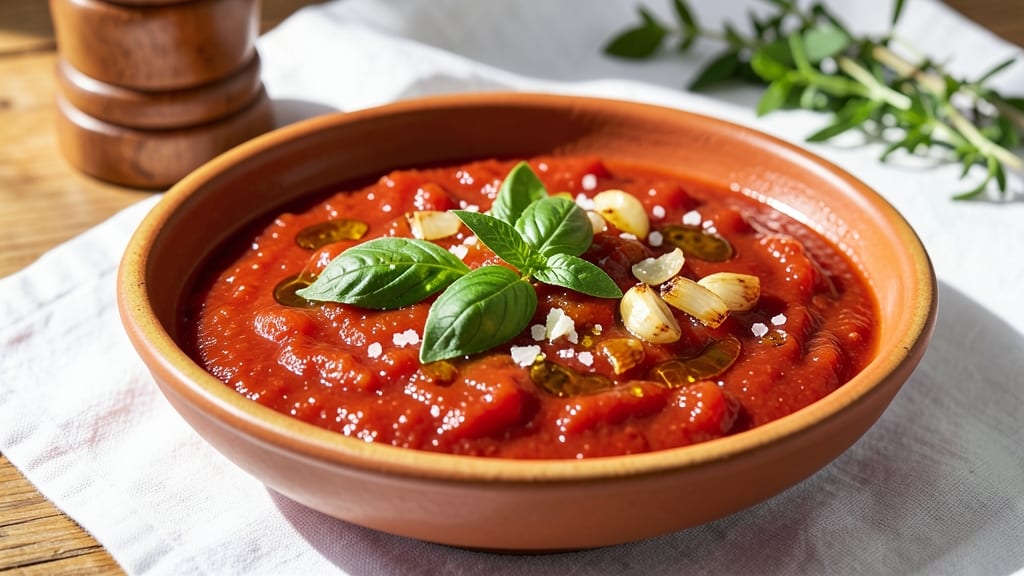
This Mutti tomato sauce recipe transforms simple San Marzano tomatoes into velvety, sweet perfection—exactly like Nonna used to make. The secret lies in slow simmering, which concentrates natural sweetness while developing deep, complex flavors that elevate any dish.
I’ve perfected this technique over years of testing, ensuring every batch delivers that restaurant-quality richness at home.
What sets this sauce apart is the balance of acidity and sweetness, achieved through careful simmering and a touch of fresh basil. Unlike store-bought versions, this recipe uses whole peeled tomatoes (or high-quality canned San Marzano) for a smoother, more authentic texture.
The process is straightforward but requires patience—letting the sauce reduce naturally creates a deeper flavor profile that’s impossible to replicate quickly.
By the time you’re done, you’ll have a rich, aromatic sauce with a velvety consistency that clings beautifully to pasta, pizza, or even grilled meats. The best part? It tastes even better the next day, making it perfect for meal prep.
Whether you’re serving it over al dente spaghetti or drizzling it on a homemade pizza, this sauce will become your new kitchen staple.
Store it in the fridge for up to 5 days or freeze for months—just thaw and reheat gently to preserve its texture. Pair it with crusty bread for dipping, toss it with your favorite pasta, or use it as a base for other Italian dishes.
Let’s get cooking—your taste buds will thank you.
Ingredients for mutti tomato sauce
San Marzano tomatoes, olive oil, and fresh basil—this trio creates velvety, sweet perfection.
| Ingredient | Amount | Notes |
|---|---|---|
| San Marzano Tomatoes 🍅 | 28 oz | Whole peeled or high-quality canned |
| Extra-Virgin Olive Oil 🫒 | ½ cup | High quality, fruity variety |
| Yellow Onion 🧅 | 1 whole | Medium size, finely chopped |
| Garlic Cloves 🧄 | 4 cloves | Fresh, peeled, minced |
| Fresh Basil Leaves 🌿 | ¼ cup | Packed, roughly chopped |
| Salt 🧂 | 1 tsp | Diamond Crystal preferred |
| Black Pepper 🌶️ | ¼ tsp | Freshly ground preferred |
| Red Wine Vinegar 🍷 | 1 tbsp | For brightness |
| Granulated Sugar 🍚 | 1 tsp | Balances acidity |
The tomatoes are non-negotiable here. San Marzano is the gold standard, but if you can't find them, whole peeled tomatoes from a trusted brand like Mutti or Cento work too. I always grab the 28-ounce cans from Trader Joe's—they're the most consistent. For the olive oil, Californian extra-virgin adds that fruity depth. Look for bottles labeled 'first cold press' if you're splurging. The garlic and onion are your flavor anchors, so don't rush the chopping—smaller pieces cook faster and blend better into the sauce.
No red wine vinegar? Balsamic vinegar at half the amount works in a pinch, though it'll taste slightly different. Fresh basil is ideal, but dried basil at one-third the quantity gets you close if you're in a bind. Want to skip the sugar? Add an extra pinch of salt instead—it'll help balance the acidity. The sauce thickens as it simmers, so if you're making a big batch, reduce the olive oil slightly to avoid a greasy texture. And for heaven's sake, don't use pre-minced garlic from the jar—fresh is worth the 30 seconds.
This sauce tastes even better the next day as the flavors meld. Store it in the fridge for up to 5 days—just give it a quick stir before reheating. For longer storage, freeze in ice cube trays and pop out single portions as needed. Thaw overnight in the fridge or reheat gently on the stove. The sauce thickens when cold, so add a splash of water or broth when reheating if it seems too stiff. Keeps frozen for up to 6 months without losing quality.
Why You'll Love This Recipe
- Here’s what sold me: that first crack of garlic in olive oil, then the basil hitting the simmer. It’s bright, herby, and just salty enough to make your taste buds dance—no heavy cream or weird spices needed.
- No Chopping Chaos: I swear by this—just dice one onion and mince three garlic cloves. That’s it. The San Marzano tomatoes handle the rest, bursting open like they’re eager to share their sweetness with you.
- Sunshine in a Saucepan: Here’s what sold me: that first crack of garlic in olive oil, then the basil hitting the simmer. It’s bright, herby, and just salty enough to make your taste buds dance—no heavy cream or weird spices needed.
- Weeknight to Dinner Party: Between us, this sauce works for pasta, grilled chicken, or even toasted bread. I’ve served it at both my kitchen table and my sister’s wedding (yes, really). The secret? The onions caramelize just enough to add depth without overpowering.
Step-by-step instructions for simmered San Marzano tomato sauce
Here's how to transform sweet San Marzano tomatoes into a rich, balanced sauce that sings with Italian flavor.
Sauté the Aromatics in Olive Oil
Heat the 0.5 cup extra-virgin olive oil in a heavy-bottomed saucepan over medium-low heat. Add the 1 whole yellow onion, finely chopped, and cook for 5-6 minutes until soft and translucent. You'll see the onion edges just starting to turn golden—this builds flavor without burning.
Push the onions to one side of the pan and add the 4 cloves minced garlic. Stir for 30 seconds until fragrant—don't let it brown or it'll turn bitter. Here's the thing: low heat prevents the garlic from burning while letting it infuse the oil. If you smell something sharp, you've gone too far.
Add Tomatoes and Initial Seasonings
Pour in the 28 oz San Marzano tomatoes (crushed by hand if using whole peeled tomatoes) and stir to combine with the aromatics. Add the 1 tsp salt, 0.25 tsp black pepper, and 1 tsp granulated sugar. The sugar helps balance the natural acidity of the tomatoes while enhancing their sweetness.
Bring the mixture to a gentle simmer over medium heat. Let it cook uncovered for 15-20 minutes, stirring occasionally. You're looking for the sauce to thicken slightly and the raw tomato flavor to soften. This slow start prevents the sauce from becoming too acidic too quickly.
Simmer and Develop Flavor
Reduce heat to low and continue simmering for another 20-25 minutes. Stir occasionally to prevent sticking, but don't over-stir—this can break down the tomato texture. The sauce should reduce until it coats the back of a spoon with a glossy sheen.
Taste the sauce and adjust seasoning if needed. I usually add another pinch of salt and a crack of black pepper at this stage. The sugar should be working its magic—you'll notice the sauce tastes sweeter and more balanced than raw tomatoes. If it's still too acidic, add a tiny bit more sugar.
Finish with Vinegar and Basil
Stir in the 1 tbsp red wine vinegar and 0.25 cup chopped fresh basil leaves. The vinegar adds a bright, tangy finish that cuts through the richness, while the basil infuses fresh herbal notes. Simmer for 5 more minutes—just long enough to warm through the basil without cooking it to oblivion.
Remove from heat and let the sauce rest for 10 minutes. This resting period allows flavors to meld completely. The sauce will thicken slightly as it cools. Taste one final time and adjust seasoning if needed. Serve immediately over pasta or save for later—this sauce only gets better with time.
Pro Tips For Making Mutti Tomato Sauce
- CRUSH THE ONIONS FIRST: I used to add chopped onion straight to the oil, and it’d just sit there, barely softening while the garlic burned. Instead, finely mince the onion (almost paste-like) so it dissolves into the sauce within 5 minutes—no waiting, no charring. If you’re in a rush, pulse it in a food processor for 3 seconds, then toss in the pot.
- LOW AND SLOW AFTER 20 MINUTES: The first 20 minutes should be medium-high heat to break down the tomatoes and onions, but once the sauce starts thickening, drop it to a simmer. I learned this the hard way—boiling it hard after that stage turns the sauce bitter and watery. Think "gentle bubble," not "rolling boil."
- PEEL GARLIC IN OIL, DON’T CHOP: Whole garlic cloves in olive oil caramelize into sweet, jammy perfection while the sauce cooks. If you slice or mince them first, they’ll burn before the onions soften. Just peel 3-4 cloves, smash them lightly with the side of your knife, and let them mellow out in the oil—no need to rush.
- SAVE THE BASIL LEAVES: Tossing fresh basil into simmering sauce kills its bright flavor—it turns bitter and slimy. Instead, tear the leaves by hand (not chopping) and stir them in at the very end, just before serving. If you’re making this ahead, store the basil separately and add it fresh when reheating. (Yes, even if you’re impatient like me.)
Troubleshooting this dish
Sauce Too Thin
If your sauce ends up too watery, don’t panic—this is an easy fix. Simmer uncovered on low heat for an extra 15-20 minutes, stirring occasionally. The water content will evaporate, and the sauce will thicken naturally.
For a quicker fix, mash 2-3 ripe bananas (yes, really!) or stir in 1 tbsp tomato paste to bind the sauce. I’ve also used a cornstarch slurry (1 tsp cornstarch + 1 tbsp water) for instant thickening. 🌡️
Sauce Too Acidic
Too much vinegar or underripe tomatoes can make your sauce taste sharp. Balance it by adding ½ tsp sugar or a pinch of brown sugar to sweeten. If it’s still too tangy, stir in 1 tsp honey or 1 tsp maple syrup—just a little goes a long way.
For a savory fix, add a small piece of cooked bacon or a sprinkle of Parmesan cheese to round out the flavors. Taste as you go!
Burnt Onions or Garlic
This happens when you cook the aromatics too aggressively. Next time, keep the heat medium-low and watch closely. If you see browned bits, immediately remove the pan from heat and scrape out the burnt pieces.
For a fresh start, add 1 extra clove of garlic and 1 tsp chopped onion to the sauce—it’ll mask the burnt flavor while adding depth. A splash of red wine (just ¼ cup) can also help smooth things out. 🧄
Sauce Separates or Splits
This usually means the tomatoes weren’t cooked long enough or the sauce was stirred too vigorously. To fix it, blend the sauce until smooth using an immersion blender or transfer to a regular blender.
If you prefer a rustic texture, simmer the sauce longer next time—30-45 minutes on low heat—to fully break down the tomato fibers. A splash of heavy cream (just 2 tbsp) can also help emulsify the sauce if needed.
Lacks Depth of Flavor
If your sauce tastes flat, it might need more time to develop. Next time, simmer it longer (up to 1 hour) for deeper flavor concentration. Add 1 tsp dried oregano or ½ tsp smoked paprika for extra complexity.
A small piece of pancetta or bacon cooked with the onions adds smoky richness. Trust me, patience pays off—this sauce only gets better with time. 💫
Nutrition facts
Frequently asked questions
Can I use regular canned tomatoes instead of San Marzano?
You can, but the flavor won't be the same. Regular tomatoes often have more seeds and a thinner, less sweet profile. For best results, choose whole peeled tomatoes from a trusted brand like Mutti or Cento. If using diced tomatoes, strain out excess liquid first. The key is balancing acidity and sweetness—regular tomatoes may need an extra ½ tsp sugar to match San Marzano's natural sweetness.
How do I make this sauce thicker for pasta?
Simmer the sauce uncovered for 20-30 extra minutes to let water evaporate naturally. For quicker thickening, blend with an immersion blender or mash 2-3 ripe bananas (trust me, it works!). Another trick: stir in 1 tbsp tomato paste at the end. Remember, the sauce will thicken more as it cools, so don't overdo it.
Can I make this sauce in a slow cooker?
Sauté onions and garlic first, then add all ingredients to your slow cooker on low for 6-8 hours or high for 3-4 hours. The slow cooking enhances the natural sweetness. Just add the basil and vinegar in the last 30 minutes to preserve their freshness. This method is perfect for busy days—just stir occasionally to prevent sticking.
What's the best way to store leftover sauce?
Store in an airtight container in the fridge for up to 5 days. For longer storage, freeze in ice cube trays for single servings or in ziplock bags (squeeze out air). Thaw overnight in the fridge—never at room temperature. When reheating, warm gently on low heat and add a splash of water if it thickens too much. The flavors actually improve with time!
Can I make this sauce without vinegar?
Yes, but it'll taste slightly less bright. Skip the vinegar and add ½ tsp extra sugar instead to balance acidity. For a different flavor profile, try 1 tsp lemon juice or a pinch of citric acid. The vinegar adds that signature tang that makes Italian sauces shine—it's worth including if possible.