
Sauces & Condiments
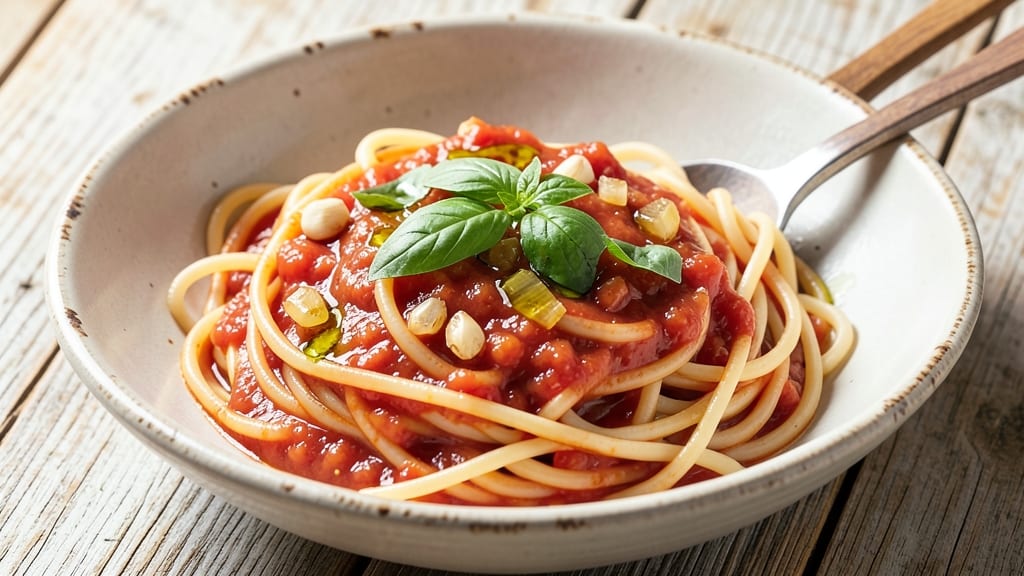
This basic Italian spaghetti sauce recipe transforms simple pantry staples into rich, simmered tomato depth that clings perfectly to every strand of pasta. The secret lies in slow cooking—letting garlic, tomatoes, and herbs meld into a velvety sauce with layers of umami and freshness.
I developed this version after years of testing, ensuring it delivers restaurant-quality flavor without requiring specialty ingredients or hours in the kitchen.
What sets this sauce apart is its versatility and balance—garlic provides depth, basil adds brightness, and a touch of red wine (or broth) enriches the texture. Unlike canned sauces, this one builds flavor as it simmers, rewarding patience with a sauce that tastes even better the next day.
The recipe calls for just 15 minutes of active prep, followed by an hour of hands-off simmering—ideal for weeknight dinners or meal prep.
By the time you're done, you'll have a sauce that's smooth yet rustic, with a natural sweetness from caramelized tomatoes and a subtle tang from fresh basil. It works equally well with ground beef, pancetta, or as a vegetarian base.
The best part? It keeps beautifully in the fridge for up to 5 days, making it perfect for batch cooking.
For those who love customization, this sauce adapts effortlessly—add mushrooms for earthiness, a pinch of sugar to balance acidity, or a splash of cream for richness. The instructions are designed to be foolproof, with clear seasoning cues so you can adjust to taste.
Let's get started on creating your go-to Italian sauce.
Ingredients for basic italian spaghetti sauce
Pantry staples and fresh herbs create a velvety sauce that clings to pasta perfectly.
| Ingredient | Amount | Notes |
|---|---|---|
| Extra-Virgin Olive Oil 🫒 | ½ cup | High-quality, fruity variety preferred |
| Garlic Cloves 🧄 | 6 cloves | Peeled, finely minced for even distribution |
| Yellow Onion 🧅 | 1 whole | Medium size, finely diced |
| Canned San Marzano Tomatoes 🍅 | 28 oz | Whole, crushed by hand |
| Dry Red Wine 🍷 | ½ cup | Bold, like Cabernet Sauvignon |
| Fresh Basil Leaves 🌿 | ½ cup | Packed, stems removed |
| Tomato Paste 🍅 | 2 tbsp | Smooth, not chunky |
| Diamond Crystal Kosher Salt 🧂 | 1 ½ tsp | Adjust to taste |
| Freshly Ground Black Pepper 🌶️ | ½ tsp | Freshly cracked for best flavor |
| Beef Broth 💧 | ½ cup | Low-sodium preferred |
The tomatoes are non-negotiable here—San Marzano delivers that perfect balance of sweetness and acidity. I always grab the 400-gram cans from Whole Foods or Trader Joe's—they're sweeter and less watery than store brands. Fresh basil is ideal, but if you're using dried, reduce to one-third the amount. For the garlic, I toast it lightly in the olive oil first—30 seconds max—to bring out its sweetness without burning. The red wine adds depth, but if you're avoiding alcohol, beef broth with a splash of balsamic works perfectly.
No red wine? Substitute beef broth with a splash of balsamic vinegar—it mimics the acidity and richness. Fresh basil? Dried oregano at one-third the amount is a decent swap, though it won’t have the same brightness. The tomato paste is your flavor booster—don’t skip it, but if you’re short on time, an extra 4 oz of crushed tomatoes will work in a pinch. For a vegetarian version, swap the beef broth for vegetable broth and add a pinch of sugar to balance the acidity. The olive oil should be extra-virgin—it makes a noticeable difference in the final sauce.
This sauce only gets better with time—simmer for at least an hour for maximum flavor development. Store in an airtight container in the fridge for up to 5 days or freeze for 3 months. I double the batch every time because it’s perfect for meal prep—just reheat with a splash of water or broth. For a smoother texture, blend briefly before serving, but I prefer the rustic look of hand-crushed tomatoes. The sauce thickens as it cools, so thin with a little broth if needed.
Why You'll Love This Recipe
- Same recipe, different vibes: toss with spaghetti for a 20-minute weeknight meal, or let it simmer hours for a potluck-worthy sauce. The onions caramelize beautifully, so it’s always the dish everyone asks for.
- Pantry-Friendly Magic: I swear by this sauce because it uses what I always have: a can of tomatoes, a bottle of wine I didn’t finish, and garlic from the jar. No last-minute grocery runs—just pull, chop, simmer.
- Wine-Infused Depth: That splash of dry red wine? It’s not just booze—it melts into the sauce, leaving behind this rich, almost smoky sweetness that makes every bite taste like a proper Italian trattoria. (Yes, even with store-bought tomatoes.)
- Weeknight to Dinner Party: Same recipe, different vibes: toss with spaghetti for a 20-minute weeknight meal, or let it simmer hours for a potluck-worthy sauce. The onions caramelize beautifully, so it’s always the dish everyone asks for.
Step-by-step instructions for simmered tomato sauce
Here's how to build rich, aromatic tomato sauce from scratch—layering flavors slowly for depth.
Sauté Aromatics Until Golden
Heat the 0.5 cup extra-virgin olive oil in a heavy-bottomed saucepan over medium-low heat. Add the finely diced yellow onion and cook for 5 minutes until soft and translucent, stirring occasionally. This gentle start prevents burning while drawing out natural sweetness.
Increase heat to medium and add the 6 cloves minced garlic cloves. Cook for 1-2 minutes until fragrant but not browned—garlic burns quickly, and that bitter flavor ruins everything. Here's the thing: you want to smell that sweet, pungent aroma before moving forward. If it darkens too quickly, reduce heat immediately.
Develop the Base with Tomato Paste
Lower heat to medium-low and stir in the 2 tablespoons tomato paste, spreading it evenly across the pan's surface. Cook for 3-4 minutes until it deepens in color and releases its concentrated flavor. This step creates the sauce's foundation—what we call a "soffritto" in Italian cooking.
Real talk: don't rush this. The paste should caramelize slightly, forming a thick, glossy layer. If it sticks, add a splash of 0.5 cup dry red wine to deglaze, scraping up any browned bits from the bottom. Those bits hold incredible flavor you don't want to waste.
Build the Sauce with Tomatoes and Wine
Pour in the 0.5 cup dry red wine and let it simmer for 2-3 minutes until reduced by half. This alcohol evaporation intensifies the wine's depth. Add the 28 oz crushed San Marzano tomatoes (hands are best for breaking them up) and stir gently to combine.
Bring to a gentle simmer, then reduce heat to low. Partially cover the pan and let it cook for 20-25 minutes, stirring occasionally. You're looking for a sauce that thickens naturally as moisture evaporates. The reason we wait is that slow cooking develops complex tomato flavors—no rushing here.
Season and Finish with Herbs
Add the 0.5 cup beef broth, 1.5 teaspoons kosher salt, and 0.5 teaspoon freshly ground black pepper. Stir well and continue simmering for another 10-15 minutes until the sauce reaches your desired consistency. Taste and adjust seasoning—Italian sauces should be balanced but bright with acidity.
In the final 5 minutes, stir in the 0.5 cup fresh basil leaves (stems removed). The heat will release their essential oils, infusing the sauce with bright, aromatic flavor. Remove from heat immediately after adding basil—overcooking turns it bitter. Let the sauce sit for 10 minutes before serving, allowing flavors to meld completely.
Adjust Texture and Serve
If the sauce is too thick, thin it with 1-2 tablespoons pasta water while stirring vigorously. For extra richness, you could add a pat of butter at the end (though purists will disagree). The sauce should coat the back of a spoon but still be fluid enough to cling to spaghetti.
Serve immediately over freshly cooked al dente spaghetti, reserving some pasta water to loosen the sauce if needed. The sauce should cling beautifully to each strand, delivering layers of tomato sweetness, garlic warmth, and basil brightness in every bite. This isn't just sauce—it's the heart of Italian comfort food.
Pro Tips For Making Basic Italian Spaghetti Sauce
- SWEAT THE ONION LOW: After burning three batches, I finally figured out that onions need gentle heat—no rushing. Cut them into even ¼-inch slices and cook them on medium-low for 8-10 minutes until translucent but not brown. If you see golden bits, you’ve gone too far, and the sauce will taste bitter. (Yes, even if you’re impatient like me.)
- DEGLAZE WITH WINE IMMEDIATELY: As soon as you remove the garlic (after 30 seconds max), pour in the red wine right away while the pan is still hot. Let it bubble for 2-3 minutes to cook off the alcohol—skipping this step leaves a raw, harsh taste. I used to wait, and the sauce always had that weird "boozy" aftertaste.
- CRUSH TOMATOES BY HAND: Drain the San Marzano tomatoes but don’t skip crushing them with your fingers or a wooden spoon. This breaks down the pulp faster and releases more flavor into the sauce. I tried blending them once, but the texture was too smooth—hand-crushing gives that rustic, chunky Italian feel.
- SALT THE TOMATOES FIRST: Before adding the tomatoes, sprinkle ½ teaspoon of salt directly into the can and stir. This seasons the sauce from the start, cutting down on the need for extra salt later. I learned this from my nonna, who swore it made the sauce "sing." (It does.)
Regional styles of this basic italian spaghetti sauce
Roman Rustic Style
In Rome, they keep it simple and bold—no wine, no broth, just tomatoes, garlic, and olive oil. Start with 3 cloves minced garlic sautéed in 0.3 cup extra-virgin olive oil until golden. Add 28 oz crushed San Marzano tomatoes and simmer uncovered for 45-60 minutes until thick and jammy.
Finish with 0.3 cup fresh basil and a pinch of flaky sea salt. The key is patience—this sauce gets richer as it reduces. 🌿
Neapolitan Tomato Sauce
Neapolitan sauce is all about sweetness and acidity balance. After sautéing garlic and onions, add 1 tablespoon sugar to the tomato paste before deglazing with 0.5 cup dry white wine (like Fiano). Use 28 oz tomatoes plus 1 extra 14 oz can for extra body.
Simmer for 30 minutes, then finish with 0.25 cup fresh basil and a splash of lemon juice for brightness. The texture should be velvety but still cling to pasta. 🍷
Tuscan Herb-Forward
Tuscany swaps basil for a fragrant herb blend. After building your base, stir in 1 tbsp dried rosemary, 1 tsp dried thyme, and 0.25 cup fresh parsley with the basil.
Add 1 cup beef broth and simmer for 40 minutes. Finish with 0.5 tsp red pepper flakes for subtle heat. This version works perfectly with ribollita or pappardelle. 🌿
Venetian Onion-Laced
Venetian cooks take their time with onions—caramelizing 1 large yellow onion for 15 minutes until deep amber. Add 1 tbsp tomato paste, then deglaze with 0.5 cup dry vermouth instead of wine. Use 28 oz tomatoes plus 0.5 cup tomato passata for silkiness.
Simmer for 35 minutes, then finish with 0.25 cup fresh basil and a pinch of nutmeg. The onions add natural sweetness that pairs beautifully with bigoli pasta. 🧅
Sicilian Spicy Kick
Sicilian sauce packs heat and citrus. After the tomato paste step, add 1 tsp crushed red pepper and 1 tsp fennel seeds toasted in the oil. Use 0.5 cup dry Marsala wine instead of red wine, then add 28 oz tomatoes plus 0.5 cup tomato paste.
Simmer for 25 minutes, then finish with 0.25 cup fresh basil, 1 tbsp capers, and a squeeze of lemon. The acidity cuts through the richness perfectly. 🌶️
Northern Alpine Twist
Up north, they add hearty ingredients. After the tomato base, stir in 1 cup diced mushrooms and 0.5 cup pancetta (or bacon). Simmer for 20 minutes***, then finish with 0.25 cup fresh sage instead of basil.
The mushrooms add earthiness that balances the acidity. This version works wonderfully with tagliatelle or risotto. 🍄
Nutrition facts
Frequently asked questions
Can I make this sauce without red wine?
Replace the 0.5 cup red wine with 0.5 cup beef broth plus 1 tablespoon balsamic vinegar for acidity. The broth adds depth while the vinegar mimics wine's brightness. For a vegetarian version, use vegetable broth and add a pinch of sugar to balance any tartness from the tomatoes.
How do I prevent the sauce from getting too thick?
Simmer uncovered for the first 30 minutes to evaporate excess moisture naturally. If it thickens too much, stir in 1-2 tablespoons pasta water or beef broth while reheating. The sauce will thicken slightly as it cools, so adjust while warm. For a smoother texture, blend briefly before serving.
What's the best way to store leftover sauce?
Let the sauce cool completely, then transfer to an airtight container. It keeps in the fridge for 5 days or freezes for 3 months. For freezing, portion into 1-cup containers for easy reheating. Thaw overnight in the fridge—never microwave directly from frozen. Reheat gently on the stove with a splash of water or broth.
Can I add meat to this sauce?
Yes! For a meaty version, brown 1 pound ground beef or Italian sausage first, then drain excess fat before adding the onions. For extra flavor, season the meat with 1 teaspoon Italian seasoning and 0.5 teaspoon fennel seeds before cooking. Remove the meat from the pan before adding the wine to prevent curdling.
Why does my sauce taste bland after simmering?
Bland sauce usually means insufficient seasoning or underdeveloped flavors. Taste and adjust with kosher salt and black pepper, then add a pinch of sugar to balance acidity. For depth, stir in 1 teaspoon balsamic vinegar or a splash of red wine reduction. Remember, Italian sauces should be bright—simmer uncovered for 10-15 extra minutes to concentrate flavors.