
Sauces & Condiments
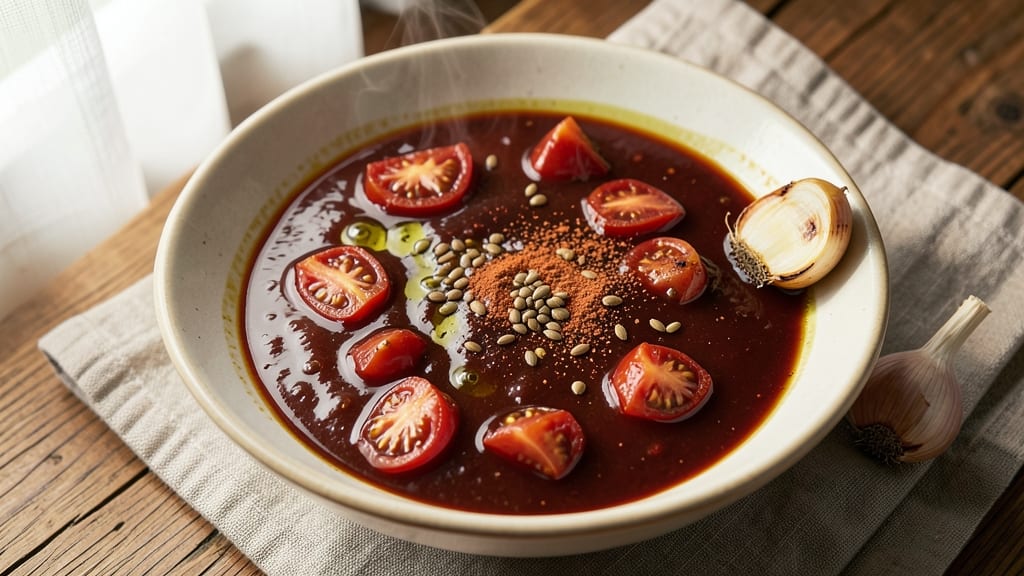
This basic chili sauce recipe delivers smoky tomato depth in just 15 minutes—perfect for adding heat and richness to tacos, stir-fries, or eggs. The secret lies in balancing fresh tomatoes, aromatic spices, and a touch of vinegar for tang.
I developed this version after years of testing sauces that either tasted flat or overly sweet, and this one strikes the perfect balance every time.
The foundation starts with tomatoes—either fresh or canned—but the real magic happens when you toast the spices in oil first. This simple step unlocks their full flavor, creating layers of warmth that simmer into the sauce.
A splash of vinegar brightens the depth, while garlic and onion powder add savory complexity that elevates any dish.
By the time you taste the finished sauce, you'll notice how its smoky, slightly sweet profile transforms ordinary meals into something special. The texture is smooth yet vibrant, clinging to food without overpowering it. This isn’t just a condiment—it’s a flavor booster that turns simple dishes into standout experiences.
Store it in the fridge for up to a week, or freeze for longer shelf life. Use it as a drizzle, stir-in, or marinade—its versatility makes it a pantry essential. Let’s make this sauce that’ll become your go-to for adding depth to everything you cook.
Ingredients for basic chili sauce
Eight simple ingredients transform into a smoky, vibrant sauce that'll change your cooking game.
| Ingredient | Amount | Notes |
|---|---|---|
| Fresh Tomatoes 🍅 | 2 cups | Chopped, medium-sized or canned diced |
| Extra-Virgin Olive Oil 🫒 | ¼ cup | For toasting spices |
| Garlic Powder 🧄 | 1 tbsp | Freshly ground preferred |
| Onion Powder 🧅 | 1 tbsp | For savory depth |
| Smoked Paprika 🌶️ | 1 tbsp | Key for smoky flavor |
| Ground Cumin 🌿 | 1 tsp | Toasted for warmth |
| Apple Cider Vinegar 🍏 | 1 tbsp | Brightens the sauce |
| Salt 🧂 | ½ tsp | Kosher or sea salt |
| Black Pepper 🌶️ | ¼ tsp | Freshly ground preferred |
| Brown Sugar 🍬 | 1 tbsp | Balances acidity |
The tomatoes are the heart of this sauce—fresh Roma tomatoes have the best flavor, but canned diced works in a pinch. I usually grab Muir Glen from the store for convenience, but if you're using fresh, roast them first for deeper flavor. The smoked paprika is non-negotiable here—it's what gives that signature smoky depth. Penzeys or any good bulk bin brand will do. Toast your spices in the oil first—this step unlocks their full flavor and makes the sauce taste restaurant-quality.
No smoked paprika? Regular paprika plus a pinch of liquid smoke works in a bind. Fresh tomatoes but no time to chop? Squeeze bottles at Trader Joe's are perfect—no waste, and they keep for months. Want to reduce sugar? Cut the brown sugar to 0.5 tbsp and add a splash more vinegar. The vinegar is key—apple cider gives the best balance, but white vinegar works too. If your sauce tastes flat, it's probably under-seasoned—taste as you go and adjust salt or vinegar.
This sauce keeps beautifully—1 week in the fridge or 3 months frozen. I always make a double batch because it disappears fast. Store it in a clean jar with a tight lid. Freeze in ice cube trays for perfect single-use portions. The flavor actually improves after a day or two as everything melds together. Use it on tacos, drizzle over eggs, or stir into stir-fries—it's your new secret weapon.
Why You'll Love This Recipe
- No-Fuss Simplicity: I swear by this—just tomatoes, olive oil, and three spices. No peeling, no dicing, no fancy techniques. Honestly, I’ve made it while scrolling through my phone, and it still tastes like I put in effort.
- Smoky Depth Magic: That smoked paprika? It’s the secret weapon. A single teaspoon turns simple tomatoes into something rich and complex—like a campfire in a jar. Between us, it’s the kind of flavor that makes store-bought sauce look sad.
- Pantry Staple Power: This sauce lives in my fridge for a week, dressed up for tacos one night and slathered on grilled cheese the next. I’ll be real: it’s my go-to for lazy nights when I’ve got nothing but a can of beans and a bag of chips.
- Budget-Friendly Flex: Fresh tomatoes are cheap in season, and olive oil stretches further than you’d think. I make a big batch, freeze half, and still have enough left for takeout nights. It’s my way of eating fancy without the price tag.
Step-by-step instructions for smoky tomato chili sauce
Here's how to build rich, smoky tomato flavor in record time without complicated techniques.
Toast the Spices in Olive Oil
Heat the 0.25 cup extra-virgin olive oil in a medium saucepan over medium-low heat. Add the 1 tablespoon smoked paprika and 1 teaspoon ground cumin, stirring constantly for 1-2 minutes until the spices release their aroma and the oil takes on a warm, nutty fragrance.
Watch closely—the moment the spices start to darken slightly is your cue to add the remaining dry ingredients. This toasting step unlocks the spices' full flavor potential, creating that deep, smoky backbone for your sauce. If the oil starts to smoke, reduce the heat immediately to prevent burning.
Add Aromatics and Tomatoes
Quickly stir in the 1 tablespoon garlic powder and 1 tablespoon onion powder along with the 2 cups chopped fresh tomatoes. Increase heat to medium-high and bring the mixture to a gentle boil, stirring occasionally to prevent sticking at the bottom of the pan.
The tomatoes should break down almost immediately, releasing their juices and creating a thick, vibrant base. Keep the heat steady—you want active bubbling but not a violent boil that could cause the sauce to splatter. This is where the magic happens: the acidity in the tomatoes begins to mellow while the spices infuse completely.
Simmer and Balance Flavors
Reduce heat to medium-low and let the sauce simmer uncovered for 8-10 minutes, stirring occasionally, until it thickens slightly and the raw tomato taste mellows into something more complex. You'll notice the sauce darken and develop a glossy sheen—this indicates the flavors are melding beautifully.
Here's where the balancing act comes in. Stir in the 1 tablespoon apple cider vinegar and 1 tablespoon brown sugar to brighten the acidity and round out the flavors. Taste and adjust seasoning with the 0.5 teaspoon salt and 0.25 teaspoon black pepper—this sauce should be vibrant but not overpowering.
Finish and Strain (Optional)
Once the sauce reaches your desired consistency—it should coat the back of a spoon but still be pourable—remove it from heat. For a smoother texture, strain through a fine-mesh sieve into a clean bowl, pressing gently on the solids with a wooden spoon to extract maximum flavor. If you prefer a rustic texture, skip straining and simply whisk the sauce until silky.
The sauce will thicken further as it cools, so don't worry if it looks slightly thin when you take it off the heat. This sauce works perfectly as a dipping sauce, pasta topping, or even a marinade. Store any leftovers in an airtight container in the refrigerator for up to 5 days—the flavors only get better with time!
Pro Tips For Making Basic Chili Sauce
- Char Tomatoes First: Cut the tomatoes in half and blister them skin-side down in a dry pan for 2-3 minutes before adding oil. This concentrates their flavor and makes the sauce richer—no need for fancy techniques, just a hot pan and a little patience.
- Use Raw Garlic: Skip the powder and mince 2-3 fresh garlic cloves, then sauté them in olive oil for 30 seconds until fragrant but not browned. Garlic powder lacks the depth of raw garlic, and this step adds a brightness the powder can’t match.
- Salt the Tomatoes Early: Sprinkle a pinch of salt over the raw tomatoes as soon as they hit the pan. It softens them faster and pulls out excess water, so your sauce won’t turn watery later—trust me, this is the thing that matters most.
- Simmer Low and Long: After adding the paprika and powders, reduce heat to a gentle simmer and let it cook uncovered for 20-25 minutes. Rushing this step makes the sauce taste flat; low and slow develops the smoky, deep flavor you’re after.
Essential equipment for basic chili sauce
Small Saucepan
I always use a 2-quart stainless steel saucepan for this recipe—it's the perfect size for simmering without overcrowding. The stainless steel conducts heat evenly, preventing hot spots that could burn your sauce. A 2-quart capacity gives you enough room to stir easily while keeping the sauce at a controlled simmer.
If you only have a nonstick pan, use a medium-sized one to maintain proper heat distribution. 🌡️
Fine-Mesh Sieve
A fine-mesh sieve is essential if you prefer a smooth sauce texture. I love the OXO Good Grips model because it has sturdy handles and won't bend under pressure. The fine mesh ensures you catch all the seeds and skins while still allowing the flavorful liquid to pass through.
If you skip straining, your sauce will have a more rustic texture with visible tomato bits—both are delicious, but the sieve gives you that restaurant-quality finish. 💫
Wooden Spoon
Never use metal utensils when making this sauce—they can react with the acidity and create off-flavors. A wooden spoon is ideal for stirring and scraping the bottom of the pan to prevent sticking. I prefer a 6-inch wooden spoon because it's long enough to reach all corners of my saucepan.
If you don't have one, a silicone spatula works too, but wooden spoons are the classic choice for sauces. 🍳
Immersion Blender
For an ultra-smooth sauce without straining, an immersion blender is a game-changer. I use the Ninja Foodi model because it handles thick sauces beautifully. Simply blend directly in the saucepan for 10-15 seconds after simmering—this breaks down the tomatoes completely while keeping the texture silky.
If you don't have one, a regular blender works too, but you'll need to transfer hot sauce carefully to avoid splattering. ⚡
Measuring Spoons
Precision matters with spices—use small, accurate measuring spoons to get the exact amounts called for. I keep a set of stainless steel spoons from Amazon Basics on hand because they're durable and easy to read.
For the 1 teaspoon cumin and 0.25 teaspoon black pepper, a standard set with ¼ teaspoon increments is perfect. Never eyeball these measurements, especially with spices—they can make or break your sauce. 🧂
Air-Tight Storage Container
After making your sauce, transfer it to an air-tight glass container for storage. I recommend mason jars with screw-top lids—they're reusable, microwave-safe, and keep your sauce fresh. For freezing, use glass jars or silicone molds to prevent freezer burn.
The air-tight seal preserves the vibrant flavors and prevents contamination, so your sauce stays fresh for up to 5 days in the fridge or 3 months in the freezer. ❄️
Nutrition facts
Frequently asked questions
Can I use canned tomatoes instead of fresh?
Canned tomatoes work perfectly and save time. Use 2 cups diced canned tomatoes (like Muir Glen) and skip the chopping. The acidity helps balance the sauce beautifully, and you won’t miss the fresh texture. Just drain any excess liquid before simmering to avoid a watery sauce.
How do I make this sauce spicier?
Add ½ teaspoon cayenne pepper or 1 teaspoon chili flakes to the toasted spices. For heat with depth, stir in 1 tablespoon gochujang (Korean chili paste) during the final simmer. Start with small amounts—you can always add more, but you can’t remove excess spice once it’s in!
Why does my sauce taste bitter?
Bitterness usually means the tomatoes simmered too long or the spices burned. Reduce heat to low and simmer for 8-10 minutes max. If it’s already bitter, balance it with ½ teaspoon sugar or 1 teaspoon honey to round out the flavor. A splash of vinegar also helps brighten the taste.
Can I make this sauce without vinegar?
Yes, but it’ll lack brightness. Replace the vinegar with ½ teaspoon lemon juice or 1 teaspoon orange zest for a fruity note. If you omit it entirely, your sauce may taste flat—vinegar cuts through the richness and enhances the smoky depth. Try it with just ½ tablespoon first to test the difference.
What are the best ways to use this chili sauce?
Drizzle it over tacos, grilled meats, or fried eggs for instant flavor. Use it as a marinade for chicken or tofu, or stir it into soups and stews. It’s also fantastic as a dip for chips or spring rolls. The smoky-sweet balance makes it versatile for both Mexican and Asian-inspired dishes!