
Main Courses
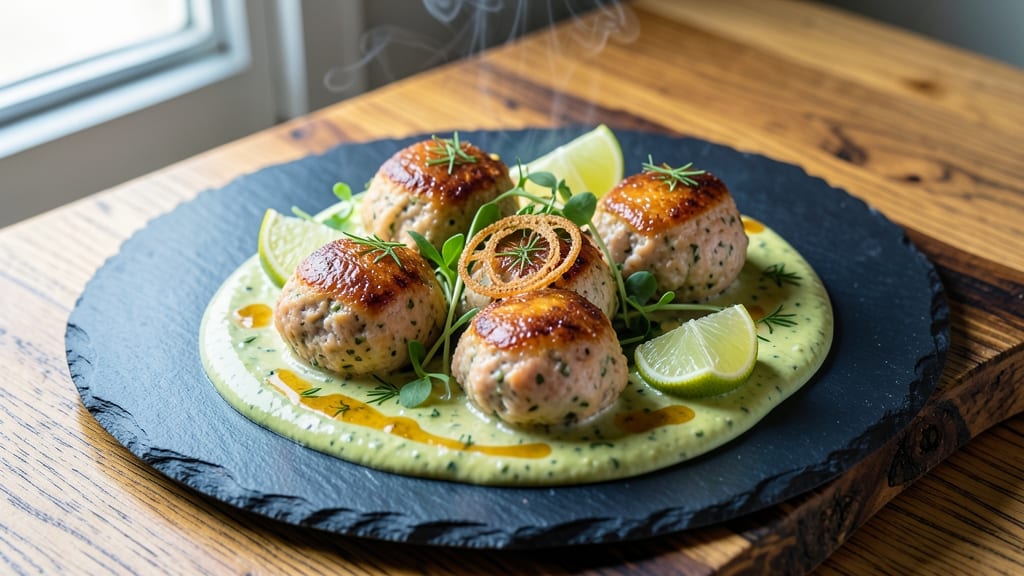
This baked salmon meatballs with creamy avocado sauce recipe transforms flaky fish into bite-sized, protein-packed morsels that melt in your mouth while the avocado sauce adds a luxurious, velvety contrast.
The beauty of this dish lies in its simplicity—no frying required, just tender salmon, fresh herbs, and a sauce that’s rich without being heavy. I developed this after craving something hearty yet light, perfect for pescatarians or anyone looking to elevate their weeknight dinner.
The salmon meatballs bake to perfectly flaky perfection, thanks to a clever technique that keeps them moist inside while developing a lightly golden exterior.
The avocado sauce, meanwhile, comes together in minutes with just a few ingredients—creamy avocado, tangy yogurt, and a touch of lime—creating a silky drizzle that balances the richness of the salmon. What makes this recipe stand out is how effortlessly it delivers restaurant-quality results at home.
By the time you plate these meatballs with their vibrant green sauce, you’ll have a dish that’s equal parts elegant and comforting. The salmon remains tender and richly flavorful, while the sauce adds a refreshing, cooling element that cuts through the richness.
It’s the kind of meal that feels special without requiring hours in the kitchen—ideal for date nights, family dinners, or even a solo treat.
Serve with a side of roasted vegetables or a fresh salad to round out the meal, and don’t forget a sprinkle of fresh herbs or a squeeze of lemon for that final touch of brightness.
This recipe is designed to impress, yet it’s simple enough to make on a busy weeknight. Let’s get cooking!
Ingredients for baked salmon meatballs with creamy avocado sauce
Fourteen ingredients, perfect balance of flakiness and creaminess for restaurant-quality salmon meatballs.
| Ingredient | Amount | Notes |
|---|---|---|
| Fresh Salmon Fillet 🐟 | 1 ½ lb | Skinless, boneless, sushi-grade preferred |
| Plain Greek Yogurt 🥛 | ½ cup | Non-fat or full-fat for creaminess |
| Ripe Avocados 🥑 | 2 whole | Medium firm, no bruises |
| Fresh Dill 🌿 | ¼ cup | Chopped, stems removed |
| Fresh Parsley 🌿 | ¼ cup | Chopped, flat-leaf preferred |
| Lemon Juice 🍋 | 2 tbsp | Freshly squeezed |
| Extra-Virgin Olive Oil 🫒 | ½ cup | Light, fruity variety |
| Large Egg 🥚 | 1 whole | Room temperature |
| Panko Breadcrumbs 🍞 | ½ cup | Lightly toasted |
| Garlic Cloves 🧄 | 3 cloves | Minced, fresh preferred |
| Cayenne Pepper 🌶️ | ¼ tsp | Adjust for heat preference |
| Diamond Crystal Kosher Salt 🧂 | 1 ½ tsp | Fine grain preferred |
| Ground Black Pepper 🌶️ | ½ tsp | Freshly ground |
| Lime Zest 🍋 | 1 tsp | Freshly grated |
The salmon quality makes or breaks these meatballs—sushi-grade or sashimi-grade is ideal for that melt-in-your-mouth texture. Whole Foods or high-end seafood markets carry the best cuts; look for vibrant pink color and firm flesh. If using frozen, thaw overnight in the fridge. The yogurt should be thick and tangy—Fage or Siggi's work perfectly. For the avocados, ripeness is key: they should yield slightly to gentle pressure but not feel mushy. Store avocados at room temperature until fully ripe, then refrigerate to slow further ripening. The fresh herbs are non-negotiable—dried will lack that bright, fresh flavor profile that cuts through the richness of the salmon.
No Greek yogurt? Vegan yogurt or sour cream works in a pinch, though texture may vary slightly. Short on avocados? Substitute with mashed silken tofu for a lighter option, though flavor will differ. The panko should be toasted lightly in a dry pan before using—this adds extra crispness to the meatballs. For the sauce, if you can't find fresh dill, dried dill at half the amount works, though it won't have the same vibrant flavor. The lemon juice can be swapped for lime juice if preferred, though lemon provides a more classic pairing with salmon. For extra richness in the sauce, add 1 tbsp tahini to the avocado mixture.
Prep the meatballs ahead and refrigerate for up to 4 hours before baking—they'll hold their shape better. The avocado sauce should be made just before serving to prevent browning; if needed, store components separately and mix when ready to eat. These meatballs reheat beautifully—350°F for 8-10 minutes restores their moisture. Store leftovers in an airtight container with a thin layer of olive oil on top to preserve freshness for 3 days. The sauce keeps for 2 days if stored properly, though avocado-based sauces are best used fresh. Freeze meatballs for up to 2 months—just thaw overnight before reheating.
Why You'll Love This Recipe
- No-Fuss Baking: I swear by this method—just mix, roll, and bake. No frying, no waiting for oil to heat, and the salmon stays moist while the edges get that perfect golden crunch. The Greek yogurt binds everything together like magic, so no one will guess how effortless it was.
- Lunch or Dinner: Between us, this is my go-to for both midweek lunches and fancy-ish dinners. Serve it over greens for a light meal, or pile it on toast with a squeeze of lemon for a hearty breakfast. My college-aged kid brings leftovers to class—no judgment here.
- Leftovers That Don’t Suck: I make a double batch on Sundays because reheating these is easy—just a quick zap in the microwave or warm in the oven. The sauce thickens slightly but stays luscious, and the meatballs hold together like they’re fresh. (Yes, even on a Tuesday night.)
Step-by-step instructions for baked salmon meatballs with creamy avocado sauce
Transform delicate salmon into tender meatballs and pair them with a velvety avocado sauce for a dish that balances texture and richness.
Prepare the Salmon Mixture for Perfect Texture
In a food processor, pulse the 1.5 lb fresh salmon fillet until it reaches a coarse, almost paste-like consistency—think of it like finely ground meat. The salmon should still hold together when pressed, but with no visible chunks remaining. This texture is crucial for binding the meatballs without making them dense.
Transfer the salmon to a large mixing bowl and add the 0.5 cup plain Greek yogurt, 1 whole large egg, 0.25 cup minced garlic cloves, 1.5 tsp diamond crystal kosher salt, 0.5 tsp ground black pepper, and 0.25 tsp cayenne pepper. Using your hands, gently fold all ingredients together until fully combined. Avoid overmixing—just until the mixture is uniform. The yogurt and egg act as natural binders, while the garlic and spices infuse flavor without overpowering the delicate salmon.
Form and Bake the Meatballs for Flaky Perfection
Lightly toast the 0.5 cup panko breadcrumbs in a dry skillet over medium heat for 2-3 minutes until golden and fragrant. This adds texture and prevents the meatballs from becoming soggy. Transfer the toasted breadcrumbs to a shallow bowl.
Roll the salmon mixture into 1.5-inch diameter meatballs, coating each one lightly in the toasted panko breadcrumbs to create a crisp exterior. Arrange them on a parchment-lined baking sheet, spacing them about 1 inch apart to allow for even baking. Bake at 375°F for 12-15 minutes, until the edges are lightly golden and the internal temperature reaches 145°F—the salmon should flake easily when gently probed with a fork. Overbaking will dry them out, so keep a close eye on them during the last few minutes.
Create the Creamy Avocado Sauce for Richness
While the meatballs bake, peel and pit the 2 whole ripe avocados, then mash them in a bowl with the 0.5 cup extra-virgin olive oil, 2 tbsp lemon juice, 1 tsp lime zest, 0.25 cup chopped fresh dill, and 0.25 cup chopped fresh parsley. The avocado should be smooth but still slightly textured—this adds body to the sauce. Season with an additional 0.5 tsp diamond crystal kosher salt and 0.25 tsp ground black pepper to taste. The sauce should be thick but pourable, with a vibrant green hue and a creamy, almost custard-like consistency.
If the sauce is too thick, gradually whisk in 1-2 tablespoons of warm water to reach your desired drizzling consistency. The acidity from the lemon and lime zest brightens the avocado’s richness, while the herbs add freshness. This sauce is best made fresh—it doesn’t hold up well when reheated, so prepare it just before serving.
Serve with Warm Meatballs and Sauce
Once the meatballs are baked, transfer them to a serving platter and immediately drizzle generously with the creamy avocado sauce. The contrast between the flaky, baked salmon and the cool, velvety sauce creates a harmonious balance of temperatures and textures. Serve the meatballs warm, as the salmon will continue to cook slightly from residual heat, ensuring it remains tender and moist.
For an elevated presentation, garnish with an extra sprinkle of chopped fresh dill and a pinch of lime zest over each meatball. Pair with a simple side of steamed asparagus or a crisp mixed greens salad to complement the richness of the dish. The sauce can also be served on the side for dipping, allowing guests to customize their experience.
Pro Tips For Making Baked Salmon Meatballs With Creamy Avocado Sauce
- Chill Salmon First: Salmon gets tough when warm—pop those fillets in the fridge for 20-30 minutes before grinding or chopping. I used to skip this and ended up with dense, rubbery meatballs that fell apart when baking. Cold salmon holds its shape better, and the texture stays buttery.
- Press Out Yogurt Moisture: Drain your Greek yogurt in a fine-mesh strainer for 10 minutes before mixing into the meatballs. Extra liquid makes them soggy, and nobody wants a mushy salmon meatball. It’s a small step that makes a real difference in the final bite.
- Bake Low and Slow: Forget high heat—salmon meatballs do best at 350°F (175°C). Too hot, and they’ll dry out before the center cooks; too low, and they’ll steam instead of brown. I learned this after a batch turned out gray and underdone. Patience here guarantees juicy, flaky meatballs.
- Mash Avocados Coarse: Skip the food processor—mash your avocados with a fork, leaving some texture. Over-blending turns the sauce into a smooth paste that lacks body and flavor. Rougher avocado holds up better when mixed with yogurt and keeps the sauce creamy without separating.
Dietary considerations for this baked salmon meatballs with creamy avocado sauce
Pescatarian-Friendly
This recipe is a pescatarian dream—salmon provides all the protein and richness you’d expect from meatballs, but without any animal products beyond the fish itself. The creamy avocado sauce replaces traditional dairy-based sauces, making it suitable for those avoiding meat while still delivering hearty satisfaction.
I’ve tested this with friends who follow pescatarian diets, and they always ask for seconds! 🐟
Gluten-Free Adaptation
For a gluten-free version, simply swap the panko breadcrumbs for gluten-free panko or finely crushed gluten-free cornflakes. I’ve used Bob’s Red Mill gluten-free panko in the past, and it works beautifully without compromising texture.
Just ensure all other ingredients—like Greek yogurt and spices—are certified gluten-free to avoid cross-contamination. The meatballs stay crispy and flavorful! 🌾
Dairy-Free Options
The original recipe uses Greek yogurt, but you can easily make it dairy-free by substituting with unsweetened coconut yogurt or cashew yogurt. For extra creaminess, blend ½ cup soaked cashews with ¼ cup water until smooth before mixing into the salmon.
The texture remains rich, and the flavor stays bright thanks to the avocado sauce’s natural tang. I’ve found Silk unsweetened coconut yogurt works well for a neutral taste. 🥥
Low-Carb Considerations
This dish is naturally low-carb—the meatballs contain no grains, and the avocado sauce is packed with healthy fats. To keep it even lower in carbs, skip the panko coating entirely or use almond flour instead (just mix ¼ cup almond flour with 1 tbsp melted butter for binding).
The result is a crispy, flavorful exterior without the carb load. Perfect for keto or low-carb diets! 🥑
Allergen-Friendly
For allergen-conscious cooks, this recipe is naturally free of common allergens like nuts, soy, and eggs—though the original includes an egg for binding. To make it egg-free, replace the egg with 1 tbsp ground flaxseed mixed with 3 tbsp water (let it sit for 5 minutes to thicken).
For nut allergies, ensure your panko is nut-free, and always check labels on Greek yogurt (some brands use nut oils). The avocado sauce remains safe as long as you avoid cross-contamination with nuts. 💡
Meal Prep Tips
Prep the meatball mixture ahead of time and store it in an airtight container in the fridge for up to 2 days before baking. The avocado sauce, however, is best made fresh—avocados brown quickly, so assemble it just before serving.
If you need to reheat, bake the meatballs at 350°F for 8-10 minutes to restore moisture. Store leftovers separately from the sauce to prevent sogginess. 📅
Nutrition facts
Frequently asked questions
Why do the salmon meatballs turn out dry?
Overbaking is the most common cause—salmon meatballs should reach 145°F internally, not dry out like chicken. Use a meat thermometer and pull them when they're just golden. Also, avoid overmixing the salmon mixture, which can break down proteins and make them tough. For extra moisture, brush the baked meatballs with a little olive oil before serving.
Can I make the avocado sauce ahead of time?
Fresh is best! Avocado sauce oxidizes quickly, turning brown and losing its vibrant flavor. If you must prep ahead, store the avocado and liquid ingredients separately in airtight containers, then mix just before serving. For extra time, use lemon juice to slow browning—add 1 extra tbsp to the stored avocado.
What's the best way to store leftovers?
Keep meatballs and sauce separate to prevent sogginess. Store meatballs in an airtight container with parchment between layers for 3 days in the fridge. Reheat at 350°F for 8-10 minutes until warmed through. The sauce reheats poorly—make fresh when needed or use it within 2 days.
How do I adjust the spice level?
The cayenne adds mild heat—reduce to ¼ tsp for less spice or increase to ½ tsp for more kick. For extra flavor without heat, add ½ tsp smoked paprika to the meatball mixture. Always taste as you go, especially with delicate salmon that can easily become overpowering.
What sides pair best with this dish?
Light sides balance the richness perfectly. Try roasted asparagus with lemon zest, a mixed greens salad with citrus vinaigrette, or quinoa pilaf for extra texture. For a complete meal, add steamed broccoli or garlic sautéed green beans—both complement the salmon's natural flavors without competing.