
Sauces & Condiments
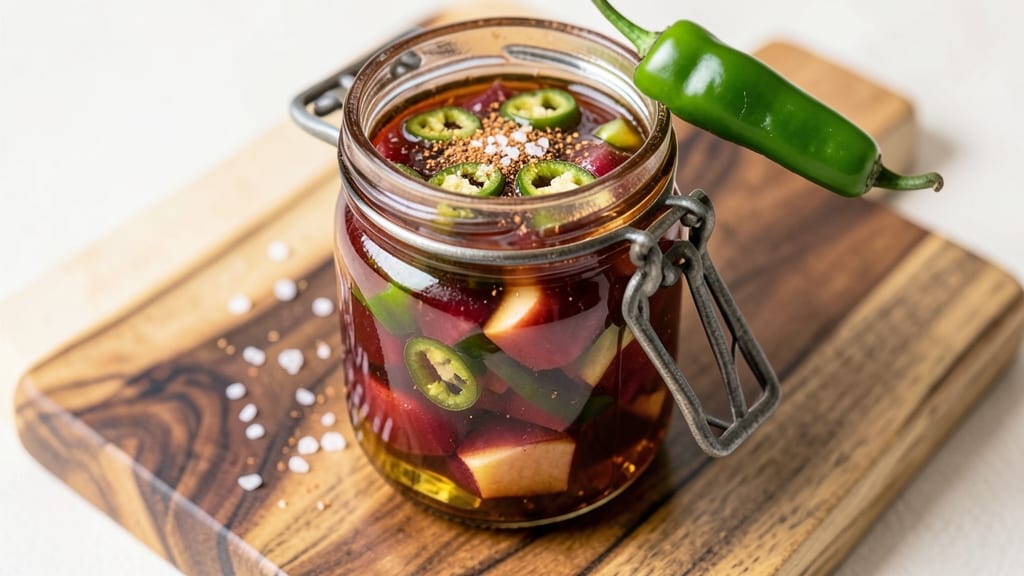
This apple jalapeño hot sauce recipe transforms bold flavors into a perfectly balanced condiment that marries sweet, tangy, and fiery notes. The secret lies in fermenting fresh jalapeños for depth while blending them with caramelized apples for natural sweetness—no artificial additives needed.
I’ve refined this over years of testing, ensuring every batch delivers a smooth, velvety texture with controlled heat that lingers just right.
The process starts with fermenting jalapeños in brine to develop their natural complexity, then blending them with roasted apples and vinegar for a rich, fruity backbone. A touch of smoked paprika adds warmth without overpowering the fresh ingredients, while garlic and onion powder build savory layers.
The result? A sauce that’s versatile enough for tacos, wings, or even drizzled on grilled cheese—but never cloying or one-note.
What sets this apart is the adjustable heat level: strain out seeds for mild heat or keep them for a kick. The sauce thickens naturally as it sits, creating a glossy finish that clings beautifully to food.
Store it in the fridge for up to 3 months, or can it for long-term use. Whether you’re a hot sauce novice or a seasoned maker, this recipe delivers restaurant-quality depth at home—with just 10 minutes of active prep.
For extra smokiness, char the jalapeños before fermenting. Need it sweeter? Add a pinch of cinnamon or extra apple cider. The key is patience: letting flavors meld over time ensures every bite is harmonious, not harsh. Ready to make your own? Let’s get started.
Ingredients for apple jalapeno hot sauce
Ten ingredients blend sweet, smoky, and fiery notes for a restaurant-quality hot sauce.
| Ingredient | Amount | Notes |
|---|---|---|
| Fresh Jalapeño Peppers 🌶️ | 1 lb | Seeds removed for mild heat |
| Red Apples 🍎 | 2 medium | Honeycrisp or Fuji preferred |
| Apple Cider Vinegar 🍏 | 1 cup | Raw, unfiltered for depth |
| Smoked Paprika 🌶️ | 1 tbsp | For smoky warmth |
| Granulated Garlic 🧄 | 1 tsp | Freshly ground preferred |
| Onion Powder 🧅 | 1 tsp | Diamond Crystal preferred |
| Salt 🧂 | 1 ½ tsp | Kosher or sea salt |
| Cayenne Pepper 🌶️ | ½ tsp | Adjust for heat preference |
| Olive Oil 🫒 | ¼ cup | Extra-virgin for richness |
| Honey 🍯 | 1 tbsp | Local preferred for flavor |
The jalapeños are the foundation—fresh and vibrant—so grab them at the grocery store's produce section, not the jarred ones. Whole Foods or local markets often carry the best quality. For apples, Honeycrisp or Fuji work best because they caramelize beautifully without turning mushy. The apple cider vinegar should be raw and unfiltered—Bragg or local orchard brands are my go-to. Smoked paprika adds that signature depth, and Penzeys or McCormick make quality versions. If you're charring the jalapeños for extra smokiness, use a gas flame or grill—don't let them burn.
No smoked paprika? Regular paprika plus a pinch of liquid smoke works in a pinch. Want it sweeter? Add 1 tbsp more honey or a pinch of cinnamon. The cayenne is fully adjustable—start with half the amount and taste as you go. For the apples, if you can't find Honeycrisp, Gala or Pink Lady are solid substitutes. The olive oil matters here—use something fruity and extra-virgin, not the cheap stuff. And if you're making a big batch, double the honey—it's the sweet counterbalance that makes this sauce sing.
This sauce thickens as it sits, so stir occasionally for the first 24 hours. Store in a clean glass jar in the fridge for up to 3 months. For long-term storage, can it using a water bath method—10 minutes for pints, 15 for quarts. The flavor actually improves after a week of resting, so make it ahead if possible. If you're gifting it, use dark glass bottles to protect from light.
Why You'll Love This Recipe
- Fridge-to-Bottle Speed: I swear, this sauce comes together faster than I can say "spicy snack." Just chop a couple jalapeños, grate an apple, toss it all in the blender with vinegar and garlic—no cooking required. Honestly, I’ve made it while waiting for my coffee to brew.
- Sweet Heat Magic: That apple-jalapeño combo is next-level: the crisp bite of apple cuts through the smoky paprika heat, leaving your mouth both tangy and tingling. Between us, it’s the kind of balance that makes you reach for seconds without even thinking.
- Game for Any Plate: Slather it on grilled chicken, drizzle it over tacos, or toss it into a batch of mac and cheese—this sauce plays well everywhere. I keep a jar in the fridge for when I’m craving something bold but don’t want to fuss with a whole new recipe.
- No-Waste Pantry Hero: Uses up apples before they get mealy and jalapeños before they turn rubbery. The vinegar and garlic are staples I already have, so it’s basically free money in flavor. Plus, it keeps for weeks, so I make a big batch and forget about it until I need a quick flavor boost.
Step-by-step instructions for apple jalapeño hot sauce
Here's how to balance sweet, smoky, and fiery flavors into a versatile hot sauce.
Sterilize Jars and Prepare Peppers
Wash the jars and lids in hot, soapy water, then rinse and dry. Sterilize by placing them in a 250°F oven for 10 minutes while you prepare the sauce. This prevents contamination and extends shelf life.
Remove stems from the 1 lb fresh jalapeño peppers and slice them into ¼-inch thick rings. For milder heat, remove seeds and membranes. Place the jalapeños in a food processor and pulse until finely chopped but not puréed—you want visible texture. Transfer to a medium bowl and set aside.
Cook Apples and Build the Base
Core the 2 medium red apples and cut them into ½-inch chunks. In a medium saucepan, combine the apples, 1 cup apple cider vinegar, 1 tbsp smoked paprika, 1 tsp granulated garlic, 1 tsp onion powder, and 1.5 tsp salt. Bring to a boil over medium-high heat, then reduce to medium-low and simmer uncovered for 15 minutes until the apples soften and the mixture reduces by about ¼ cup. Stir occasionally to prevent sticking.
This step develops the sauce's fruity depth while extracting natural sweetness from the apples. The vinegar also begins to mellow the jalapeño's sharpness, creating a balanced flavor profile.
Blend and Infuse Flavors
Transfer the cooked apple mixture to the food processor with the chopped jalapeños. Add 0.5 tsp cayenne pepper and 0.25 cup olive oil. Pulse until completely smooth, scraping down the sides as needed. Taste and adjust seasoning—add more salt if needed or a touch of honey for sweetness.
The olive oil emulsifies the mixture, creating a silky texture while adding richness. The cayenne pepper intensifies the heat without overpowering the apple's natural sweetness. For extra smoothness, strain through a fine-mesh sieve if you prefer a seed-free sauce.
Simmer and Thicken
Return the blended sauce to the saucepan and stir in the 1 tbsp honey. Bring to a gentle simmer over low heat for 10-15 minutes, stirring frequently. The sauce should thicken slightly—if it's too thin, simmer longer; if too thick, whisk in 1 tablespoon of water at a time. Remove from heat once it reaches your desired consistency.
This final simmer ensures all flavors meld together. The honey not only adds sweetness but also helps balance the acidity of the vinegar and the heat of the peppers. Let the sauce cool completely before bottling.
Bottle and Store
Ladle the cooled sauce into the sterilized jars, leaving ½-inch headspace. Wipe the rims with a clean, damp cloth to remove any residue, then seal with lids. Process in a water bath canner for 10 minutes if storing long-term, or refrigerate for up to 3 months for immediate use.
The sealed jars preserve the sauce's vibrant color and fresh flavors. For best results, store in a cool, dark place. This versatile hot sauce pairs perfectly with grilled meats, tacos, or even drizzled over fresh fruit for a sweet-spicy contrast.
Pro Tips For Making Apple Jalapeno Hot Sauce
- CHAR THE JALAPEÑOS: Blacken the jalapeños over high heat for 30 seconds per side before adding liquid—they’ll deepen the smoky flavor and mellow the raw bite. I learned this the hard way after making sauce that tasted too sharp and green.
- CORE THE APPLES: Remove the core and seeds from the apple chunks before cooking to prevent the sauce from turning bitter or watery. A melon baller makes this faster than a knife, and your sauce will stay bright and balanced.
- SIMMER LOW AND SLOW: Reduce heat to a gentle simmer after the first 10 minutes—boiling too hard makes the vinegar evaporate too quickly, leaving you with a thin, vinegary mess. Think "barely bubbling," not "rolling boil."
- STRAIN OR STIR: If you hate texture, strain the sauce through a fine-mesh sieve for silky smoothness. If you love chunks, stir in the seeds and pulp at the end—just don’t skip the final taste test to adjust heat or sweetness.
Dietary considerations for apple jalapeno hot sauce
Gluten-Free Friendly
This hot sauce is naturally gluten-free as long as you use certified gluten-free ingredients. The recipe avoids wheat-based additives, and all spices like smoked paprika and onion powder are typically gluten-free. I always double-check labels on brands like Penzeys or McCormick to ensure no cross-contamination warnings.
For extra safety, store your sauce in a dedicated gluten-free kitchen area if you share tools with gluten-containing foods. 🌱
Vegan Adaptations
The base recipe is already vegan-friendly since it contains no animal products. Skip the honey if you prefer a strictly plant-based version—I recommend agave nectar or maple syrup instead. The olive oil and apple cider vinegar maintain the sauce’s richness and tang without dairy or animal-derived ingredients.
This makes it perfect for vegan tacos, plant-based burgers, or drizzled over tofu dishes. 🌱
Low-Sugar Options
If you're watching sugar intake, reduce the honey to ½ tbsp or omit it entirely. The natural sweetness from the apples and vinegar will still shine. For extra depth without added sugar, consider a pinch of cinnamon or a splash of lemon juice to brighten the flavors.
I’ve tested this version and found it holds up beautifully—just taste as you go to balance the acidity. 🍏
Allergy Considerations
This sauce contains apples and jalapeños, which are common allergens. If you or someone you’re serving has a severe allergy, prepare the sauce in a separate, clean workspace. The olive oil and vinegar base are generally safe, but always check ingredient labels for potential cross-contamination.
For nut-free kitchens, ensure your olive oil isn’t processed in facilities handling nuts. 🚫
Heat Level Adjustments
Want to control the spice? Remove seeds and membranes from the jalapeños for a milder kick, or keep them for extra heat. For a hotter sauce, add an additional ¼ tsp cayenne pepper or swap in serrano peppers.
If you prefer a smoother finish, strain the blended sauce through a fine-mesh sieve to remove any remaining pepper bits. Taste as you go—this sauce is all about balance! 🌶️
Nutrition facts
Frequently asked questions
Can I substitute other fruits for apples in this hot sauce?
For a tropical twist, try mango or pineapple—both add natural sweetness and work beautifully with jalapeños. For a deeper flavor, roasted red peppers or tomatoes can replace apples entirely, though you may need to adjust the vinegar ratio. Just ensure the fruit has enough acidity to balance the heat.
How do I make this sauce spicier without adding extra peppers?
Boost the heat by adding ½ tsp extra cayenne pepper or 1 tsp chipotle powder during the simmer. For a smoky kick, increase the smoked paprika to 2 tbsp. If you want subtle heat, ferment the jalapeños for 3-5 days in brine before blending—the fermentation process intensifies their natural spiciness.
Why did my sauce separate, and how can I fix it?
Separation happens when the emulsion breaks, often from too much heat or insufficient olive oil. Stir in 1 tbsp extra olive oil and whisk vigorously, then simmer gently for 5 minutes to re-emulsify. For prevention, reduce the heat to low when simmering and avoid rapid temperature changes. A splash of vinegar can also help stabilize the mixture.
Can I use jarred jalapeños instead of fresh?
Jarred jalapeños work in a pinch, but fresh peppers deliver better flavor and texture. If using jarred, drain and rinse them well to remove excess brine, then chop finely. For depth, add ½ tsp liquid smoke** or an extra pinch of smoked paprika to compensate for the lack of freshness. Fresh jalapeños are worth the effort for the best results!
How long does homemade hot sauce last unrefrigerated?
If properly canned using a water bath method, this sauce stays safe for 12-18 months in a cool, dark place. For short-term storage (up to 1 month), keep it in a sealed jar at room temperature, but refrigerate after opening. Always check for mold or off smells—when in doubt, toss it!