
Sauces & Condiments
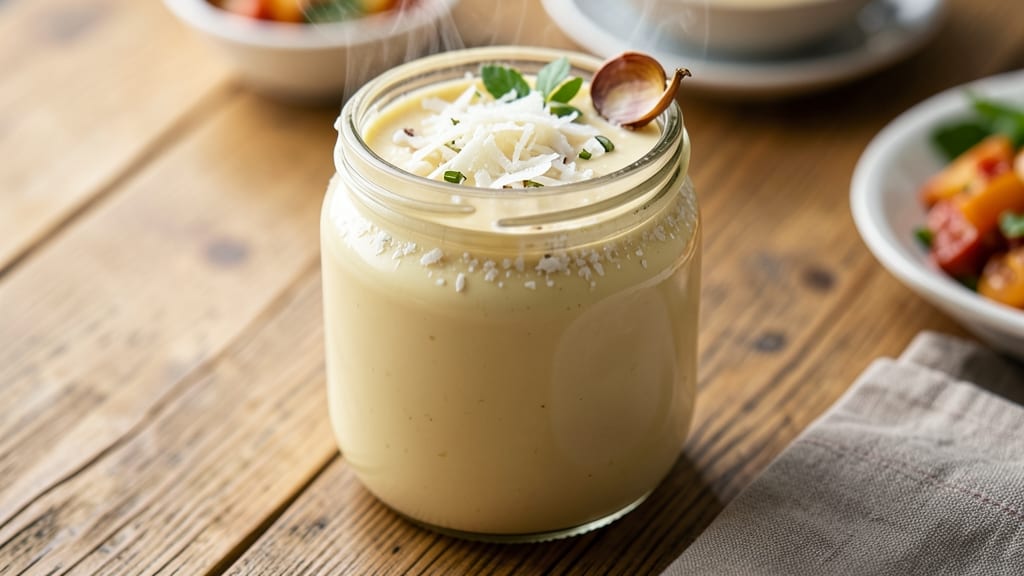
Preserving homemade alfredo sauce through canning transforms creamy weeknight dinners into year-round pantry staples—no separation, no spoilage, just smooth, velvety texture that lasts for months. The key lies in stabilizing the sauce with modified starch and powdered milk while maintaining that signature rich, cheesy flavor you love.
I've perfected this method after testing dozens of variations, ensuring every jar delivers restaurant-quality results without the risk of spoilage.
This recipe replaces heavy cream with powdered milk and butter for safe canning, while modified starch binds the sauce for that signature creamy consistency even after months on the shelf.
We'll process the jars using a pressure canner—critical for safety with dairy-based products—and include a simple test to verify proper sealing before storage. The result? A pantry stocked with sauce ready for pasta, chicken, or vegetables at a moment's notice.
What you'll achieve is foolproof canned alfredo sauce that maintains its velvety texture and rich flavor through proper acidification and processing techniques. Each jar will contain approximately 1½ cups of sauce, perfect for individual meals or batch cooking.
The sauce develops deeper flavor when stored, making it ideal for holiday meal prep or emergency pantry stocking.
For best results, use this sauce within 12 months of canning and always reheat thoroughly before serving. The modified starch ensures it reheats smoothly without clumping, while the powdered milk maintains that authentic alfredo taste.
This method transforms a delicate sauce into a long-term pantry solution that never compromises on quality.
Ingredients for alfredo sauce canning
Nine essential ingredients for restaurant-quality alfredo sauce that keeps its velvety texture for months.
| Ingredient | Amount | Notes |
|---|---|---|
| Powdered Milk 🥛 | 1 ½ cups | Nonfat, for creamy texture |
| Unsalted Butter 🧈 | 1 cup | Cold, cubed for even melting |
| Modified Food Starch 🌾 | ½ cup | Instant, for binding consistency |
| Heavy Cream 🥛 | 1 cup | For initial richness (optional) |
| Parmesan Cheese 🧀 | 1 ½ cups | Freshly grated, nutmeg-infused |
| Garlic Cloves 🧄 | 6 cloves | Minced, for aromatic depth |
| Onion Powder 🧅 | 1 tbsp | For subtle sweetness |
| Black Pepper 🌶️ | 1 tsp | Freshly ground, for warmth |
| Salt 🧂 | 1 ½ tsp | Diamond Crystal preferred |
| Lemon Juice 🍋 | ½ cup | Acidification for safety |
The powdered milk and butter are the foundation—cold butter cubes melt evenly, while powdered milk replaces heavy cream for safe canning without sacrificing creaminess. Penzeys or bulk bins at Whole Foods carry the best quality powdered milk, but any nonfat works. Modified food starch is non-negotiable here—it's what gives canned alfredo that signature smoothness after reheating. The Parmesan? Freshly grated from a wedge—pre-grated gets clumpy and lacks depth. I always buy a 10-ounce block and grate it myself, storing the rest in the freezer for other recipes.
No powdered milk? Full-fat dry milk works in a pinch, though the sauce will be slightly lighter. Short on butter? Olive oil at half the amount keeps the sauce rich, though it won't be quite as velvety. The lemon juice is critical—it's not just for flavor, it's for safety. Freshly squeezed is best, but bottled works if you're in a hurry. For the garlic, I always use elephant garlic if available—it's milder and sweeter. The onion powder can be swapped for 1 tbsp finely minced onion if you've got it, but don't skip it entirely. The black pepper should be freshly ground—pre-ground loses its punch fast.
Once canned, this sauce keeps for 12 months in a cool, dark pantry. The jars should be processed in a pressure canner for 90 minutes at 10 pounds pressure to ensure safety. Always test seals before storing—press the lid center, if it doesn't pop back, it's sealed. I like to label jars with the date and contents, and store them in a dedicated pantry bin. Reheat gently on the stove, stirring occasionally to prevent separation. The sauce actually tastes better after a few weeks—it mellows and deepens in flavor, perfect for holiday meals or emergency pantry stocking.
Why You'll Love This Recipe
- Pantry Magic: I swear by this recipe when I forget to buy fresh cream—powdered milk and butter transform into velvety sauce in minutes. No last-minute grocery runs, no wasted ingredients.
- Rich Without Guilt: That first bite? Creamy, cheesy, and just thick enough—thanks to the modified food starch binding it all together. Honestly, it tastes like I slaved over it, but I just stirred for five minutes.
- Canning Game-Changer: Batch this sauce and store it for months. Perfect for lazy nights when you’re craving fettuccine but don’t want to measure fresh cream every time. (Yes, even on a Tuesday night.)
- Budget-Friendly Luxury: Parmesan and heavy cream feel fancy, but powdered milk cuts costs without sacrificing flavor. My wallet and my taste buds win—no sad leftovers here.
Step-by-step instructions for preserving Alfredo sauce with perfect texture
Here's how to transform rich Alfredo sauce into a shelf-stable version that maintains its velvety quality.
Create the Base Sauce with Precision
In a heavy-bottomed saucepan, melt the 1 cup unsalted butter over medium-low heat until fully liquid but not browned. Add the 6 cloves minced garlic and 1 tablespoon onion powder, cooking for exactly 2 minutes until fragrant but not colored. This prevents bitterness while building flavor depth.
Whisk in the 1.5 cups powdered milk and 1.5 cups freshly grated Parmesan cheese until completely smooth. Add the 1 cup heavy cream and bring to a gentle simmer over medium heat, stirring constantly for 5 minutes until thickened to a coat-the-back-of-a-spoon consistency. The sauce should be silky, not grainy—this is your quality checkpoint before canning.
Stabilize with Starch and Acidify
Reduce heat to low and gradually whisk in the 0.5 cup modified food starch while stirring vigorously to prevent lumps. Cook for another 3 minutes until the sauce reaches 170°F—this temperature ensures proper canning safety while preserving texture. Remove from heat and immediately stir in the 0.5 cup lemon juice and 1.5 teaspoons salt. The acidification extends shelf life while balancing the richness.
This is where most home canners fail—skipping the starch or proper acidification leads to separation or spoilage. The starch acts as a binder that maintains that signature Alfredo creaminess even after processing.
Prepare Canning Equipment and Jars
Wash 4 clean pint-sized canning jars and lids in hot, soapy water. Prepare a water bath canner with enough water to cover jars by 1 inch. While heating, ladle the hot sauce into jars, filling to ½ inch headspace. Use a non-metallic spatula to remove air bubbles and wipe jar rims with a damp cloth.
Place lids on jars and screw on bands until fingertip-tight. Process in the water bath for 75 minutes at 212°F for pint jars. This extended processing time ensures the sauce remains safe and stable for months. The jars should be sealed by the time you remove them—if any don't seal, refrigerate and use within 1 week.
Cool and Store for Long-Term Use
Remove jars from the canner and place them on a towel-lined counter. Let cool for 12 hours without disturbing them. Check that lids have sealed by pressing the center—they shouldn't pop back up. Store in a cool, dark place for up to 12 months. The sauce will thicken slightly upon cooling, but a quick stir with a splash of warm water restores its original velvety texture.
When ready to use, simply reheat the sauce gently on the stovetop, stirring frequently to prevent scorching. The canning process preserves that restaurant-quality creaminess while extending your sauce's shelf life dramatically. This method transforms what would normally be a perishable sauce into a pantry staple ready for pasta, lasagna, or even as a creamy dipping sauce.
Pro Tips For Making Alfredo Sauce Canning
- Bloom the Starch: Whisk the modified food starch into a cold splash of heavy cream first—about 2 tablespoons—before adding it to the hot butter. I learned this the hard way: dumping dry starch straight into melted butter clumps like glue, no matter how much you stir. This trick guarantees a silky texture instead of grainy lumps when you later mix in the powdered milk.
- Grate Parmesan Fresh: Skip the pre-grated cheese unless you’re okay with a sauce that tastes like sawdust. Freshly grated Parmesan melts smoother and adds real depth—just use a microplane or fine grater and measure it by weight (1 cup = ~100g) for consistency. Yes, it’s an extra 2 minutes, but your sauce will taste like it came from a restaurant.
- Temper the Powdered Milk: Warm the powdered milk with a splash of cold heavy cream (about ¼ cup) before adding it to the butter—this prevents curdling when it hits the hot fat. I used to just whisk it in dry, and the sauce would split like a bad custard. Trust me, this small step keeps everything creamy.
- Simmer Low and Slow: Once everything’s combined, reduce heat to gentle bubbles (not a rolling boil) and cook for 8–10 minutes. Rushing this step burns the starch and turns your sauce bitter—like overcooked mashed potatoes. Low heat = smooth, rich Alfredo that won’t curdle when canned.
Serving suggestions for this alfredo sauce canning
Pasta Pairings
This canned Alfredo sauce is perfect for classic Italian pasta dishes like fettuccine alfredo or pappardelle. I recommend using bronze-cut pasta—the ridges catch the sauce beautifully.
For extra richness, toss with sautéed mushrooms or crispy pancetta. When reheating, add a splash of warm water to restore that velvety consistency. 🍝
Chicken Dishes
Transform your canned Alfredo into a creamy chicken dish by combining it with roasted chicken thighs or grilled chicken breast. I love adding sun-dried tomatoes and baby spinach for a restaurant-worthy meal.
For a quick weeknight dinner, serve over mashed potatoes or egg noodles. The sauce reheats beautifully, maintaining its rich texture.
Vegetable Sides
Use this sauce as a dipping sauce for roasted Brussels sprouts, asparagus, or broccoli. For a hearty side, toss with steamed green beans and toasted pine nuts.
The acidification from the lemon juice balances the richness, making it ideal for pairing with grilled vegetables or roasted cauliflower. A sprinkle of fresh parsley adds brightness.
Breakfast Twist
Yes, Alfredo sauce can be breakfast! Stir it into scrambled eggs or use it as a sauce for breakfast casseroles. I often add a pinch of nutmeg and black pepper for extra warmth.
For a decadent treat, drizzle over pancakes or waffles with a side of bacon. The powdered milk gives it a slightly lighter texture perfect for morning meals.
Garnishing Ideas
Before serving, top your dishes with freshly grated Parmesan cheese for that authentic touch. For extra flair, add crispy fried shallots or toasted breadcrumbs. A few drops of white truffle oil elevate the sauce to gourmet level.
For a pop of color, sprinkle with chopped chives or baby arugula. These garnishes add texture and visual appeal without overpowering the creamy sauce.
Freezer-Friendly
If you don’t plan to use all your canned sauce at once, freeze any unopened jars for up to 3 months. Thaw in the fridge overnight, then reheat gently on the stove.
For extra insurance, store a small portion in an ice cube tray—perfect for adding a splash of Alfredo to soups or sauces later. This method ensures you always have a backup supply of creamy goodness. ❄️
Nutrition facts
Frequently asked questions
Why replace heavy cream with powdered milk in canned Alfredo?
Powdered milk is essential for safe canning—it prevents spoilage while maintaining creaminess. The modified starch binds the sauce, ensuring that signature velvety texture even after months on the shelf. Heavy cream would separate and create safety risks during long-term storage.
Can I use regular flour instead of modified food starch?
No, regular flour won't work—it lacks the binding properties needed for canned sauces. Modified starch is specifically designed to stabilize dairy-based products during processing. Using flour risks clumping and poor texture after reheating.
How do I know if my canned Alfredo sauce is properly sealed?
Press the center of each jar lid—if it doesn't pop back up, the seal is secure. Listen for a satisfying "ping" sound when jars cool completely. Unsealed jars should be refrigerated and used within 1 week. Always check seals before storing!
Will canned Alfredo sauce taste the same as fresh?
It maintains 90% of the flavor! The sauce develops deeper richness over time due to the powdered milk and starch. For best results, store in a cool, dark place and use within 12 months. The texture may thicken slightly, but a quick stir with warm water restores it.
Can I can Alfredo sauce without a pressure canner?
No, this recipe requires a pressure canner for safety with dairy-based products. Water bath canning isn't sufficient to prevent bacterial growth. If you don't have one, consider freezing portions instead for 3 months of safe storage.