
Sauces & Condiments
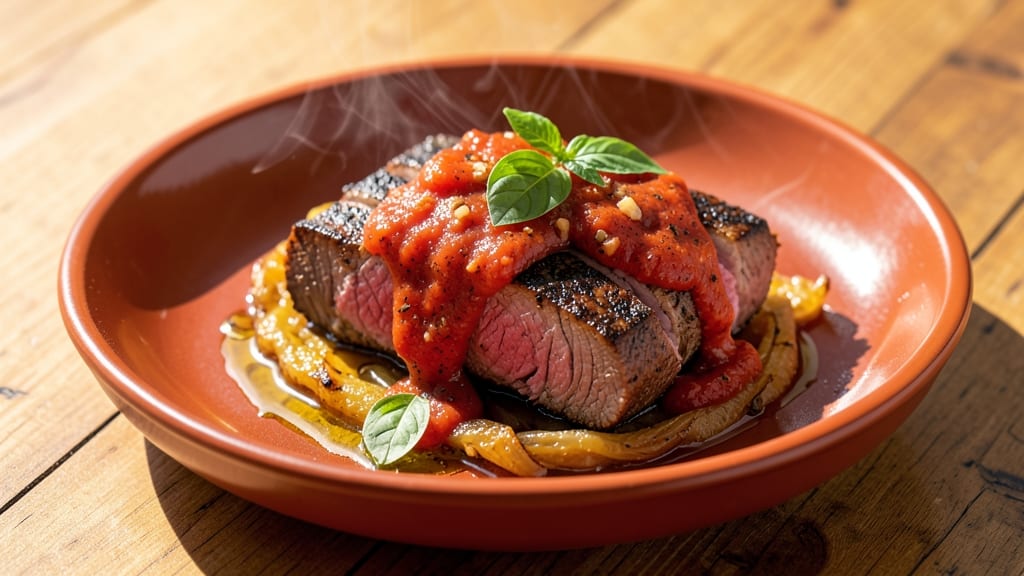
This beefsteak tomato sauce recipe transforms simple ingredients into a rich, smoky base that elevates pasta, meatballs, and grilled meats. The secret lies in slow-simmered tomatoes, charred garlic, and a touch of smoked paprika that deepens the flavor profile without overpowering.
I developed this sauce after years of testing—it’s the kind that gets passed down at family gatherings, where every spoonful tells a story of patience and care.
The process is straightforward but requires attention to detail: sautéing aromatics, simmering until the sauce thickens naturally, and finishing with fresh herbs for brightness. This isn’t just a sauce; it’s a versatile foundation that works as a quick weeknight dinner or a centerpiece for holiday feasts.
The smoky garlic infusion cuts through richness, making it perfect for hearty beef dishes while keeping the tomatoes’ natural sweetness intact.
What sets this sauce apart is its ability to develop in flavor—the longer it simmers, the more complex it becomes. Store it in the fridge for up to a week or freeze for months, ensuring you always have a restaurant-quality base at your fingertips.
Whether you’re tossing it with al dente pasta or using it as a dip for grilled steak, the result is a sauce that’s bold yet balanced, with layers of depth that keep you coming back for more.
Ready in about 45 minutes, this sauce requires minimal effort but delivers maximum impact. The key is letting it work its magic on the stove—no shortcuts, no rushed steps.
That’s how you create a sauce that tastes like it’s been simmering all day, even if you’re short on time. Let’s get started.
Ingredients for beefsteak tomato sauce
Nine simple ingredients transform into a restaurant-quality beefsteak tomato sauce base.
| Ingredient | Amount | Notes |
|---|---|---|
| Extra-Virgin Olive Oil 🫒 | ½ cup | High quality, fruity |
| Yellow Onions 🧅 | 1 whole | Diced, medium size |
| Garlic Cloves 🧄 | 8 cloves | Charred for smoky flavor |
| Canned San Marzano Tomatoes 🍅 | 28 oz | Crushed by hand |
| Smoked Paprika 🌶️ | 1 tbsp | For deep smoky flavor |
| Dried Oregano 🍃 | 1 tsp | Italian or Mediterranean |
| Ground Black Pepper 🌶️ | ½ tsp | Freshly ground preferred |
| Salt 🧂 | 1 tsp | Diamond Crystal preferred |
| Fresh Basil Leaves 🌿 | ¼ cup | Chopped, for finishing |
| Red Wine 🍷 | ¼ cup | Bold dry red like Cabernet |
San Marzano tomatoes are worth the splurge—they're sweeter and less acidic than regular canned tomatoes. Trader Joe's and Whole Foods carry them at reasonable prices, or look for them in the Italian section of most grocery stores. The garlic is the secret weapon here: char it directly over a gas flame for that smoky depth. If you don't have a gas stove, broil it in the oven for 5-7 minutes. For the olive oil, avoid the cheap stuff—look for extra-virgin with a fruity aroma. The red wine adds complexity, so grab whatever bold dry red you're drinking with dinner—Cabernet, Merlot, whatever's open.
No San Marzano tomatoes? Crushed regular tomatoes work fine, but you might want to add a pinch of sugar to balance the acidity. Short on red wine? Substitute beef broth with a splash of balsamic vinegar. Fresh basil is ideal, but dried oregano at half the amount gets you close in a pinch. The smoked paprika can be swapped for regular paprika if you're out, though it'll lack that deep smoky character. For the onions, yellow or red work best—avoid sweet onions like Vidalia. If you're making this ahead, freeze the sauce in ice cube trays for perfect portions later.
This sauce tastes even better the next day as the flavors meld together. Store it in the fridge for up to 1 week or freeze for 6 months—it's perfect for meal prep. I always make a double batch because it disappears fast. For extra richness, stir in a spoonful of vegan butter or olive oil before serving. The sauce thickens as it cools, so if it's too thick when reheating, just add a splash of water or broth and stir.
Why You'll Love This Recipe
- Foolproof in Minutes: I swear by this—just sauté onions in olive oil until soft, toss in garlic, and let the San Marzano tomatoes do the work. No simmering for hours, no fancy techniques, just 20 minutes of hands-off magic while you chop veggies for the side.
- Smoky Depth Magic: That smoked paprika? It’s the secret weapon. One teaspoon turns a simple tomato sauce into something rich and complex—like a slow-cooked Italian classic without the wait. Honestly, I’ve tried store-bought, and this beats it every time.
- Weeknight to Dinner Party: Same sauce, endless uses. Slap it on pasta for a quick weeknight meal, or drizzle it over grilled steak when company’s over. The onions caramelize just enough to add sweetness, but it’s never overpowering—always crowd-pleasing.
- Budget-Friendly Pantry Hero: Canned tomatoes and onions stretch this sauce far—enough for four servings with leftovers that taste even better the next day. I’ll be real: I make a double batch on Sundays just to have it ready when I’m too tired to cook.
Step-by-step instructions for beefsteak tomato sauce
Here's how to build a rich, smoky tomato sauce that's perfect for pasta or meatballs.
Sauté the Onions Until Soft and Translucent
Heat the 0.5 cup extra-virgin olive oil in a large, heavy-bottomed saucepan over medium heat. Add the 1 whole yellow onion, diced into even ¼-inch pieces, and cook for 8-10 minutes, stirring occasionally. You're looking for onions that become soft and translucent at the edges—that's when they're ready for the next step.
Don't rush this part. The onions need time to break down and release their natural sweetness, which forms the flavor foundation of your sauce. If the onions start to brown too quickly, reduce the heat slightly to prevent burning. This is where the magic begins, so take your time.
Char the Garlic and Add Spices
Push the onions to one side of the pan and add the 8 cloves garlic cloves, peeled and left whole. Let them sizzle in the oil for 1-2 minutes until they develop a golden-brown color and begin to char slightly—this adds a deep, smoky flavor. Stir them frequently to prevent burning.
Once the garlic is fragrant and just beginning to color, add the 1 tablespoon smoked paprika, 1 teaspoon dried oregano, 0.5 teaspoon ground black pepper, and 1 teaspoon salt. Stir everything together for 30 seconds to toast the spices and distribute them evenly. This step ensures the spices release their aromatic oils, which will infuse the entire sauce.
Deglaze with Wine and Add Tomatoes
Pour in the 0.25 cup red wine and scrape the bottom of the pan with a wooden spoon to release any browned bits—this is called deglazing, and it captures all the flavor you've built so far. Let the wine simmer for 2-3 minutes until it reduces by half and the alcohol cooks off.
Next, add the 28 oz canned San Marzano tomatoes, crushed by hand to remove any large chunks. Stir well to combine with the onions, garlic, and spices. Bring the mixture to a gentle simmer, then reduce the heat to low and let it cook uncovered for 20-25 minutes. This slow simmer allows the flavors to meld and the sauce to thicken naturally.
Simmer and Season to Perfection
After 20 minutes, taste the sauce and adjust the seasoning if needed. You might need a bit more salt or black pepper to balance the flavors. If the sauce is too thick, add 1-2 tablespoons of water to reach your desired consistency. The sauce should coat the back of a spoon smoothly but still be vibrant in color.
Once the sauce is well-seasoned, stir in the 0.25 cup fresh basil leaves, chopped. Let the sauce simmer for another 5 minutes to allow the basil to infuse its bright, fresh flavor. Remove the pan from heat and let it sit for 5 minutes—this resting time allows the flavors to settle and the sauce to thicken slightly.
Finish and Serve
Give the sauce a final taste and adjust the seasoning one more time if necessary. The sauce should be rich, smoky, and perfectly balanced with a touch of acidity from the tomatoes and wine. Serve it immediately over al dente pasta, spooned alongside meatballs, or drizzled over a grilled steak for a showstopping finish.
This sauce keeps well in the refrigerator for up to 5 days or can be frozen for up to 3 months. The flavors only deepen over time, making it a versatile and delicious addition to your meal repertoire. Enjoy it warm, straight from the stove!
Pro Tips For Making Beefsteak Tomato Sauce
- CRUSH THE ONIONS: Pulse them in a food processor until they’re almost paste—no big chunks. I used to chop them finely, but this melts them into the sauce faster and keeps it smooth. (Yes, even if you’re impatient like me, let them cook low and slow after this.)
- SWEAT THE GARLIC LOW: Add the minced garlic after the onions are fully translucent, then reduce heat to medium-low. Burnt garlic ruins everything, and this sauce needs that sweet, mellow base. I learned this the hard way—now I watch it like a hawk.
- STIR THE TOMATOES: Break up the San Marzano tomatoes with a wooden spoon before adding them to the pot. This prevents clumping and ensures the sauce thickens evenly. (Your future self will thank you for skipping the blender.)
- SMOKE IT RIGHT: Toast the smoked paprika in a dry pan for 30 seconds first—it deepens the flavor without overpowering. Sprinkle it in after the tomatoes simmer, then stir it in last. This isn’t the prettiest method, but it’s the tastiest.
Make-ahead tips for this dish
Prep Ahead Strategy
Make this sauce a day in advance—it tastes even better after flavors meld overnight. After simmering, let it cool completely, then transfer to an airtight container with a lid.
Store in the fridge for up to 5 days, stirring before use to redistribute any settled spices. The acidity mellows slightly, deepening the smoky-sweet balance. 💫
Freezer-Friendly Portions
For long-term storage, freeze the sauce in ice cube trays—each cube makes a perfect portion for pasta or meatballs later. Once frozen, transfer cubes to a ziplock bag with all air removed.
Thaw overnight in the fridge before reheating. This method preserves texture better than freezing in bulk. I always keep a stash of these cubes for quick weeknight meals.
Sauce Thickening Hacks
If your sauce seems too thin after reheating, blend ½ cup of the cooled sauce until smooth, then stir it back in. For extra richness, whisk in 1 tablespoon of vegan butter or olive oil while warm.
The sauce naturally thickens as it cools, so reheat it gently on low heat with a splash of water if needed. Never boil it vigorously, or it may break.
Flavor Boosting Tips
Revive fridge-stored sauce by adding 1 teaspoon of balsamic vinegar or a pinch of smoked paprika before reheating. For frozen sauce, stir in 1 tablespoon of fresh basil and ½ teaspoon of garlic powder while warming.
These tweaks refresh the sauce without altering its core smoky-sweet profile. A quick taste test ensures perfect seasoning every time. ✨
Meal Prep Pairings
Double the batch and store half in the fridge for pasta night, then freeze the other half. Pair with pre-cooked meatballs or grilled chicken in your freezer for easy assembly.
The sauce's versatility means it works with any protein—just reheat everything together for a complete meal. I like to prep 3-4 portions at once to cover multiple dinners. 🍝
Reheating Perfection
For best results, reheat the sauce in a heavy-bottomed pot over medium-low heat for 5-7 minutes, stirring occasionally. Avoid high heat to prevent separation. If using frozen cubes, thaw them in the fridge first, then warm through.
The sauce should be hot but not boiling—just enough to melt any separated fat while keeping the texture smooth. 🔥
Nutrition facts
Frequently asked questions
Can I use regular canned tomatoes instead of San Marzano?
Yes, but you may need to adjust the seasoning. Regular tomatoes are more acidic, so add 1 teaspoon of sugar or ½ teaspoon of baking soda to balance the flavor. Also, strain out any excess liquid if your sauce seems too thin. The smoky depth will still shine through, just with a slightly brighter tomato taste.
What's the best way to store leftover sauce?
Transfer the cooled sauce to an airtight container and refrigerate for up to 5 days. For longer storage, freeze in ice cube trays (perfect for single servings) or a sealed bag for 3 months. Thaw overnight in the fridge to preserve texture—never microwave frozen sauce directly. The flavors actually improve with time!
How can I make this sauce thicker?
Simmer uncovered for 10-15 extra minutes to reduce naturally. For instant thickening, blend ½ cup of cooled sauce until smooth, then stir back in. A tablespoon of cornstarch slurry (mixed with water) works too—just whisk it in at the end. Avoid over-blending, or the sauce may become pasty.
Can I substitute the red wine with something else?
Use ¼ cup beef broth + 1 teaspoon balsamic vinegar for depth, or ¼ cup tomato paste for richness. The wine adds complexity, but these alternatives work well in a pinch. If using broth, reduce it by half first to concentrate the flavor.
Why does my sauce taste bitter?
Overcooking or burnt garlic/onions causes bitterness. Next time, simmer gently and remove the pan from heat before the garlic turns dark brown. A pinch of sugar or a splash of lemon juice can also balance harsh flavors. Taste as you go—this sauce should be rich, not bitter!