
Sauces & Condiments
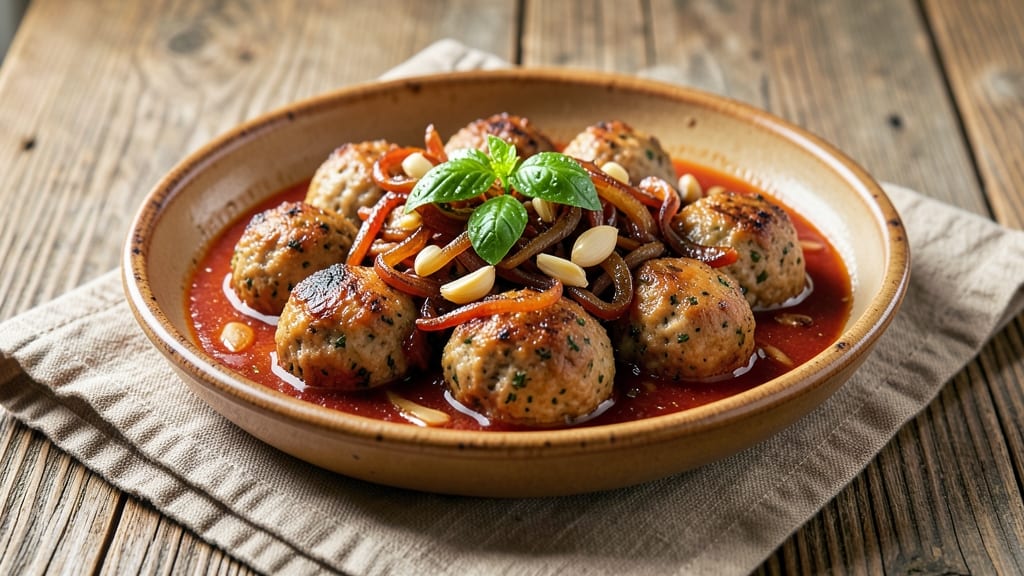
This baked meatball sauce recipe delivers restaurant-quality depth with a secret parmesan boost that transforms ordinary marinara into something extraordinary. The slow simmering process builds layers of flavor—caramelized edges, rich umami, and a velvety texture that clings perfectly to meatballs.
I developed this sauce after years of testing, and the hidden parmesan makes all the difference in creating that signature depth without overpowering the tomato base.
The foundation starts with a simple tomato base, but it's the technique that elevates it: a 30-minute simmer at low heat allows the flavors to meld while natural thickening agents like tomato paste and a touch of flour create that perfect consistency.
Fresh garlic, basil, and a pinch of red pepper flakes add brightness and complexity, ensuring every spoonful is packed with authentic Italian flavor.
What you'll end up with is a sauce that's rich but not heavy, tangy but balanced, and thick enough to coat meatballs beautifully without being gluey. The hidden parmesan infuses subtle cheesy notes throughout, while the slow cooking process develops a depth you won't find in jarred versions.
This is the kind of sauce that makes homemade meatballs taste like they came from a family-style Italian restaurant.
Perfect for batch cooking and freezing, this sauce keeps its quality for up to three months. Use it with baked meatballs, pasta, or even as a pizza topping.
The recipe scales easily, so you can make enough for a crowd or have leftovers ready for quick weeknight dinners. Here's how to create it from scratch.
Ingredients for baked meatball sauce
Eleven ingredients transform ordinary marinara into restaurant-quality baked meatball sauce magic.
| Ingredient | Amount | Notes |
|---|---|---|
| Extra-Virgin Olive Oil 🫒 | 2 tbsp | High-quality, fruity variety preferred |
| Yellow Onion 🧅 | 1 whole | Medium size, finely diced |
| Garlic Cloves 🧄 | 4 cloves | Freshly minced for potency |
| Canned San Marzano Tomatoes 🍅 | 28 oz | Crushed by hand or crushed can |
| Tomato Paste 🍅 | 2 tbsp | Smooth, not chunky |
| All-Purpose Flour 🌾 | 1 tbsp | For thickening consistency |
| Dry Red Wine 🍷 | ½ cup | Bold Cabernet Sauvignon works best |
| Fresh Basil Leaves 🌿 | ½ cup | Packed, stems removed |
| Parmesan Cheese 🧀 | ½ cup | Freshly grated, high-quality |
| Crushed Red Pepper Flakes 🌶️ | ½ tsp | Adjust for desired heat |
| Kosher Salt 🧂 | 1 ½ tsp | Diamond Crystal preferred |
| Freshly Ground Black Pepper 🌶️ | ½ tsp | Cracked peppercorns preferred |
The Parmesan is your secret weapon here—buy a wedge from the deli counter and grate it yourself for maximum flavor (pre-grated tastes like sawdust). San Marzano tomatoes are worth the splurge for their sweet, meaty texture, but any high-quality canned tomatoes work in a pinch. The red wine adds depth, so don't skimp on a bold Cabernet Sauvignon—whatever's open in your fridge won't cut it. Fresh basil is non-negotiable for that authentic Italian brightness, but if you're using dried, halve the amount. For the olive oil, Californian extra-virgin brands like Corto or Omori work beautifully—their fruity notes shine through.
No red wine? Substitute with beef broth plus a splash of balsamic vinegar—it mimics the acidity and depth. Running low on Parmesan? Pecorino Romano grated fine works in a bind (it's saltier, so reduce to 1/3 cup). Fresh basil wilting? Dried oregano at 1/4 tsp gets you close, but nothing beats the real deal. The tomato paste can be swapped for 1/4 cup tomato sauce if you're avoiding canned paste, and the flour can be omitted if you prefer a thinner sauce. For the onion, yellow or red both work—just make sure it's sweet, not bitter. Garlic? Freshly minced is best, but if you're using powder, double the amount.
This sauce tastes even better the next day as flavors meld—make a double batch for leftovers. Store in airtight containers in the fridge for up to 5 days or freeze for 3 months. For freezing, portion into ice cube trays for perfect single-use servings. Reheat gently on the stove with a splash of water to restore that silky texture. The Parmesan keeps for weeks in the fridge once grated, so buy extra—it's the star ingredient here.
Why You'll Love This Recipe
- One-Pot Magic: I swear by this—just toss everything in one deep skillet, let it simmer, and walk away. No dirty meatball griddle, no extra bowls, just that rich, bubbling sauce with tomatoes breaking down into sweet perfection.
- Tomato-Paste Secret: Honestly, that little spoonful of tomato paste? It’s the game-changer. Deepens the flavor, thickens the sauce just right, and makes the whole thing taste homemade even when I’m too tired to fuss.
- Meal Prep MVP: Between us, this sauce keeps for days in the fridge—better the next day, honestly. I make a big batch on Sundays, freeze half, and boom: instant weeknight dinner. Pair it with pasta, toast it on bread, or dump it over polenta.
- Budget-Friendly Luxury: San Marzano tomatoes and EVOO sound fancy, but they stretch so far. A single can of tomatoes and a small jar of paste feed my family for three meals, and the olive oil’s rich taste makes every bite feel like a splurge.
Step-by-step instructions for slow-simmered meatball sauce
Here's how to build a deeply flavorful sauce that transforms simple ingredients into something extraordinary.
Sauté Aromatics Until Fragrant
Heat the 2 tbsp extra-virgin olive oil in a heavy-bottomed saucepan over medium heat. Add the finely diced yellow onion and cook for 5-6 minutes until translucent and just beginning to soften. This is where flavor development starts—don't rush it.
Push the onions to the sides of the pan and add the minced garlic cloves. Stir constantly for 30 seconds until you can smell that sweet, pungent aroma. Garlic burns quickly, so keep your eye on it. The onions should be golden at the edges by now, indicating they've released their natural sugars for caramelization.
Build the Sauce Base
Stir in the 2 tbsp tomato paste and cook for 1 minute until it darkens slightly and loses its raw taste. This step creates the foundation for your sauce's depth. Next, pour in the ½ cup dry red wine and scrape up any browned bits from the bottom of the pan—this technique, called deglazing, captures all the flavor you've built so far.
Let the wine simmer for 3-4 minutes until it reduces by half and the alcohol cooks off. You'll notice the aroma becomes more concentrated. Now add the 28 oz crushed San Marzano tomatoes, 1½ tsp kosher salt, ½ tsp freshly ground black pepper, and ½ tsp crushed red pepper flakes. Stir well to combine.
Thicken and Simmer
Sprinkle the 1 tbsp all-purpose flour over the sauce and stir vigorously for 1-2 minutes until it forms a smooth paste. This creates a natural thickener that will give your sauce that perfect cling. Bring the mixture to a gentle simmer and let it cook uncovered for 25-30 minutes at a low boil.
Here's where patience pays off—the sauce should reduce until it coats the back of a spoon. Stir occasionally to prevent sticking, and if it gets too thick, add 1-2 tablespoons of water to maintain the right consistency. The sauce should smell rich and complex, with layers of tomato, wine, and spice.
Finish with Parmesan and Basil
Reduce the heat to low and stir in the ½ cup freshly grated Parmesan cheese. Let it melt completely into the sauce, about 2-3 minutes. This is the secret ingredient that adds an umami depth and creamy texture without making the sauce heavy. The cheese should dissolve smoothly, leaving no gritty bits.
Finally, add the ½ cup fresh basil leaves and stir gently just to wilt them slightly. Remove from heat and let the sauce sit for 5 minutes to allow all the flavors to meld. The basil should be just softened—not mushy—so the sauce retains its vibrant green flecks. Taste and adjust seasoning if needed, remembering that the sauce will continue to develop as it cools.
Serve Over Your Favorite Pasta
Ladle the sauce over cooked pasta and toss gently to coat. The sauce should cling beautifully to each strand, creating a glossy, flavorful finish. The Parmesan adds a subtle richness that balances the acidity of the tomatoes, while the basil brings freshness to every bite. This sauce works equally well with meatballs, chicken, or as a standalone dish with crusty bread.
For best results, serve immediately while the sauce is still warm. The flavors will continue to develop as it sits, but the texture is at its peak when freshly made. Store leftovers in an airtight container in the refrigerator for up to 5 days, or freeze for 3 months. Reheat gently on the stove with a splash of water to restore the perfect consistency.
Pro Tips For Making Baked Meatball Sauce
- Sear the Onion Slow: I learned this the hard way—rushing the onion turns your sauce into a watery tomato soup. Simmer the diced yellow onion in olive oil over low heat for 8-10 minutes until it’s golden and nearly caramelized. That deep flavor is the foundation of your sauce, not just a quick color boost.
- Crush Garlic Like a Pro: Skip the mincer—peel and smash the garlic cloves with the flat side of your knife before adding them to the pot. This releases more aroma and flavor without burning, and it blends into the sauce instead of floating as whole cloves. (Yes, even if you’re impatient like me.)
- Deglaze with Tomatoes: After browning your meatballs, don’t just add the sauce—deglaze the pan with a splash of water first. Then stir in the San Marzano tomatoes and tomato paste. This scrapes up all the browned bits (the good stuff) that’ll otherwise turn your sauce bland. Two minutes of scraping saves the whole dish.
- Simmer Uncovered, Covered: Start your sauce uncovered on medium heat to evaporate excess liquid, then cover and reduce to a low simmer for 20-30 minutes. The uncovered step cuts cooking time, while the covered finish keeps the sauce from splitting or turning bitter. (Your future self will thank you.)
Essential equipment for baked meatball sauce
Heavy-Bottomed Saucepan
Your sauce's success starts with the right pan—a 5-6 quart heavy-bottomed saucepan prevents scorching and maintains even heat. I swear by All-Clad's 5.5-quart stainless steel for its durability and heat distribution, but Le Creuset's enameled Dutch oven works beautifully too.
Avoid thin aluminum pans—they heat unevenly and burn easily. If you're on a budget, Calphalon's stainless steel is a great mid-range option. 🔥
Wooden Spoon
A long-handled wooden spoon is essential for stirring without scratching your pan. I prefer Oxo's Good Grips for its ergonomic handle and sturdy build. Avoid metal utensils when the sauce is simmering—they can react with the acidity and create off-flavors.
The spoon's gentle scraping motion helps lift those flavorful browned bits from the pan during deglazing. Keep it handy for the entire process.
Fine-Mesh Strainer
For straining your sauce if you prefer a smoother texture, a fine-mesh stainless steel strainer works best. I use a 3-cup capacity one from OXO—it's durable and easy to clean. If you're not straining, this tool can also help remove any herb stems or cheese lumps before serving.
A good strainer is especially useful when working with fresh basil stems or if you accidentally add any unwanted bits.
Kitchen Timer
Timing is everything with this sauce, so a reliable kitchen timer prevents overcooking or under-simmering. I use a digital countdown timer from OXO that sits on my counter. Set it for the 25-30 minute simmer and another 5 minutes for resting—this ensures perfect texture every time.
A timer also helps you remember when to add the Parmesan or basil at the right moment for maximum flavor infusion.
Cheese Grater
Freshly grated Parmesan makes all the difference, so invest in a high-quality box grater. My go-to is a Microplane-style grater—it produces fine, even shreds without the bitter rind. For the ½ cup needed in this recipe, I grate directly into the saucepan to avoid transfer mess.
Pre-grated cheese won't cut it here—the fresh grating releases more flavorful oils and creates a smoother texture in the sauce. 🧀
Measuring Spoons
Precision matters with small quantities like the ½ tsp crushed red pepper flakes or ½ tsp black pepper. I use stainless steel measuring spoons from OXO—they're durable and easy to read.
For the 1 tbsp flour and 2 tbsp tomato paste, a small offset spatula helps ensure accurate measurements. Having these tools ready prevents guesswork and ensures consistent results every time you make this sauce.
Nutrition facts
Frequently asked questions
Why does this sauce need red wine?
The ½ cup dry red wine adds depth and complexity that you won't get from tomato sauce alone. It reduces during cooking, concentrating the flavors and creating a subtle richness that balances the acidity of the tomatoes. A bold Cabernet Sauvignon works best—it adds tannins that round out the sauce's texture. If you don't have wine, beef broth with a splash of balsamic vinegar makes a good substitute.
Can I make this sauce without flour?
Yes, but your sauce will be thinner. The 1 tbsp flour helps create that perfect cling to meatballs and pasta. For a gluten-free version, substitute with 1 tbsp cornstarch or 1 tbsp tomato paste—both work well. Just remember that cornstarch needs to be mixed with a little cold water first to prevent lumps. The sauce will still be delicious, just slightly less thick.
How do I fix a sauce that's too thick or too thin?
If your sauce is too thick, add 1-2 tablespoons of water or broth while stirring constantly. For a thinner sauce, simmer uncovered for 5-10 more minutes to reduce the liquid. The ideal consistency should coat the back of a spoon but still be pourable. Remember, sauces often thicken as they cool, so don't over-correct while hot.
Can I make this sauce ahead of time?
This sauce tastes even better the next day as flavors meld together. Store in an airtight container in the fridge for up to 5 days or freeze for 3 months. For freezing, portion into ice cube trays for perfect single-use servings. When reheating, add 1-2 tablespoons of water to restore that silky texture—never reheat dry.
What's the secret to getting that restaurant-quality depth?
The magic comes from three things: slow simmering (let it cook 25-30 minutes uncovered), the hidden Parmesan (it adds umami without heaviness), and deglazing (scraping up those browned bits from the pan). These techniques build layers of flavor that jarred sauces can't match. Patience is key—don't rush the simmering process!