
Sauces & Condiments
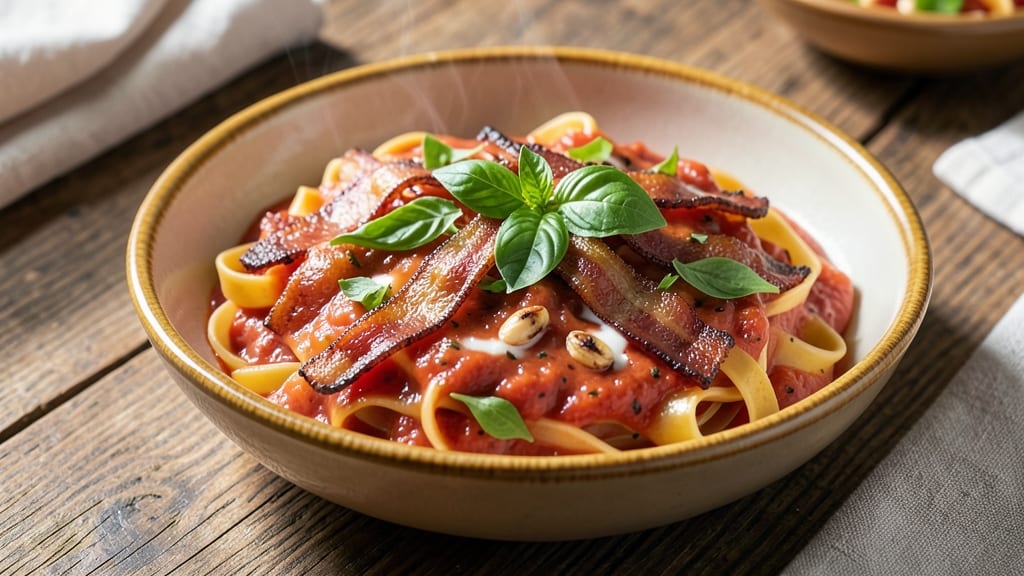
This bacon pasta sauce recipe delivers restaurant-quality depth in just 20 minutes, combining smoky bacon, sweet tomatoes, and rich umami in every spoonful. The secret lies in slow-cooking crispy bacon until it renders its fat into the sauce, creating a velvety base that clings perfectly to pasta.
I developed this after years of testing—it's the one sauce that elevates simple noodles into a meal-worthy dish without requiring fancy ingredients.
The process is straightforward but transformative: crisp the bacon until golden, then deglaze the pan to capture every flavorful bit. Add crushed tomatoes, garlic, and herbs to build layers of sweetness and depth, then simmer until thickened.
A splash of cream at the end adds luxurious body without overpowering the smoky-sweet balance. This sauce keeps well in the fridge for up to 5 days, making it ideal for meal prep or last-minute dinners.
What sets this sauce apart is its versatility—it works with any pasta shape, from spaghetti to penne, and pairs beautifully with grilled chicken, shrimp, or even as a hearty vegetarian option. The bacon adds a satisfying crunch when sprinkled on top, while the herbs keep the flavors fresh and bright.
Each bite delivers that perfect harmony of smoky, sweet, and savory notes that makes this sauce irresistible.
For extra richness, stir in a pat of butter at the end, or keep it lighter with a squeeze of lemon. The sauce thickens as it cools, so feel free to thin it with pasta water if needed.
Whether you're feeding a crowd or prepping for the week, this bacon pasta sauce delivers professional results with minimal effort—proof that great flavor doesn't require complicated techniques.
Ingredients for bacon pasta sauce
Pantry staples plus bacon elevate simple ingredients to restaurant-quality sauce perfection.
| Ingredient | Amount | Notes |
|---|---|---|
| Thick-Cut Bacon 🥓 | 8 oz | Thick-cut for best flavor |
| Crushed Tomatoes 🍅 | 1 can | 28 oz can, San Marzano preferred |
| Garlic Cloves 🧄 | 4 cloves | Minced for even distribution |
| Heavy Cream 🥛 | ½ cup | Full-fat for richness |
| Dried Oregano 🌿 | 1 tsp | Italian blend preferred |
| Dried Basil 🌿 | 1 tsp | For fresh herb brightness |
| Red Pepper Flakes 🌶️ | ½ tsp | Adjust for heat preference |
| Salt 🧂 | 1 tsp | Diamond Crystal preferred |
| Black Pepper 🌶️ | ½ tsp | Freshly ground preferred |
| Unsalted Butter 🧈 | 2 tbsp | For finishing richness |
The bacon is non-negotiable—thick-cut delivers the best flavor and fat. Costco or Trader Joe's always have high-quality options, but any good grocery store works. Look for thick slices (about 1/4-inch) that crisp up beautifully. The crushed tomatoes should be San Marzano if possible—their sweetness shines through. If you can't find them, any quality canned tomatoes work, just taste first. Garlic matters too; freshly minced releases more flavor than pre-minced. I usually grab a head and crush the cloves with the side of my knife—takes 30 seconds and makes a difference.
No heavy cream? Half-and-half at double the amount works in a pinch, though the sauce won't be as rich. Fresh herbs are ideal, but dried oregano and basil at half the amount still deliver. Skip the red pepper flakes if you prefer mild heat—just omit them entirely. The butter at the end is optional but worth it; European-style butter like Plugra adds extra flavor. For a lighter version, swap the cream for a splash of pasta water at the end. The sauce thickens as it cools, so feel free to thin it with more pasta water if needed—just a tablespoon or two at a time.
This sauce keeps beautifully in the fridge for up to 5 days, with flavors deepening over time. Portion into airtight containers for easy reheating—just warm through on the stove with a splash of water. Freezes for 3 months if you want to make a big batch. The bacon fat solidifies when chilled, so stir vigorously when reheating. For extra richness, stir in a pat of butter at the end. Store any leftover butter in the fridge wrapped tightly—it keeps for up to 3 months this way.
Why You'll Love This Recipe
- No-Chop Nightmare: The only prep is slicing bacon—no onions, no celery, no small dice. I just tear the thick-cut into chunks, toss them in a pan, and let them render while I open a can of tomatoes. That’s it. (Yes, even on a Tuesday night.)
- Creamy Crisp Contrast: The heavy cream smooths out the acidity from the tomatoes, but the thick-cut bacon? It stays gloriously crispy around the edges, so every bite has that satisfying crunch. Honestly, it’s the kind of sauce that makes you slow down and savor.
- Leftovers That Beg: This sauce holds up for days—better, even. The flavors meld into something deeper, and it reheats like a dream. I’ll be real: I’ve microwaved it straight from the fridge at work and still finished the container.
- Budget Luxury: Thick-cut bacon isn’t cheap, but a single package stretches across two meals. Add pasta, and you’ve got a restaurant-worthy dish for half the price. Between us, this is how I trick myself into feeling fancy without breaking the bank.
Step-by-step instructions for bacon pasta sauce
This method delivers rich, smoky depth with minimal effort—perfect for weeknight dinners.
Cook the Bacon Until Crisp
Cut the 8 oz thick-cut bacon into ½-inch pieces using kitchen shears. Place in a cold, heavy-bottomed skillet over medium heat. Cook undisturbed for 5-6 minutes until the fat renders and the bacon becomes crispy and golden brown. This low-and-slow approach prevents burning while maximizing flavor extraction.
Once the bacon is crisp, remove it from the skillet with tongs and transfer to a paper towel-lined plate. Leave the rendered fat in the pan—this is your flavor foundation. If the fat looks thin, reduce heat to medium-low and let it settle for 1-2 minutes to thicken slightly. The bacon should yield about 4-5 tablespoons of fat, which will create a luxurious base for your sauce.
Sauté Garlic and Deglaze the Pan
Add the 4 cloves minced garlic to the skillet with the bacon fat and cook for 30 seconds until fragrant. Be careful not to let it brown—garlic burns quickly and becomes bitter. Immediately pour in the 1 can crushed tomatoes, scraping up any browned bits from the bottom of the pan with a wooden spoon. This deglazing step captures all the meaty flavors that would otherwise stick to your pan.
Bring the mixture to a gentle simmer and let it cook uncovered for 8-10 minutes. You'll notice the sauce thicken slightly as the tomatoes break down and release their juices. Stir occasionally to prevent sticking, but don't overwork the sauce—this can make it too smooth. The tomatoes should reduce enough to coat the back of a spoon but still maintain a chunky texture.
Build Flavor with Herbs and Spices
Add the 1 teaspoon dried oregano, 1 teaspoon dried basil, ½ teaspoon red pepper flakes, 1 teaspoon salt, and ½ teaspoon black pepper to the simmering tomato mixture. Stir well to combine and let the sauce cook for another 5 minutes. This allows the spices to bloom and infuse the tomatoes with their aromatic qualities. The red pepper flakes will add a subtle heat that balances the richness of the bacon and cream.
Taste the sauce at this point. It should be tangy from the tomatoes, slightly spicy from the red pepper, and well-seasoned. If you find it needs more depth, you can add a splash of water or a pinch of sugar to balance the acidity. The sauce should be vibrant red with visible tomato chunks and a thick, syrupy consistency.
Finish with Cream and Butter
Reduce the heat to low and stir in the ½ cup heavy cream. Let the sauce simmer gently for 3-4 minutes, stirring occasionally. The cream will create a velvety texture while adding richness that complements the smoky bacon. Add the 2 tablespoons unsalted butter and stir until completely melted and incorporated. The butter will add a luxurious mouthfeel and help emulsify the sauce for a silky finish.
Return the crispy bacon to the skillet and toss everything together for 1-2 minutes. This allows the bacon to reabsorb some of the sauce, making each bite even more flavorful. The final sauce should be thick enough to coat the back of a spoon but still have a smooth, velvety consistency. If it's too thick, you can thin it slightly with a splash of pasta water or milk.
Serve Over Fresh Pasta
Toss the sauce with cooked pasta according to your preferred ratio—typically 2 cups of sauce for 1 pound of pasta. The sauce should cling beautifully to each strand, creating a rich, flavorful coating. If the sauce seems too thick after tossing, add a little more pasta water to loosen it. Serve immediately while the pasta is hot and the sauce is at its peak flavor and texture.
This bacon pasta sauce delivers a perfect balance of smoky, sweet, and umami flavors that elevate any pasta dish. The crispy bacon adds texture, while the cream and butter create a luxurious mouthfeel. The herbs and spices provide depth, making this sauce versatile enough for spaghetti, penne, or even as a hearty topping for baked pasta dishes.
Pro Tips For Making Bacon Pasta Sauce
- CRACKLE THE BACON LOW: Thick-cut bacon needs patience—cook it on medium-low heat until the fat renders and the edges turn golden, not crispy. I learned this the hard way: high heat burns the edges before the fat melts, leaving you with chewy bacon and a pan full of smoke. Let it work its magic, and save that rendered fat for the sauce.
- SIMMER THE TOMATOES FIRST: Before adding garlic or cream, cook the crushed tomatoes alone for 5-7 minutes on medium heat. This drives off excess moisture and deepens the flavor—no watery sauce later. (Yes, even if you’re impatient like me, resist the urge to rush.)
- STIR THE CREAM GENTLY: When folding in heavy cream, lower the heat to medium-low and stir in just one direction for 30 seconds. High heat or aggressive stirring turns the sauce grainy or curdled. My grandmother swore by this, and she was right: the cream should melt in, not fight back.
- TOAST THE OREGANO: Dry-toast the dried oregano in a small pan for 30 seconds before adding it to the sauce. The aroma intensifies, and it won’t clump or taste bitter. (Sounds weird, but it works—trust me.)
Best sauces and condiments for bacon pasta sauce
Creamy Variations
For an extra-smooth texture, blend the sauce for 30 seconds after adding cream but before incorporating butter. Use an immersion blender to avoid transferring hot liquid—just pulse until the tomatoes break down slightly but still retain some chunks.
I find this works best with San Marzano tomatoes since their natural sweetness shines through even when blended. 🥛
Spicy Kick Options
Add 1 tbsp hot honey at the end for a sweet-spicy balance that cuts through the richness. For heat lovers, stir in 1 tsp Calabrian chili paste with the tomatoes—it adds deep, fruity heat without overpowering.
Always taste first; you can adjust heat by adding more red pepper flakes gradually. 🌶️
Vegetarian Adaptation
Swap bacon for smoked tempeh (½-inch cubes) or mushrooms (8 oz cremini, sliced)—both add umami depth. Cook tempeh until crispy, then deglaze with 1 tbsp soy sauce before adding tomatoes. For mushrooms, sauté until golden and remove before deglazing to avoid bitterness. The sauce still delivers that smoky-sweet profile! 🍄
Thicker or Thinner
Need thicker sauce? Simmer uncovered for 5 extra minutes after adding cream. For thinner sauce, stir in 2 tbsp pasta water at the end. I often adjust thickness when reheating—just add water gradually until it reaches the perfect consistency. The sauce thickens as it cools, so plan accordingly. 💡
Herb Swaps
Replace basil with 1 tsp dried thyme for a rustic Italian flavor, or add ½ tsp smoked paprika with the red pepper flakes for a subtle smokiness. Fresh herbs like parsley or cilantro work beautifully at the end—just chop 2 tbsp and stir in during the final minute.
The key is balancing the herbs with the bacon's smokiness. 🌿
Storage Hacks
For longer fridge storage (5-7 days), press plastic wrap directly on the sauce's surface before sealing the container. This prevents a skin from forming.
Freeze in 1-cup portions** for easy reheating—just thaw overnight in the fridge, then warm gently on the stove. The texture remains velvety when reheated properly. ❄️
Nutrition facts
Frequently asked questions
Can I make this sauce without heavy cream?
For a lighter version, replace the ½ cup heavy cream with ½ cup whole milk or ¼ cup half-and-half plus ¼ cup water. The sauce will still be flavorful but slightly less rich. For a dairy-free option, use ½ cup coconut milk (full-fat) and add a pinch of salt to balance flavors.
How do I prevent the sauce from becoming too thick?
If your sauce thickens too much, simply stir in 1-2 tablespoons of pasta water at a time until you reach the desired consistency. The sauce naturally thickens as it cools, so plan to thin it slightly when reheating. For a smoother texture, blend briefly with an immersion blender after adding cream.
What's the best way to reheat leftover sauce?
Reheat gently on the stove over medium-low heat, stirring occasionally. Add 1-2 tablespoons of water or pasta water to prevent sticking and restore creaminess. Avoid microwaving—it can make the sauce grainy. For frozen portions, thaw overnight in the fridge first. The sauce reheats best when warmed through slowly.
Can I use bacon bits instead of crispy bacon?
Not recommended! Bacon bits lack the flavorful fat and crispy texture that makes this sauce special. If you're short on time, use ½ the amount of bacon bits (about 4 oz) and add 1 tablespoon bacon fat or olive oil to the pan to mimic the richness. The sauce won't be quite as deep, but it'll still work in a pinch.
What pasta shapes work best with this sauce?
This sauce clings beautifully to spaghetti, penne, rigatoni, or farfalle—any shape with ridges or hollows helps it cling better. For a heartier dish, try bucatini or pappardelle. Avoid delicate shapes like angel hair unless you prefer a looser sauce. The sauce's thickness makes it perfect for tossing with any sturdy pasta.