
Sauces & Condiments
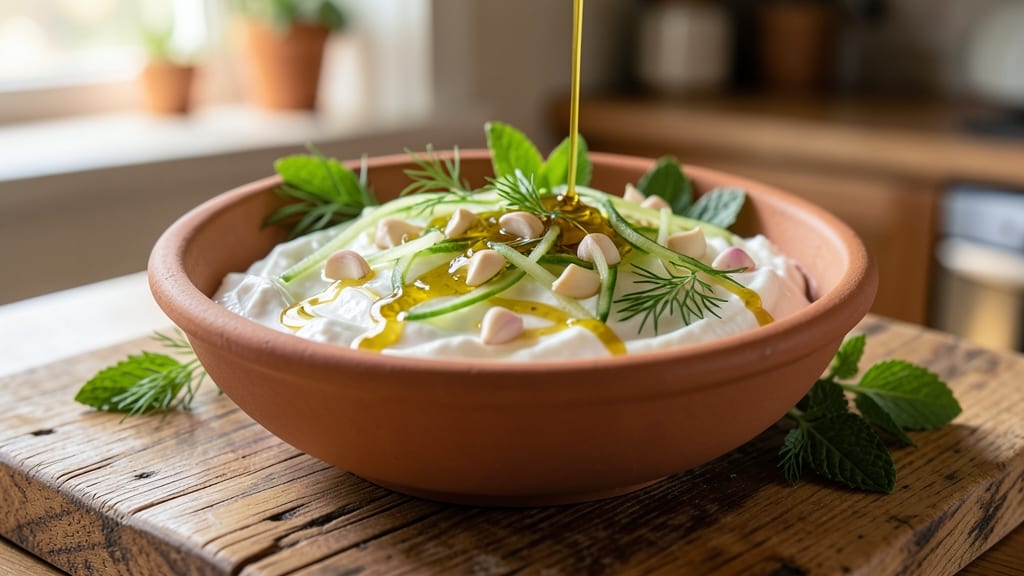
This authentic tzatziki sauce recipe transforms simple ingredients into the creamy, tangy companion every gyro deserves. The secret lies in straining fresh cucumber for that signature smooth texture while balancing bright garlic with rich olive oil—just like the sauces served in Greek tavernas.
I've perfected this version after years of testing, ensuring it stays cool, creamy, and packed with fresh dill zing that cuts through greasy pita.
The foundation is thick Greek yogurt—never skip the straining step for that velvety consistency—mixed with grated cucumber that's been drained thoroughly. A touch of garlic adds depth without overpowering, while lemon juice and olive oil brighten the flavors.
This isn't just a side; it's the star that makes gyros unforgettable, with every spoonful delivering that perfect balance of cool, creamy, and herbaceous.
What sets this apart is the attention to texture: no graininess, no wateriness, just a sauce that clings perfectly to warm pita or grilled meats. The fresh dill and mint add layers of aromatic freshness that elevate even the simplest gyro into something restaurant-worthy.
Once you taste this version, store-bought tzatziki will never compare.
Use it immediately for maximum freshness, or store in an airtight container for up to 5 days—though I guarantee it won't last that long. Perfect for gyros, grilled meats, or even as a refreshing dip. Let's make the most authentic tzatziki you've ever tasted.
Ingredients for authentic tzatziki sauce recipe for gyros
Nine ingredients transform into velvety, herby tzatziki that clings perfectly to gyros and grilled meats.
| Ingredient | Amount | Notes |
|---|---|---|
| Thick Greek Yogurt 🧀 | 1 ½ cups | Full-fat for creaminess, strained overnight |
| Persian Cucumber 🥒 | 1 ½ cups | Seedless, grated and drained well |
| Fresh Garlic Cloves 🧄 | 4 cloves | Minced finely for subtle depth |
| Fresh Dill 🌿 | ½ cup | Chopped finely, stems removed |
| Fresh Mint Leaves 🌿 | ¼ cup | Finely chopped for brightness |
| Extra-Virgin Olive Oil 🫒 | ½ cup | High-quality, fruity variety |
| Fresh Lemon Juice 🍋 | 2 tbsp | Strained for clarity |
| Diamond Crystal Kosher Salt 🧂 | 1 tsp | Adjust to taste, not pre-salted |
| Ground Black Pepper 🌶️ | ¼ tsp | Freshly cracked for warmth |
The Greek yogurt is non-negotiable—Fage 5% or Chobani full-fat at Whole Foods or Trader Joe's give the best texture. Look for thick, creamy batches (avoid watery ones). For the cucumber, Persian cucumbers are ideal—they're seedless and drain beautifully. If you can't find them, use regular cucumbers but remove all seeds and membranes. The garlic should be freshly minced (pre-minced jars add bitterness). Fresh dill and mint? Buy bunches—they're cheaper than pre-chopped and way more flavorful. I always grab extra because half goes in the tzatziki and half gets tossed on salads.
No Persian cucumbers? Regular cucumbers work, but you'll need to scoop out the seeds and membranes first. Short on dill? Fresh parsley at half the amount adds a different but lovely brightness. Want more tang? Add an extra tablespoon of lemon juice. The olive oil matters—avoid cheap supermarket brands. A good EVOO (like Colavita or California Olive Ranch) makes all the difference. For storage, I keep the grated cucumber in a fine-mesh strainer over a bowl for 15 minutes to remove excess moisture. Trust me, this step prevents a watery sauce.
This sauce is best used fresh, but if you must store it, transfer to an airtight container and keep in the fridge for up to 5 days. The flavors actually improve slightly after 24 hours as everything melds. For serving, I like to chill it for at least 1 hour before using—this helps the flavors develop. If you make extra, freeze it in ice cube trays for easy portioning. Just remember: the fresher the herbs, the brighter the sauce. Don't compromise on that.
Why You'll Love This Recipe
- I swear by this trick: just grate the cucumber instead of dicing it. The texture stays perfect—no soggy mess—while saving me 10 minutes of fiddling. (Yes, even on a Tuesday night.)
- No-Chop Nightmare: I swear by this trick: just grate the cucumber instead of dicing it. The texture stays perfect—no soggy mess—while saving me 10 minutes of fiddling. (Yes, even on a Tuesday night.)
- Garlic-Dill Magic: That first bite? Cool, creamy yogurt cutting through the sharp garlic and bright herbs—it’s the kind of flavor that makes you pause mid-bite. Honestly, the dill alone sells me, but the mint ties it all together like a secret handshake.
- Gyros’ Best Friend: Spread it on warm pita with sizzling meat, pile it on grilled veggies, or slather it on a sandwich—it’s the MVP of any meal. I’ve even used it as a dip for roasted potatoes, and no one’s ever questioned my genius.
Step-by-step instructions for authentic tzatziki sauce
Here's how to craft the perfect balance of creamy, tangy, and herby—just like in Greek tavernas.
Prepare the Cucumber Base
Start by peeling and seeding the 1.5 cups Persian cucumber—this removes excess moisture that would make your sauce watery. Use a box grater or food processor to grate it finely, then transfer to a clean kitchen towel or cheesecloth. Gather the edges and gently squeeze out all the liquid for 5-10 minutes. This step is non-negotiable for authentic texture.
Real talk: If you skip draining, your tzatziki will turn into a thin dip rather than a thick, spreadable sauce. The cucumber should yield about ½ cup liquid—discard this completely. The remaining grated cucumber will be dry enough to blend seamlessly with the yogurt.
Whisk Yogurt and Aromatics Together
In a medium bowl, combine the 1.5 cups thick Greek yogurt with the drained cucumber. Using a whisk, stir gently to distribute the cucumber evenly—don't overmix or you'll break down the yogurt's natural creaminess. Add the 4 cloves minced fresh garlic cloves, 1 tsp Diamond Crystal kosher salt, and 0.25 tsp ground black pepper, mixing until fully incorporated.
Here's the thing—Greek yogurt should be thick and unstrained for the best texture. If yours is too runny, strain it overnight in a clean towel before using. The mixture should look like a thick, speckled yogurt-cucumber blend with no visible liquid pooling at the bottom of the bowl.
Fold in Fresh Herbs and Oil
Add the 0.5 cup finely chopped fresh dill and 0.25 cup finely chopped fresh mint leaves to the yogurt mixture. Using a rubber spatula, gently fold them in just until combined—you want visible herb flecks for that authentic restaurant presentation. Drizzle in the 0.5 cup extra-virgin olive oil while folding continuously to emulsify the sauce.
Don't skip the folding motion; this prevents the herbs from clumping and ensures an even distribution of oil. The sauce should thicken slightly as you work, developing a glossy sheen from the olive oil. Taste and adjust the salt if needed—authentic tzatziki balances tangy, herby, and savory perfectly.
Finish with Lemon and Rest
Stir in the 2 tbsp fresh lemon juice until fully combined. The sauce should brighten noticeably, cutting through the richness of the yogurt. Transfer to a serving bowl, cover with plastic wrap pressed directly onto the surface, and refrigerate for at least 2 hours—this lets the flavors meld and the texture set properly.
This resting period is crucial. It allows the garlic to mellow slightly (so it doesn't overpower) and the herbs to release their oils fully. For the best results, make it ahead—tzatziki tastes even better after 4-6 hours in the fridge. When ready to serve, give it one final stir before scooping onto your gyros.
Pro Tips For Making Authentic Tzatziki Sauce Recipe For Gyros
- Drain Cucumber Twice: I learned this the hard way—skipping the second drain leaves your tzatziki watery and sad. After grating the Persian cucumber, wrap it in a clean kitchen towel, squeeze out every drop, then let it sit for 5 minutes before mixing. That second press makes all the difference when serving with warm gyros.
- Use Room-Temp Yogurt: Cold Greek yogurt makes for a clumpy, unappetizing tzatziki. Take it out of the fridge 30 minutes before mixing—just long enough to soften but not warm up. This ensures a smooth, creamy texture that clings perfectly to pita and meat.
- Mince Garlic, Don’t Crush: Whole garlic cloves or even minced ones from a jar add a harsh bite. Use a sharp knife to finely mince fresh cloves—just a teaspoon or two—so the flavor blends seamlessly without overpowering. Too much garlic turns your sauce into a side dish for vampires.
- Balance Herbs with Lemon: Fresh dill and mint are non-negotiable, but skip the lemon if you’re not careful. Start with a tablespoon of juice, then taste before adding more—it brightens the yogurt but can also turn your sauce sour if you go overboard. Trust your palate, not the recipe.
Make-ahead tips for this recipe
Prep Ahead for Freshness
Make your tzatziki sauce 1 day in advance—this lets flavors meld beautifully while keeping the texture perfect. I always prep mine the night before a gyro night because the herbs release their oils more fully after 24 hours in the fridge.
Store in an airtight container with the plastic wrap pressed directly onto the surface to prevent a skin from forming. 🧀
Cucumber Prep Shortcut
Save time by grating the cucumber first, then storing it in a sealed container in the fridge for up to 24 hours before mixing. This prevents wilting and makes assembly faster. Just
Herb Substitutions
Short on fresh dill? Swap in ½ cup parsley for a milder flavor, or use ¼ cup each parsley and tarragon for a French-inspired twist. For mint, ½ cup cilantro works in a pinch, though the flavor will differ slightly. Always chop herbs finely—visible stems make the sauce look less refined. 🌿
Freezing for Later Use
Portion tzatziki into ice cube trays or small airtight containers for easy single-serving use. Freeze for up to 3 months, though texture may separate slightly upon thawing.
To revive, stir in 1 tsp lemon juice and 1 tsp olive oil to restore creaminess. I avoid freezing with herbs if possible—they lose their vibrant flavor.
Gyro Prep Pairing
Make tzatziki 4 hours before serving to ensure it's fully chilled and ready to pair with warm gyros. Keep it in the fridge until 30 minutes before serving, then let it sit at room temperature for a few minutes—this makes scooping easier without compromising texture.
Pro tip: Serve in a small ceramic bowl with a wooden spoon for that authentic Greek taverna look. 🍽️
Reheating Leftovers
If your tzatziki thickens too much after refrigeration, stir in 1-2 tsp water or lemon juice to restore smoothness. For a quick refresh, mix in 1 tsp olive oil and ½ tsp minced garlic to revive the flavors.
Never microwave—heat destroys the delicate balance of textures and herbs. Always taste and adjust seasoning before serving again.
Nutrition facts
Frequently asked questions
Why does authentic tzatziki need to rest in the fridge?
Resting for at least 2 hours (or overnight) lets the garlic mellow and herbs release their oils fully. This creates that signature restaurant-quality texture—smooth, creamy, and perfectly balanced. The flavors meld beautifully while preventing any separation.
Can I use regular cucumbers instead of Persian?
Yes, but you must remove all seeds and membranes first to avoid wateriness. Persian cucumbers are ideal because they're seedless and drain better. For regular cucumbers, scoop out the center with a spoon before grating. This extra step prevents a thin, soupy sauce.
What's the secret to creamy tzatziki without lumps?
Use thick Greek yogurt (never strained) and fold ingredients gently with a rubber spatula. Overmixing breaks down the yogurt's texture. Also, drain the cucumber thoroughly—this prevents separation. The key is patience: fold herbs in just until combined, leaving visible flecks.
How do I fix tzatziki that's too thick or too thin?
For thick sauce, stir in 1-2 tsp lemon juice or water. If too thin, add 1 tbsp extra yogurt or olive oil and chill for 30 minutes to thicken. The magic ratio is 1.5 cups yogurt to 1.5 cups drained cucumber—measure carefully for perfect texture.
Can I make this sauce dairy-free?
Swap the Greek yogurt for 1.5 cups coconut yogurt or dairy-free yogurt (like Kite Hill). For creaminess, add 1 tbsp tahini or olive oil. The texture will be slightly lighter but still delicious. Just ensure it's thick enough to cling to gyros.