
Sauces & Condiments
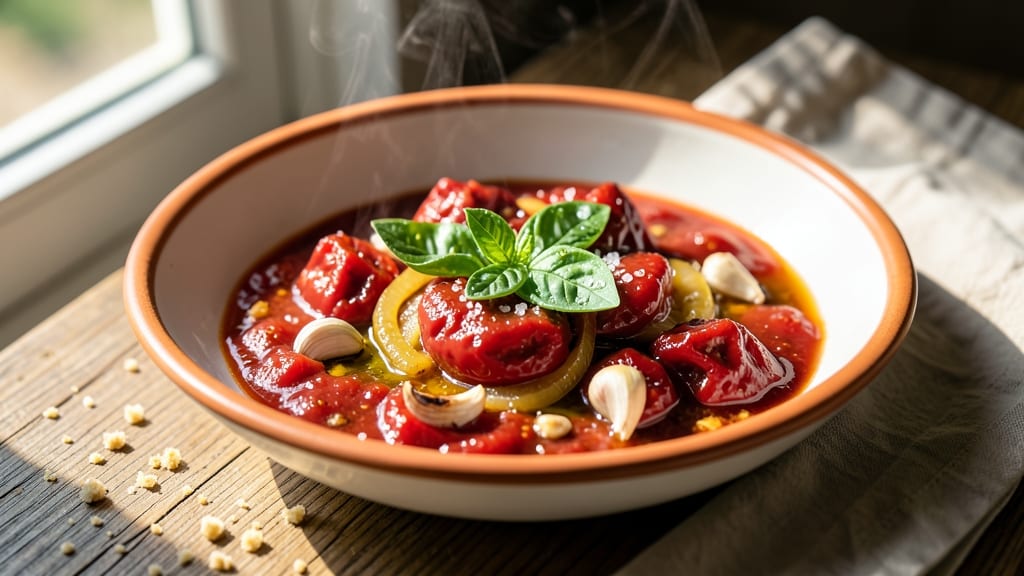
This authentic tomato sauce recipe from Italy transforms simple ingredients into the velvety, aromatic base that defines Italian cooking. 💫 The secret lies in San Marzano tomatoes—sweet, low-acid varieties that simmer down to create a sauce so rich, it becomes the soul of pasta, pizza, or braised meats.
I perfected this version after years of testing, balancing sweetness with just enough acidity to brighten every bite.
The process is deceptively simple: garlic slowly caramelized in olive oil, tomatoes simmered until broken down into a thick, glossy consistency, and fresh basil added at the end to preserve its bright, herbal notes. What makes this sauce truly authentic is the patience—no rushing, no shortcuts.
The result is a sauce that develops deep, complex flavors that store-bought versions can't match, with a texture that clings perfectly to any dish.
What you'll end up with is a restaurant-quality tomato sauce that's versatile enough for weeknight dinners yet impressive enough for guests. The sauce thickens naturally as it simmers, creating a velvety consistency that's neither too thin nor too heavy.
The aroma alone will transport you to a sunlit Italian kitchen, where fresh basil and ripe tomatoes take center stage.
This sauce keeps beautifully in the refrigerator for up to five days or can be frozen for months, making it the ultimate pantry staple.
Whether you're tossing it with al dente pasta or using it as a base for braised meats, this recipe delivers the kind of depth and authenticity that turns simple meals into something extraordinary. Let's get started on creating your own taste of Italy.
Ingredients for authentic tomato sauce recipe from italy
Nine simple ingredients transform into restaurant-quality tomato sauce with Italian soul.
| Ingredient | Amount | Notes |
|---|---|---|
| Extra-Virgin Olive Oil 🫒 | ½ cup | High-quality, fruity variety |
| Garlic Cloves 🧄 | 4 cloves | Freshly peeled, rough chopped |
| Yellow Onion 🧅 | 1 whole | Medium size, finely chopped |
| San Marzano Tomatoes 🍅 | 28 oz | Canned, whole peeled tomatoes |
| Fresh Basil Leaves 🌿 | ¼ cup | Packed, stems removed |
| Salt 🧂 | 1 tsp | Diamond Crystal preferred |
| Black Pepper 🌶️ | ½ tsp | Freshly ground preferred |
| Red Wine 🍷 | ¼ cup | Dry, bold variety like Chianti |
| Granulated Sugar 🍚 | 1 tsp | Optional for balancing acidity |
San Marzano tomatoes are the heart of this sauce—look for the DOP label at Italian markets or Trader Joe's for the best quality. The canned variety is perfect here, but if you're using fresh, roast them first for deeper flavor. Fresh basil is non-negotiable for that bright Italian aroma, so grab a bunch. I always buy extra because half gets torn over the sauce and half gets tucked into the fridge for other dishes. The olive oil should be extra-virgin—none of that cheap stuff. Ottavio or Colavita are my go-tos, but any fruity, peppery oil works.
No red wine? Dry white wine or even a splash of balsamic vinegar works in a pinch. The sugar is optional but helps balance acidity if your tomatoes are particularly tart. For the garlic, roast it first for a sweeter flavor—toss peeled cloves in olive oil at 400°F for 15 minutes. Onions can be swapped for shallots if you're feeling fancy, but regular yellow onions work perfectly fine. If you're using dried basil, reduce to one-third the amount—it's all about that fresh herbal punch. The sauce thickens as it simmers, so don't worry if it looks thin at first.
This sauce tastes even better the next day as flavors meld. Store in the fridge for up to 5 days or freeze for 6 months—portion into ice cube trays for easy use. The red wine adds depth, so if you're freezing, add it fresh after reheating. Basil wilts fast, so store it in a jar of water like flowers. Double the batch—you'll want leftovers for pasta, pizza, or braised meats. Trust me, your freezer will thank you.
Why You'll Love This Recipe
- This sauce works for everything: toss it with pasta, slather it on grilled chicken, or even use it as a marinade. I’ve served it at casual dinners and fancy gatherings—no one ever questions how simple it is. Honestly, it’s my go-to for when I don’t want to overthink but still want to impress.
- No Fuss, Big Payoff: I swear by this sauce because it’s the kind of recipe that feels like cheating—just chop, simmer, and let the tomatoes do the work. The onions and garlic melt into the San Marzano tomatoes until they’re practically invisible, leaving behind that deep, sweet base that’s ridiculously easy to achieve.
- Garlic-Basil Magic: That first hit of fresh basil on a spoonful of hot sauce? It’s like a flavor hug. The garlic gets caramelized just enough to add complexity, while the basil brightens it all up—no fancy techniques, just the right balance that makes you want to eat it straight from the pot. (Yes, I’ve done it.)
- Weeknight to Dinner Party: This sauce works for everything: toss it with pasta, slather it on grilled chicken, or even use it as a marinade. I’ve served it at casual dinners and fancy gatherings—no one ever questions how simple it is. Honestly, it’s my go-to for when I don’t want to overthink but still want to impress.
Step-by-step instructions for authentic Italian tomato sauce
Let's create a sauce that tastes like Nonna's kitchen—rich, balanced, and full of Italian soul.
🍳 Step 1: Sauté Onion Until Translucent
Heat the 0.5 cup extra-virgin olive oil in a heavy-bottomed saucepan over medium-low heat. Add the finely chopped yellow onion and cook for 8-10 minutes until completely translucent and just beginning to turn golden at the edges. This slow cook prevents burning and builds sweetness that forms the sauce's foundation.
I like to stir occasionally with a wooden spoon, breaking up any large pieces as they soften. The onion should release its moisture and become tender without any brown spots—this is your cue to move to the next step. If you see any brown bits forming, reduce the heat slightly to prevent bitterness.
🍳 Step 2: Add Garlic and Wine for Depth
Push the onions to one side of the pan and add the roughly chopped garlic cloves. Let them sizzle gently for 30-45 seconds until fragrant but not browned—garlic burns quickly, and you want that delicate, sweet aroma, not bitter notes. Stir occasionally to prevent sticking.
Pour in the 0.25 cup red wine and let it simmer for 2-3 minutes until nearly completely evaporated. The alcohol will cook off, leaving behind concentrated wine flavors that deepen the sauce. This is where the magic happens—don't rush this step, as the wine carries the soul of Italian cooking.
🍳 Step 3: Build the Sauce with San Marzano Tomatoes
Add the 28 oz San Marzano tomatoes (crushed by hand or with a wooden spoon) to the pan. Stir well to combine with the onion mixture, then sprinkle in the 1 tsp granulated sugar (if using) and 1 tsp salt. The sugar helps balance the acidity of the tomatoes while enhancing their natural sweetness.
Bring the sauce to a gentle simmer over medium-low heat. Let it cook uncovered for 25-30 minutes, stirring occasionally. You're looking for a thick, velvety consistency where the sauce coats the back of a spoon. The tomatoes should break down completely, releasing their juices and creating a rich, concentrated base.
🥘 Step 4: Finish with Fresh Basil and Season
When the sauce has thickened to your liking, remove it from heat and stir in the 0.25 cup fresh basil leaves. Let the basil steep in the warm sauce for 5 minutes—this infuses the delicate flavors without overpowering the tomato base. Then, add the 0.5 tsp black pepper and give it one final taste to adjust seasoning.
Here's the thing—authentic Italian tomato sauce is all about balance. If it tastes too acidic, a pinch more sugar helps. If it's bland, a splash of red wine or a pinch of salt can elevate it. The sauce should be vibrant, slightly sweet, and deeply aromatic—like a taste of summer in every spoonful.
⏰ Step 5: Rest and Serve with Confidence
Let the sauce rest for 10-15 minutes before serving. This allows the flavors to meld and the sauce to thicken further as it cools slightly. The resting period is crucial—it's the difference between a good sauce and a great one.
Serve your sauce immediately over pasta, drizzled with a little more extra-virgin olive oil and fresh basil, or use it as a base for other Italian dishes. The sauce will keep well in the refrigerator for up to 5 days, and it actually improves over time as the flavors deepen. This is the kind of sauce that gets better with age—just like a fine wine.
Pro Tips For Making Authentic Tomato Sauce Recipe From Italy
- Sweat, Don’t Burn the Onion: The onion should dissolve into the oil—no color, just a sweet, translucent base. Too much heat turns it bitter; too little and you’re wasting time. Keep it on medium-low, stirring occasionally, until it’s fully broken down but not golden. (Yes, even if you’re impatient like me.)
- Crush Garlic, Don’t Mince It: Whole garlic cloves add depth without burning. Smash them with the flat side of your knife first, then let them cook slowly in the oil until they’re fragrant but not browned. Over-mincing means bitter, fast-burning flavor—skip it.
- Peel Tomatoes Before Crushing: San Marzano skins are tough, but peeling them first makes the sauce smoother and brighter. Drop them into boiling water for 30 seconds, then shock in ice water—skins slide off like magic. (No peeler? A paring knife works, but it’s a pain.)
- Salt the Tomatoes Early: Add a pinch of salt to the crushed tomatoes right after they hit the pot. It softens them faster and balances acidity before simmering. Wait too long, and you’re left with a thin, one-dimensional sauce—trust the process.
Storing and reheating this dish
Fridge Storage Secrets
Transfer your sauce to an airtight glass container—I use Pyrex with snap-on lids—and let it cool completely before refrigerating. The flavors actually deepen overnight as the tomatoes continue to break down gently.
Store for up to 5 days at 40°F or below, and always leave ½ inch headspace to prevent mold. 💫
Pro tip: If the sauce thickens too much in the fridge, simply stir in 1-2 tablespoons of water or pasta water when reheating. Never add water directly to cold sauce—it can create a skin that's impossible to remove.
Freezer Prep Like a Pro
Portion sauce into ice cube trays before freezing—this makes it easy to thaw just what you need for a meal. Once frozen, transfer cubes to a ziplock freezer bag with all air squeezed out.
Label with the date—this sauce stays 3-6 months without losing quality, though I find it's best within 3 months.
For larger batches, use quart-sized freezer-safe containers with plastic wrap pressed directly on the surface to prevent freezer burn. Thaw overnight in the fridge for best results—never microwave directly from frozen.
Reheating Without Ruining
My preferred method is stovetop reheating on low heat with 1 tablespoon of water or olive oil to prevent sticking. Simmer gently for 5-8 minutes, stirring occasionally, until heated through (165°F internal temp). This preserves the sauce's velvety texture better than microwave methods.
For microwave reheating, use 50% power in 1-minute intervals, stirring between each. Cover loosely with a damp paper towel to retain moisture. Avoid high power—it can create a skin and make the sauce grainy. 🔥
Reviving Thickened Sauce
If your refrigerated sauce has thickened beyond your liking, don't panic. Simply add 1-2 tablespoons of warm water or reserved pasta water while reheating. Stir vigorously to break up any lumps, then adjust seasoning—it often needs a pinch more salt after reheating.
For frozen sauce that's separated, stir in 1 teaspoon of olive oil while reheating. The fat helps re-emulsify the sauce, restoring its silky consistency. If you notice any freezer burn (grayish spots), simply scoop out the affected portion—it won't compromise the rest.
Basil Revival Hack
Fresh basil loses its vibrant color when reheated, but you can revive it by adding 1-2 fresh leaves during the final minute of reheating.
For a more dramatic effect, stir in ½ teaspoon of lemon juice—this brightens the basil's green color and adds a citrusy note that cuts through the richness.
If you're short on fresh basil, try 1 teaspoon of dried basil (added during reheating) or a pinch of basil pesto—both work in a pinch, though nothing beats the real thing. I keep a small pot of basil growing on my windowsill just for this purpose! 🌿
Nutrition facts
Frequently asked questions about authentic Italian tomato sauce
Why do Italian recipes specify San Marzano tomatoes?
San Marzano tomatoes are the gold standard for Italian tomato sauce because they grow in volcanic soil near Mount Vesuvius, giving them a naturally sweet, low-acid flavor and thick flesh that breaks down beautifully. Their consistent quality ensures a rich, velvety sauce without needing extra sugar or vinegar. For best results, look for the DOP label at Italian markets or specialty stores.
Can I make this sauce without red wine?
If you don't have red wine, substitute with 0.25 cup dry white wine or 2 tablespoons balsamic vinegar for depth. For a non-alcoholic version, use 2 tablespoons tomato paste mixed with 2 tablespoons water. The key is adding something acidic to balance the sweetness and enhance the tomato flavor.
How do I know when the sauce is thick enough?
The sauce is ready when it coats the back of a spoon smoothly without being gluey. For a pasta sauce, aim for a consistency between ketchup and heavy cream—it should cling lightly to a wooden spoon. For pizza sauce, it should be slightly thinner. If it's too thick, stir in 1-2 tablespoons water or pasta water while reheating.
What if my sauce tastes too acidic?
Add a pinch of granulated sugar (about ½ teaspoon) to balance the acidity. For a more dramatic fix, stir in 1 teaspoon of olive oil—the fat helps mellow the sharpness. If the sauce is still too tangy, a splash of red wine or a pinch of salt can help round out the flavors. Taste as you go!
Can I make this sauce in a slow cooker?
Yes! Follow the same steps but transfer everything to a slow cooker after the wine has evaporated. Cook on low for 4-5 hours or high for 2-3 hours, stirring occasionally. The slow cooking enhances the flavors even more. Just