
Sauces & Condiments
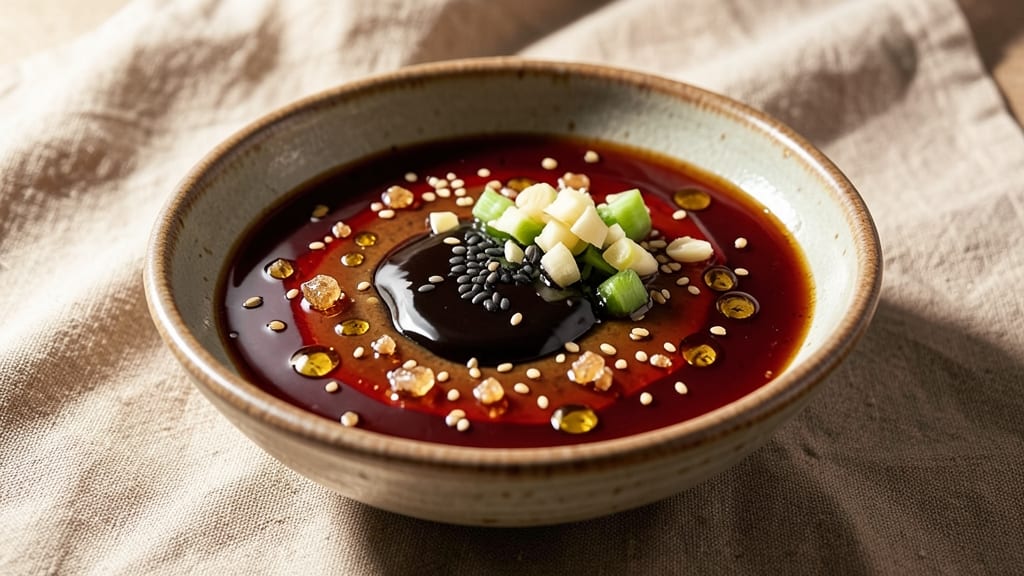
This authentic stir fry sauce recipe delivers the kind of umami depth that transforms simple stir-fries into restaurant-quality meals. The secret lies in fermented ingredients like soy sauce and oyster sauce (or vegan substitutes), which build layers of savory complexity that bottled sauces can't match.
I've refined this recipe over years of testing, balancing traditional techniques with modern convenience.
The foundation starts with a simple blend of soy sauce, oyster sauce, and a touch of honey or brown sugar for balance. Fresh garlic and ginger provide aromatic warmth, while a splash of rice vinegar adds brightness.
For extra depth, I incorporate fish sauce or a dash of sesame oil—these ingredients elevate the sauce from basic to extraordinary. The result is a versatile sauce that clings perfectly to proteins and vegetables while enhancing their natural flavors.
What makes this sauce truly special is its ability to adapt. Use it for beef stir-fries where it caramelizes beautifully, or toss it with chicken and vegetables for a quick weeknight meal.
The sauce also works wonders with tofu, absorbing its neutral texture while adding rich umami notes. Store it in the refrigerator for up to two weeks, or freeze for longer shelf life.
Whether you're cooking for a family dinner or meal prepping for the week, this sauce is your secret weapon. It's the kind of recipe that becomes a staple in your kitchen, saving you time while delivering authentic, restaurant-quality flavor every time. Let's get started!
Ingredients for authentic stir fry sauce
Nine ingredients, maximum umami—this sauce turns simple stir-fries into restaurant-quality meals.
| Ingredient | Amount | Notes |
|---|---|---|
| Light Soy Sauce 🍶 | ½ cup | High-quality, preferably Japanese |
| Dark Soy Sauce 🍶 | ¼ cup | For deeper color and flavor |
| Oyster Sauce 🦪 | ¼ cup | Vegan version if needed |
| Sesame Oil 🫒 | 1 tbsp | Toasted for nutty aroma |
| Rice Vinegar 🍶 | ¼ cup | White or seasoned |
| Brown Sugar 🍯 | 2 tbsp | Light or dark variety |
| Garlic Cloves 🧄 | 4 cloves | Minced for aromatic punch |
| Fresh Ginger 🌿 | 1 tbsp | Grated, not powdered |
| Fish Sauce 🐟 | 1 tbsp | Vegan substitute if needed |
| Cornstarch 🌾 | 1 tsp | For thickening consistency |
The soy sauces are non-negotiable here—Kikkoman light and Lee Kum Kee dark are my go-tos, but any high-quality brands work. Oyster sauce? Look for the thick, glossy kind—it's worth hunting down at an Asian market if your grocery store doesn't carry it. Fresh ginger and garlic are essential for that bright, aromatic foundation. Trader Joe's has great pre-minced jars if you're short on prep time, but freshly grated always wins for flavor. Sesame oil can be toasted in a dry pan for 30 seconds to deepen its nutty aroma—trust me, it makes a difference.
No fish sauce? Vegan fish sauce or coconut aminos work in a pinch, though the umami won't be identical. Short on oyster sauce? Mushroom sauce or extra soy sauce gets you close. The cornstarch is key for that perfect cling—skip it if you prefer a thinner sauce, but you'll miss the texture. Brown sugar adds just enough caramel depth, but honey or maple syrup work if you're avoiding refined sugar. For extra heat, add a dash of Sichuan chili oil—it's a game-changer for spicy stir-fries.
This sauce keeps beautifully—2 weeks in the fridge or 3 months frozen. I always double the batch because it disappears fast. For freezing, portion into ice cube trays—just pop out what you need. The sauce thickens as it cools, so give it a quick whisk with a splash of water if it seems too stiff after refrigeration. Leftovers? Toss them with rice and veggies for an instant takeout-style meal.
Why You'll Love This Recipe
- Pantry Magic: I swear by this sauce—no fresh herbs, no fancy prep. Just five ingredients you likely already have, and boom, instant umami depth that cuts through any stir-fry like a knife.
- Umami Bomb: That dark soy sauce? It’s the secret weapon—deep, caramelized richness that makes your veggies or protein taste like they’ve been simmering for hours. Honestly, I’ll take this over store-bought any day.
- Weeknight Swiss Army: Dinner with the kids? Date night? Leftovers for lunch? This sauce handles it all—slap it on noodles, toss it with tofu, or drizzle it over rice. I’ve even used it to glaze baked chicken (don’t judge).
- Budget Win: Oyster sauce and sesame oil stretch my grocery budget and my flavor. A little goes a long way, so I’m not stressing over expensive sauces or wasted leftovers. Plus, it’s cheaper than takeout—by a lot.
Step-by-step instructions for authentic stir fry sauce
This sauce delivers restaurant-quality depth with just 10 minutes of active work.
Bloom the Aromatics in Toasted Sesame Oil
Heat a small saucepan over medium-low heat and add the 1 tablespoon toasted sesame oil. Let it warm through for 30 seconds until fragrant—you'll smell that nutty aroma we're after. Add the 4 cloves minced garlic and 1 tablespoon freshly grated ginger immediately after the oil warms.
Cook the aromatics for 1-2 minutes until they're golden and sizzling but not browned. This step builds the sauce's aromatic foundation—don't rush it or you'll burn the garlic. I like to stir constantly with a wooden spoon to distribute the heat evenly. Once the raw garlic smell disappears and you're left with a toasty aroma, it's time to move to the next ingredients.
Combine the Fermented Sauce Base
Reduce the heat to low and add the 0.5 cup light soy sauce, 0.25 cup dark soy sauce, 0.25 cup oyster sauce, and 1 tablespoon fish sauce. Stir continuously for 2 minutes as the mixture begins to simmer gently. The dark soy sauce will start to darken the mixture immediately—this is what gives authentic stir fry its rich color.
Here's where the magic happens: the combination of light and dark soy sauces creates a perfect balance of saltiness and depth, while the oyster and fish sauces add umami complexity. I always use high-quality soy sauces here—cheap versions will make the final sauce taste flat. Let the mixture bubble gently for 3-4 minutes until it reduces by about 25% and thickens slightly.
Balance with Sweet and Acid
Add the 0.25 cup rice vinegar and 2 tablespoons brown sugar, stirring constantly to dissolve the sugar completely. The vinegar will make the sauce bubble vigorously—this is normal. Let it simmer for 2-3 minutes until the sugar dissolves and the mixture thickens further. You're looking for a sauce that coats the back of a spoon but isn't syrupy.
This is the balancing act: the vinegar cuts through the richness of the fermented ingredients while the sugar rounds out the acidity. Taste the sauce now—it should be complex but not overpowering. If it needs more depth, add another ½ teaspoon fish sauce. If it's too salty, add 1 teaspoon rice vinegar to balance. The sauce should taste like a perfect harmony of sweet, salty, sour, and umami.
Thicken to Perfect Consistency
In a small bowl, whisk together the 1 teaspoon cornstarch with 1 tablespoon cold water until completely dissolved. Pour this slurry into the simmering sauce while stirring constantly. The sauce will thicken immediately—keep stirring for 1-2 minutes until it reaches a glossy, coatable consistency.
For an authentic stir fry sauce, you want it thick enough to cling to noodles or vegetables but still flow smoothly. Test it by drizzling a small amount over steamed rice—it should coat the grains without pooling. If it's too thick, add 1 teaspoon hot water at a time until you reach the perfect consistency. The sauce should be ready to use immediately, but it will continue to thicken slightly as it cools.
Finish and Use Immediately
Remove the sauce from heat and let it cool for 5 minutes—this allows the flavors to meld completely. Give it a final taste and adjust seasoning if needed. The sauce should be balanced with all components working together: the fermented depth from the sauces, the sweetness from the brown sugar, the brightness from the vinegar, and the nutty aroma from the sesame oil.
This sauce is best used immediately, but it will keep in the refrigerator for up to 5 days in an airtight container. For maximum authenticity, use it within 24 hours—the flavors develop beautifully when fresh. It's perfect for tossing with stir-fried vegetables, noodles, or grilled meats. The key to an authentic stir fry lies in this sauce—it's what transforms simple ingredients into something truly special.
Pro Tips For Making Authentic Stir Fry Sauce
- Warm the Oyster Sauce: Cold oyster sauce clumps like glue when tossed into a hot pan—trust me, I’ve seen it happen. Heat it gently in a small saucepan with a splash of water (just 1 tablespoon) until it’s fully liquid and slightly thickened. This keeps your stir-fry glossy and prevents that sad, stringy texture no one wants.
- Salt Early, Taste Late: Dark soy sauce is salty enough that adding all the light soy at once can overwhelm the dish. Start with half the light soy, stir, then adjust—your taste buds will thank you. I learned this the hard way after serving a plate that needed a whole shaker of extra salt.
- Use Less Sesame Oil: A few drops of sesame oil at the very end is all you need—this stuff is potent. Drizzle it in when the pan’s off the heat, swirl it around, then toss in your veggies or protein. Overdoing it turns your stir-fry into a nutty, overpowering mess (yes, I’ve done that too).
- Balance the Vinegar: Rice vinegar brightens the sauce, but too much makes it taste like a pickle. Start with 1 teaspoon, taste, then add another if needed—acidity builds fast. My grandmother swore by this, and she was right: balance is everything, especially when you’re mixing salty and sweet.
Troubleshooting perfect results
Sauce Too Thin?
If your stir fry sauce ends up too thin after cooking, don't panic—it's an easy fix. The most common cause is insufficient reduction time. Let the sauce simmer uncovered for an extra 2-3 minutes to evaporate excess moisture.
For immediate thickening, whisk in ½ teaspoon cornstarch mixed with 1 teaspoon cold water, then return to low heat for 30 seconds while stirring constantly. For a more natural approach, simmer with the lid slightly ajar to concentrate the flavors without adding starch. 🌡️
Overpowering Saltiness
Too much soy sauce can make your sauce taste harshly salty. If this happens, balance it by adding 1-2 teaspoons of rice vinegar or 1 tablespoon of water to dilute the saltiness.
For a more flavorful fix, stir in ½ teaspoon of freshly grated ginger or 1 teaspoon of toasted sesame oil—these add aromatic depth without altering the salt level. Taste frequently while adjusting, as small changes make a big difference. 🧄
Lumpy or Grainy Texture
Lumps often appear when cornstarch isn't fully dissolved or when sugar isn't properly incorporated. To prevent this, whisk the cornstarch slurry vigorously until completely smooth before adding it to the sauce. For sugar, stir constantly over low heat until fully dissolved.
If lumps appear during cooking, immediately remove from heat and blend with an immersion blender for 10 seconds. If you don't have one, strain the sauce through a fine-mesh sieve to achieve a silky consistency. 💫
Flat or Bland Flavor
A bland sauce usually means the umami components weren't balanced properly. Boost the depth by adding ½ teaspoon fish sauce or 1 teaspoon oyster sauce (if using vegan, try mushroom sauce). For extra richness, stir in 1 teaspoon of toasted sesame oil or a pinch of white pepper.
If the sauce tastes one-dimensional, try adding ½ teaspoon of grated ginger or 1 minced garlic clove to enhance complexity. The key is building layers—don't be afraid to taste and adjust. 💡
Sauce Separates When Cold
This happens when the cornstarch thickens too much or when fats (like sesame oil) separate from the liquid base. To fix it, gently reheat the sauce over low heat while stirring until it returns to a smooth consistency. If separation persists, whisk in 1 teaspoon of warm water to re-emulsify.
For prevention, store the sauce in an airtight container and refrigerate it within 2 hours of making. When reheating, do so slowly over medium-low heat to avoid breaking the emulsion. ⚡
Burnt Garlic or Ginger
Burnt aromatics create a bitter, unpleasant taste that ruins the sauce. To prevent this, keep the heat at medium-low when cooking garlic and ginger, and stir constantly. If you notice them darkening too quickly, remove the pan from heat for 30 seconds to let them cool slightly before continuing.
For a quick fix, strain out any burnt pieces using a fine-mesh sieve. If the entire batch is compromised, start fresh with a new batch of aromatics—it's worth the extra effort for that perfect flavor. 🔥
Nutrition facts
Frequently asked questions
Can I make this stir fry sauce without fish sauce?
For a vegan version, replace the fish sauce with 1 tablespoon coconut aminos or ½ teaspoon vegan fish sauce substitute. The umami won't be identical, but it'll still taste delicious. You might need to add ½ teaspoon extra soy sauce to compensate for the reduced saltiness. For a non-vegan alternative, try ½ teaspoon mushroom powder or an extra ½ teaspoon oyster sauce.
How long does this sauce keep in the fridge?
The sauce stays fresh for up to 2 weeks when stored in an airtight container in the refrigerator. For longer storage, freeze it in 1-tablespoon portions using ice cube trays—just pop out what you need. The texture may thicken slightly when refrigerated, so give it a quick whisk with 1 teaspoon water before using if needed.
What's the best way to use leftover stir fry sauce?
Leftover sauce is perfect for marinating proteins like chicken or tofu before cooking, or as a quick glaze for roasted vegetables. You can also use it as a dipping sauce for dumplings or spring rolls. For extra flavor, stir in 1 teaspoon toasted sesame oil or a pinch of white pepper right before using. It keeps well for 5 days in the fridge.
Can I adjust the sweetness level?
Yes! If you prefer less sweetness, reduce the brown sugar to 1 tablespoon and add ½ teaspoon extra rice vinegar for brightness. For more sweetness, increase to 3 tablespoons brown sugar or use 1 tablespoon honey instead. The sauce should balance sweet, salty, sour, and umami—taste as you go to find your perfect ratio.
What's the difference between this sauce and store-bought stir fry sauces?
Homemade sauce has far more depth and freshness. Store-bought versions often contain preservatives and lack the complexity of fermented ingredients like oyster sauce and fish sauce. This recipe uses fresh garlic, ginger, and toasted sesame oil—key aromatics that elevate the flavor. Plus, you control the sweetness, saltiness, and thickness perfectly to match your taste.