
Sauces & Condiments
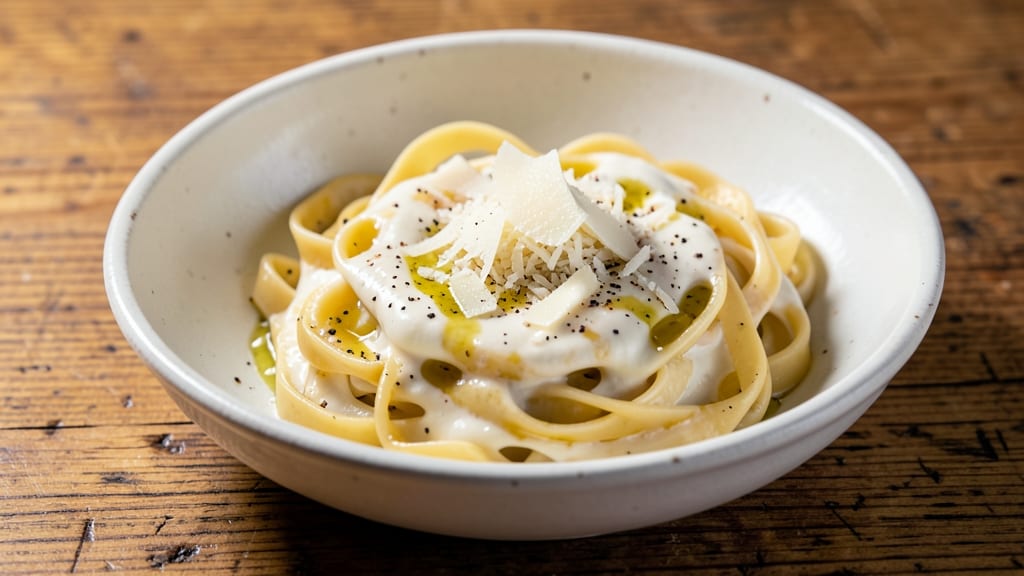
This authentic Italian white sauce pasta transforms simple ingredients into a dish that feels like a Roman trattoria brought to your kitchen. The secret lies in the sauce—rich, velvety, and built layer by layer with butter, flour, and Parmigiano-Reggiano, finished with fresh basil and a whisper of nutmeg.
I've perfected this technique over years of testing, ensuring the sauce clings to al dente pasta without ever turning greasy or heavy.
The foundation of an authentic white sauce starts with a proper roux—cooking butter and flour until golden creates the base that emulsifies beautifully with warm milk or cream.
What sets this recipe apart is the balance: enough cream for richness, but not so much that it overpowers the pasta's natural flavor. Freshly grated Parmigiano-Reggiano adds depth, while a handful of torn basil leaves at the end brightens every bite with aromatic freshness.
By the time you twirl that first forkful, you'll experience the perfect harmony of textures—al dente pasta hugged in a sauce that's silky yet substantial, with just enough body to coat each noodle. The sauce should cling like a second skin, not pool at the bottom of your plate.
This is the kind of dish that feels indulgent yet effortless, proving that authentic Italian cooking doesn't require complicated techniques—just quality ingredients and patience.
Whether you're serving this for a weeknight dinner or impressing guests, the same principles apply: use high-quality pasta, don't overcook it, and let the sauce work its magic. The result is a plate of pasta that tastes like it came from a Michelin-starred kitchen, not a home cook's stovetop.
Let's get started on creating this timeless Italian classic.
Ingredients for authentic italian white sauce pasta
Twelve simple ingredients create a Roman trattoria's velvety white sauce perfection.
| Ingredient | Amount | Notes |
|---|---|---|
| Extra-Virgin Olive Oil 🫒 | ½ cup | For sautéing garlic and butter |
| Unsalted Butter 🧈 | ¾ cup | Cold, cubed for roux |
| All-Purpose Flour 🌾 | ¾ cup | For golden roux base |
| Heavy Cream 🥛 | 1 ½ cups | Full-fat for richness |
| Whole Milk 🥛 | ½ cup | Balances cream's richness |
| Parmigiano-Reggiano Cheese 🧀 | 1 cup | Freshly grated from block |
| Garlic Cloves 🧄 | 4 cloves | Minced, not powdered |
| Fresh Basil Leaves 🌿 | ½ cup | Torn, not chopped |
| Ground Nutmeg 🌶️ | ¼ tsp | Freshly grated preferred |
| Salt 🧂 | 1 tsp | Diamond Crystal preferred |
| Black Pepper 🌶️ | ½ tsp | Freshly cracked |
| Fettuccine Pasta 🍝 | 12 oz | High-quality, al dente |
The butter and flour are your foundation—European-style unsalted butter works best, like Plugrá or Kerrygold, for that authentic flavor. Grab all-purpose flour from the bulk bins—it's fresher and won't clump like pre-sifted bags. The Parmigiano-Reggiano? Never pre-grated. A wedge from the deli counter, freshly grated with a microplane, makes all the difference. For the garlic, fresh is non-negotiable—powdered won't give you that sweet, aromatic punch. And the pasta? De Cecco or Barilla are my go-tos, but any high-quality brand works. Just make sure it's labeled 'al dente'—that means it's cooked just right and won't turn mushy in the sauce.
No heavy cream? Half-and-half with an extra tablespoon of butter gets you close. Fresh basil wilted? Dried basil at one-third the amount works in a pinch, but trust me—fresh is worth hunting down at the market. Running low on Parmigiano? Pecorino Romano has a sharper bite that works well too. The flour needs to be measured precisely—spoon it into the measuring cup, then level it off with a knife. Too much flour and your sauce will thicken too fast, too little and it'll be too thin. And if you're short on nutmeg, a pinch of cinnamon adds warmth, though it's not the same. The garlic? Roast it first if you want to take it to the next level—just toss with olive oil and roast at 400°F for 10 minutes.
The sauce keeps beautifully—3-4 days in the fridge, covered with a layer of olive oil to prevent a skin. Freeze it for up to 3 months in airtight containers, thawing overnight in the fridge. I always make extra because it reheats like a dream—just warm it gently on the stove with a splash of milk or water to loosen it up. The pasta? Cook it one minute less than the package says, then finish it in the sauce. That's the secret to al dente perfection. And if you're prepping ahead, cook the pasta fresh the day you serve it—it's not something you want to reheat.
Why You'll Love This Recipe
- No-Fuss Technique: I swear by the slow whisking of butter and flour—it’s where the magic happens. No blender, no stress, just a gentle hand and patience that pays off in that velvety, lump-free sauce.
- Rich Without Effort: That first spoonful? Pure comfort. The olive oil and butter marry perfectly with the cream and milk, giving it a depth that’s creamy but never heavy—like a hug in a bowl.
- Weeknight to Dinner Party: Same recipe, different vibes. Toss it with fettuccine for a quick Tuesday night, or add roasted mushrooms and prosciutto for a fancy Friday. The sauce handles both like a champ.
- Budget-Friendly Luxury: Five ingredients, big flavor. Butter and cream might seem indulgent, but they stretch further than you’d think—plus, the leftovers reheat like a dream, saving me both time and money.
Step-by-step instructions for creamy garlic basil pasta
Here's how to make this restaurant-quality white sauce that clings perfectly to al dente fettuccine.
Cook the Pasta Al Dente
Bring a large pot of water to a rolling boil and add 12 oz fettuccine pasta. Season the water generously with 1 tsp salt—it should taste like the sea. Cook the pasta for 1 minute less than the package directions suggest, as it will continue cooking in the sauce. Stir occasionally to prevent sticking, and taste-test a piece for al dente doneness—it should be firm with a slight bite in the center.
Before draining, reserve 1 cup of pasta water in a measuring cup. This starchy liquid is essential for creating a silky sauce. Drain the pasta and set it aside, but don't rinse it—those surface starches help the sauce cling beautifully. Toss the hot pasta with 1 tablespoon of the extra-virgin olive oil to prevent sticking while you prepare the sauce.
Prepare the Golden Roux
In a large skillet, melt 0.75 cup unsalted butter over medium heat until it foams. Add 0.75 cup all-purpose flour all at once and whisk vigorously to combine. Cook the mixture for 2-3 minutes, stirring constantly, until it turns a rich golden brown color. This is your roux—the foundation of your sauce—and it should smell nutty and toasty.
Here's the thing—don't walk away. A golden roux is essential for that authentic Italian flavor and proper sauce texture. If it starts to darken too quickly, reduce the heat slightly. You want it to be the color of caramel, not burnt toast. Once it reaches the perfect golden hue, immediately add 4 cloves minced garlic and cook for another 30 seconds until fragrant.
Build the Creamy Sauce
Slowly whisk in 1.5 cups heavy cream and 0.5 cup whole milk to the roux, a little at a time, allowing each addition to incorporate completely before adding more. The mixture will bubble vigorously—keep whisking to prevent lumps from forming. Cook for 3-4 minutes until the sauce thickens noticeably and coats the back of a spoon.
Stir in 1 cup freshly grated Parmigiano-Reggiano cheese, 0.25 tsp ground nutmeg, 0.5 tsp black pepper, and 1 tsp salt. The cheese should melt smoothly into the sauce, creating a velvety texture. If the sauce becomes too thick, whisk in 2-3 tablespoons of reserved pasta water to reach your desired consistency. It should coat the back of a spoon but still flow easily when stirred.
Finish with Fresh Basil and Combine
Remove the skillet from heat and stir in 0.5 cup torn fresh basil leaves. The heat will release their aromatic oils, infusing the sauce with that bright, fresh basil flavor that's so characteristic of Italian white sauces. Let the sauce sit off the heat for 1-2 minutes to allow the flavors to meld together.
Add the cooked fettuccine to the skillet and toss gently to coat each strand with the creamy sauce. If needed, add more reserved pasta water 1 tablespoon at a time to loosen the sauce to your desired consistency. The pasta should be completely coated, with each strand glistening with the rich white sauce. Taste and adjust seasoning if needed—sometimes the cheese adds enough salt that you might not need to add more.
Serve Immediately
Transfer the pasta to serving plates and garnish with additional torn basil leaves and a sprinkle of freshly grated Parmigiano-Reggiano cheese. The sauce should cling beautifully to each strand of pasta, creating that perfect balance of creamy richness and fresh basil flavor. Serve immediately while the sauce is still warm and silky.
This authentic Italian white sauce is all about balance—creamy but not heavy, rich but not overpowering, with that bright basil note cutting through the richness. The key is in the technique: the golden roux, proper timing with the cream, and that final touch of fresh basil. Enjoy your perfectly al dente fettuccine hugged in this velvety, creamy garlic basil sauce!
Pro Tips For Making Authentic Italian White Sauce Pasta
- Bloom the Flour Properly: After burning three batches of roux, I finally realized: low and slow is the only way. Heat the butter and olive oil together on medium-low—no rushing—until the flour bubbles gently for 2-3 minutes. This toasts the flour without browning, giving that nutty depth Italian white sauces need. (Yes, even if you’re impatient like me.)
- Use Cold Heavy Cream: Dumping warm or hot cream into your sauce is a one-way ticket to lumps. Keep the heavy cream refrigerated until the very last step, then whisk it in slowly while stirring constantly. The cold fat emulsifies better, and the sauce stays silky instead of breaking. Trust me, your sauce will thank you.
- Skip the Heavy Cream: Sounds weird, but it works: swap half the heavy cream for whole milk and a splash of pasta water. The milk adds richness without overpowering, and the pasta water’s starch binds the sauce like glue. My grandmother swore by this—she called it "the lazy chef’s secret" (her words, not mine).
- Finish with Olive Oil: The last step isn’t just salt—it’s a generous drizzle of high-quality extra-virgin olive oil. Stir it in off the heat, and watch the sauce transform: glossy, balanced, and less cloying. It cuts through the dairy’s heaviness and adds that bright, authentic Italian finish. (No, it’s not cheating—it’s tradition.)
Make-ahead tips for this authentic italian white sauce pasta
Sauce Prep Ahead
Make the white sauce 1 day ahead and store it in an airtight container in the refrigerator. The flavors deepen overnight, and the sauce thickens slightly—just whisk in 1-2 tablespoons of warm milk to loosen it before combining with pasta.
I always double the recipe because it reheats beautifully for quick weeknight dinners. 💫
Pasta Prep Shortcuts
Cook the pasta just before serving—it's not something you want to reheat. But if you're prepping components separately, boil the fettuccine 1 minute less than package instructions, drain, and toss with 1 tablespoon olive oil to prevent sticking.
Store in a ziplock bag in the fridge for up to 24 hours. When ready to serve, simply reheat the sauce separately and toss with the pasta.
Freezing the Sauce
This sauce freezes exceptionally well for up to 3 months in quart-sized freezer bags. Press out all air to prevent freezer burn, then thaw overnight in the fridge.
To reheat, warm on the stove over low heat with 2 tablespoons of milk to restore its silky texture. Never microwave—it breaks the sauce's delicate emulsion. ❄️
Make-Ahead Plating
For a restaurant-style presentation, assemble the pasta and sauce in a large serving bowl (not on plates) and keep it covered in the oven at 200°F for up to 30 minutes.
This keeps everything warm while you finish garnishing. I love adding toasted pine nuts or crispy prosciutto for extra texture—just sprinkle them on top right before serving.
Portion Control
Divide the sauce into individual portions in ramekins and refrigerate. When ready to serve, simply reheat each portion with 1 tablespoon of warm milk, then toss with freshly cooked pasta.
This works perfectly for lunch prep or family-style dinners. The sauce reheats in just 2-3 minutes on the stove, maintaining its velvety consistency.
Leftovers Strategy
Leftover pasta with white sauce is even better the next day—just reheat the sauce separately and toss with the pasta. If the sauce seems too thick, whisk in 1-2 tablespoons of pasta water or milk to restore its silky texture.
Store leftovers in airtight containers for up to 3 days. For a quick lunch, I often reheat portions in the microwave for 30 seconds, then stir in a splash of milk to smooth it out. 💡
Nutrition facts
Frequently asked questions
Can I use heavy cream instead of milk in this white sauce?
You can, but for authentic Italian flavor, use half heavy cream and half whole milk—this creates the perfect balance of richness and lightness. Heavy cream alone makes the sauce too dense, while milk keeps it velvety. If you're avoiding dairy, coconut milk works but lacks the authentic taste.
Why does my white sauce turn out grainy or lumpy?
Lumps happen when flour isn't fully incorporated or milk is added too quickly. Always whisk vigorously when adding liquid to the roux, and cook it until golden before adding cream. If lumps appear, blend the sauce briefly with an immersion blender. The key is patience—don't rush the process!
What's the best pasta shape for this creamy sauce?
Fettuccine or tagliatelle are ideal—their flat surfaces cling beautifully to the sauce. Ribbon pasta like pappardelle also works well. Avoid thick shapes like rigatoni, as they can overwhelm the delicate sauce. For extra authenticity, use bronze-die pasta for that perfect texture.
Can I make this sauce without butter?
Yes, but the flavor will differ. Replace butter with olive oil (same quantity) for a lighter version, or use vegetable shortening for a neutral base. The sauce will still work, though it won't have that rich, nutty depth from butter. For a dairy-free option, try coconut oil—but expect a different taste profile.
How do I fix sauce that's too thick or too thin?
For thick sauce, whisk in 1-2 tablespoons of pasta water or warm milk until smooth. If too thin, cook uncovered on medium heat for 2-3 minutes**, stirring constantly, to reduce. The sauce should coat the back of a spoon but still flow easily. Never add flour—it'll make the sauce taste raw.