
Sauces & Condiments
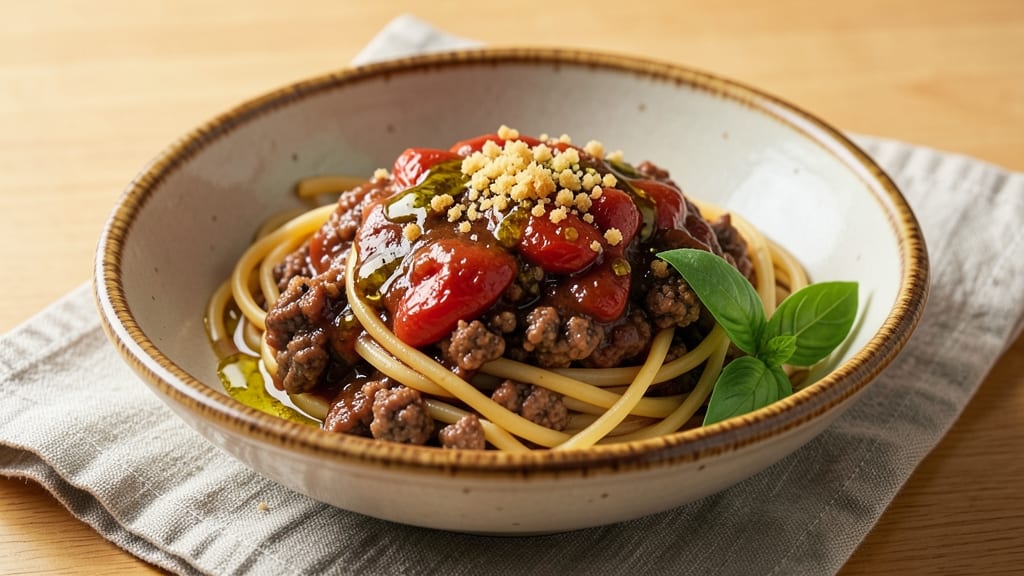
This authentic Italian red meat sauce recipe transforms humble ingredients into a slow-simmered masterpiece that captures the soul of traditional Italian cooking. The key lies in patience—hours of gentle simmering develop deep, complex flavors that store-bought versions can never match.
I've perfected this technique over years of testing, ensuring every spoonful delivers that perfect balance of rich meat, caramelized aromatics, and bright acidity from tomatoes and wine.
The foundation begins with ground beef and pork, browned to develop a deep, meaty flavor before being deglazed with white wine to dissolve those precious browned bits. Tomatoes—both canned and fresh—provide the acidity and body that define Italian sauces, while herbs like rosemary and thyme add aromatic depth.
The sauce simmers low and slow, allowing flavors to meld and intensify until it reaches that perfect consistency: thick enough to coat pasta beautifully, yet still vibrant and full of life.
What makes this sauce truly authentic is the attention to technique: never rushing the cooking process, using quality ingredients, and letting the sauce work its magic over time. The result is a sauce so rich and flavorful it transforms even the simplest pasta into a restaurant-worthy meal.
Each bite delivers layers of umami, a touch of sweetness from the tomatoes, and a satisfying depth that comes only from slow simmering.
This recipe serves as the perfect base for your favorite Italian dishes—whether it's classic tagliatelle, creamy risotto, or even stuffed shells. The beauty of this sauce is its versatility, yet its soul remains rooted in tradition. Let's create something that tastes like home, even if you're miles away from Italy.
Ingredients for authentic italian red meat sauce
Eleven essential ingredients transform into the soul of Italian cooking—rich, slow-simmered perfection.
| Ingredient | Amount | Notes |
|---|---|---|
| Ground Beef 🥩 | 1 ½ lb | 80% lean, finely ground |
| Ground Pork 🐷 | ½ lb | Finely ground for texture |
| Yellow Onion 🧅 | 1 whole | Medium size, finely chopped |
| Garlic Cloves 🧄 | 4 cloves | Fresh, minced for aroma |
| Dry White Wine 🍷 | ½ cup | Bold variety like Pinot Grigio |
| Canned San Marzano Tomatoes 🍅 | 2 cups | Crushed, no salt added |
| Fresh Rosemary 🌿 | ¼ cup | Chopped, stems removed |
| Fresh Thyme 🌿 | ¼ cup | Leaves only, finely chopped |
| Extra-Virgin Olive Oil 🫒 | ¼ cup | For initial searing |
| Tomato Paste 🍅 | 2 tbsp | Squeeze tube preferred |
| Kosher Salt 🧂 | 1 ½ tsp | Diamond Crystal preferred |
| Ground Black Pepper 🌶️ | ½ tsp | Freshly cracked |
The meat blend is non-negotiable for authentic flavor. Look for 80% lean ground beef at Whole Foods or your butcher—they'll often grind it fresh for you. The pork adds juiciness, and both should be finely ground for that classic Italian texture. San Marzano tomatoes are worth the splurge (or hunt down the canned section at Trader Joe's), as their sweetness balances the richness. Fresh herbs make all the difference—rosemary and thyme from the grocery store's produce section (not the dried aisle) will give you that vibrant, aromatic punch. If you're feeling fancy, grab a sprig of each and chop them yourself—it takes 30 seconds and changes everything.
No white wine? Substitute with chicken broth plus a splash of lemon juice—it'll give you that same bright acidity. Short on fresh herbs? Dried works at one-third the amount, but honestly, it's not the same. The tomato paste can be skipped if you're using a lot of crushed tomatoes, but I always include it—it's what gives that thick, velvety consistency. Want to make this vegetarian? Swap the meat for finely chopped mushrooms and lentils, but trust me, the meat version is where the magic happens. The wine is crucial for deglazing—don't use cooking wine, and if you must skip it, the broth substitute works surprisingly well.
This sauce only gets better with time—plan for at least 3 hours of simmering. Store in airtight containers in the fridge for up to 5 days, or freeze for 3 months (portion into ice cube trays for easy use). The flavors deepen overnight, so make extra—it disappears faster than you'd think. I always keep a jar in the freezer labeled 'Sunday Sauce' because it's perfect for quick weeknight dinners. Just thaw and reheat gently—no microwave, ever. Stovetop only, and keep it warm for that restaurant-quality finish.
Why You'll Love This Recipe
- No Fuss, Big Payoff: I swear by this sauce because it’s the kind of recipe that forgives mistakes. Brown the beef and pork together—no need to stress over perfect crumbles—and the onions caramelize while you stir. That wine splash? It’s the secret that deglazes and adds depth without extra effort.
- Umami Bomb: The combo of beef and pork gives it this deep, savory punch, while the garlic and onions build layers of flavor as they cook. Simmer it long enough, and the sauce thickens into something rich but not heavy—like a hug from Nonna, but edible.
- Leftovers That Shine: This sauce keeps better than most. Reheat it with a splash of water or broth, and it’s just as good the next day—perfect for tossing with pasta, stuffing into ravioli, or even slathering on grilled cheese. (Yes, I’ve done that. Don’t judge.)
- Budget-Friendly Luxury: Ground beef and pork stretch further than you’d think, and the onions/garlic/wine elevate it without breaking the bank. It’s the kind of meal that makes you feel fancy without the restaurant price tag—especially when you’re feeding a crowd or just treating yourself midweek.
Step-by-step instructions for slow-simmered Italian red meat sauce
This is where the magic happens—where simple ingredients transform into a rich, layered sauce that clings to every strand of pasta.
Build Rich, Flavorful Browned Bases
Heat a large Dutch oven over medium-high heat until hot. Add the 0.25 cup extra-virgin olive oil and let it shimmer for 30 seconds. This is crucial—you want the oil hot enough to sear but not smoking. Add half of the 1.5 lb ground beef and break it apart with a wooden spoon, pressing down gently to create a thick, even layer.
Cook undisturbed for 5-6 minutes until the beef releases its juices and turns a deep, rich brown. This browning creates the umami foundation of your sauce. Once browned, transfer it to a plate and repeat with the remaining 1.5 lb ground beef. Set aside both batches temporarily—they'll come back together soon.
Sear the Pork and Aromatics
In the same Dutch oven, add the remaining 0.25 cup extra-virgin olive oil if needed, then add the 0.5 lb ground pork. Break it apart and cook for 4-5 minutes until it loses its raw color and begins to brown. The pork should be finely crumbled and golden—this is where its fat infuses into the oil, creating a luxurious texture.
Push the pork to one side of the pan and add the 1 whole yellow onion, finely chopped. Cook for 3-4 minutes until softened and translucent. Add the 4 cloves garlic cloves, minced, and cook for 30 seconds until fragrant—you'll smell that irresistible garlic aroma that signals it's time to deglaze.
Deglaze and Incorporate Herbs
Pour in the 0.5 cup dry white wine and scrape up all those delicious browned bits from the bottom of the pan with a wooden spoon. This deglazing step captures all the flavor you've built so far. Let the wine simmer for 2-3 minutes until it reduces by half, leaving behind a rich, concentrated liquid.
Stir in the 2 tbsp tomato paste, spreading it evenly over the bottom of the pan. This paste will deepen the color and add a subtle sweetness to balance the acidity. Add the 0.25 cup fresh rosemary and 0.25 cup fresh thyme, finely chopped, and stir for 1 minute until the herbs release their aromatic oils into the sauce.
Simmer the Sauce to Perfection
Return the browned beef to the Dutch oven and add the 2 cups canned San Marzano tomatoes, crushed. Stir well to combine, then add the 1.5 tsp kosher salt and 0.5 tsp ground black pepper. Bring the sauce to a gentle simmer over medium-low heat, then reduce the heat to low and let it cook uncovered for 1.5 hours.
This slow simmer is where the sauce transforms from a simple mixture into a rich, velvety sauce. Stir occasionally to prevent sticking, and taste after 1 hour to adjust seasoning if needed. The sauce should thicken slightly as it reduces, and the flavors should meld into a harmonious, umami-packed profile. You'll know it's ready when it coats the back of a spoon smoothly and has a deep, inviting color.
Finish and Serve
Once the sauce reaches the perfect consistency, remove it from the heat and let it rest for 5 minutes. This resting period allows the flavors to settle and the sauce to thicken slightly. Taste and adjust seasoning one last time—this is your chance to perfect the balance of salt, acid, and herbs.
Serve the sauce immediately over your choice of pasta, tossing it generously to coat each strand. The sauce should cling beautifully, creating a luxurious, flavorful bite with every mouthful. This is the kind of sauce that makes you want to savor every forkful, where the layers of flavor tell the story of how it was made with care and patience.
Pro Tips For Making Authentic Italian Red Meat Sauce
- CRISPY THE MEAT FIRST: After breaking up the beef and pork, spread it in a thin layer on a dry skillet and cook undisturbed for 3-4 minutes until deeply browned. I learned this the hard way—skipping this step means a sauce that tastes more like stew than ragù. The crust adds flavor and texture that nothing else can replace.
- SWEAT THE ONIONS LOW: Cut onions into ¼-inch dice and cook them in the same pan with the meat drippings on medium-low heat for 10-12 minutes. Let them bubble gently, stirring occasionally—don’t rush this or you’ll end up with bitter, mushy onions. Patience here means a sauce that actually tastes like it belongs in Italy.
- DEGLAZE WITH WINE: Once the onions are soft, pour in the white wine and let it simmer for 5 minutes before adding anything else. The alcohol burns off, but the acidity cuts through the richness of the meat. Skipping this step is like building a house without a foundation—your sauce will feel incomplete.
- SALT THE MEAT BEFORE SEASONING: Mix 1 teaspoon of salt into the raw ground meat before browning it. This guarantees even seasoning and prevents the sauce from tasting bland later. I used to add salt at the end, and the flavor always felt uneven—this fix changed everything.
Troubleshooting great authentic italian red meat sauce
Sauce Too Thin?
If your sauce is too thin after simmering, don't panic—this is easily fixed. Simmer uncovered for an additional 30-45 minutes to reduce the liquid naturally. For faster results, mix 1 tbsp tomato paste with 1 tbsp water and stir it in, then simmer for 10 minutes more.
The key is patience; rushing will make it grainy. 💡
Pro tip: If it's still too thin, remove the lid and simmer on medium heat for 15 minutes, stirring occasionally. The sauce should thicken as the moisture evaporates. Avoid adding flour or cornstarch—it's not traditional and can make the sauce taste off.
Sauce Too Thick?
If your sauce is too thick, add ¼ cup warm water or beef broth at a time, stirring constantly. Heat gently over low heat to incorporate the liquid smoothly. Avoid adding too much at once—it's easier to fix than over-diluting. 🌡️
For a more traditional fix, add ½ cup crushed tomatoes and simmer for 30 minutes to restore balance. The acidity will also brighten the flavors. If you're in a hurry, a splash of white wine can help thin it out while adding depth.
Meat Not Browned Enough
If your meat looks pale or undercooked, it's crucial to fix this immediately. Remove the meat from the sauce and return it to the Dutch oven over medium-high heat.
Break it apart and cook for an additional 3-4 minutes until it reaches 165°F internal temperature. This ensures food safety while still developing flavor. 🥩
For next time, cook the meat in smaller batches if needed. Overcrowding the pan steams the meat instead of browning it. Use a meat thermometer to check doneness—this is non-negotiable for both flavor and safety.
Sauce Tastes Bland
Blandness usually means the sauce needs more acidity or salt. Add ½ tsp red wine vinegar or balsamic vinegar to brighten the flavors. For salt, use ½ tsp kosher salt at a time—taste as you go.
Fresh herbs like basil or parsley can also elevate the sauce right before serving. 🌿
If the sauce lacks depth, simmer it uncovered for 15-20 minutes longer to concentrate the flavors. A pinch of smoked paprika or a splash of soy sauce (just ½ tsp) can add umami without overpowering. Trust your taste buds—seasoning is about balance.
Herbs Floating on Top
If your herbs are floating instead of infusing, they need more time to release their oils. Stir them in earlier during the simmering process, or finely chop them even smaller. For fresh rosemary, remove the needles from the stems before chopping—this ensures better flavor distribution. 🌿
If you notice herbs floating after the sauce is finished, blend the sauce briefly with an immersion blender to break them up. This won't ruin the texture but will help distribute the flavors evenly. For next time, add herbs when you deglaze with wine—this ensures they cook through evenly.
Sauce Too Acidic
If the sauce tastes too tangy, balance it with a touch of sweetness. Stir in 1 tsp honey or brown sugar and simmer for 5 minutes to let it meld. A pinch of sugar can also help round out the acidity from the tomatoes and wine. 🍯
For a more traditional fix, add a small piece of parmesan rind (about 1 inch) and simmer for 15 minutes
Nutrition facts
Frequently asked questions
Why does this recipe use both beef and pork?
Traditional Italian red meat sauces like ragù rely on this combination for perfect texture and flavor. The beef provides a deep, rich umami base, while the pork adds juiciness and fat that keeps the sauce velvety. The pork also helps create that signature Italian sauce consistency—thick enough to coat pasta beautifully without being gluey.
Can I make this sauce in a slow cooker?
Brown the meat first in a skillet, then transfer everything to your slow cooker. Cook on low for 6-8 hours or high for 3-4 hours. The slow cooker's gentle heat mimics traditional simmering, though you'll need to add ¼ cup water if it gets too thick. Stir occasionally and adjust seasoning at the end.
What's the secret to getting that deep, authentic flavor?
Three things: browning the meat thoroughly (don't skip this step!), deglazing with wine to capture those flavorful browned bits, and long, slow simmering. The wine reduces and concentrates, while the herbs infuse their oils over time. Patience is key—rushing makes bland sauce.
How do I know when the sauce is ready?
It's ready when it coats the back of a spoon smoothly and has a deep, rich color. The sauce should be thick enough to cling to pasta but still vibrant, not dry. Taste it after 1.5 hours—it should be flavorful but balanced. If it's still too thin, simmer uncovered for another 30 minutes to reduce naturally.
Can I use this sauce for dishes other than pasta?
This versatile sauce works beautifully on risotto, polenta, or even as a filling for stuffed shells. For risotto, reduce the sauce slightly more and stir it into the rice at the end. For polenta, simmer the sauce with the polenta until it absorbs the flavors. The key is to use it within 3 days for best texture.