
Sauces & Condiments
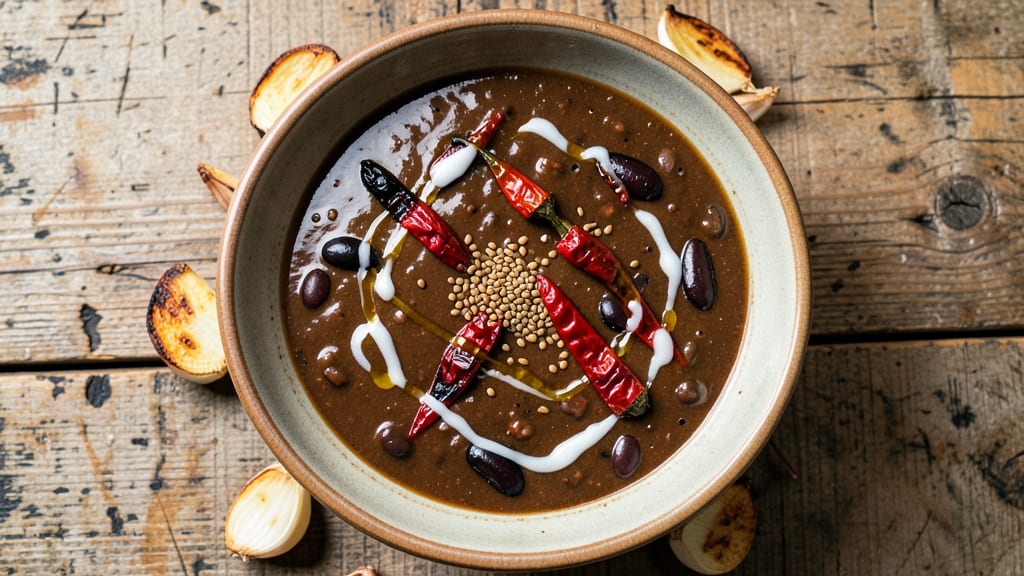
This authentic black bean sauce transforms simple ingredients into a rich, smoky condiment that elevates every dish. The secret lies in slow-simmered black beans blended with chipotle, cumin, and garlic for depth that lingers on the tongue.
Unlike store-bought versions, this sauce builds layers of flavor through proper simmering and balancing—no shortcuts, just tradition. The process begins with toasting spices to wake up their aromas before blending them with soaked beans, creating a velvety base.
A touch of vinegar brightens the richness, while soy sauce adds umami complexity. The result? A sauce so versatile it works as a stir-fry glaze, noodle dipping sauce, or even a taco topping—each use revealing new dimensions of its smoky-sweet profile.
What makes this sauce truly authentic is the patience required: simmering until thickened and adjusting consistency with water or a splash of vinegar. The final product coats ingredients beautifully, leaving behind a satisfying stickiness that clings to every bite.
It’s the kind of sauce that turns ordinary meals into memorable experiences. Store it in the fridge for up to two weeks or freeze for longer use—perfect for batch cooking and meal prep. Whether you’re serving up stir-fries, tacos, or grilled meats, this sauce delivers restaurant-quality depth with minimal effort.
Ingredients for authentic black bean sauce
Nine essential ingredients create this restaurant-quality black bean sauce with smoky depth.
| Ingredient | Amount | Notes |
|---|---|---|
| Dried Black Beans 🥣 | 1 ½ cups | Soaked overnight for velvety texture |
| Chipotle Peppers in Adobo 🌶️ | 3 whole | Smoked chipotle for authentic smokiness |
| Ground Cumin 🌿 | 1 ½ tbsp | Toasted for deeper aroma |
| Garlic Cloves 🧄 | 6 cloves | Freshly minced for vibrant flavor |
| White Vinegar 💧 | 2 tbsp | Brightens and balances richness |
| Tamari or Soy Sauce 🍶 | 2 tbsp | Gluten-free tamari preferred |
| Extra-Virgin Olive Oil 🫒 | ½ cup | High-quality for richness |
| Brown Sugar 🍯 | 2 tbsp | Balances smokiness naturally |
| Fresh Cilantro 🌿 | ¼ cup | Chopped for fresh finish |
| Water 💧 | 1 ½ cups | Adjust for desired consistency |
The black beans are the foundation—dried beans yield the best texture, but canned low-sodium beans work in a pinch if soaked and rinsed. For chipotle peppers, Hatch brand delivers consistent smokiness, though any quality adobo sauce suffices. Toast the cumin seeds briefly in a dry pan before grinding to unlock their full aroma. Garlic should be freshly minced for vibrant flavor, not pre-minced jarred garlic. Trader Joe's and Whole Foods carry excellent dried spices and beans for this sauce.
No chipotle peppers? Smoked paprika at half the amount provides smokiness, though it lacks the heat. Substitute tamari with coconut aminos for a gluten-free alternative. Fresh cilantro can be swapped for dried cilantro at one-third the amount, though fresh is preferred. For a sweeter profile, maple syrup replaces brown sugar one-to-one. The sauce thickens as it cools, so adjust consistency with water or vinegar while blending. Food processor yields the smoothest texture, but an immersion blender works for smaller batches.
Store the sauce in an airtight container in the fridge for up to 2 weeks, or freeze for 3 months in ice cube trays for single-use portions. The flavor deepens overnight, making it ideal for meal prep. For best results, simmer the sauce uncovered initially to thicken, then adjust consistency before serving. This sauce elevates grilled meats, stir-fries, and tacos with its complex, smoky-sweet profile.
Why You'll Love This Recipe
- One-Pot Wonder: I swear by this—just soak the dried beans overnight, toss everything into one pot, and let it simmer. No blender, no extra bowls, just hands-off flavor building while you do whatever else you’re doing.
- Smoky Depth Bomb: That chipotle in adobo? It’s the secret weapon—smoky, slightly sweet heat that lingers. Add a splash of vinegar at the end, and suddenly you’ve got complexity without extra effort.
- Meal Prep MVP: Make a big batch on Sunday, and you’ve got sauce for tacos, bowls, or even grilled fish all week. Honestly, I’ve had it last in my fridge for five days and still taste amazing—just reheat with a little water.
- Budget Magic: Dried beans are my wallet’s best friend—cheap, shelf-stable, and packed with protein. This sauce costs me pennies per serving, yet it feels like a restaurant-worthy dish. (Yes, even on a Tuesday night.)
Step-by-step instructions for authentic black bean sauce
This method delivers restaurant-quality depth with smoky chipotle and earthy cumin—every technique matters.
Toast the Cumin and Prepare the Chipotle
Heat a dry skillet over medium heat and add the 1.5 tablespoons ground cumin. Toast for 1-2 minutes until fragrant and slightly darker—you'll smell that warm, nutty aroma that defines authentic Mexican cooking. Immediately transfer to a bowl to cool while you prepare the chipotle.
Remove the 3 whole chipotle peppers in adobo from their sauce and finely chop them. Save the adobo sauce for another use, but don't waste it—the smoky depth in this sauce comes from both the peppers and their original sauce. Set the chopped chipotle aside with the toasted cumin.
Sauté Garlic and Build the Base
In a medium saucepan, heat the 0.5 cup extra-virgin olive oil over medium-low heat. Add the 6 minced garlic cloves and sauté for 2-3 minutes until golden—not brown, just lightly toasted. This prevents bitterness and builds flavor. Remove from heat immediately after to preserve that fresh aroma.
Return the pan to medium heat and add the chopped chipotle peppers and toasted cumin. Stir constantly for 1 minute until the mixture smells deeply smoky and aromatic. This is where the authentic flavor foundation forms. If you smell burning, reduce heat immediately—it's easy to overdo this step.
Simmer the Black Beans
Add the drained 1.5 cups dried black beans (from overnight soaking), 1.5 cups water, 2 tablespoons white vinegar, 2 tablespoons tamari or soy sauce, and 2 tablespoons brown sugar to the saucepan. Stir well to combine all ingredients.
Bring to a boil over medium-high heat, then immediately reduce to low heat. Cover and simmer for 45-50 minutes, stirring occasionally, until the beans are completely tender and the sauce has thickened to a velvety consistency. The sauce should coat the back of a spoon with a rich, glossy texture. If it's too thin, uncover and simmer uncovered for 5-10 minutes more.
Finish with Fresh Cilantro
Once the beans are tender, remove the saucepan from heat. Stir in the 0.25 cup chopped fresh cilantro and let it steep for 5 minutes—this allows the bright herb notes to infuse the warm sauce. The cilantro should brighten the smoky, earthy flavors without overpowering them.
Taste and adjust seasoning if needed. You might want to add a pinch more salt or a splash of vinegar to balance the flavors. The sauce should be rich, slightly sweet, and deeply smoky with a bright finish. For best results, let it cool slightly before serving—this allows the flavors to meld completely.
Pro Tips For Making Authentic Black Bean Sauce
- SOAK BEANS OVERNIGHT: I learned this the hard way—rushing soaks leave beans tough and gummy. Dried black beans need 8+ hours in water (or a quick 2-hour soak in boiling water, then cooled). The longer they soak, the creamier your sauce will be later. No excuses: just toss them in a bowl with cold water and let them sit.
- TOAST CUMIN LOW: After burning three batches, I finally figured out: toast ground cumin on low heat for 30 seconds until fragrant, not brown. High heat turns it bitter fast. Smell it—if it’s acrid, you’ve gone too far. This step makes a real difference in the earthy depth of your sauce.
- BLITZ GARLIC FAST: Mince garlic cloves super fine—no big chunks hiding in your sauce. Use the flat side of your knife to smash them first, then chop. Add them to the pot last, just 30 seconds before removing from heat. They burn faster than you think, and you don’t want that bitter kick ruining your work.
- VINEGAR LAST MINUTE: Sounds weird, but it works: stir in white vinegar after the sauce cools slightly—around 160°F (70°C). Too early, and the acidity fights the beans’ natural sweetness. Too late, and it clings unevenly. A splash (2-3 tablespoons) brightens the whole dish without overpowering. Trust the process.
Regional styles of this dish
Mexican Street Style
In Mexico City’s markets, this sauce is known as salsa de frijoles negros and is often served as a condiment with tacos al pastor or quesadillas. The key difference? Add 1 tablespoon of ground coriander to the simmering beans for a citrusy depth.
Vendors also boost the sauce with 1 teaspoon of Mexican oregano—this herb’s earthy notes complement the smoky chipotle beautifully. For authenticity, serve it slightly warm with a sprinkle of crushed tortilla chips on top. 🌶️
Thai-Inspired Adaptation
Thai cuisine transforms this sauce into a spicy peanut-black bean dip by blending in ½ cup roasted peanuts and 1 tablespoon fish sauce (or soy sauce for vegan). Add 1 teaspoon of shrimp paste (optional) for umami, then finish with lime zest instead of cilantro.
This version pairs perfectly with spring rolls or grilled tofu. The Thai approach relies on high heat—reduce the chipotle to 2 peppers and add 1 teaspoon of Thai bird’s eye chili for a fiery kick. 🌶️
Peruvian Andean Twist
In the Andes, black bean sauces often incorporate huacatay (black mint) and ají amarillo (yellow chili). Swap the chipotle for 1 tablespoon of ají amarillo paste and add 2 tablespoons of chopped huacatay (or regular mint in a pinch).
Stir in 1 teaspoon of ground ají panca (dried red chili) during the simmer for a nutty, slightly sweet heat. This version shines on lomo saltado or causa rellena. The sauce should have a thicker, almost paste-like consistency—simmer uncovered for 10 extra minutes to achieve this. ✨
Japanese-Inspired Miso-Black Bean
For a fusion twist, blend 2 tablespoons of white miso paste into the sauce during the final 5 minutes of simmering. Add 1 teaspoon of grated ginger and 1 tablespoon of mirin to balance the smokiness.
Top with toasted sesame seeds and thinly sliced scallions for a umami-rich glaze perfect for yaki soba noodles or grilled salmon. The miso adds a fermented depth that bridges Mexican and Japanese flavors seamlessly. 🍜
Caribbean Jerk Fusion
Jerk seasoning meets black bean sauce in this bold variation. After toasting the cumin, add 1 teaspoon of ground allspice and ½ teaspoon of ground nutmeg to the garlic sauté. Stir in 1 tablespoon of jerk seasoning (store-bought or homemade) during the simmer.
Finish with 1 tablespoon of lime juice and 2 tablespoons of chopped scallions. This sauce slathers onto jerk chicken or grilled pineapple like a dream. The allspice and nutmeg give it a warm, slightly sweet complexity that’s pure Caribbean-Mexican mashup. 🔥
Nutrition facts
Frequently asked questions
Can I use canned black beans instead of dried?
Yes, but with adjustments! Use 2 (15-ounce) cans of low-sodium black beans (about 3 cups drained) and rinse them thoroughly to remove excess sodium. For best texture, simmer the sauce for 20-25 minutes uncovered to thicken properly. The flavor will be slightly less developed than dried beans, but it's a great shortcut.
How do I adjust the spice level?
For milder heat, reduce chipotle peppers to 2 whole peppers or remove seeds before chopping. For extra spice, add ½ teaspoon of cayenne pepper during simmering or serve with a sprinkle of chili powder on top. Always taste as you go—this sauce builds flavor gradually!
What's the best way to store leftover sauce?
Transfer to an airtight container and refrigerate for up to 2 weeks. For longer storage, freeze in ice cube trays (perfect for single servings) or a sealed bag for 3 months. Thaw overnight in the fridge—never microwave directly from frozen. The sauce thickens when chilled, so thin with water or vinegar before reheating.
Can I make this sauce without a food processor?
Use an immersion blender for small batches or mash the beans with a potato masher after simmering. For a chunkier texture (like traditional Mexican versions), simply stir the sauce vigorously with a wooden spoon. The key is simmering until the beans break down naturally—this creates the velvety consistency without blending.
What are the best dishes to pair with this sauce?
This versatile sauce shines on grilled meats, stir-fried vegetables, tacos, and noodle bowls. Try it as a dipping sauce for spring rolls or a glaze for tofu. For extra drama, drizzle over seared scallops or use it to deglaze pans after cooking. The smoky-sweet balance works with both spicy and mild dishes.