
Sauces & Condiments
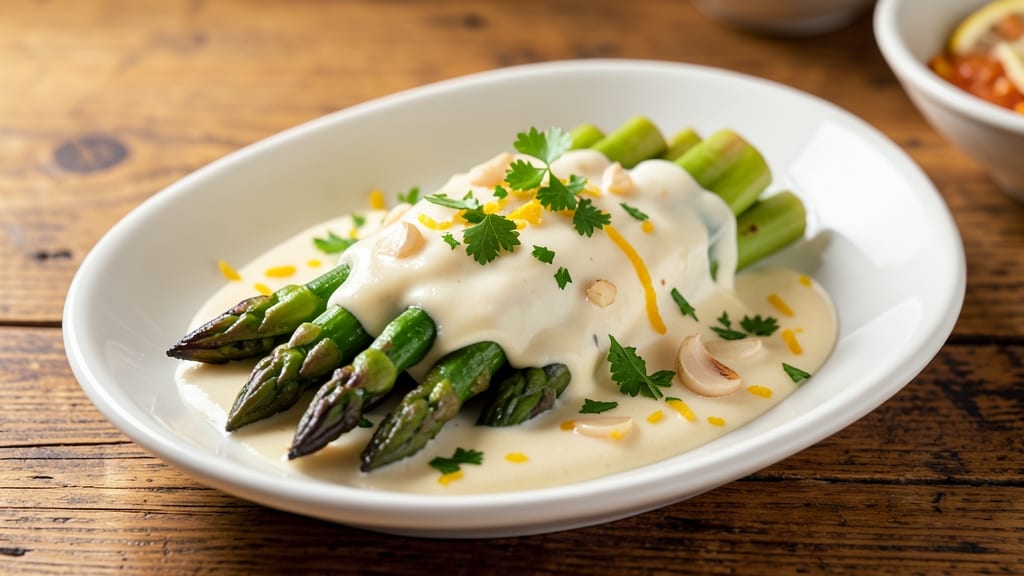
This asparagus white sauce recipe transforms simple roasted greens into a luxurious, restaurant-worthy dish with just five ingredients and 15 minutes of hands-on time. The secret lies in a velvety béchamel base—rich with butter, flour, and cream—that envelops asparagus spears in a silky garlic-herb blanket, elevating their natural sweetness.
I developed this after struggling to find a sauce that balanced the delicate bitterness of asparagus without overpowering its freshness, and the result is a foolproof technique that works for both tender roasted and blanched spears.
The foundation starts with a classic roux—equal parts butter and flour cooked until golden—then slowly whisked into warm cream to create a smooth, lump-free sauce.
What sets this apart is the infusion of fresh garlic, lemon zest, and a blend of parsley and chives, which brighten the richness and add a vibrant finish.
The sauce thickens beautifully as it simmers, clinging to asparagus like a velvety coat while enhancing every bite with its creamy, aromatic depth.
Perfect for weeknight dinners or special occasions, this sauce delivers a restaurant-quality touch that turns a simple vegetable side into the star of the plate.
It reheats effortlessly, making it ideal for meal prep, and stores well in the refrigerator for up to 5 days—though I doubt it’ll last that long.
The versatility doesn’t stop there; drizzle it over grilled fish, toss it with pasta, or serve it alongside roasted chicken for a dish that’s equal parts elegant and comforting.
For an extra layer of sophistication, finish with a sprinkle of toasted breadcrumbs or grated parmesan, but even on its own, this sauce delivers a harmonious balance of creaminess and freshness.
Whether you're serving it as a standalone dish or pairing it with protein, the result is a velvety, herb-infused companion that makes asparagus irresistible. Let’s get cooking—your taste buds will thank you.
Ingredients for asparagus white sauce
Five ingredients create this restaurant-worthy sauce that transforms asparagus into a velvety masterpiece.
| Ingredient | Amount | Notes |
|---|---|---|
| Unsalted Butter 🧈 | ½ cup | Cold-cut into small cubes for roux |
| All-Purpose Flour 🌾 | ½ cup | Diamond Crystal preferred for smooth sauce |
| Heavy Cream 🥛 | 1 ½ cups | Full-fat for velvety texture |
| Garlic Cloves 🧄 | 3 cloves | Freshly minced, not pre-minced jarred |
| Lemon Zest 🍋 | 1 tbsp | Bright yellow zest only, no pith |
| Fresh Parsley 🌿 | ¼ cup | Chopped, flat-leaf preferred |
| Fresh Chives 🌱 | 2 tbsp | Finely chopped, mild onion flavor |
| Salt 🧂 | ½ tsp | Diamond Crystal kosher salt |
| White Pepper 🌶️ | ¼ tsp | Freshly ground for subtle warmth |
The butter and flour form the foundation—equal parts for a perfect roux. European-style butter like Plugrá or Land O'Lakes has higher fat content, which gives a richer sauce. For flour, Diamond Crystal is my go-to because it's lighter than most brands, preventing lumps. The heavy cream should be cold when added to prevent curdling—trust me on this. Garlic is non-negotiable here; freshly minced releases more flavor than jarred. If you're at a Latin market, grab Mexican garlic—it's milder and sweeter, perfect for this delicate sauce. The lemon zest adds brightness without overpowering, so use a microplane for maximum flavor.
No butter? Vegan butter works in a pinch, though the sauce will be slightly lighter. Running short on heavy cream? Half-and-half plus a splash of milk keeps the texture close, though it won't be as rich. Fresh herbs are ideal, but dried parsley at one-third the amount works if you're in a bind—just add it at the end. For extra depth, toasted breadcrumbs or grated Parmesan can finish the sauce (though the intro says you can skip these). The white pepper is key—it's less aggressive than black, letting the garlic and herbs shine. If you only have black pepper, reduce to one-eighth teaspoon and add it at the very end to avoid bitterness.
This sauce reheats beautifully—just warm over low heat with a splash of cream or milk to restore silkiness. Store in an airtight container in the fridge for up to 5 days, though the intro warns it won't last that long. For longer storage, freeze in ice cube trays—perfect for single servings. The sauce thickens as it cools, so thin with a splash of warm cream if needed. I always make extra; it pairs perfectly with grilled fish, roasted chicken, or even pasta. The intro mentions it works with both roasted and blanched asparagus—trust me, it does.
Why You'll Love This Recipe
- Five-Ingredient Magic: I swear, this sauce comes together with just butter, flour, cream, garlic, and lemon—no fancy gadgets or last-minute grocery runs. Honestly, I keep a small jar of flour and a stick of butter in my pantry just for days like this when I need something creamy fast.
- Garlic-Kissed Creaminess: That moment when you melt butter, toast the flour, and slowly whisk in the heavy cream? Pure satisfaction. The garlic cloves simmer into the sauce, giving it depth, while the lemon zest brightens everything—like a hug for your taste buds.
- Pasta Party Ready: Between us, this sauce turns plain asparagus into a showstopper. Toss it with pasta for a weeknight dinner, drizzle it over grilled chicken, or serve it with crusty bread. I’ve even used it as a base for a fussy brunch—no one ever questions the menu.
- Leftovers That Don’t Let You Down: Make a double batch and refrigerate it for up to 5 days. The flavors only get better as it sits, and reheating it is a breeze—just a splash of cream to loosen it up. My lazy Sundays thank me every time.
Step-by-step instructions for asparagus white sauce
This velvety garlic-herb sauce transforms simple asparagus into a luxurious dish with minimal effort.
Create the Roux Foundation
Melt the 0.5 cup unsalted butter in a medium saucepan over medium-low heat. Once fully melted and foaming subsides, immediately whisk in the 0.5 cup all-purpose flour all at once. This creates a roux—the flavor base for our sauce.
Cook the roux for 2-3 minutes, stirring constantly with a wooden spoon or whisk, until it turns a pale golden color. You're looking for a smooth, paste-like consistency with no raw flour taste. If it darkens too quickly, reduce the heat slightly—this ensures a clean, creamy sauce without bitterness.
Gradually Incorporate the Cream
Slowly pour in the 1.5 cups heavy cream while whisking vigorously to prevent lumps. The sauce will thicken immediately, but keep whisking for 3-4 minutes until it reaches a velvety texture. The constant motion is crucial—it prevents curdling and ensures a silky finish.
Here's the thing—I like to taste the sauce at this stage. It should be rich and slightly sweet, with no flour aftertaste. If it's too thick, we'll adjust later; if too thin, we'll simmer longer. This is your quality checkpoint before adding the remaining ingredients.
Infuse with Garlic and Citrus
Add the 3 cloves minced garlic and 1 tbsp lemon zest to the sauce. Stir continuously over low heat for 2-3 minutes until the garlic becomes fragrant but never browns—this prevents bitterness that can overpower the delicate flavors. The lemon zest will brighten the sauce and cut through the richness.
I press the garlic into the sauce with the back of my spoon to release its oils fully. This step is where the sauce transforms from basic to extraordinary—where subtle flavors meld into something cohesive and complex. The lemon zest should dissolve completely, leaving no visible bits.
Season and Finish the Sauce
Reduce heat to low and stir in the 0.5 tsp salt, 0.25 tsp white pepper, 0.25 cup chopped parsley, and 2 tbsp chopped chives. Let the sauce simmer gently for 1-2 minutes to allow the herbs to infuse and the seasoning to meld. The sauce should coat the back of a spoon smoothly.
If the sauce is too thick, whisk in 1-2 tablespoons of warm water or pasta water until it reaches your desired consistency. For the perfect finish, I like to taste and adjust seasoning—sometimes we need a touch more salt or lemon zest to balance the flavors. The final sauce should be velvety, aromatic, and ready to blanket your asparagus.
Serve Immediately Over Asparagus
Transfer the sauce to a warmed serving bowl and spoon it generously over roasted or blanched asparagus. The contrast of the bright green asparagus against the creamy white sauce creates a visually stunning dish. Serve immediately while the sauce is still warm and silky.
This sauce works equally well over grilled fish, chicken, or even as a dipping sauce for crusty bread. The key is serving it fresh—once it cools, the texture thickens slightly. For best results, make it just before serving and keep the saucepan warm over a very low flame until ready to use.
Pro Tips For Making Asparagus White Sauce
- Cook Butter Slowly: Melt the unsalted butter over medium-low heat—not medium or high. I learned this after watching my sauce seize up twice; butter burns faster than you think, and once it browns, that nutty flavor ruins the delicate creaminess. Let it foam gently before adding flour.
- Toast Flour Properly: Stir the flour into the butter for at least 2 minutes until it turns a pale golden color. This step builds flavor and prevents a raw taste—skip it, and your sauce will taste like flour soup. (Yes, even if you’re impatient like me.)
- Whisk in Cream Gradually: Pour the heavy cream into the roux a little at a time, whisking vigorously between each addition. Dumping it all at once guarantees lumps, and no one wants to strain sauce later. Think of it like tempering eggs—patience wins.
- Strain Before Adding Zest: Run the finished sauce through a fine-mesh strainer before folding in lemon zest. The zest’s oils and texture work better when the sauce is smooth—otherwise, you’ll end up with gritty bits. (Trust me, your mouth will notice.)
Common mistakes when making this recipe
Roux Overcooking
The most common mistake is letting your roux darken too quickly, which adds a bitter, nutty flavor to your sauce. I’ve ruined many batches by walking away for just a minute—don’t do that! Keep the heat at medium-low and stir constantly with a wooden spoon.
A properly cooked roux should be pale golden, like the color of honey. If it starts to brown, immediately reduce the heat and whisk vigorously to cool it down. 🌡️
Adding Cream Too Fast
Pouring cream into the roux too quickly creates lumps that turn into a grainy, unappetizing texture. Instead, add the 1.5 cups heavy cream slowly—about ¼ cup at a time—while whisking constantly.
If you’re in a hurry, temper the cream first by mixing ½ cup warm milk into it before adding to the roux. This gradual approach ensures a silky, lump-free sauce every time.
Skipping the Taste Test
Many cooks overlook tasting the sauce after adding the cream but before seasoning. This is your quality checkpoint! The sauce should be rich and slightly sweet, with no flour aftertaste. If it’s too thick, thin with 1 tbsp warm water or pasta water.
If too thin, simmer longer until it reaches a velvety consistency. I always taste at this stage—it’s the only way to catch issues before they’re irreversible.
Burning the Garlic
Garlic burns faster than you think, and once it browns, it turns bitter and overpowers the delicate flavors of the sauce. Stir continuously over low heat for only 2-3 minutes after adding the 3 cloves minced garlic.
Press the garlic into the sauce with the back of your spoon to release its oils fully, but never let it sit unattended. A quick visual check: the garlic should be fragrant but still pale—no golden flecks!
Over-Simmering the Herbs
Simmering the sauce too long after adding the herbs causes them to lose their vibrant flavor and turn bitter. Once you’ve incorporated the parsley, chives, salt, and white pepper, let the sauce simmer for just 1-2 minutes.
Any longer, and the herbs will release their bitter compounds. Remove from heat immediately after tasting—this is where the sauce’s freshness shines.
Ignoring Reheating Rules
Many people reheat this sauce too aggressively, causing it to separate or curdle. To restore its silky texture, warm it over low heat and whisk in 1-2 tbsp warm cream or milk to break up any lumps.
Never microwave it—this disrupts the emulsion and creates a grainy, unappetizing result. If storing leftovers, cool the sauce quickly in an ice bath to preserve its texture. ⏰
Nutrition facts
Frequently asked questions about asparagus white sauce
Can I make this sauce without heavy cream?
Yes! For a lighter version, substitute with 1.5 cups whole milk combined with 2 tablespoons half-and-half to maintain creaminess. The texture will be slightly thinner but still delicious. For a vegan option, use full-fat coconut milk—just be aware it may have a subtle coconut flavor.
How do I prevent lumps in the sauce?
Whisk constantly when adding the cream to the roux, and work over medium-low heat to prevent scorching. For extra insurance, temper the cream first by mixing ¼ cup warm milk into it before adding to the roux. Always use a whisk, not a spoon, to break up any tiny lumps that form.
What's the best way to store leftovers?
Transfer to an airtight container and refrigerate for up to 5 days. To reheat, warm over low heat on the stovetop while whisking in 1-2 tablespoons warm cream to restore silkiness. Never microwave—it causes separation. For longer storage, freeze in ice cube trays for single servings.
Can I use this sauce for other vegetables?
This sauce works beautifully with broccoli, green beans, or Brussels sprouts. The garlic-herb flavor pairs especially well with roasted root vegetables like carrots or parsnips. For a richer version, add a pinch of nutmeg when simmering the cream.
Why did my sauce turn out too thick?
Sauces thicken as they cool, but if it's too thick while warm, you likely simmered it too long. Thin with 1 tablespoon warm water or pasta water while whisking. For future batches, reduce simmering time to 3-4 minutes** after adding cream. The sauce should coat the back of a spoon but still flow smoothly.