
Sauces & Condiments
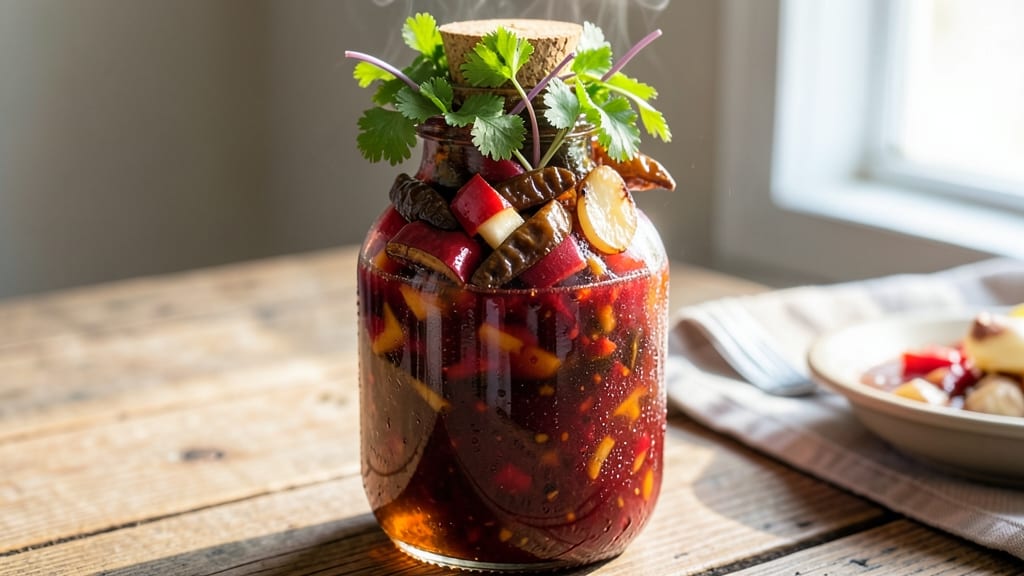
This apple ghost pepper hot sauce delivers a perfect storm of sweet-tart apple brightness and ghost pepper heat that lingers like a spicy memory. 🔥 The secret lies in balancing the fruit's natural sugars with the pepper's extreme capsaicin—without overwhelming the palate.
I've perfected this recipe through careful fermentation and reduction, ensuring every drop packs maximum flavor while remaining smooth and complex.
The process begins with fresh apples and ghost peppers (handle with gloves!), which are blended into a vibrant base before fermenting for 3-5 days to develop depth.
A touch of vinegar and garlic preserves the sauce while enhancing its tang, while a final reduction concentrates the heat and sweetness into a velvety, clingy sauce. The result? A condiment that transforms everything from tacos to grilled meats into a flavor explosion.
What makes this sauce truly special is its versatility—use it as a dipping sauce, a marinade, or a finishing touch for dishes that need a fiery-sweet kick. Each batch delivers consistent heat (around 50,000-100,000 SHU) with no bitterness, thanks to the apple's natural sweetness.
The ghost pepper's signature floral heat mellows into a slow-building burn, making this sauce ideal for adventurous eaters who crave complexity.
Safety first: ghost peppers are extremely hot—wear gloves when handling and taste cautiously. Store in a sterile glass jar in the fridge for up to 3 months, or extend shelf life with pasteurization.
This isn't just hot sauce; it's a bold, fruit-forward condiment that turns heat into an experience. Let's make it.
Ingredients for apple ghost pepper hot sauce
Fresh fruit, fiery peppers, and aromatic herbs create a bold, balanced hot sauce experience.
| Ingredient | Amount | Notes |
|---|---|---|
| Ghost Peppers 🌶️ | 4 whole | Wear gloves when handling |
| Red Apples (Honeycrisp or Fuji) 🍎 | 2 lb | Organic preferred for skin-on prep |
| Apple Cider Vinegar 🍶 | ½ cup | Raw, unfiltered for tang |
| Garlic Cloves 🧄 | 4 cloves | Fresh, peeled and minced |
| Fresh Cilantro 🌿 | ½ cup | Stems included for extra zing |
| Fresh Basil 🌿 | ¼ cup | Genovese preferred for sweetness |
| Granulated Sugar 🍚 | ¼ cup | Light brown sugar for depth |
| Salt 🧂 | 1 tsp | Diamond Crystal preferred |
| Black Peppercorns 🌶️ | ½ tsp | Freshly cracked for aroma |
| Olive Oil 🫒 | 2 tbsp | Extra-virgin for richness |
Ghost peppers are the star here—handle with gloves and avoid touching your face. Penzeys Spices or specialty Latin markets are best for sourcing them fresh, though many grocery stores now carry them in the international aisle. Opt for organic apples when possible; their thinner skins make peeling easier and reduce bitterness. The apple variety matters too—Honeycrisp or Fuji deliver the perfect sweet-tart balance that pairs beautifully with the pepper's heat. For the cilantro and basil, look for bright green leaves with no yellowing—a sign of freshness that translates directly to flavor in the finished sauce.
No ghost peppers? Scotch bonnet or habanero can substitute at half the quantity, but expect slightly different heat profiles. Running low on apple cider vinegar? White vinegar with 1 tsp extra sugar works in a pinch, though the flavor won't be identical. Fresh herbs wilt fast—if you can't use them immediately, blanch and freeze them in olive oil until ready. The sugar can be swapped for maple syrup or agave, though granulated dissolves more smoothly. For those sensitive to capsaicin, remove pepper seeds before blending—though you'll sacrifice some heat intensity. The olive oil serves as both a carrier for flavors and a natural preservative during fermentation.
This sauce develops best when fermented 3-5 days in a clean glass jar, covered but not sealed. Store in the fridge at all times—ghost pepper enzymes degrade rapidly at room temperature. Properly preserved, it keeps for 3 months in the fridge or 6 months if pasteurized. For long-term storage, freeze in 1-ounce portions—perfect for gifting or single-use applications. Always label with the date and heat level (50,000-100,000 SHU) as a safety reminder. The sauce thickens as it ages, so thin with water or vinegar if needed before use.
Why You'll Love This Recipe
- No-Fuss Blend: I swear, this takes less effort than deciding what to watch on Netflix. Just toss peeled apples, ghost peppers, and vinegar into a blender—no chopping, no straining, no stress. The heat and sweetness balance themselves out while you’re still scrolling through your phone.
- Sweet Heat Magic: That first bite of crisp Honeycrisp apple meets ghost pepper fire? It’s like a flavor explosion in your mouth. The vinegar cuts through the heat while the garlic and cilantro add this fresh, herby punch. Honestly, I’ve never tasted a hot sauce where the sweetness actually enhances the burn.
- Game for Any Plate: Slather it on grilled chicken, drizzle it over tacos, or use it to wake up a simple charcuterie board. Between us, it’s my go-to for spicing up eggs in the morning or adding a kick to marinades. The versatility is wild—it turns even the simplest meal into something exciting.
- Pantry Goldmine: A single batch lasts me weeks, and I’m not exaggerating. The vinegar preserves the flavor, so you’re not scrambling to use it up. Plus, ghost peppers are cheaper than you’d think, and apples? They’re basically free if you’re buying them for snacks anyway. This sauce pays for itself in bold flavor and zero waste.
Step-by-step instructions for apple ghost pepper hot sauce
Transform bold flavors into a balanced hot sauce with this precise technique.
🔥 Step 1: Roast the Ghost Peppers and Apples
Preheat your oven to 400°F. Cut the 4 whole ghost peppers in half lengthwise, removing seeds and membranes (wear gloves—this pepper packs serious heat!). Place them on a baking sheet cut-side up along with the 2 lb red apples, peeled and cored, cut into 1-inch chunks.
Drizzle everything with the 2 tbsp olive oil and toss to coat evenly. Roast for 25-30 minutes until the apples are tender when pierced with a knife and the peppers develop deep char marks. The apples should collapse slightly and turn golden brown—they'll break down further during cooking, so don't worry if they seem underdone now.
Real talk: If the peppers start to burn before the apples soften, tent them loosely with foil for the last 10 minutes of roasting. You want caramelized sweetness, not bitter ash.
🍳 Step 2: Blend the Roasted Base
Transfer the roasted ghost peppers and apples to a high-powered blender. Add the 0.5 cup apple cider vinegar, 0.25 cup granulated sugar, 1 tsp salt, and 0.5 tsp black peppercorns. Blend on high until completely smooth, scraping down the sides as needed. The mixture should be thick but pourable—if it's too thick, add 1-2 tablespoons of water.
Here's the thing—this blend needs to be silky smooth. Any texture will make your hot sauce look amateur. If your blender struggles, pulse in short bursts and give it a good stir between each round. The sugar will help balance the pepper's heat while the vinegar preserves the bright apple flavor.
👨🍳 Step 3: Cook and Strain the Sauce
Transfer the blended mixture to a heavy-bottomed saucepan and place over medium heat. Bring to a gentle simmer and cook for 15-20 minutes, stirring occasionally, until the sauce thickens slightly. You're looking for a consistency like heavy cream—it should coat the back of a spoon but still flow freely.
While the sauce cooks, crush the 4 cloves garlic and add them to the pan along with the 0.5 cup fresh cilantro and 0.25 cup fresh basil. Stir well and cook for an additional 5 minutes. The herbs will infuse their bright flavors before you strain them out. Don't let the sauce boil vigorously—you want gentle simmering to preserve the delicate herb notes.
🥘 Step 4: Strain and Bottle the Hot Sauce
Line a fine-mesh strainer with cheesecloth or a coffee filter and place it over a clean bowl. Carefully pour the hot sauce through the strainer, pressing gently with a wooden spoon to extract all the liquid. Discard the solids. This step is crucial—it removes any fibrous texture that would make your hot sauce gritty.
Once strained, transfer the sauce to clean glass bottles or jars. The sauce will continue to thicken as it cools, so don't worry if it looks slightly runny now. Let it cool completely before sealing. For best results, store in the refrigerator where it will keep for up to 3 months. The flavors will actually improve as they meld over time.
⏰ Step 5: Taste and Adjust the Balance
Before using, give your hot sauce a taste. The ghost pepper should provide a lingering heat that builds gradually, while the apple and sugar create a sweet contrast. If it's too fiery, add a pinch more sugar or a splash of vinegar to balance. If it lacks heat, you can add a tiny bit of finely chopped ghost pepper (start with just a pinch—this pepper is potent!).
This sauce works beautifully on tacos, grilled meats, or even drizzled over avocado toast. The sweetness makes it approachable for those who avoid spicy foods, while the ghost pepper delivers serious heat for thrill-seekers. Serve chilled for the best experience—cold temperatures help mellow the pepper's intensity slightly.
Pro Tips For Making Apple Ghost Pepper Hot Sauce
- TOAST THE PEPPERS: Toss whole ghost peppers in a dry skillet over medium-high heat for 30 seconds per side until they start to blister—this unlocks deeper flavor without burning. I learned this the hard way after making sauce that tasted raw and one-dimensional; the char adds complexity that no amount of vinegar can replace.
- COARSELY GRATE APPLES: Skip the blender for the apple base—use a box grater instead. The texture stays chunkier, balancing the heat, and you avoid that gluey, over-processed consistency that ruins so many hot sauces. Honeycrisp holds up better than Fuji when grated, but either works if you act fast.
- SIMMER LOW AND LONG: Reduce the sauce to a slow simmer (not a boil) for at least 20 minutes. Rushing this step leaves behind raw garlic and apple bitterness—your sauce will taste like a science experiment instead of something you’d slather on wings. Cover loosely to let excess moisture evaporate.
- STRAIN THE GARLIC: After crushing the garlic, strain it through a fine-mesh sieve before adding to the pot. Whole cloves can turn bitter and muddy the sauce, even when cooked. Sounds tedious, but it guarantees that smooth, clean garlic flavor that makes the difference between "good" and "wow."
Troubleshooting great apple ghost pepper hot sauce
Fermentation Gone Wrong
If your hot sauce develops a sour, vinegary smell after fermentation, it means the vinegar concentration became too high or the environment wasn't properly controlled. Always use sterile glass jars and store in the fridge—never at room temperature.
For a quick fix, add 1 tsp extra sugar and 1 tbsp water per cup of sauce, then simmer for 5 minutes to rebalance flavors. This happens when the pH drops too fast, so next time, ferment for only 3 days instead of 5. 💡
Pepper Heat Too Overpowering
When the ghost pepper's heat dominates completely, the apple's sweetness didn't balance it enough. Start by adding 1 extra tbsp sugar to your blend, then simmer for an additional 5 minutes to caramelize it.
If the heat still feels unmanageable, strain the sauce through a coffee filter to remove some pepper oils. For future batches, reduce ghost peppers to 3 whole peppers instead of 4, or add ½ cup apple juice to the initial blend. 🌶️
Sauce Too Thin or Watery
If your sauce separates or remains too thin after cooking, the issue is usually under-reduced liquid. Simmer uncovered on low heat for 10-15 extra minutes, stirring frequently, until it thickens to a syrup-like consistency.
For immediate results, mix 1 tbsp cornstarch with 2 tbsp cold water, stir into the sauce, and cook for 2 more minutes. Always strain through a fine-mesh sieve to remove excess pulp before bottling. 🥄
Mold or Fungus Growth
Mold appears when fermentation happens in non-sterile containers or at room temperature. Discard any contaminated batches immediately—ghost pepper mold can be dangerous. Prevent this by using clean, sanitized jars and refrigerating during fermentation.
If you spot mold, wash your jars with hot, soapy water and rinse with boiling water before reuse. Never taste or salvage moldy hot sauce. ❄️
Herb Flavors Disappearing
Herbs lose their brightness if cooked too long or strained too aggressively. Add fresh cilantro and basil just 3 minutes before removing from heat, then strain gently with a wooden spoon. For extra zing, infuse 1 tbsp fresh herbs directly into the finished sauce for 1 hour before serving.
Store herbs separately in the fridge and add them fresh when using the sauce. 🌿
Uneven Heat Distribution
If some batches feel hotter than others, the ghost peppers weren't blended evenly. Pulse the peppers in short bursts while blending to distribute capsaicin uniformly. For consistency, weigh the peppers (aim for 20-25g each) and blend them separately with 2 tbsp vinegar before combining with the apple mixture.
Always wear nitrile gloves when handling peppers to avoid skin contact. 🧤
Nutrition facts
Frequently asked questions
Why does this hot sauce use roasted ghost peppers instead of raw?
Roasting ghost peppers caramelizes their natural sugars, creating a deeper, smokier flavor that balances the extreme heat. Raw ghost peppers can taste bitter or overly sharp, while roasting mellows their intensity slightly while preserving the signature floral heat. The process also helps break down the pepper's cell walls, making the capsaicin (what makes it hot) more evenly distributed in the sauce.
Can I adjust the heat level in this recipe?
For milder heat, reduce ghost peppers to 2-3 peppers instead of 4, or remove seeds/membranes before roasting. For extra heat, add 1 extra pepper or blend in ½ tsp cayenne powder at the end. Always taste before bottling—ghost pepper heat builds gradually, so start conservative.
How long should I ferment the sauce, and what happens if I skip it?
Ferment for 3-5 days in the fridge to develop complex flavors. Skipping fermentation gives a brighter, more acidic sauce, but you'll miss the depth from microbial activity. If you're short on time, blend the ingredients, simmer immediately, and strain—just expect a simpler flavor profile. The fermentation also helps preserve the sauce longer.
What's the best way to store leftover hot sauce?
Store in sterile glass jars in the fridge for up to 3 months. For longer storage, pasteurize by heating to 160°F for 10 minutes, then seal while hot. Freeze in 1-ounce portions for up to 6 months. Always use clean utensils when scooping to prevent contamination. The sauce will thicken slightly as it ages—thin with vinegar if needed.
Can I substitute other fruits for apples?
Yes! Try peaches or mangoes for tropical sweetness, or pineapple for tangy brightness. Avoid overly tart fruits like lemons—stick to sweet-tart varieties that pair well with ghost pepper's heat. For every pound of apples, use 1.5 cups of puréed fruit to maintain balance. The fruit's natural acidity helps cut through the pepper's intensity.