
Sauces & Condiments
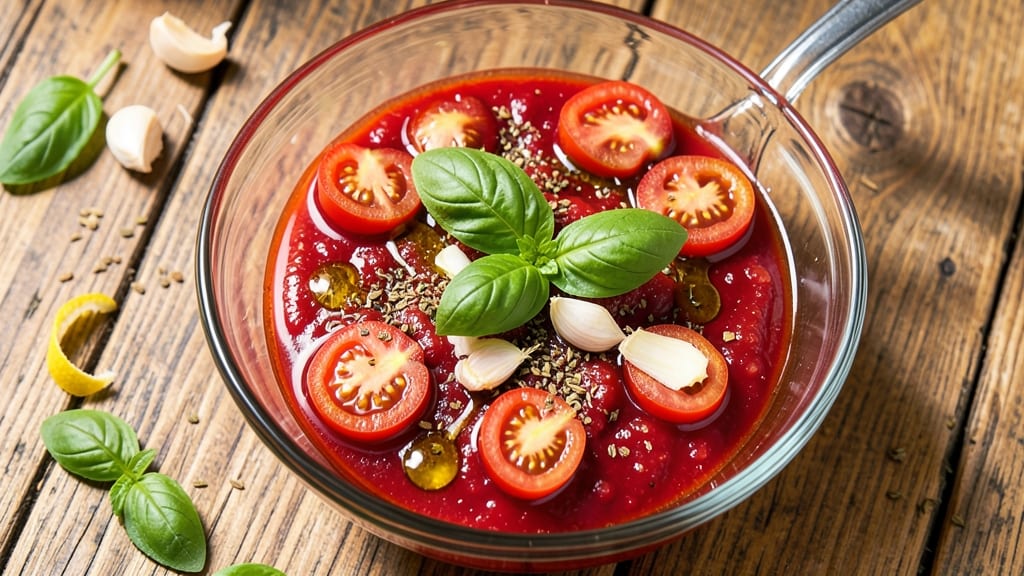
This recipe for pizza sauce from the fresh tomatoes delivers the kind of depth and richness that store-bought versions simply can't match—no blender required. 🌿 After years of perfecting the technique at Nana Mae's diner, I've learned that the secret lies in the slow simmering of fresh tomatoes, garlic, and herbs, allowing their flavors to meld into a velvety, aromatic sauce that's perfect for any pizza night.
The result is a sauce that's vibrant, balanced, and packed with that unmistakable fresh tomato flavor that makes homemade pizza taste like it came straight from a brick oven.
The beauty of this recipe is in its simplicity and versatility. With just a handful of ingredients—fresh tomatoes, garlic, olive oil, and herbs—you'll create a sauce that's rich enough to stand up to cheese and toppings but light enough to let the flavors shine.
The hand-crushing method ensures a rustic texture that adds character, while the slow simmering process develops a depth of flavor that no quick blend can achieve. It's the kind of sauce that transforms a simple pizza into a restaurant-quality meal, all from the comfort of your own kitchen.
What sets this sauce apart is its ability to elevate any pizza you make, whether it's a classic Margherita or a loaded meat lover's feast. The balance of sweet and tangy tomato flavors, combined with the aromatic garlic and herbs, creates a sauce that's both complex and approachable.
It's the kind of recipe that feels like a labor of love, but with a method that's straightforward and foolproof. Once you taste the difference, you'll never go back to store-bought again.
Best of all, this sauce keeps beautifully in the refrigerator for up to a week, making it the perfect addition to your meal prep routine. You can even freeze it for up to three months, ensuring you always have a jar of homemade goodness on hand.
Whether you're hosting a pizza night with friends or just craving a slice of comfort food, this sauce is your secret weapon for creating pizzas that taste like they were made with love—and a little bit of Southern charm.
Ingredients for recipe for pizza sauce from fresh tomatoes
Fresh tomatoes, garlic, and herbs create velvety pizza sauce without a blender—just hand-crushing and slow simmering.
| Ingredient | Amount | Notes |
|---|---|---|
| Fresh Roma Tomatoes 🍅 | 2 lbs | Ripe, firm, hand-crushed only |
| Garlic Cloves 🧄 | 6 cloves | Freshly minced, vibrant color |
| Extra-Virgin Olive Oil 🫒 | ½ cup | High-quality, fruity variety |
| Fresh Basil Leaves 🌿 | ½ cup | Packed, stems removed |
| Dried Oregano 🍃 | 1 tsp | Mexican oregano preferred |
| Salt 🧂 | 1 ½ tsp | Diamond Crystal preferred |
| Black Pepper 🌶️ | ½ tsp | Freshly ground preferred |
| Red Wine Vinegar 🍷 | 1 tbsp | For brightness, optional |
| Granulated Sugar 🍯 | 1 tsp | Balances acidity |
The tomatoes are everything here. Roma tomatoes are ideal—their meaty texture crushes perfectly and gives that authentic Italian vibe. Hit the farmers market when they're in season for the sweetest flavor, or grab the heirloom variety at Whole Foods if you're craving something special. Avoid the watery vine-ripened types—they'll turn your sauce into soup. For garlic, peel and mince fresh (no jars here). The basil? Fresh is non-negotiable—dried just won't cut it. I always grab extra because half gets torn over the final sauce, and the other half goes into my morning smoothies. Pro tip: Pat the tomatoes dry before crushing to avoid excess water in your sauce.
No Roma tomatoes? San Marzano canned tomatoes work in a pinch—just crush them by hand. Skip the vinegar if you're sensitive to acidity, but trust me, it's worth the bright pop of flavor it adds. The sugar might sound odd, but it's just enough to round out the acidity from the tomatoes and vinegar. No fresh basil? Dried oregano at half the amount gets you close, but you'll miss that fresh aroma. The olive oil quality matters here—Trader Joe's or Whole Foods have great options for a reasonable price. And if you're feeling fancy, add a pinch of red pepper flakes for subtle heat.
This sauce tastes even better the next day as the flavors meld together. Store it in a glass jar in the fridge for up to 1 week—it keeps beautifully. For longer storage, freeze in ice cube trays and transfer to a bag. Thaw overnight in the fridge before using. I always make a double batch because once you go homemade, you'll never want to go back to store-bought. The sauce thickens as it cools, so if it's too thick after chilling, just stir in a splash of water or olive oil to reach your desired consistency.
Why You'll Love This Recipe
- No Chopping Chaos: I’ll be real—Roma tomatoes are the easiest to work with. Halve them, roast them whole, then crush. That’s it. No seeds to fuss with, no blender required.
- Garlic-Basil Magic: The moment I crush fresh garlic into warm tomatoes and olive oil? Chef’s kiss. The basil’s bright punch and oregano’s earthy warmth cut through the richness—like a hug in sauce form.
- Pantry to Party: This sauce doubles as marinara for pasta, a dip for bread, or a base for bruschetta. Freezes like a dream, too—just reheat and toss on frozen pizzas when you’re lazy.
- Budget Bright Spot: Fresh tomatoes stretch further than jarred sauce, and you’re using what’s ripe. A few cloves of garlic and a handful of basil make it taste gourmet without the grocery shock.
Step-by-step instructions for hand-crushed tomato pizza sauce
Let's create a vibrant, chunky pizza sauce that captures summer's freshness—no blender required!
👨🍳 Step 1: Prep and Crush the Tomatoes
Start by cutting the 2 lbs Fresh Roma Tomatoes in half lengthwise and scoop out the seeds with a spoon. I like to use a large bowl for this—it gives me room to work. Now comes the fun part: crush the tomatoes by hand. Place the tomato halves cut-side down and press firmly with the flat of your hand. You want to break them down into ¼-inch chunks—this creates that perfect rustic texture we're after.
Don't worry if it's not perfectly uniform. The slight variation in chunk sizes adds character to your sauce. Once crushed, transfer the tomatoes to a medium saucepan. Here's the thing—hand-crushing releases more flavor than blending, and those little tomato bits add beautiful texture to your pizza.
🔥 Step 2: Cook the Tomatoes Until Broken Down
Place the saucepan over medium-high heat and bring the tomatoes to a boil. Once boiling, reduce the heat to medium-low and let it simmer uncovered for 15-20 minutes. You'll see the tomatoes start to break down and release their juices. Stir occasionally, but not constantly—this helps prevent the sauce from breaking or burning.
You're looking for a sauce that's thickened but still has some body. It should coat the back of a spoon but still have a slight chunkiness. If it's reducing too quickly, you can add 1-2 tablespoons of water to help it along. The goal is to concentrate the flavors while maintaining that fresh tomato character.
🍳 Step 3: Add Aromatics and Build Flavor
While the tomatoes are still warm, add the 6 cloves Garlic Cloves (minced) and 1 tsp Dried Oregano. Stir well to distribute the garlic throughout. Let the mixture cook for another 3-4 minutes until the garlic becomes fragrant but doesn't brown—burnt garlic makes the sauce bitter. I know it seems like a short time, but garlic burns in seconds, so keep an eye on it.
Next, stir in the 0.5 cup Extra-Virgin Olive Oil and 1 tbsp Red Wine Vinegar. The vinegar adds a nice brightness that cuts through the richness of the tomatoes. Let everything simmer together for 2-3 minutes to allow the flavors to meld. This is where the magic happens—the acidity from the vinegar and the richness of the olive oil come together to create a balanced sauce.
🥘 Step 4: Finish with Herbs and Seasonings
Remove the sauce from heat and let it cool slightly for 5 minutes. This cooling period is crucial—it prevents the basil from turning bitter when added to hot sauce. Once cooled, stir in the 0.5 cup Fresh Basil Leaves (stems removed) and let them infuse for 5 minutes. The basil should wilt slightly and release its aromatic oils into the sauce.
Now it's time to season. Add the 1.5 tsp Salt, 0.5 tsp Black Pepper, and 1 tsp Granulated Sugar. The sugar might seem odd, but it's essential for balancing the acidity of the tomatoes and vinegar. Taste the sauce and adjust the seasoning as needed—you might want to add a pinch more salt or a splash of vinegar for brightness.
⏰ Step 5: Rest and Use Your Sauce
Transfer the sauce to a clean jar or container and let it rest at room temperature for at least 30 minutes (or refrigerate for up to 5 days). This resting period allows all the flavors to fully develop and meld together. The sauce will thicken slightly as it cools, which is perfect for spreading on your pizza.
When you're ready to use it, give the sauce a good stir. You'll notice how the flavors have deepened and the texture has become even more velvety. Spread this homemade sauce generously on your pizza dough—about ¼ cup per 12-inch pizza—and watch as it transforms your homemade pizza into a restaurant-quality masterpiece.
Pro Tips For Making Recipe For Pizza Sauce From Fresh Tomatoes
- BLISTER THE GARLIC: Cook the minced garlic in olive oil over medium heat until it’s golden and fragrant—just 30 seconds to a minute. After burning three batches of garlic into bitter oblivion, I finally learned: high heat for a flash works better than low and slow. (Yes, even if you’re impatient like me.)
- SALT THE TOMATOES: Sprinkle a generous pinch of salt over the chopped tomatoes and let them sit for 10 minutes before cooking. This draws out excess water and concentrates their flavor—no more watery sauce. (I used to skip this, and the difference is night and day.)
- LOW AND SLOW: Simmer the sauce uncovered on low heat for at least 20 minutes, stirring occasionally. Rushing this step makes the sauce taste raw and thin—patience here guarantees a rich, balanced flavor. (Your future self will thank you.)
- PULSE THE BASIL: Tear the basil leaves instead of chopping them finely—this keeps their bright flavor intact. Add them at the very end, just before serving, so they don’t turn bitter. (I was skeptical until I tried it.)
Flavor customization for recipe for pizza sauce from fresh tomatoes
Sweet & Tangy Twist
Add 1 tbsp honey or agave nectar along with the sugar to deepen the tomato sweetness while keeping that bright acidity. I love this variation for breakfast pizzas—it pairs beautifully with ricotta and fresh figs.
For extra depth, simmer the sauce with ½ cup apple cider instead of water to add subtle apple notes. 🍯
Spicy Kick
Increase the heat by adding 1 tsp crushed red pepper flakes or ½ tsp cayenne pepper with the dried oregano. For a smoky element, stir in ½ tsp smoked paprika or a pinch of chipotle powder.
This works amazingly well with pepperoni and spicy sausage toppings. Trust me, David always requests this version when we're making spicy pizza nights.
Herb Variations
Swap out the basil for thyme and rosemary for a Mediterranean twist—simmer 2 sprigs fresh thyme and 1 sprig rosemary with the tomatoes. Or try cilantro and lime juice for a Mexican-inspired pizza sauce. Both variations add unexpected depth that works beautifully with grilled chicken or shrimp toppings. 🌿
Umami Boost
For a deeper, richer sauce, stir in 1 tbsp soy sauce or 1 tsp fish sauce when adding the aromatics. This works especially well with mushrooms, prosciutto, or anchovies on your pizza.
I also love adding 1 tsp tomato paste to intensify the tomato flavor without making the sauce thicker. It's a secret weapon from my time working in Charleston kitchens.
Creamy Finish
For a luxurious touch, stir in 2 tbsp heavy cream or ¼ cup ricotta cheese at the very end. This creates a silky, velvety sauce that pairs perfectly with mozzarella and burrata toppings.
The creaminess balances the acidity beautifully, making it ideal for white pizzas with prosciutto and arugula. Emma always asks for this version when we're hosting dinner parties.
Seasonal Adjustments
In summer, when tomatoes are at their peak, reduce the sugar to ½ tsp—the natural sweetness of ripe tomatoes does the work. In winter, when tomatoes are less sweet, increase to 2 tsp sugar and add ½ tsp cinnamon for warmth.
These adjustments keep your pizza sauce perfectly balanced year-round. I learned this trick from Nana Mae during Atlanta's long winters.
Nutrition facts
Frequently asked questions
Can I use any tomatoes or do I need Roma?
Roma tomatoes are ideal because their thick flesh crushes perfectly and gives that authentic Italian texture. For best results, stick with them, but in a pinch, you can use San Marzano canned tomatoes (crushed by hand) or other firm varieties like vine-ripened. Avoid overly watery tomatoes—they'll dilute your sauce and make it too thin.
How do I know when the sauce is done simmering?
The sauce is ready when it thickens enough to coat the back of a spoon but still has slight chunkiness. This should take about 15-20 minutes on medium-low heat. If it reduces too quickly, add 1-2 tablespoons of water to maintain the right consistency while concentrating the flavors.
Why does the recipe call for both fresh basil and dried oregano?
Fresh basil adds vibrant aroma and flavor, while dried oregano provides depth that stands up to cooking. The basil infuses quickly at the end, so it retains its bright notes, while the oregano develops during simmering. You can skip the dried oregano if you prefer, but fresh basil is non-negotiable for that classic pizza taste.
Can I make this sauce ahead of time?
This sauce tastes even better after resting. Store it in a glass jar in the fridge for up to 1 week, or freeze in ice cube trays for up to 3 months. The flavors deepen overnight, making it perfect for meal prep. Just thaw in the fridge before using.
What if my sauce tastes too acidic?
Add a pinch more sugar (up to ½ tsp) or a splash of olive oil to balance the acidity. For extra richness, stir in 1 tbsp heavy cream or ¼ cup ricotta cheese at the end. If the acidity comes from the tomatoes, try using slightly less vinegar next time or simmering longer to concentrate the flavors.