
Sauces & Condiments
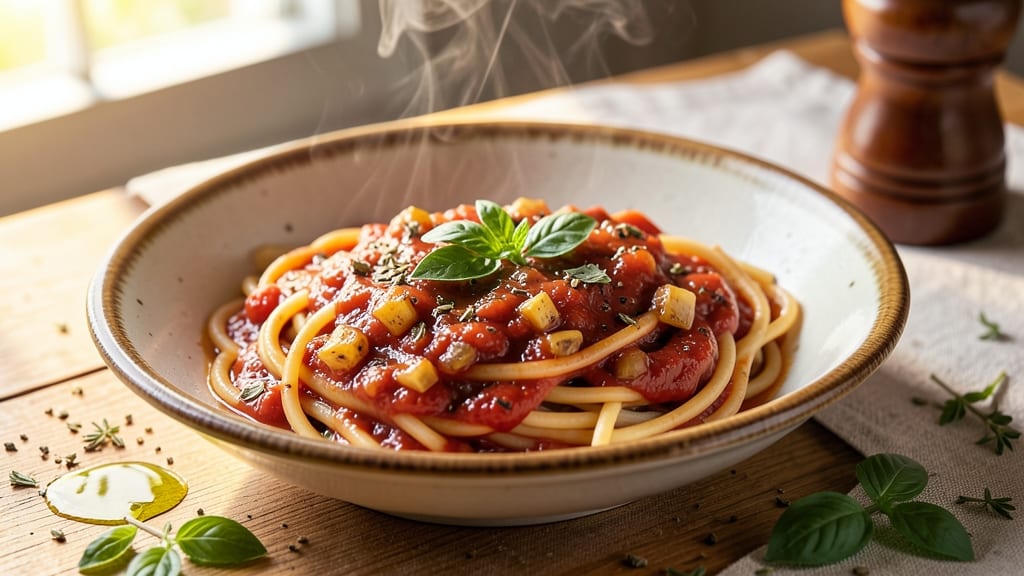
This Clemenza's spaghetti sauce recipe delivers the rich, slow-simmered depth that makes Italian-American family meals legendary. 🔥 The secret lies in caramelizing onions and garlic until they're golden brown—this builds layers of umami that transform basic tomatoes into something extraordinary.
I've perfected this sauce over years of Sunday dinners, where it becomes the star of every spaghetti night.
The beauty of this sauce is in its simplicity: just tomatoes, aromatics, and a few key herbs, all simmered low and slow until the flavors meld into perfect harmony.
No fancy ingredients or complicated techniques—just time and patience, which is why it tastes so much better than anything from a jar. The sauce thickens naturally as it reduces, creating that signature clingy texture that clings to every strand of pasta.
What you'll end up with is a sauce so flavorful it elevates even the simplest plate of spaghetti into a restaurant-quality meal. The aroma alone will have your whole family gathering at the table, and the taste?
That's where the magic happens—deep, savory, and just sweet enough to make your taste buds sing. This is the kind of sauce that improves with time, so don't be afraid to make a big batch.
Perfect for freezing and using throughout the week, this sauce pairs beautifully with spaghetti, meatballs, or even as a marinara for chicken parmesan. Let's get started on creating something that tastes like home.
Ingredients for clemenza's spaghetti sauce
Eleven ingredients transform into sauce so rich it tastes like home.
| Ingredient | Amount | Notes |
|---|---|---|
| San Marzano Tomatoes 🍅 | 28 oz | Crushed by hand for texture |
| Yellow Onions 🧅 | 2 whole | Yellow or red, diced fine |
| Garlic Cloves 🧄 | 6 cloves | Peeled, minced for depth |
| Extra-Virgin Olive Oil 🫒 | ½ cup | High quality, fruity variety |
| Dried Oregano 🌿 | 1 tbsp | Italian or Mediterranean blend |
| Dried Basil 🌿 | 1 tbsp | Sweet, not spicy |
| Red Wine 🍷 | 1 cup | Bold dry red, like Chianti |
| Tomato Paste 🍅 | 2 tbsp | High quality, no sugar added |
| Granulated Sugar 🍚 | 1 tbsp | Balances acidity |
| Salt 🧂 | 1 ½ tsp | Diamond Crystal preferred |
| Black Pepper 🌶️ | ½ tsp | Freshly cracked |
The tomatoes are non-negotiable—San Marzano has that perfect balance of sweetness and acidity. Grab a 28-oz can from Trader Joe's or Whole Foods; the cheaper brands lack depth. Onions and garlic need to caramelize until golden brown (that's where the umami magic happens), so don't rush this step. The olive oil should be extra-virgin—anything less and you'll taste it. I always buy mine in dark glass bottles to preserve freshness. For the wine, any bold, dry red works—Chianti or Cabernet Sauvignon are foolproof choices.
No San Marzano tomatoes? Plum tomatoes are your next best bet, but skip the Roma—too watery. Running low on red wine? Beef broth with a splash of balsamic vinegar mimics the depth. The dried herbs can be swapped for fresh at one-third the amount (e.g., 1 tbsp fresh basil = 1 tsp dried). For tomato paste, Rao's or Barilla are my go-tos—they're consistent and affordable. The sugar might seem odd, but it's essential to balance the acidity of the tomatoes. Trust me on this—no sugar means a sharp, bitter sauce.
This sauce tastes even better the next day as flavors meld. Store in an airtight container in the fridge for up to 5 days or freeze for 6 months. I like to portion it into ziplock bags with a splash of water—thaws perfectly and keeps texture intact. For restaurant-quality results, simmer uncovered for at least 3 hours. The longer it cooks, the deeper the flavor. Leftovers? Toss them into omelets or pasta the next day—waste not.
Why You'll Love This Recipe
- No-Chop Needed: I swear by this—just slice those onions thick (yes, really) and let the olive oil do the work. The San Marzano tomatoes soften so easily, you’ll have sauce ready while you boil pasta. Even my "I can’t chop onions" days work here.
- Garlic Confidence: That first sizzle of garlic in olive oil? Chef’s move. The cloves caramelize just enough to coat every strand of spaghetti without overpowering—herbs balance it perfectly. Honestly, it’s the kind of flavor that makes you pause mid-bite.
- Weeknight to Party: Same sauce, endless uses. Toss it with ziti for a crowd, ladle it over grilled chicken for a Tuesday dinner, or freeze half for when you’re too tired to cook. My kids ask for it at school events because it’s that reliable.
- Budget-Friendly Luxury: San Marzano tomatoes might sound fancy, but they stretch like crazy—this recipe feeds six for under $10. The olive oil and oregano amplify every bite, so you’re getting restaurant-quality depth without the price tag. (Yes, even on a Tuesday night.)
Step-by-step instructions for Clemenza's spaghetti sauce
Here's how to build deep umami layers through slow-simmered tomatoes and bold aromatics.
🍳 Step 1: Sauté Aromatics Until Fragrant
Heat the 0.5 cup extra-virgin olive oil in a heavy-bottomed Dutch oven over medium-low heat. Add the 2 whole yellow onions, diced fine, and cook for 8-10 minutes until completely translucent and just beginning to caramelize at the edges. This gentle cooking prevents burning while developing sweetness.
Add the 6 cloves minced garlic and cook for another 30 seconds until the raw garlic aroma disappears and you can smell its sweet, nutty essence. Here's the thing—don't let the garlic brown or it'll turn bitter. Remove the pot from heat for 1 minute to let the aromatics settle before adding the next ingredients.
🔥 Step 2: Develop the Sauce Base
Return the pot to medium heat and stir in the 2 tablespoons tomato paste. Cook for 2 minutes until the paste darkens slightly and loses its raw flour taste. This creates a rich foundation for the sauce and prevents a raw tomato flavor.
Pour in the 1 cup red wine and scrape up any browned bits from the bottom of the pot with a wooden spoon. These bits are pure flavor—don't miss them. Let the wine reduce by half (3-4 minutes) before adding the 28 oz crushed San Marzano tomatoes and 1 tablespoon granulated sugar.
⏰ Step 3: Simmer Slowly for Deep Flavor
Bring the sauce to a gentle simmer over low heat and partially cover with a lid. I like to leave it slightly ajar to allow moisture to escape—this helps concentrate the flavors. Let it cook for 45-60 minutes, stirring occasionally, until the sauce thickens and reduces by about one-third.
Here's the moment that matters: Taste the sauce and adjust seasoning with the 1.5 teaspoons salt and 0.5 teaspoon black pepper. Add the 1 tablespoon dried oregano and 1 tablespoon dried basil now—they'll infuse more deeply during the final simmer. The sauce should coat the back of a spoon with a velvety texture and have a rich, complex tomato flavor.
🥘 Step 4: Finish and Rest for Maximum Depth
Once the sauce reaches your desired consistency, remove it from heat and let it rest for 10-15 minutes. This resting period allows the flavors to meld and the sauce to thicken further. Stir occasionally to prevent a skin from forming.
For the final touch, taste and adjust seasoning one more time. The sauce should be perfectly balanced—sweet from the tomatoes and sugar, acidic from the wine and tomatoes, and umami-rich from the slow reduction. Serve immediately over fresh spaghetti with extra grated cheese and fresh basil if desired.
Pro Tips For Making Clemenza'S Spaghetti Sauce
- CRUSH THE ONIONS: I used to chop onions for this sauce and wonder why they always tasted bitter—turns out, you need to cook them until they’re almost translucent, with just a hint of golden color. Low heat, no rush: 8-10 minutes with a splash of water if they stick. (Yes, even if you’re impatient like me.)
- PEEL GARLIC IN ADVANCE: Here’s the thing about garlic in Clemenza’s sauce: raw cloves burn fast and turn bitter. Peel them the night before and store in a jar of olive oil in the fridge. When you’re ready to cook, just grab a clove, squeeze it out of the skin, and toss it in—no mess, no burning. I learned this the hard way after one batch tasted like garlic soap.
- SIMMER THE TOMATOES LOW: San Marzano tomatoes are sweet, but if you boil them too hard, they’ll turn mushy and lose their brightness. Once you’ve crushed them, keep the heat at a gentle simmer—just enough to see tiny bubbles at the edges, not a rolling boil. This keeps the sauce rich without turning it into tomato paste. (Your future self will notice the difference.)
- SALT THE SAUCE IN STAGES: Don’t dump all the salt at once. After the onions are cooked, add a pinch to the pot—this draws out moisture and concentrates their flavor. Then, once the tomatoes are added, taste and adjust again. Oregano and garlic are bold; salt balances them. I skip this, and the sauce ends up flat. (Doesn’t take long, but it matters.)
Storing and reheating your leftovers
Fridge Storage Tips
Let your sauce cool to room temperature before transferring it to an airtight glass container—I use Pyrex with snap-on lids for easy sealing. Store in the fridge at 40°F or below for up to 5 days, but honestly?
It tastes even better the next day as the flavors meld. The sauce will thicken slightly overnight, so you might need to add 1-2 tablespoons of water when reheating if it seems too stiff. 💡
Freezer Prep Essentials
For long-term storage, portion the sauce into quart-sized ziplock freezer bags—leave 1 inch of headspace to prevent expansion cracks. Squeeze out excess air before sealing to avoid freezer burn. Label each bag with the date and freeze for up to 6 months.
The texture remains perfect when thawed properly, but I always add 1 tablespoon of water when reheating to restore that silky consistency. ❄️
Thawing Like a Pro
Never thaw sauce at room temperature—it’s a bacteria party waiting to happen! Instead, transfer the frozen bag to the fridge 12-24 hours before using. For a quick fix, submerge the sealed bag in warm water (not hot) for 20-30 minutes, then gently shake to redistribute the sauce.
Avoid microwaving—it turns the sauce rubbery and dulls the flavors. 🌡️
Reheating Perfection
Stovetop reheating is your best friend. Pour the sauce into a heavy-bottomed pot and warm over low heat, stirring occasionally. If it’s too thick, add 2-3 tablespoons of water or pasta water to loosen it up.
For extra richness, stir in 1 tablespoon of olive oil or a splash of red wine while reheating. The sauce should reach 165°F internally—use a thermometer if you’re unsure. 🔥
Microwave Shortcuts
If you’re in a rush, transfer the sauce to a microwave-safe bowl and heat on medium power in 1-minute intervals, stirring between each. Avoid overcooking—just until it’s steaming hot. If it separates, whisk in 1 tablespoon of butter or olive oil to restore that velvety texture.
Pro tip: Cover the bowl with a damp paper towel to prevent splattering. ✨
Reviving Leftovers
Sauce that’s been stored too long? Don’t toss it! Simmer it with ½ cup of crushed tomatoes and a pinch of sugar to refresh the flavors. If it’s lost its depth, stir in 1 teaspoon of tomato paste and 1 tablespoon of red wine to revive it.
Even "old" sauce can shine again with a little love—just don’t let it sit too long at room temperature. 💛
Nutrition facts
Frequently asked questions
Why does Clemenza's sauce taste better after resting?
The slow simmering and resting time allow the flavors to fully develop and meld together. When you let the sauce rest for 10-15 minutes after cooking, the natural pectin in the tomatoes continues to break down, creating a thicker, more velvety texture. This also lets the aromatics and herbs infuse deeper, resulting in that rich, complex flavor that makes it taste like it's been simmering for hours.
Can I add meat to this sauce?
For a heartier version, brown 1 pound of ground beef or Italian sausage first and drain the fat. Add it to the sauce during the final 30 minutes of simmering so it absorbs all those deep flavors. Just don't overcook the meat or it'll turn tough.
What if my sauce turns out too acidic?
The sugar in the recipe balances acidity, but if it's still too sharp, stir in ½ teaspoon more sugar or a pinch of baking soda (just a tiny amount!). For a deeper flavor, add 1 teaspoon tomato paste and simmer for 5-10 minutes to mellow the acid. Taste as you go—this sauce is all about balance.
How do I know when the sauce is done?
The sauce is ready when it's reduced by about one-third and coats the back of a spoon with a velvety texture. It should smell rich and aromatic, with no raw tomato taste remaining. If it's still too thin after 45-60 minutes, uncover the pot and simmer longer—this helps thicken it naturally.
Can I make this sauce without red wine?
Yes! Replace the wine with 1 cup beef broth plus 1 tablespoon balsamic vinegar for similar depth. The vinegar adds acidity to balance the tomatoes, while the broth brings umami. For a non-alcoholic version, you can also use grape juice, though the flavor will be slightly sweeter.