
Sauces & Condiments
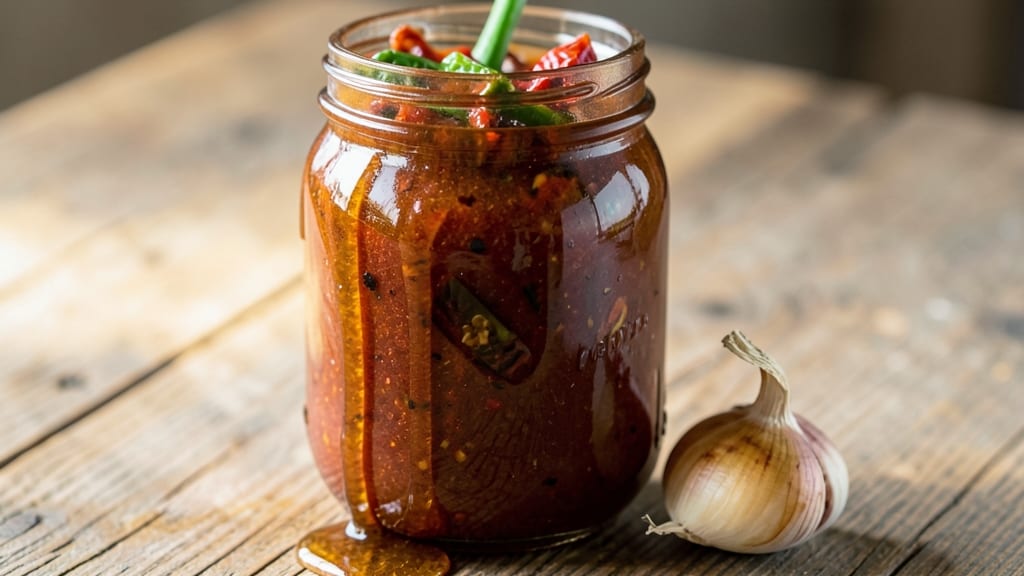
This bourbon hot sauce transforms simple ingredients into a complex, smoky-sweet condiment that elevates everything from wings to grilled meats. The marriage of bourbon’s caramelized oak notes with fiery peppers creates depth you won’t find in store-bought versions.
I developed this recipe after years of experimenting with small-batch hot sauces, and the bourbon makes all the difference—adding warmth without overpowering the heat.
The process is straightforward but requires patience: fresh peppers simmered in vinegar with bourbon and spices, then rested for at least a week to let flavors meld. The bourbon’s alcohol burns off during cooking, leaving behind its signature vanilla and oak undertones, while the vinegar sharpens the heat.
For best results, use a mix of fresh jalapeños and habaneros—adjust the ratio to control spice levels.
What you’ll end up with is a glossy, amber-colored sauce with layers of heat, sweetness, and smoky complexity. It’s perfect for drizzling over tacos, mixing into cocktails, or serving as a bold dip for fries.
The resting period is critical—it’s the difference between a good hot sauce and a great one.
Store it in the refrigerator for up to 3 months, where the flavors will continue to deepen. This isn’t just a condiment; it’s a flavor booster that turns simple dishes into something extraordinary. Let’s make it.
Ingredients for bourbon hot sauce
Simple ingredients, bold flavors—this sauce brings smoky-sweet heat to any dish.
| Ingredient | Amount | Notes |
|---|---|---|
| Fresh Jalapeño Peppers 🌶️ | 1 cup | Seeded, chopped, medium heat |
| Fresh Habanero Peppers 🔥 | ½ cup | Seeded, chopped, extreme heat |
| Apple Cider Vinegar 🍎 | 1 cup | Raw, unfiltered preferred |
| Bourbon Whiskey 🥃 | ½ cup | 80-proof or higher, oak-aged |
| Granulated Sugar 🍚 | ¼ cup | Light brown preferred for depth |
| Garlic Cloves 🧄 | 4 cloves | Peeled, smashed for infusion |
| Smoked Paprika 🌶️ | 1 tbsp | For smoky depth |
| Ground Black Pepper 🌶️ | ½ tsp | Freshly cracked |
| Sea Salt 🧂 | 1 tsp | Diamond Crystal preferred |
| Water 💧 | ½ cup | For thinning if needed |
The peppers are the heart of this sauce, so pick them fresh. Local farmers markets often have the best selection, but the grocery store works too. Look for firm, vibrant jalapeños and habaneros—the riper the better. If you can't find habaneros, ghost peppers or serranos work in a pinch, but reduce the amount by half to avoid overpowering the bourbon's warmth. The bourbon should be a quality batch—Buffalo Trace or Maker's Mark add that signature caramelized oak. If you're using a cheaper brand, increase to 2/3 cup to compensate for less depth. And for the vinegar, raw, unfiltered apple cider vinegar has more complexity than the pasteurized kind.
No bourbon? Rye whiskey or even a good-quality rum can stand in, but the flavor will shift slightly. The sugar isn't just for sweetness—it helps caramelize the bourbon's flavors during cooking. If you're avoiding sugar, honey or maple syrup at half the amount works, though the sauce will be less glossy. The smoked paprika is non-negotiable for that signature smokiness—don't swap it for regular paprika. For extra depth, toast the garlic in a dry pan for 2 minutes before adding it to the sauce. And if you're making a big batch, double the peppers and bourbon, but keep the vinegar and sugar ratios the same to maintain balance.
This sauce tastes better with time—at least a week in the fridge lets the flavors meld, but it keeps for 3 months if stored properly. Use a clean glass jar with a tight seal, and leave about an inch of headspace to prevent mold. The sauce will thicken as it rests, so thin with water if needed. Once opened, it'll last 2 weeks in the fridge. For serving, I like to pour it into a small bottle with a pour spout—Etsy has great options if you want to get fancy. Trust me, the wait is worth it for that complex, smoky-sweet heat.
Why You'll Love This Recipe
- Five-Ingredient Magic: I swear, this sauce is one of those rare recipes where you don’t need a degree in chemistry—just chop, steep, and wait. The jalapeños and habaneros go straight from the garden (or grocery bag) to the pot, no fancy prep required.
- Smoky-Sweet Heat: Between us, the bourbon doesn’t just add a boozy kick—it mellows the habanero’s bite into something rich and layered. That sugar? It caramelizes just enough to make every drop taste like a little hug for your taste buds.
- Tailgate or Taco Night: Honestly, I’ve drizzled this on everything from pulled pork sliders to deviled eggs, and it never lets me down. The tangy vinegar and deep bourbon notes cut through grease like a dream, whether it’s a backyard cookout or a lazy Sunday brunch.
- Lasts for Weeks: I made a batch last summer and still have half in the fridge—no spoilage, just pure flavor waiting to be used. Plus, the cost? A fraction of store-bought sauces, and way more interesting. (Yes, even on a Tuesday night.)
Step-by-step instructions for bourbon hot sauce
Here's how to craft a bold, smoky hot sauce with layers of oak and spice that'll elevate any dish.
Sterilize and Prep the Peppers
Start by sterilizing a clean quart-sized mason jar and its lid in boiling water for 5 minutes. This ensures your hot sauce stays fresh longer. While it sterilizes, combine the 1 cup chopped fresh jalapeño peppers and 0.5 cup chopped fresh habanero peppers in a food processor. Pulse until you achieve a coarse chop—think pea-sized pieces, not a puree. The texture should be chunky enough to maintain some bite while still releasing flavor.
Transfer the pepper mixture to a bowl and add the 4 peeled and smashed garlic cloves. The smashed cloves will infuse more flavor than minced ones. Give it a quick stir, then taste the mixture—you should feel an immediate heat wave. If it's too intense for your palate, reduce the habanero slightly next time; if it's too mild, consider adding more next batch.
Combine Wet Ingredients and Infuse
In a separate saucepan, combine the 1 cup apple cider vinegar, 0.5 cup bourbon whiskey, 0.25 cup granulated sugar, 1 tbsp smoked paprika, 0.5 tsp ground black pepper, and 1 tsp sea salt. Stir over medium heat until the sugar dissolves completely—this should take about 3-4 minutes. The mixture should smell like a smoky campfire meets a spicy vinegar punch.
Remove the pan from heat and let it cool slightly for 5 minutes. Then, carefully pour the warm liquid over the pepper-garlic mixture in the bowl. Stir well to ensure everything is evenly coated. The heat from the liquid will help release more oils from the peppers, intensifying the flavor. This is where the magic happens—the vinegar preserves the peppers while the bourbon adds depth and a subtle caramel note.
Simmer and Infuse Flavors
Transfer the entire mixture to the sterilized mason jar. Seal the lid tightly and place the jar in a large pot. Fill the pot with enough water to come about halfway up the sides of the jar. This water bath method ensures even heat distribution without risking contamination. Bring the water to a gentle simmer over low heat, maintaining a temperature of 180-190°F—never a rolling boil.
Simmer for 45-60 minutes, checking occasionally to ensure the water level hasn't dropped below the jar's neck. You'll know it's ready when the peppers have softened and the mixture takes on a deep, rich color with visible red flecks. The bourbon aroma should be prominent, and the heat should be well-integrated rather than sharp. If the sauce seems too thick after simmering, add the 0.5 cup water to reach your desired consistency.
Strain and Bottle for Aging
Carefully remove the jar from the hot water bath and let it cool to room temperature. Once cooled, strain the mixture through a fine-mesh sieve or cheesecloth into a clean bowl, pressing gently on the solids to extract as much liquid as possible. Discard the solids or compost them—they're spent now. The strained sauce should be a vibrant red with a smoky sheen.
Return the strained sauce to the sterilized mason jar, seal tightly, and store in a cool, dark place. Let it age for at least 2 weeks, shaking the jar gently each day to redistribute flavors. The longer it ages, the more complex the flavor profile becomes. After 4 weeks, the sauce will be at its peak—deep, smoky, with a perfect balance of heat and sweetness. Refrigerate once opened and use within 3 months for the best flavor.
Pro Tips For Making Bourbon Hot Sauce
- Char the Peppers: Toss whole jalapeños and habaneros in a dry skillet over medium-high heat until blackened in spots—about 2-3 minutes per side. This smoky base is where the flavor magic happens, and skipping it means missing that deep, caramelized kick that makes this sauce stand out.
- Use Aged Bourbon: Grab a bottle that’s been resting for at least 3 years if you can—older bourbon adds richer vanilla and oak notes that cut through the heat. I used to grab whatever was on sale, but the difference in depth is noticeable, especially when paired with the vinegar’s sharpness.
- Reduce Slowly: Let the sauce simmer uncovered on low heat for 20-30 minutes, stirring occasionally. Rushing this step leaves you with a thin, watery sauce; patience gives you a glossy, concentrated punch that coats better and balances the sweetness and heat perfectly.
- Strain Twice: First pass through a fine-mesh strainer catches big chunks, but the second pass with cheesecloth removes those stubborn pepper oils that make the sauce cloudy. It’s a little extra work, but the clarity and smooth texture make it worth it—your mouth will thank you.
Essential equipment for perfect results
Mason Jars
A quart-sized mason jar is essential for both the fermentation process and storage. I recommend Ball or Le Parfait jars—they’re made for canning and have airtight seals that prevent contamination.
Sterilize them by boiling for 5 minutes before use, and always leave 1 inch of headspace to avoid mold growth. For a larger batch, half-gallon jars work well, but stick to quart size for the recipe’s proportions. 🌶️
Food Processor
Use a food processor to chop the peppers into pea-sized pieces—this ensures even heat distribution without pureeing them into oblivion. A Cuisinart or Ninja model handles the job efficiently, but even a basic KitchenAid will work.
Avoid a blender, as it can over-process the peppers into a paste, which dulls the heat and texture. Pulse in short bursts to maintain control.
Fine-Mesh Sieve
A fine-mesh sieve or cheesecloth is crucial for straining the sauce. I prefer a stainless-steel sieve from OXO—it’s durable and won’t retain flavors. If using cheesecloth, double it up for extra filtration.
Press the solids gently to extract every drop of liquid, but don’t strain too hard or you’ll lose the pepper oils that carry the heat. The strained sauce should be smooth and vibrant, with no visible solids.
Thermometer
A candy or instant-read thermometer is your best friend for maintaining the 180–190°F water bath. I swear by the ThermoWorks Thermapen Neo—it’s precise and fast. If you don’t have one, a digital kitchen thermometer with a probe will work.
Never let the water boil, as that can cook off the bourbon’s flavors too quickly and risk contamination. Keep the temperature steady for 45–60 minutes to ensure even infusion.
Water Bath Setup
You’ll need a large pot that can accommodate your jar(s) without overcrowding. A 6-quart Dutch oven works perfectly for a quart jar. Fill the pot with enough water to cover the jar’s sides up to halfway. Use distilled or filtered water to avoid mineral buildup that can affect flavor.
A wire rack placed in the pot elevates the jar, ensuring even heat circulation. If you don’t have a rack, use a heatproof trivet or even a folded towel.
Bottling Supplies
Once strained, transfer the sauce to a clean, sterilized bottle for aging. I love amber glass bottles from Etsy—they block light, which preserves the sauce’s color and potency. For serving, a small squeeze bottle with a spout makes drizzling effortless.
Label your bottles with the date and spice level (e.g., "Medium Heat") to keep track. If you’re gifting, mini bottles make adorable presents—just ensure they’re airtight to maintain freshness.
Nutrition facts
Frequently asked questions
Why does this bourbon hot sauce need to rest for so long?
The 2-week minimum rest period is crucial for flavor development. The bourbon's alcohol burns off during cooking, but its vanilla and oak notes need time to fully integrate with the peppers and vinegar. This resting period also lets the heat mellow and the sweetness caramelize, creating that complex, smoky-sweet profile. Think of it like aging whiskey—patience pays off with depth!
Can I adjust the spice level after making the sauce?
Yes, but you'll need to thin it first. Mix 1 cup of the strained sauce with 1/4 cup water to loosen it, then add 1-2 extra habanero peppers (seeded and chopped) or 1 tsp cayenne powder for more heat. Let it rest another 3-5 days to rebalance flavors. For milder heat, simply add a pinch of sugar to offset the spice.
What's the best way to use up leftover bourbon from this recipe?
Don't waste a drop! Use the remaining bourbon to deglaze your pan after cooking meats, or reduce it with 1/4 cup brown sugar and 1/4 cup apple cider vinegar for a quick glaze. You can also infuse it with cinnamon sticks and orange peel for 2 weeks to make a spiced syrup perfect for cocktails or drizzling over pancakes. Every sip deserves to be flavorful!
Will this sauce work in cocktails?
This sauce adds incredible depth to drinks. Try 2-3 dashes in a whiskey sour or bourbon old-fashioned for a spicy-sweet kick. For non-alcoholic options, mix 1 tsp with 4 oz ginger beer and lime juice for a fiery mocktail. Just remember—start with less and adjust to taste, as the bourbon's residual flavor will amplify the heat. Cheers!
What if my sauce grows mold after aging?
This can happen if the jar wasn't properly sealed or if you didn't leave enough headspace. If you see mold, discard the entire batch immediately—mold spores can be dangerous. To prevent this, always use sterilized jars, leave 1 inch of headspace, and store in a cool, dark place. If you're unsure about safety, err on the side of caution and toss it. Better safe than sorry!