
Sauces & Condiments
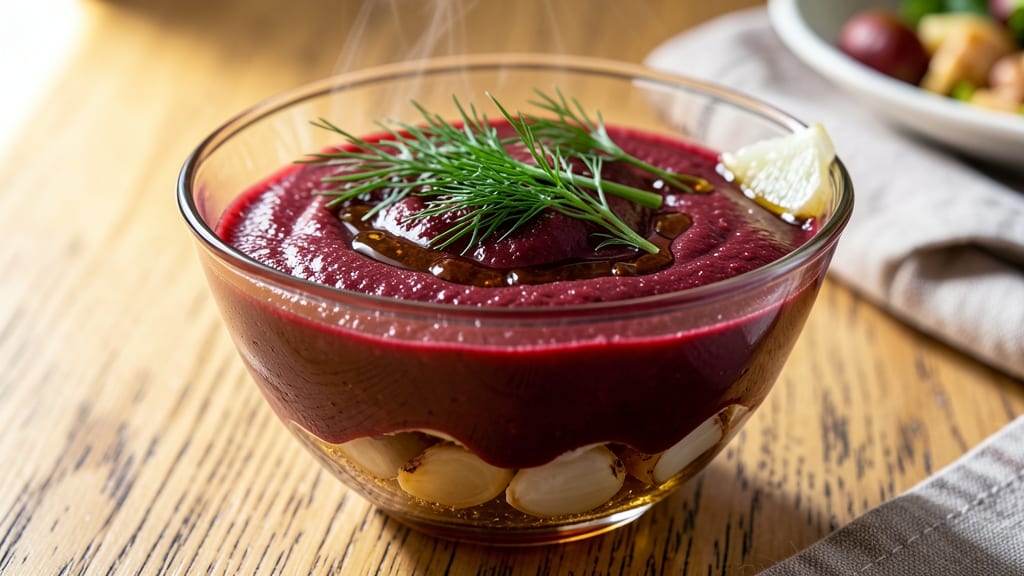
This vegan beetroot sauce recipe transforms humble beets into a velvety, earthy-sweet condiment that adds depth to everything from roasted vegetables to plant-based bowls. 🌱 The secret lies in slow-roasting the beets to concentrate their natural sweetness, then blending them with tangy vinegar, aromatic herbs, and a touch of maple syrup for balance.
Unlike store-bought versions, this sauce builds flavor as it sits—intensifying over time for richer results.
The process is simpler than it sounds: roast, blend, and adjust. You’ll start with tender, caramelized beets that dissolve into a smooth or slightly textured sauce depending on your blending preference. A splash of apple cider vinegar brightens the earthiness, while fresh dill or thyme adds a fragrant herbal note.
The sauce thickens naturally as it cools, creating a perfect consistency for drizzling or dipping.
What makes this sauce truly versatile is its ability to elevate any dish. Drizzle it over roasted sweet potatoes or Brussels sprouts for a sweet-tangy contrast, swirl it into hummus for extra depth, or use it as a marinade for tofu or tempeh.
The flavors develop beautifully over time, making it ideal for meal prep—store it in the fridge for up to 5 days or freeze for longer shelf life.
Best of all, this recipe requires just 10 minutes of active prep and 45 minutes of hands-off roasting, making it perfect for busy weeknights. The ingredients are simple—no thickeners, no dairy, just pure, vibrant beetroot goodness. Let’s make this sauce!
Ingredients for beetroot sauce
Nine vibrant ingredients transform roasted beets into velvety, earthy-sweet sauce magic.
| Ingredient | Amount | Notes |
|---|---|---|
| Medium Beets 🍠 | 1 ½ lb | Roasted until tender, skins removed |
| Extra-Virgin Olive Oil 🫒 | ½ cup | High-quality, fruity variety |
| Apple Cider Vinegar 🍏 | ¼ cup | For bright acidity |
| Pure Maple Syrup 🍁 | 2 tbsp | Grade B for robust flavor |
| Fresh Dill 🌿 | ¼ cup | Chopped, stems removed |
| Garlic Cloves 🧄 | 3 cloves | Roasted for sweetness |
| Fresh Lemon Juice 🍋 | 1 tbsp | Brightens the sauce |
| Salt 🧂 | 1 tsp | Diamond Crystal preferred |
| Black Peppercorns 🌶️ | ½ tsp | Freshly cracked |
| Vegetable Broth 💧 | ½ cup | Low-sodium preferred |
The beets are the star—organic, deep red varieties like Detroit Dark Red hold their shape beautifully during roasting. Trader Joe's and Whole Foods carry the best pre-washed options, but any medium-sized beets work. Roast them whole with a drizzle of olive oil until fork-tender (about 45 minutes at 400°F)—the skins will slip right off. For extra richness, toss the roasted beets with a pinch of salt and a splash of maple syrup before blending. Fresh dill is non-negotiable here; Penzeys or your local farmers market are your best bets for the most aromatic bunches. If you can't find fresh, dried dill at one-third the amount works in a pinch, though it lacks that bright herbal punch.
No maple syrup? Agave nectar or date syrup will do, though maple's caramel notes are ideal. Swap apple cider vinegar for red wine vinegar or balsamic—just reduce the amount to 1 tablespoon to avoid overpowering. The garlic can be raw, but roasting it with the beets (peeled, tossed in oil) adds a sweet, jammy depth. For a smoother texture, strain the blended sauce through a fine-mesh sieve. Need extra thickness? Simmer the sauce uncovered for 5-10 minutes—the water content will evaporate naturally. The vegetable broth adds body without dairy, but cashew cream** (blended soaked cashews + water) makes it luxuriously velvety if you're feeling fancy.
This sauce tastes even better the next day as flavors meld. Store in an airtight jar in the fridge for up to 5 days—the longer it sits, the deeper the flavor. For longer storage, freeze in ice cube trays; thaw overnight in the fridge. The sauce thickens as it cools, so if it's too stiff after chilling, whisk in 1-2 tablespoons of water or broth. Drizzle over everything: roasted Brussels sprouts, mashed sweet potatoes, or even a vegan cheese plate. It's also a game-changer for marinades—toss tofu or tempeh in this before baking for a vibrant, earthy crust.
Why You'll Love This Recipe
- No-Cook Magic: I swear, this sauce takes less effort than boiling water. Just roast the beets (or use pre-cooked ones), blend with olive oil and vinegar, and—boom—done. The maple syrup and dill tie it all together without a single pan to scrub.
- Sweet-Tart Balance: That first bite of earthy roasted beets meets bright vinegar and honeyed maple—it’s like a hug for your taste buds. Fresh dill adds a bright finish that makes it taste like you slaved over it (but you didn’t).
- Weeknight Superstar: Drizzle it over grilled chicken, toss with greens, or slather on toast—it’s the kind of sauce that turns boring meals into something special. Honestly, I keep a jar in the fridge for lazy nights when I need flavor fast.
- Budget Brightener: Beets are cheap, and this recipe stretches a little sauce a long way. Use leftovers on eggs, in sandwiches, or even as a dip—it’s my go-to when I’m trying to make ingredients last without sacrificing taste.
Step-by-step instructions for earthy beetroot sauce
Transform humble beets into a velvety, vibrant sauce that adds depth to everything from roasted meats to creamy pastas.
🔥 Step 1: Roast the Beets Until Tender
Preheat your oven to 400°F. Wrap the 1.5 lb medium beets tightly in aluminum foil, then place them directly on the oven rack. Roast for 45-60 minutes until completely tender—you'll know they're done when a knife slides in easily with no resistance.
Here's the thing—roasting beets in their skins preserves their natural sweetness and makes peeling effortless later. Don't be tempted to cut them first; the foil traps steam and creates a perfect cooking environment. Once the beets are cool enough to handle, gently rub off the skins under running water—they should peel away like magic.
🍳 Step 2: Build the Flavor Base
Heat 0.5 cup extra-virgin olive oil in a large saucepan over medium heat. Add the 3 roasted garlic cloves (peeled) and cook for 1-2 minutes until fragrant. Then add 0.5 cup vegetable broth and bring to a gentle simmer, letting it reduce by half (3-4 minutes).
This reduction step is crucial—it concentrates the flavors and creates the sauce's velvety texture. Watch carefully as the broth bubbles; you want it to reduce to about ¼ cup before moving to the next step. If it reduces too quickly, lower the heat slightly to maintain control.
🥘 Step 3: Blend to Silky Perfection
Transfer the roasted beets to a food processor along with the reduced broth mixture. Add 0.25 cup apple cider vinegar, 2 tbsp pure maple syrup, 1 tbsp fresh lemon juice, 1 tsp salt, and 0.5 tsp black peppercorns. Pulse until smooth, then blend continuously for 1-2 minutes until completely creamy.
Here's where the magic happens: the acidity from the vinegar and lemon brightens the beets' earthy sweetness, while the maple syrup adds just the right touch of caramel depth. Taste as you go—you might want to add a splash more broth if the sauce is too thick, or a pinch more salt if needed.
👨🍳 Step 4: Finish with Fresh Herbs
Return the blended sauce to the saucepan and warm over low heat for 3-4 minutes, stirring occasionally. Remove from heat and stir in 0.25 cup chopped fresh dill. Let it steep for 5 minutes to infuse the herby aroma before serving.
The dill adds a bright, slightly citrusy note that cuts through the sauce's richness. This is also the perfect time to adjust seasoning—another squeeze of lemon or pinch of salt can elevate the sauce to restaurant-quality. Serve immediately over roasted meats, drizzled over grains, or spooned alongside charcuterie boards.
Pro Tips For Making Beetroot Sauce
- ROAST BEETS UNTIL SOFT: Peel them raw, then roast at 400°F (200°C) for 45–50 minutes—no need to parboil. The skins slide off easily, and the texture stays velvety instead of turning to mush.
- PEEL WHEN COOL: Let roasted beets sit 10 minutes before peeling—hot beets release bitter juices and make your sauce taste harsh. A damp paper towel helps wipe off any lingering residue.
- SIMMER NOT BOIL: Reduce the sauce on medium-low heat to evaporate excess liquid and deepen flavor. High heat turns it watery, and you’ll be left chasing consistency with extra maple syrup.
- CHOP DILL FINE: Tiny diced pieces distribute flavor evenly instead of floating as whole fronds. Pulse in a food processor for 2–3 seconds if you’re impatient—just don’t puree it into oblivion.
Storing and reheating your leftovers
Refrigerator Storage
Transfer your beetroot sauce to an airtight glass jar—I love using Le Parfait jars for their tight seals. Let it cool completely before refrigerating to prevent condensation, which can dilute flavors.
Store in the fridge for up to 5 days, though honestly, it tastes even better after 24 hours as the flavors meld beautifully. 🌱
Pro tip: Leave about ½ inch of headspace in the jar. The sauce thickens as it chills, so don’t fill it to the brim. If it becomes too thick after refrigeration, whisk in 1-2 tablespoons of water or vegetable broth to restore its silky consistency.
Freezer Storage
For longer storage, portion the sauce into silicone ice cube trays or small jars. Freeze for up to 3 months—this works perfectly for single-serving drizzles. When ready to use, thaw overnight in the fridge.
The texture remains smooth, though you may need to whisk in a splash of water if it separates slightly. ❄️
If freezing in jars, leave 1 inch of headspace to account for expansion. Label with the date to track freshness. I’ve found that reheating frozen portions on low heat (never microwave) preserves the sauce’s vibrant color and depth of flavor.
Reheating Methods
For the best texture, reheat in a small saucepan over low heat—never boil. Add 1-2 tablespoons of water or broth to help it warm evenly. Stir frequently to prevent scorching, and bring to just 140°F (it’s ready when steaming gently). This method keeps the sauce velvety, not watery. 🔥
Microwaving is possible but less ideal: Heat in 20-second bursts, stirring between each, until warmed through. Avoid high power to prevent splitting the sauce. If it looks too thick after reheating, a splash of warm water or broth will restore its silky finish.
Flavor Development
The sauce’s magic happens over time—day-old versions taste richer due to the melding of sweet, tangy, and earthy notes. If you’re prepping ahead, store it in the fridge and let it sit at room temperature for 10-15 minutes before serving to soften its intensity slightly. ✨
For extra depth, add a pinch of smoked paprika or a dash of hot sauce when reheating. These tweaks transform a simple sauce into a bold, restaurant-worthy condiment. Trust me, your taste buds will thank you!
Nutrition facts
Frequently asked questions
Can I use canned beets instead of fresh?
Yes, but with a few adjustments! Drain and rinse canned beets, then roast them at 375°F for 15-20 minutes to deepen their flavor. They won’t be as sweet as fresh roasted beets, so add an extra 1 tbsp maple syrup to balance the acidity. For texture, blend with 1-2 tbsp water or broth to prevent grittiness.
How can I make this sauce spicier?
Add heat with a pinch of smoked paprika or ½ tsp cayenne pepper while blending. For a smoky kick, stir in ½ tsp liquid smoke after reheating. For extra depth, blend in 1 tbsp pickled jalapeños (seeds removed) to add tangy heat. Adjust to taste—start small and increase gradually.
Why did my sauce turn watery after refrigerating?
Beetroot sauces naturally thicken as they cool, but refrigeration can cause separation. Warm the sauce gently on low heat while whisking in 1 tbsp cornstarch mixed with 2 tbsp water (or a splash of broth). Simmer for 2-3 minutes until thickened. For a vegan alternative, blend 1 tbsp soaked cashews into the sauce.
What’s the best way to use up leftover sauce?
This versatile sauce elevates so many dishes! Drizzle over roasted potatoes, mix into vegan pesto, or use as a marinade for tofu or tempeh. Spread it on toasted baguette slices with goat cheese (or vegan cream cheese), or blend it into smoothies for an earthy boost. Even a spoonful stirred into hummus adds vibrant color and depth.