
Sauces & Condiments
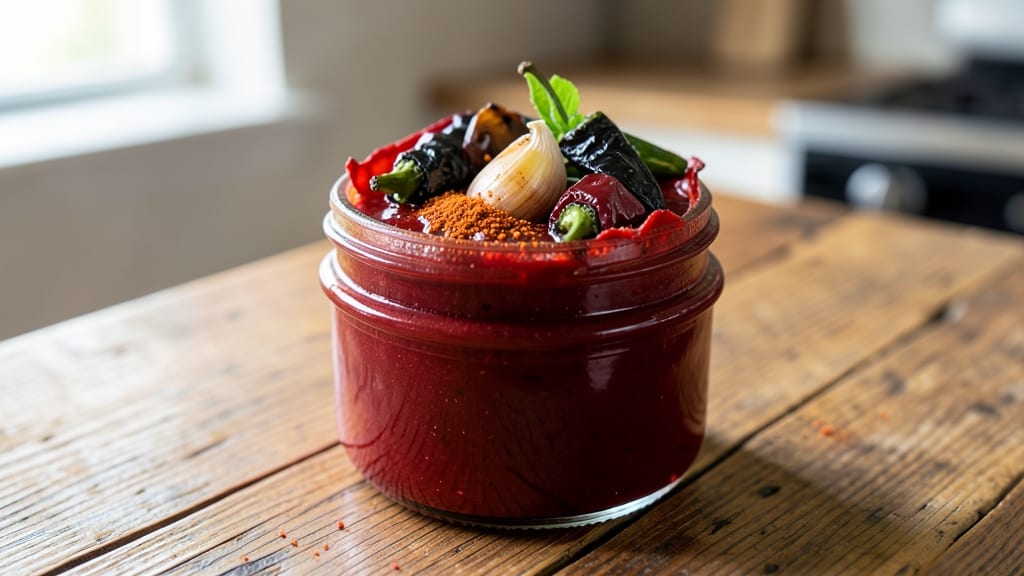
This base hot sauce recipe transforms simple ingredients into a fiery foundation you can customize to your heat tolerance. The secret lies in balancing fresh peppers, vinegar, and a touch of sweetness to create a sauce that's both bold and versatile—perfect for drizzling, cooking, or gifting.
I've perfected this method over years of testing, ensuring every batch delivers consistent heat without overpowering other flavors.
What sets this recipe apart is its adaptability. Start with a simple blend of red bell peppers, jalapeños, and vinegar, then adjust the heat by adding cayenne or habanero to taste.
The cooking process is straightforward: blend, simmer, and strain for a smooth, restaurant-quality sauce that keeps well for months. No special equipment is needed—just a blender, a pot, and patience for the flavors to meld.
The result is a bright, tangy hot sauce with layers of smoky depth from the peppers and a crisp finish from the vinegar. This base works as a dip for wings, a marinade for meats, or a finishing touch for tacos and soups.
The heat level is customizable, so you can start mild and build up to something that'll make your eyes water—if that's what you're after.
Once you've mastered the base, experiment with variations like adding garlic for punch, fruit purees for sweetness, or smoked paprika for depth. Store it in the fridge for up to 3 months, or can it for long-term preservation. This isn't just a hot sauce—it's a flavor-building toolkit for your kitchen.
Ingredients for base hot sauce
Fresh peppers, vinegar, and a touch of sweetness create the perfect fiery foundation.
| Ingredient | Amount | Notes |
|---|---|---|
| Fresh Red Bell Peppers 🌶️ | 2 whole | Seeds removed for mild heat |
| Fresh Jalapeño Peppers 🌶️ | 4 whole | Seeds removed for balanced heat |
| White Vinegar 💧 | 1 cup | Distilled white preferred |
| Granulated Sugar 🍬 | ¼ cup | Balances acidity and heat |
| Garlic Cloves 🧄 | 4 cloves | Freshly minced for depth |
| Cayenne Pepper 🌶️ | 1 tsp | Adjust for desired heat level |
| Salt 🧂 | 1 tsp | Kosher or sea salt preferred |
| Extra-Virgin Olive Oil 🫒 | ¼ cup | For smooth texture and richness |
| Fresh Cilantro Leaves 🌿 | ¼ cup | Optional for freshness |
| Lime Juice 🍋 | 1 tbsp | Brightens final flavor |
The peppers are the heart of this sauce—jalapeños for heat and red bell peppers for body. Grab the freshest you can find, ideally from the produce section at Whole Foods or your local farmers market. The seeds make all the difference: keep them in for extra spice or remove them for a milder kick. If you're feeling adventurous, swap in habaneros for a smoky depth, but start with just one or two—those things pack a punch. For vinegar, distilled white is the gold standard, but apple cider vinegar adds a fruity twist if you're feeling experimental. The sugar might seem odd, but it's essential for balancing the acidity and heat—think of it as the sauce's sweet relief.
No fresh peppers? Dried arbol chiles work in a pinch—soak them first for 15 minutes to rehydrate. Short on jalapeños? Serrano peppers are a great substitute, but use half the amount since they're hotter. The garlic can be roasted for a sweeter flavor—just toss whole cloves on a baking sheet at 400°F for 10 minutes. For extra richness, add a splash of balsamic vinegar instead of some of the white vinegar. And if you're feeling bold, a pinch of smoked paprika adds a smoky dimension that's hard to resist. The lime juice is the final touch—always freshly squeezed, never bottled.
This sauce keeps beautifully, so make a big batch. Store it in a clean, airtight glass jar in the fridge for up to 3 months, or extend its shelf life to 6 months by canning it. For gifting, use small bottles with tight-sealing lids—Trader Joe's has great options. The flavor actually improves with time, so don't be afraid to let it sit for a few weeks before using. If you're not sure about the heat level, taste as you go—you can always add more cayenne later, but you can't take it out. Freezes well too, though texture might change slightly after thawing.
Why You'll Love This Recipe
- No Chopping Needed: I just toss whole roasted bell peppers and jalapeños straight from the grill into the jar—no dicing, no mess. The skins soften perfectly in the vinegar, and you get that smoky depth without extra work.
- Sweet Heat Balance: That sugar isn’t just for sweetness—it mellows the vinegar’s sharpness while keeping the jalapeños’ kick alive. Honestly, the first time I tasted it, I reached for the jar again before finishing my first bite.
- Game for Any Meal: Slather it on grilled chicken, drizzle it over tacos, or mix it into marinades—it disappears just as fast as it adds flavor. Between us, I’ve even used it to wake up bland store-bought salsa.
- Lasts for Months: A single batch fills my fridge for weeks, and the pantry version? Still vibrant after six months. Plus, the ingredients cost pennies—garlic, peppers, vinegar—nothing fancy, just reliable.
Step-by-step instructions for homemade base hot sauce
Here's how to craft a vibrant, customizable hot sauce foundation with perfect balance.
Roast and Blister the Peppers
Preheat your oven to 450°F and line a baking sheet with parchment paper. Cut the 2 whole fresh red bell peppers and 4 whole fresh jalapeño peppers in half lengthwise, removing seeds and membranes. Place them cut-side down on the baking sheet.
Roast for 20-25 minutes until the skins blacken dramatically and smell intensely sweet and charred. This process caramelizes natural sugars and develops deep, smoky complexity. Watch closely—they're done when the skins look like burnt paper but still hold together. Let them cool slightly before handling.
Create the Base Mixture
Transfer the roasted peppers to a blender or food processor. Add the 4 cloves garlic cloves (peeled), 1 tsp cayenne pepper, 1 tsp salt, 1 tbsp lime juice, and 0.25 cup granulated sugar. Pulse until everything is finely chopped but not completely pureed—you want some texture.
This is where the magic happens. The sugar balances the acidity and heat while the lime juice brightens everything. I like to leave a few tiny charred bits for authentic depth. If your mixture looks too dry, add 1-2 tablespoons of water to help with blending.
Blend with Vinegar and Oil
With the blender running, slowly pour in the 1 cup white vinegar and 0.25 cup extra-virgin olive oil through the feed tube. This gradual addition prevents splattering and creates a smooth emulsion. Blend until completely smooth, scraping down the sides as needed.
The vinegar acts as both a preservative and flavor enhancer, while the olive oil adds richness that rounds out the heat. For extra freshness, add the 0.25 cup fresh cilantro leaves now and pulse just until incorporated. Taste and adjust—you can add more cayenne for heat or sugar to balance acidity.
Simmer and Thicken
Transfer the mixture to a saucepan and bring to a gentle simmer over medium-low heat. Let it cook uncovered for 15-20 minutes, stirring occasionally, until it thickens slightly and reduces by about 20%. You're looking for a consistency similar to ketchup—smooth but still pourable.
This simmering step develops the sauce's complexity. The acidity will mellow slightly while the flavors meld together. If you prefer a smoother texture, strain the sauce through a fine-mesh sieve before bottling. For maximum heat retention, store in sterilized glass jars in the refrigerator for up to 2 weeks.
Rest and Adjust
Let the hot sauce cool completely before tasting. This resting period allows all the flavors to fully integrate—what might seem too hot or acidic when fresh will mellow into perfect balance. If needed, adjust the heat by adding more cayenne or the brightness with additional lime juice.
For best results, let the sauce sit overnight before using. The flavors will continue developing, and you'll be amazed at how much more complex it becomes. This base sauce serves as a perfect foundation—use it as-is or customize with additional ingredients like smoked paprika, chipotle peppers, or even a splash of bourbon for depth.
Pro Tips For Making Base Hot Sauce
- Char Peppers First: Toss whole red bell peppers and jalapeños directly onto a screaming-hot grill or cast-iron skillet—no cutting needed. The charred skin adds smoky depth that chopped peppers just can’t match, and you’ll save 10 minutes of prep by skipping the blade work.
- Seed Jalapeños Wet: Run your finger along the slit of each jalapeño while holding it under cold water—this washes away seeds and membranes without making a mess. Dry hands = no slipping, and you’ll avoid the "oops, I scraped the good stuff off" mistake.
- Simmer Slow and Steady: Reduce the heat to a bare simmer after adding vinegar, or you’ll end up with a vinegary punch instead of balanced heat. Five minutes of gentle bubbling lets flavors meld without turning your sauce into a science experiment.
- Strain or Don’t: If you hate texture, strain through a fine-mesh sieve—it’s worth the extra 30 seconds. If you love chunky sauce, skip it, but know you’ll need to stir more often to prevent separation later. (I usually do both: strain half, leave half chunky.)
Flavor customization for these flavors
Sweet Heat Balance
The sugar in this recipe isn’t just for sweetness—it’s the secret to taming the vinegar’s sharpness and the peppers’ fiery bite. Start with ¼ cup granulated sugar and adjust to taste after simmering. For a more complex flavor, try agave nectar or honey—both add depth while maintaining balance.
If your sauce tastes too acidic, add another 1 tsp sugar and simmer for 5 more minutes. The goal is a harmonious blend where heat doesn’t overpower. 🌶️
Smoky Depth Variations
For a smoky twist, add 1 tsp smoked paprika or ½ tsp chipotle powder to the base mixture before blending. For extra intensity, char 1 dried guajillo pepper in a dry skillet for 30 seconds per side, then soak it in hot water for 10 minutes before blending.
This adds a rich, earthy dimension that pairs perfectly with grilled meats or tacos. If you love bold flavors, try a splash of liquid smoke—just ½ tsp is enough to transform the sauce. 🔥
Fruity and Tangy Twists
Brighten your hot sauce with fruit purees like mango, pineapple, or tomato. Add 2 tbsp puree to the base before blending for a sweet-spicy contrast. For a citrusy kick, replace the lime juice with orange juice or add 1 tsp grated orange zest.
These variations work beautifully with seafood or as a glaze for roasted vegetables. If you’re feeling adventurous, blend in ½ cup cooked strawberries for a fruity heat that’s surprisingly addictive. 🍍
Herbal and Earthy Additions
Fresh herbs elevate this sauce to new heights. Stir in 2 tbsp chopped cilantro or 1 tbsp fresh basil after simmering for a bright, aromatic finish. For an earthy note, add 1 tsp dried oregano or ½ tsp thyme during the blending stage.
If you love complexity, try infusing the vinegar with 1 sprig rosemary or 2 bay leaves while simmering—remove them before bottling. These additions add layers that make the sauce perfect for drizzling over soups or pasta. 🌿
Spicy and Complex Boosts
For a fierier sauce, blend in 1 habanero pepper (seeds removed for less heat) or 1 tbsp gochujang for a fermented kick. If you love depth, add 1 tsp fish sauce or ½ tsp soy sauce during simmering—this adds umami that rounds out the heat.
For a smoky-spicy fusion, mix in 1 tsp coffee or ½ tsp cocoa powder for a rich, complex finish. These tweaks turn your base into a versatile condiment for everything from wings to stir-fries. 🌶️🔥
Sweet and Smoky Finishes
After simmering, stir in 1 tbsp brown sugar and ½ tsp liquid smoke for a caramelized, smoky finish. For a bourbon-infused sauce, add 1 tbsp bourbon during the last 5 minutes of simmering—this adds warmth and depth.
If you’re a fan of caramelized onions, blend in 2 tbsp cooked onions for a sweet, savory contrast. These finishes work beautifully with BBQ dishes or as a dipping sauce for fries. The key is to taste as you go—adjust sweetness or smokiness to your preference. 🍯
Nutrition facts
Frequently asked questions
Can I make this hot sauce without roasting the peppers?
You can, but roasting develops deeper, smokier flavors that balance the heat. For a quick version, use fresh peppers raw in the blend, but expect a brighter, less complex sauce. If you skip roasting, add ½ tsp smoked paprika to mimic the smoky depth. The texture will also be slightly less smooth.
How do I adjust the heat level if it's too mild or too spicy?
For milder heat, reduce or omit the cayenne and use only seeds-removed jalapeños. If it's too spicy, stir in 1 tbsp sugar or 1 tbsp lime juice to balance—these ingredients help dilute the capsaicin's intensity. For extra heat, add ½ tsp cayenne or blend in 1 habanero pepper (seeds removed for less heat).
Can I use apple cider vinegar instead of white vinegar?
Yes! Apple cider vinegar adds a fruity, slightly sweet complexity that works beautifully. For best results, use the same 1 cup measurement, but reduce sugar to 2 tbsp since the vinegar already has natural sweetness. The flavor profile shifts toward a tangy, almost "fermented" quality that pairs well with meats and roasted vegetables.
Why does my hot sauce separate after simmering?
Separation happens when the oil and vinegar aren't properly emulsified. To fix it, blend the sauce again after cooling, or whisk vigorously with 1 tsp cornstarch mixed with 1 tbsp water to stabilize. For prevention, add ½ tsp xanthan gum during blending (it's a natural thickener). Store in a sealed jar to maintain consistency.
How long does homemade hot sauce last, and can I can it?
In the fridge, this sauce keeps for 3 months in a clean glass jar. For longer storage, can it using a water bath method (10 minutes for pints, 15 for quarts) to preserve it for 1 year. Sterilize jars and lids first, and leave ½-inch headspace at the top. The vinegar acts as a natural preservative, but proper canning ensures safety.