
Sauces & Condiments
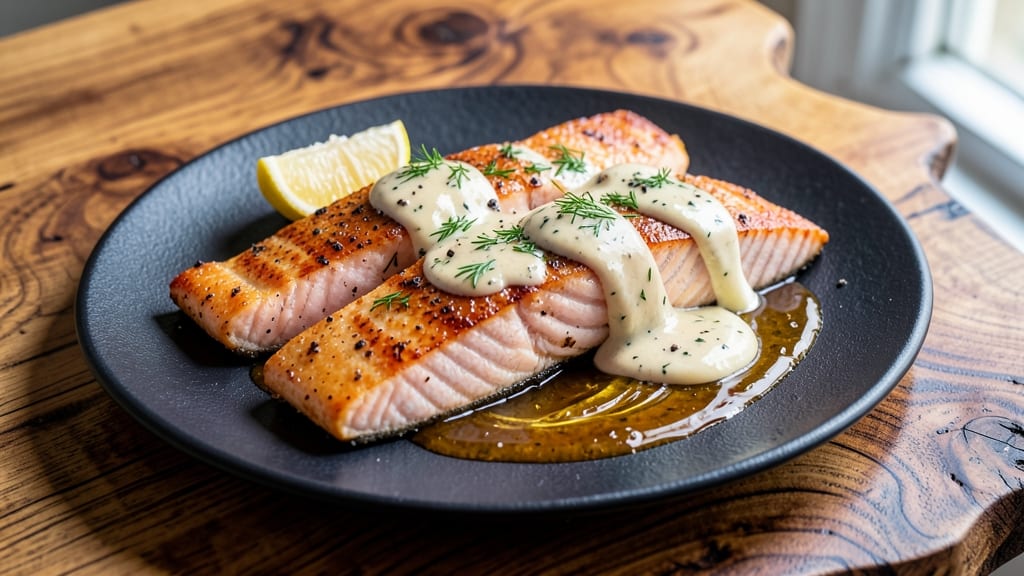
This baked salmon with creamy dill sauce recipe delivers restaurant-quality results with minimal effort—flaky, golden salmon paired with a velvety sauce that's impossible to resist.
The secret lies in a high-heat bake that locks in moisture while creating a crispy skin, all while the sauce infuses with bright lemon and fresh dill. I've perfected this technique over countless weeknight dinners, ensuring every bite is tender and bursting with herby freshness.
The creamy dill sauce transforms simple ingredients into something extraordinary—just sour cream, fresh dill, lemon juice, and a touch of garlic create a sauce that's tangy, rich, and perfectly balanced. What sets this recipe apart is how the sauce complements the salmon without overpowering it, creating harmony in every forkful.
The dish comes together in under 30 minutes, making it ideal for busy weeknights or impressing guests with minimal prep.
By the time you serve this dish, you'll have perfectly baked salmon with a golden crust and tender flesh, topped with a dollop of that luscious creamy dill sauce. The sauce clings beautifully to the flakes, adding moisture and depth that elevates the salmon from good to unforgettable.
This is the kind of meal that feels special without requiring hours in the kitchen.
The best part? This recipe scales effortlessly—double the sauce for leftovers or serve it as a dip alongside. The flavors only improve when reheated, making it perfect for meal prep. Here's how to create this foolproof, restaurant-worthy dish at home.
Ingredients for baked salmon with creamy dill sauce
Simple ingredients that deliver restaurant-quality salmon with velvety dill sauce.
| Ingredient | Amount | Notes |
|---|---|---|
| Salmon Fillets 🐟 | 4 whole | Skin-on, 6-8 oz each |
| Unsalted Butter 🧈 | ½ cup | Cold, sliced into 8 pieces |
| Lemon Juice 🍋 | 2 tbsp | Freshly squeezed |
| Garlic Cloves 🧄 | 3 cloves | Minced, peeled |
| Fresh Dill 🌿 | ½ cup | Chopped, stems removed |
| Sour Cream 🥛 | ½ cup | Full-fat preferred |
| Extra-Virgin Olive Oil 🫒 | 2 tbsp | For drizzling |
| Salt 🧂 | 1 ½ tsp | Kosher or sea salt |
| Ground Black Pepper 🌶️ | ½ tsp | Freshly ground |
| Lemon Zest 🍋 | 1 tsp | From 1 lemon |
| All-Purpose Flour 🌾 | 1 tbsp | For dredging |
The salmon fillets should be skin-on—that crispy skin is what makes this dish shine. Look for wild-caught salmon if you can find it at Whole Foods or your local fishmonger; it has richer flavor. If using frozen, thaw overnight in the fridge. The butter matters too—Plugrá or Land O'Lakes work perfectly, but avoid margarine. Fresh dill is a must here; Trader Joe's sells great bundles, or grab it from the grocery store's produce section—just check that the stems are green and vibrant.
No fresh dill? Dried dill at one-third the amount will work, but the flavor won't be as bright. The sour cream should be full-fat for that luxurious texture—Kroger's or Trader Joe's carry excellent options. If you're short on time, pre-minced garlic from a jar works fine, though fresh is always better. For extra richness, add a pinch of smoked paprika to the butter slices. The lemon juice should be freshly squeezed—bottled just doesn't cut it here. If you're feeling adventurous, swap half the sour cream for Greek yogurt for a tangier twist.
Store the salmon fillets in the fridge for up to 2 days before baking, but prep the sauce the same day for best flavor. The dill sauce keeps well in an airtight container for 3-4 days in the fridge, and it reheats beautifully—just warm gently on the stove. For meal prep, portion the sauce into small containers and pair it with baked salmon for easy lunches. The butter slices can be prepped ahead and stored in the freezer for up to 1 month.
Why You'll Love This Recipe
- Foolproof Timing: I swear by this method—just pop the salmon on a sheet pan with butter, garlic, and a squeeze of lemon, then bake while I chop veggies for the side. Twenty minutes later, dinner’s done. No hovering, no stress.
- Buttery-Garlic Magic: That melted butter basting into the salmon while it bakes? It’s like a hug for your taste buds. The dill sauce ties it all together—bright, herby, and rich without being heavy. My husband licks the plate.
- Weeknight to Dinner Party: Same recipe, different vibes. Toss it together for a lazy Tuesday or dress it up with roasted asparagus and crusty bread for guests. The sauce elevates it every time, and honestly? It’s the kind of dish that makes you look like a pro.
- Leftovers That Don’t Suck: Baked salmon stays moist for days, and this sauce? It clings like glue. I’ll pack it in lunches or reheat it for a quick breakfast—crispy eggs on top, anyone? No sad, dry fish here. Just reliable, flavorful meals.
Step-by-step instructions for baked salmon with creamy dill sauce
Here's how to achieve flaky, buttery salmon with a velvety dill sauce that ties everything together.
Prepare the Salmon for Perfect Flakiness
Preheat your oven to 400°F and line a baking sheet with parchment paper. Pat each of the 4 whole salmon fillets dry with paper towels—this ensures crispy skin and even cooking. Place them skin-side down on the prepared sheet.
In a small bowl, combine 1 tablespoon all-purpose flour, 1.5 teaspoons salt, and 0.5 teaspoon ground black pepper. Lightly dredge each fillet in this mixture, pressing gently to adhere. The flour creates a delicate crust that helps the butter melt into the salmon.
Drizzle each fillet with 2 tablespoons extra-virgin olive oil, dividing it evenly. This keeps the salmon moist while allowing the butter to crisp beautifully. Arrange the fillets in a single layer on the baking sheet, leaving space between each for even browning.
Create the Lemon-Butter Topping
While the oven preheats, prepare the topping by slicing the 0.5 cup unsalted butter into 8 even pieces. In a small bowl, mix 2 tablespoons lemon juice, 1 teaspoon lemon zest, and 3 minced garlic cloves. This bright, aromatic mixture will infuse the butter as it melts.
Place the butter slices directly on top of each salmon fillet, dividing them evenly. The butter will melt into the fish, creating a rich, golden crust. Bake the salmon for 12-15 minutes, until the skin is crisp and the internal temperature reaches 145°F when measured in the thickest part.
Make the Creamy Dill Sauce
While the salmon bakes, prepare the sauce by combining 0.5 cup sour cream, 0.5 cup chopped fresh dill, 1 teaspoon lemon zest, and 0.5 teaspoon ground black pepper in a bowl. Mix until smooth and set aside. The dill should be finely chopped to ensure a velvety texture without chunks.
For extra richness, stir in 1 tablespoon lemon juice and adjust the seasoning with additional salt if needed. The sauce should be thick but pourable—if it's too stiff, thin it with 1-2 teaspoons water. This step is where the herby freshness shines, balancing the richness of the salmon.
Serve with Flaky Perfection
Once the salmon is done, carefully transfer it to a serving platter. Spoon the creamy dill sauce over the top, letting it cascade down the sides for an elegant presentation. The sauce should coat the salmon evenly, adding a cool contrast to the warm, buttery fish.
Garnish with additional chopped dill and a sprinkle of lemon zest for a pop of color and brightness. Serve immediately with steamed vegetables or crusty bread to soak up the sauce. The result is a restaurant-quality dish with tender, flaky salmon and a creamy, herby sauce that ties everything together.
Pro Tips For Making Baked Salmon With Creamy Dill Sauce
- Dry the Salmon First: Pat those fillets thoroughly with paper towels—don’t just wipe them. Wet skin won’t crisp, and you’ll end up with sad, steamed salmon instead of golden, flaky perfection. I used to skip this, and the sauce would just pool on top like a sad, buttery lake.
- Use Cold Butter for Sauce: Whisk the butter into the dill sauce cold, then warm it gently over low heat. Melted butter makes the sauce greasy; cold butter emulsifies better and gives that velvety texture without separating. (Yes, even if you’re impatient like me.)
- Don’t Overcrowd the Pan: Bake the salmon in a single layer, skin-side down, with space between fillets. I learned this the hard way—stacking them turns the skin rubbery and steams the edges. A half-inch gap guarantees even cooking and that crisp skin you crave.
- Toast the Garlic in Butter: Sauté the minced garlic in butter for 30 seconds until it smells aromatic, not burnt. This step—skipping it saves 2 minutes, but the sauce tastes noticeably flatter. The butter should foam slightly; that’s your cue to add the lemon juice.
Pro cooking tips for this dish
Skin-Crisping Secrets
For that perfect crispy skin, pat the salmon fillets bone-dry with paper towels before baking—this step is non-negotiable. I like to use King Arthur all-purpose flour for dredging because it creates a delicate, even crust that helps the butter melt beautifully.
The 400°F oven temperature is key—any lower, and the skin won't crisp properly. 🔥
Don’t skip the olive oil drizzle—it prevents the butter from sticking to the pan and adds moisture to the fish. I recommend California Olive Ranch extra-virgin olive oil for its balanced peppery notes that complement the salmon's natural flavor.
Arrange the fillets skin-side down on the baking sheet to ensure even browning.
Butter Timing Tricks
The butter slices should be cold when placed on the salmon—they’ll melt into the fish as it bakes, creating a golden crust. I like to use Land O'Lakes unsalted butter because it’s consistently high-quality.
For extra flavor, mix the butter with minced garlic and lemon zest before placing it on top. This infusion adds depth that takes the dish from good to restaurant-worthy. ⚡
If your butter starts browning too quickly, tent the baking sheet with aluminum foil to prevent overcooking. The salmon is done when it reaches 145°F internally—use a meat thermometer to check the thickest part.
Overcooking is the fastest way to ruin perfectly flaky salmon, so keep an eye on it during the last few minutes.
Sauce Consistency Hacks
The secret to a velvety dill sauce is finely chopping the fresh dill—I use a microplane for the lemon zest to avoid any gritty texture. For the sour cream, I always reach for full-fat—Trader Joe’s brand works perfectly.
If your sauce is too thick, thin it with 1-2 teaspoons water or a splash of lemon juice to achieve that perfect pourable consistency. 💫
For extra brightness, add a pinch of smoked paprika to the sauce—it adds a subtle depth that pairs beautifully with the salmon. Taste as you go and adjust the seasoning with kosher salt or a squeeze of lemon juice.
The sauce should be tangy, creamy, and herby, not overpowering. Store any leftovers in an airtight container for up to 3 days—it reheats beautifully on the stove.
Resting for Flakiness
Never skip the 10-minute rest after baking—this allows the juices to redistribute, ensuring each bite is moist and tender. I like to place the salmon on a wire rack over a plate to catch any drippings, which can be used to baste the sauce.
The contrast between the warm, buttery salmon and the cool, creamy dill sauce is what makes this dish truly special. ✨
To serve, spoon the sauce over the salmon and garnish with additional chopped dill and lemon zest for a pop of color. Pair it with steamed asparagus or a simple arugula salad to balance the richness.
The sauce also works as a dip—double the recipe and serve it alongside the salmon for a crowd-pleasing spread.
Nutrition facts
Frequently asked questions
Can I use frozen salmon for this recipe?
Yes, but thaw it properly first! Place the frozen fillets in a sealed bag and submerge in cold water for 30 minutes to speed up thawing, or let them thaw overnight in the fridge. Never microwave—it creates uneven cooking. Pat the salmon completely dry before baking for that perfect crispy skin.
What if I don't have fresh dill?
Use dried dill instead, but reduce the amount to 1/3 cup (one-third of fresh). For extra flavor, add 1/2 teaspoon dried tarragon or 1/4 teaspoon dried chives. The sauce will still taste great, though fresh dill gives the brightest flavor.
How do I keep the salmon from sticking to the pan?
Line your baking sheet with parchment paper or use a well-oiled sheet. The key is to pat the salmon completely dry before seasoning—moisture is your enemy! Also, arrange fillets skin-side down and don't overcrowd the pan. If needed, use a thin layer of butter on the pan before adding the salmon.
Can I make this dish ahead of time?
Bake the salmon up to 2 days ahead and store it in an airtight container in the fridge. The sauce can be made 1 day ahead and reheated gently on the stove. When ready to serve, warm the salmon for 5-10 minutes at 350°F and spoon fresh sauce over the top. The flavors actually improve with a day's rest!
What's the best way to reheat leftovers?
Reheat salmon gently in the oven at 300°F for 10-12 minutes with a splash of water or lemon juice to keep it moist. For the sauce, warm it in a saucepan over low heat for 2-3 minutes, stirring constantly. Never microwave—it makes the sauce grainy. The combination reheats beautifully for sandwiches or salads!