
Sauces & Condiments
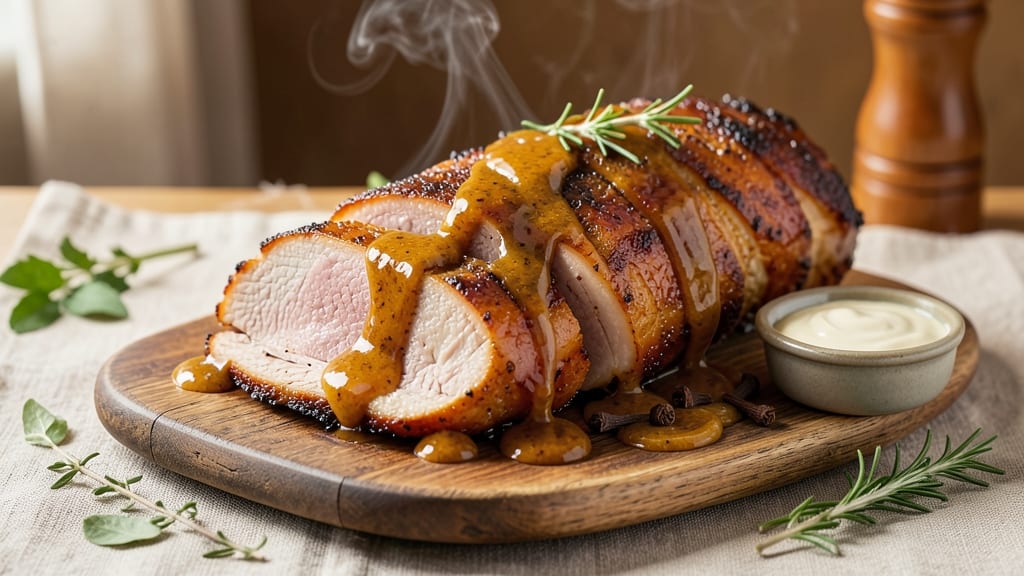
This baked ham with mustard sauce transforms holiday centerpieces into showstopping meals with crispy glaze and rich, savory-sweet sauce. The secret lies in a slow-baked foundation that keeps the meat tender while high heat caramelizes the mustard mixture into a glossy, crackling crust.
I've perfected this technique over years of holiday hosting—where every slice reveals juicy perfection beneath that irresistible glaze.
What sets this recipe apart is the dual-cooking approach: the ham bakes gently at first to develop deep flavor, then finishes with a broiling step that turns the mustard sauce into a golden, crackling shell.
The sauce itself is a perfect balance—Dijon mustard provides tangy depth while brown sugar and honey create that signature sweetness. It's the kind of dish that makes guests ask for seconds before dessert even arrives.
By the time you're serving, your ham will have crispy edges that shatter with each bite, tender meat that falls apart easily, and a sauce so rich it needs no sides to shine.
The aroma alone fills the house with holiday magic, and the presentation—golden glaze glistening under lights—makes it the star of any table. This isn't just ham; it's a centerpiece that delivers both visual drama and restaurant-quality flavor.
Pair with classic sides like scalloped potatoes or honey-glazed carrots for the full holiday experience. The sauce even reheats beautifully for sandwiches the next day. Here's how to make it—step by step—for a ham that will have everyone coming back for more.
Ingredients for baked ham with mustard sauce
Twelve ingredients for a ham that crackles with flavor and impresses every guest.
| Ingredient | Amount | Notes |
|---|---|---|
| Pre-Cooked Bone-In Ham 🍖 | 8 lb | Center-cut, fully cooked, rind removed |
| Dijon Mustard 🌶️ | ½ cup | High-quality, smooth variety |
| Brown Sugar 🍚 | 1 cup | Light or dark, packed firmly |
| Honey 🍯 | ½ cup | Wildflower or clover preferred |
| Apple Cider Vinegar 🍎 | ¼ cup | For tangy depth |
| Whole Cloves 🌿 | 10 whole | For studding ham |
| Orange Zest 🍊 | 2 tbsp | Freshly grated |
| Fresh Orange Juice 🍊 | ½ cup | No pulp, freshly squeezed |
| Unsalted Butter 🧈 | ½ cup | Cold, cubed for glaze |
| Fresh Rosemary 🌿 | ¼ cup | Chopped, stems removed |
| Fresh Thyme 🌿 | ¼ cup | Leaves only, chopped |
| Kosher Salt 🧂 | 1 ½ tbsp | Diamond Crystal preferred |
| Ground Black Pepper 🌶️ | 1 tsp | Freshly cracked |
| Granulated Garlic 🧄 | 1 tsp | For seasoning |
The ham is everything here—center-cut, bone-in is non-negotiable for even cooking. Look for a pre-cooked ham with a thick layer of fat (about 1/4-inch) to keep it juicy. I always grab mine from Whole Foods or Costco—their holiday selection is top-notch. The rind must go, but save it for stock later. For the mustard, Maille or Whole Foods brand is worth the splurge—those cheap store brands lack depth. The brown sugar should be packed firmly; don't scoop it loosely or you'll end up with a dry glaze. Fresh herbs make all the difference, so if you're using dried, halve the amount—Trader Joe's has great pre-chopped options if you're short on time.
No Dijon mustard? Substitute yellow mustard plus 1 tsp vinegar for tang. Short on honey? Maple syrup works too, though it'll be slightly less floral. The apple cider vinegar is key for that restaurant-quality depth—Bragg or local orchard brands are my go-tos. If you can't find fresh orange juice, not-from-concentrate is the next best thing. For the butter, Plugrá or Land O'Lakes unsalted melts beautifully. The cloves? Whole Foods or bulk bins have the best quality—none of that dusty stuff. Want to skip the orange zest? Double the vinegar for brightness.
This ham reheats like a dream—just cover it with foil and warm at 300°F for 10-15 minutes. The glaze keeps for 3 days in the fridge if you make it ahead (store separately), so you can assemble everything the night before. For leftovers, slice thin and reheat in a skillet with a splash of water to keep it moist. The sauce freezes beautifully too—just thaw in the fridge overnight. Pro tip: Use a meat thermometer—the ham should hit 140°F internal temp before serving. Trust me, it's worth the investment.
Why You'll Love This Recipe
- No-Fuss Glaze: I swear by this sauce—just whisk together Dijon, honey, and vinegar, then brush it on while the ham bakes. The brown sugar caramelizes into a sticky, golden crust that takes zero babysitting.
- Sweet-Savory Magic: That tangy mustard and honey combo? It’s like a flavor hug for your ham. The vinegar cuts through the richness, leaving you with a glaze that’s addictive—crisp on the outside, juicy inside.
- Weeknight Hero: I make this when I’m hosting last-minute or just craving something special. The ham feeds a crowd, and the glaze doubles as a dip for dinner rolls. Honestly, it’s my go-to for holidays and lazy Sundays.
- Leftovers That Shine: This ham stays moist for days, so I bake a big one and repurpose it. Slice it for sandwiches, dice it into soups, or even toss it into fried rice. Between us, the glaze makes reheated ham taste almost as good as fresh.
Step-by-step instructions for baked ham with mustard sauce
Transform your pre-cooked ham into a showstopper with crisp edges and rich, tangy glaze.
Prepare the Ham for Perfect Glaze Adherence
Start by placing the 8 lb pre-cooked bone-in ham in a roasting pan, cut-side down. This positioning allows the juices to flow back into the meat during baking, keeping it moist. Pat the surface completely dry with paper towels—this critical step ensures the glaze will crisp beautifully instead of steaming.
In a small bowl, whisk together the 0.5 cup Dijon mustard, 1 cup brown sugar, 0.5 cup honey, and 0.25 cup apple cider vinegar until fully combined. This mixture forms the base of our sauce, balancing sweetness with tangy depth. The mustard adds complexity while the vinegar prevents the sugar from crystallizing during baking.
Stud and Season the Ham for Maximum Flavor
Place the ham back in the roasting pan and score the fat cap in a diamond pattern using a sharp knife. This creates channels for the glaze to penetrate deeper into the meat. Push 10 whole cloves into the scored fat, spacing them evenly for balanced flavor distribution.
In a separate bowl, combine the 0.25 cup fresh rosemary, 0.25 cup fresh thyme, 1.5 tbsp kosher salt, 1 tsp ground black pepper, and 1 tsp granulated garlic. Sprinkle this herb and spice blend evenly over the ham's surface, pressing gently so it adheres. The herbs will infuse aromatic notes while the garlic adds subtle warmth that complements the sweet-savory glaze.
Bake Until Internal Temperature Reaches Perfection
Preheat your oven to 325°F. Pour the mustard mixture evenly over the ham, coating all surfaces completely. Cover tightly with aluminum foil and bake for 2 hours. This initial covered phase allows the ham to heat through gently while the glaze begins to set without burning.
After 2 hours, remove the foil and increase the oven temperature to 375°F. Return the ham to the oven and bake uncovered for an additional 30-45 minutes until the glaze turns a deep amber color and forms a crackly crust. The internal temperature should reach 140°F—this is safe for consumption and ensures perfect doneness without drying out the meat.
Create the Final Glaze and Finish Cooking
While the ham bakes, prepare the finishing glaze by combining the 0.5 cup fresh orange juice and 0.5 cup unsalted butter in a small saucepan. Cook over medium-low heat until the butter melts completely and the mixture thickens slightly, about 3-4 minutes. Remove from heat and stir in the 2 tbsp orange zest, creating a vibrant, citrusy topping that brightens the sweet-savory base.
Once the ham's glaze reaches the desired caramelized depth, brush the orange butter mixture generously over the surface. Return the ham to the oven for 5-10 minutes to set the glaze completely. This final step adds a beautiful sheen and intense citrus aroma that elevates the entire dish.
Rest and Serve for Maximum Juiciness
Transfer the ham to a carving board and tent loosely with aluminum foil. Let it rest for at least 15 minutes before slicing. This resting period allows the juices to redistribute throughout the meat, preventing them from pooling on your plate when you serve. The glaze will remain crisp while the meat stays perfectly moist.
Slice the ham against the grain into ¼-inch thick portions and arrange on a platter. Drizzle any remaining pan juices over the top and garnish with additional orange zest if desired. Serve immediately with your favorite sides—each bite should deliver perfect balance of crispy glaze, tender meat, and bright citrus notes.
Pro Tips For Making Baked Ham With Mustard Sauce
- Scrape the Glaze: That sticky brown sugar-honey mix won’t caramelize properly if it’s hiding in the pan. Every 15 minutes, use a spoon to scrape up the glaze from the bottom and spread it back over the ham—especially the edges. I learned this the hard way when my ham looked dry but tasted like syrup soup.
- Warm the Mustard: Cold Dijon mustard clumps like a stubborn lump in your sauce. Whisk it with the honey and vinegar first, then warm it gently in a small saucepan for 2-3 minutes before brushing it on the ham. Sounds weird, but it works: no grainy texture, just smooth, glossy perfection.
- Don’t Overbake the Bone: Bone-in ham turns rubbery if you push it past 325°F for too long. Once the internal temp hits 140°F (about 20-25 minutes in), pull it out—even if it looks undercooked. The residual heat will finish it while you’re making the sauce. Your future self will thank you.
- Balance the Vinegar: Apple cider vinegar adds tang, but too much makes the sauce taste like a science experiment. Start with 1 tablespoon per cup of glaze, then taste as you go. If it’s too sharp, a pinch of brown sugar or a splash of honey fixes it faster than you’d think.
Troubleshooting your baked ham with mustard sauce
Glaze Won't Set
If your mustard glaze stays sticky instead of crisping, the ham likely wasn't dry enough before baking. Pat it completely dry with paper towels—moisture is the enemy of crisp edges.
Also, ensure you're using high-quality Dijon mustard (like Maille) rather than cheaper brands, which can contain more water. For extra insurance, broil the ham for 2-3 minutes at the end on high heat to help set the glaze faster. 🔥
Sauce Too Sweet
The mustard sauce may taste overly sweet if the balance of ingredients is off. To fix this, add 1-2 extra tablespoons of Dijon mustard or 1 tablespoon apple cider vinegar to cut through the sugar.
If the glaze is already on the ham, brush it with a mix of 2 tablespoons orange juice and 1 tablespoon vinegar to refresh the flavor profile. Taste as you go—adjust gradually!
Ham Dries Out
Overcooking is the usual culprit here. Use a meat thermometer and remove the ham when it hits 140°F internal temperature—never let it exceed 145°F. If you're concerned about drying, baste the ham with pan juices every 30 minutes during the covered baking phase.
For extra moisture, place a cup of water in the roasting pan before adding the ham.
Glaze Burns
Burnt glaze happens when the oven temperature is too high or the ham isn't covered long enough. Always start with 325°F for the first 2 hours before increasing to 375°F.
If you notice browning too quickly, tent the ham loosely with foil to prevent scorching. For a deeper color without burning, finish with 5 minutes under the broiler on low heat.
Cloves Fall Out
Whole cloves often pop out during baking if they're not inserted properly. Use a small paring knife to make shallow slits in the fat (about ½-inch deep) before pushing the cloves in.
For extra security, press them in firmly and consider using clove-studded butter on top of the ham as an alternative method. 🌿
Sauce Separates
If your mustard sauce separates during baking, it's likely due to the sugar crystallizing. To prevent this, whisk the sauce vigorously before pouring it over the ham and add 1 extra tablespoon of vinegar to help stabilize the mixture.
If separation occurs, simply whisk the sauce again before serving—it won't affect the flavor, just the texture slightly.
Nutrition facts
Frequently asked questions
Can I use a smaller ham for this recipe?
The recipe is designed for an 8 lb bone-in ham to achieve the perfect balance of meat-to-glaze ratio. For a 4-6 lb ham, reduce the mustard mixture by half and adjust baking time to 1-1.5 hours covered at 325°F. The key is maintaining the same 1/4-inch thick slices for even cooking. Smaller hams will require less time to reach 140°F internal temp.
What's the best way to reheat leftover ham?
For maximum juiciness, wrap the ham in foil and warm at 300°F for 10-15 minutes. To revive the glaze, brush with a mix of 2 tbsp orange juice and 1 tbsp honey before serving. For sandwiches, slice thin and reheat in a skillet with 1 tbsp butter over medium heat for 2-3 minutes. The sauce reheats beautifully too—just warm gently with a splash of water.
Can I make the mustard sauce ahead of time?
Yes! Prepare the sauce up to 3 days ahead and store it in an airtight container in the fridge. When ready to use, whisk vigorously to re-emulsify, then heat gently until warm. The glaze components (orange juice and butter) should be made fresh before applying to the ham. For best results, assemble the ham with sauce 1 hour before baking to let flavors meld.
How do I adjust the recipe for a honey-free diet?
Replace the 0.5 cup honey with 0.5 cup maple syrup for similar sweetness, or use 0.25 cup brown sugar plus 0.25 cup orange juice to maintain moisture. For a lower-sugar option, reduce brown sugar to 0.75 cup and add 1 tbsp Dijon mustard to compensate for lost sweetness. The glaze will still crisp beautifully—just monitor baking time closely.
What sides pair best with this ham?
Classic options include sweet potato mash, scalloped potatoes, or honey-glazed carrots to complement the mustard's tang. For contrast, serve with sautéed Brussels sprouts with bacon or a fresh arugula salad with apple slices and walnuts. The citrus notes in the glaze also shine with cornbread or dinner rolls—perfect for soaking up the sauce.