
Sauces & Condiments
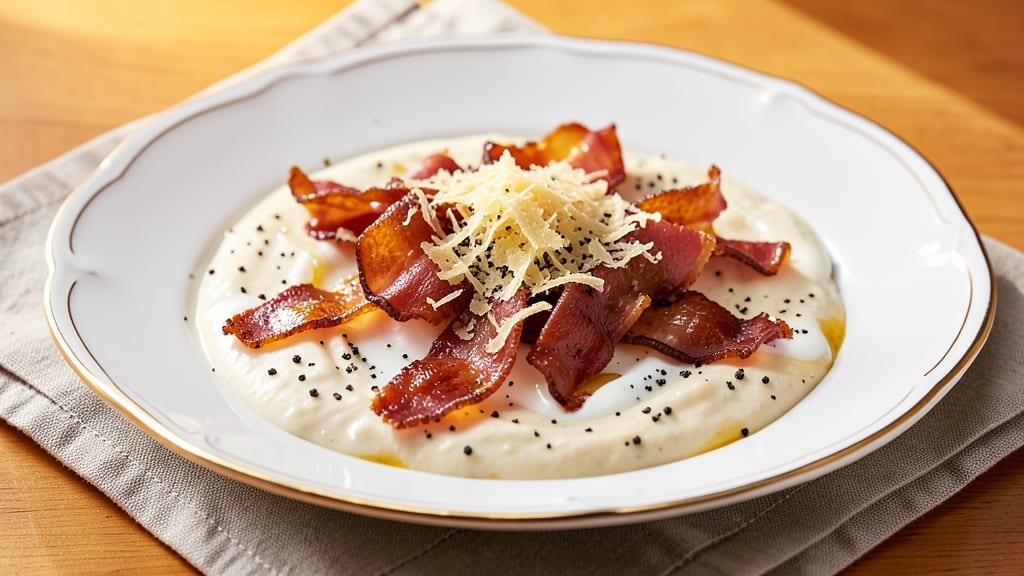
This bacon carbonara sauce recipe delivers the creamy, smoky essence of Rome without the fuss of traditional preparation. The secret lies in a perfect balance of crispy pancetta, rich egg yolks, and aged pecorino—all emulsified into a velvety sauce that clings to pasta like a dream.
I developed this method after years of trial and error, ensuring the sauce stays silky smooth while maintaining that signature carbonara depth.
The process begins with rendering pancetta until it's crispy and fragrant, then creating a stovetop emulsion with egg yolks and cheese. This technique guarantees a sauce that's rich but not greasy, with a luxurious mouthfeel that's impossible to resist.
The key is patience—adding the hot pasta gradually to temper the eggs and create that signature creamy texture.
What sets this sauce apart is its versatility. Use it as a finishing sauce for al dente spaghetti, toss it with roasted vegetables, or drizzle it over grilled chicken for an instant flavor upgrade. The sauce thickens beautifully when reheated, making it perfect for meal prep or last-minute dinner solutions.
For those who prefer a lighter version, simply reduce the cream slightly or swap in whole milk. The result is still decadent but with a touch more balance. This sauce is the ultimate shortcut to restaurant-quality Italian flavor—rich, smoky, and utterly satisfying.
Ingredients for bacon carbonara sauce
Nine essential ingredients transform into the creamiest, smokiest carbonara sauce you'll ever make.
| Ingredient | Amount | Notes |
|---|---|---|
| Pancetta 🥓 | 6 oz | Diced into 1/4-inch pieces |
| Extra-Virgin Olive Oil 🫒 | 2 tbsp | High-quality, fruity variety |
| Large Egg Yolks 🥚 | 4 whole | Fresh, room temperature |
| Pecorino Romano Cheese 🧀 | 1 cup | Finely grated, aged |
| Heavy Whipping Cream 🥛 | ½ cup | Full-fat for richness |
| Freshly Ground Black Pepper 🌶️ | 1 tsp | Coarsely cracked |
| Garlic Cloves 🧄 | 2 cloves | Minced, for aroma |
| Diamond Crystal Kosher Salt 🧂 | ½ tsp | For seasoning |
| Spaghetti 🍝 | 12 oz | Al dente cooked |
Pancetta is the star here—look for thick-cut slices at specialty butchers or Italian markets. Trader Joe's carries pre-diced pancetta in vacuum packs, which saves time. The key is rendering it until it's crispy and golden, not crispy and burnt. For extra depth, toast the minced garlic in the same pan with the pancetta. The Pecorino Romano must be aged—young cheese won't melt properly. I always buy it pre-grated from the deli counter at Whole Foods because it's fresher than the block you'd have to grate yourself.
No pancetta? Thick-cut bacon works in a pinch, but it's smokier and less delicate. Swap the Pecorino for Parmigiano-Reggiano if that's what you've got, but it won't be as sharp. Fresh egg yolks are non-negotiable—pasteurized yolks won't emulsify properly. For a lighter version, reduce the cream to 1/4 cup and add 1/4 cup whole milk instead. The spaghetti should be cooked al dente—undercooked pasta absorbs sauce better. Reserve 1/2 cup pasta water before draining, it's your secret weapon for adjusting consistency.
This sauce is best made fresh, but it reheats beautifully. For meal prep, assemble everything except the pasta water, then finish with hot pasta when ready to serve. Keeps in the fridge for 3 days if stored in an airtight container with a thin layer of olive oil on top. Freezes for 1 month—portion into ice cube trays for single servings. The sauce thickens as it cools, so always add a splash of warm pasta water when reheating.
Why You'll Love This Recipe
- Five-Ingredient Magic: I swear by this—just pancetta, yolks, pecorino, cream, and oil. No fancy prep, no stress. The pancetta renders down fast, the eggs emulsify like a dream, and suddenly you’ve got a sauce that tastes like a restaurant’s secret.
- Creamy Crispy Contrast: That crispy pancetta crunch against the velvety egg-cream sauce? It’s the kind of bite you’ll crave. Honestly, I’ve tried store-bought carbonara mixes, and this beats them every time—no chalky aftertaste, just pure, salty, cheesy goodness.
- Weeknight or Dinner Party: Make a double batch on Sunday and reheat it all week—it’s my go-to for lazy nights or when unexpected guests show up. (Yes, even on a Tuesday night.) The sauce clings to pasta like glue, so it’s foolproof for feeding a crowd or just one hungry person.
- Budget-Friendly Luxury: Pancetta and pecorino might sound fancy, but they stretch further than you’d think. A little goes a long way, and the flavor? Ridiculously rich. I’ll be real: this is how I trick myself into feeling fancy without breaking the bank.
Step-by-step instructions for bacon carbonara sauce
This silky, smoky sauce delivers restaurant-quality richness with perfectly balanced flavors.
Render the Pancetta Until Crispy
Heat a large skillet over medium heat and add the 6 oz diced pancetta. Cook undisturbed for 5-6 minutes until the fat begins to render and the edges turn golden. Stir occasionally to prevent burning, but let those crispy bits form—they're packed with flavor.
Once the pancetta is deep golden brown and the fat has rendered out (about ¼ cup should remain in the pan), remove the pancetta with a slotted spoon and set aside on a paper towel-lined plate. Leave the rendered fat in the skillet—this is your sauce foundation. If you're worried about excess fat, drain all but 2 tablespoons if needed, but I promise the richness is worth it.
Build the Flavor Base with Garlic
Reduce the heat to medium-low and add the 2 cloves minced garlic to the skillet with the rendered pancetta fat. Cook for 30-45 seconds until the garlic becomes fragrant but doesn't brown—burnt garlic makes the sauce bitter. You'll know it's ready when the kitchen smells like a Roman trattoria.
Next, stir in the 0.5 tsp Diamond Crystal kosher salt and 1 tsp freshly ground black pepper. Let these aromatics cook together for another 30 seconds to meld their flavors. This step creates the umami backbone that makes carbonara so irresistible. Don't skip it—these simple ingredients transform the sauce from good to extraordinary.
Create the Egg-Cream Mixture
In a medium bowl, whisk together the 4 large egg yolks, 0.5 cup heavy whipping cream, and 1 cup finely grated Pecorino Romano until completely smooth. The mixture should be pale yellow and slightly thickened. I like to whisk vigorously for about 1 minute to ensure the cheese is fully emulsified.
Here's the thing—this mixture needs to be at room temperature. If it's too cold, the sauce will curdle when it hits the hot pasta. If it's too warm, the eggs will scramble. The ideal temperature is just slightly cooler than your body heat. If your kitchen is cold, let the bowl sit for 5 minutes before proceeding.
Cook the Pasta Al Dente
Bring a large pot of well-salted water to a rolling boil. Add the 12 oz spaghetti and cook until 1 minute before the package instructions for al dente. Reserve 1 cup of pasta water before draining—this starchy liquid is essential for creating the perfect sauce consistency.
While the pasta cooks, keep the egg-cream mixture at room temperature. The moment you drain the pasta, turn off the stove heat completely. You'll be working quickly now, so have everything ready: the drained pasta, egg mixture, and reserved pasta water. The goal is to combine everything off the heat to prevent scrambled eggs.
Combine and Finish the Sauce
Working quickly, add the drained pasta to the skillet with the pancetta and garlic mixture. Toss to coat the pasta evenly in the rendered fat. Then, immediately pour in the egg-cream mixture while stirring constantly with tongs or a wooden spoon.
Keep stirring vigorously for 1-2 minutes until the sauce becomes creamy and clings to the pasta. If the sauce looks too thick, add 1-2 tablespoons of the reserved pasta water at a time until you reach your desired consistency. The sauce should coat the back of a spoon smoothly without being watery. Return the crispy pancetta to the skillet and toss everything together one final time.
Pro Tips For Making Bacon Carbonara Sauce
- CRACK THE YOLKS FIRST: Separate your yolks into a cold, wide bowl before you even think about cooking the pancetta—room temperature yolks blend smoother and won’t scramble when the hot sauce hits them. I used to dump them straight from the fridge, and half the time I’d end up with a sad, lumpy mess. Trust me, this tiny prep step saves you from disaster.
- SALT THE PANCETTA LIKE IT’S WORTH IT: Pancetta needs serious salt—generously coat the cubes before rendering, then add another pinch when the fat is golden. Unsalted pancetta? You’re doing yourself a disservice. The salt renders out with the fat, so you’re left with flavorful drippings instead of bland grease. (Yes, even if the package says "cured"—it’s still not enough.)
- LOW AND SLOW ON THE SAUCE: Once you toss the cooked pancetta into the yolk-cream-cheese mix, immediately pull the pan off the heat—even for 10 seconds. The residual heat will gently thicken the sauce without risking scrambled eggs. I learned this after one too many batches where the sauce looked like a science experiment gone wrong. Let the residual heat do the work.
- GRATE THE PECORINO FINE: Skip the food processor—hand-grate your Pecorino Romano with a microplane or the smallest holes on a box grater. The finer the cheese, the smoother the sauce, and the less chance of gritty bits ruining the texture. I used to pulse it in a food processor, but the result was always slightly grainy. This takes 30 seconds but makes all the difference.
Flavor customization for bacon carbonara sauce
Smoky vs. Sweet
For a deeper smoky profile, add 1 tsp smoked paprika to the pancetta fat while cooking. This enhances the bacon notes without overpowering the delicate cheese flavors. If you prefer sweetness, stir in 1 tbsp honey or 1 tsp maple syrup with the egg-cream mixture—it balances the saltiness beautifully. 🌶️
Spicy Kick
Add ½ tsp red pepper flakes to the pancetta fat for subtle heat, or mix 1 tbsp hot honey into the finished sauce for a sweet-spicy contrast.
For a bold kick, toss in ½ tsp cayenne pepper with the egg yolks before whisking. Adjust to taste—spicy carbonara is a Roman trattoria favorite!
Creamy or Light
For extra richness, replace ¼ cup of the cream with ¼ cup crème fraîche or mascarpone. For a lighter version, swap half the cream for whole milk—it still delivers creaminess but with less fat. The sauce will still coat beautifully while feeling lighter on the palate.
Umami Boost
Add 1 tsp fish sauce or ½ tsp soy sauce to the pancetta fat for an umami depth that mimics traditional guanciale. Alternatively, stir in 1 tbsp nutritional yeast with the egg mixture for a vegan-friendly boost. These additions elevate the sauce’s complexity without altering its core texture.
Herb Infusions
Finish with 1 tbsp chopped fresh parsley or thyme leaves for brightness. For a more robust herb profile, infuse the cream with 1 sprig rosemary while heating (remove before whisking with eggs). Fresh herbs add freshness that cuts through the richness, making each bite feel balanced.
Cheese Swaps
Swap Pecorino for Parmigiano-Reggiano for a nuttier flavor, or use Asiago cheese for a sharper bite. For a dairy-free option, replace the cheese with ½ cup cashew cream (blended soaked cashews) and 1 tbsp nutritional yeast. The sauce will still cling beautifully while offering a plant-based twist.
Nutrition facts
Frequently asked questions
Can I make this bacon carbonara sauce ahead of time?
Yes, but with a few key adjustments! Assemble everything except the pasta water, then store the sauce mixture in an airtight container in the fridge for up to 3 days. When ready to serve, cook your pasta al dente, drain it, and toss with the cold sauce while adding warm pasta water to create the creamy emulsion. The sauce will thicken as it cools, so always add extra pasta water when reheating. For best results, finish with fresh black pepper and crispy pancetta right before serving.
Why did my sauce turn grainy or separate?
This usually happens when the egg mixture is too warm or too cold, or if the sauce hits boiling water. The key is working quickly off the heat—combine the hot pasta with the egg mixture immediately after draining, and stir constantly. If it separates, whisk in 1-2 tablespoons of warm pasta water to re-emulsify. For extra insurance, temper the egg mixture by whisking in 1 tablespoon of the hot pasta water before combining with the pasta.
Can I use bacon instead of pancetta?
While pancetta is traditional, thick-cut bacon works perfectly and adds a smokier depth. Use 6 oz of bacon, cut into 1/4-inch cubes, and cook it until deep golden brown and crispy. The fat content is slightly higher, so you may want to drain all but 2 tablespoons of fat to avoid an overly rich sauce. Just be sure to remove the bacon from the pan before adding the garlic to prevent burning.
How can I make this sauce dairy-free?
Replace the heavy cream with ½ cup full-fat coconut milk and swap the Pecorino for ½ cup cashew cream (blend soaked cashews with water) plus 1 tbsp nutritional yeast. For extra creaminess, add 1 tbsp olive oil to the egg mixture. The sauce will still cling beautifully to pasta, though it’ll have a slightly lighter texture. Finish with extra black pepper and fresh herbs to brighten the flavors.
What’s the best way to reheat leftover sauce?
Gently reheat the sauce in a saucepan over low heat, stirring constantly with a splash of warm water or pasta water to prevent drying out. Never microwave it directly—this causes the eggs to scramble. If the sauce thickens too much, thin it with a little warm water or milk. For best results, add fresh crispy pancetta or bacon to revive the smoky flavor. The sauce reheats beautifully and tastes almost as good as fresh!