
Sauces & Condiments
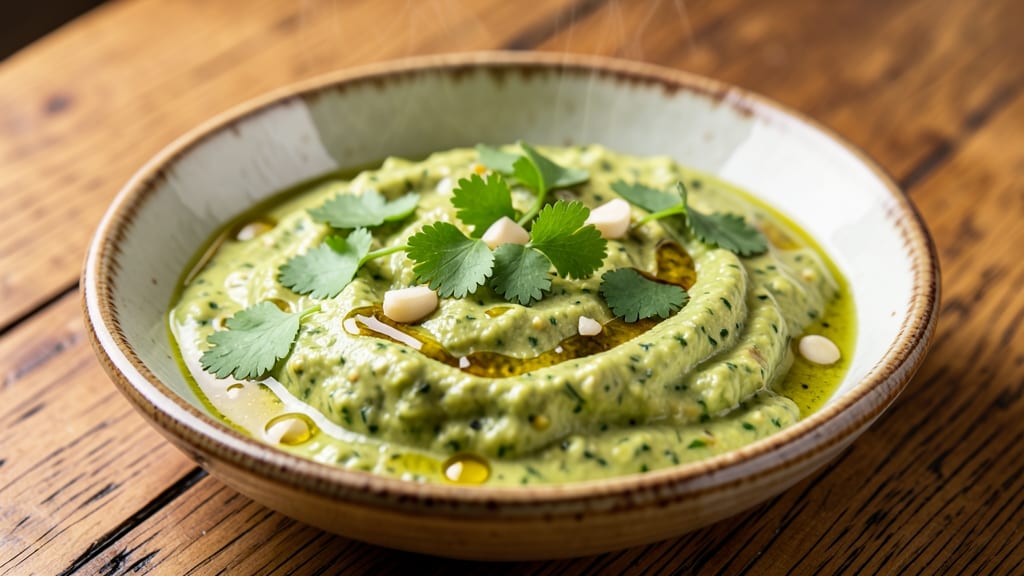
This avocado chimichurri sauce transforms traditional chimichurri into a creamy, vibrant condiment that adds rich texture and bold flavor to any dish. The secret lies in blending fresh cilantro, parsley, garlic, and ripe avocado with zesty lemon and high-quality olive oil—no mayo or dairy needed.
What sets this sauce apart is its balanced creaminess, achieved through proper avocado preparation and a touch of lime juice for brightness.
The process is straightforward: finely chop herbs, mash avocado until smooth, and combine everything in a food processor until just blended—leaving some texture for that satisfying bite. This sauce delivers restaurant-quality results in under 10 minutes of prep time, making it perfect for busy weeknights.
The avocado adds a velvety richness while the herbs maintain their fresh, herbaceous punch, creating a sauce that's both elegant and approachable.
What makes this sauce truly versatile is its ability to elevate everything from grilled meats and fish to roasted vegetables, tacos, or even toast. Unlike traditional chimichurri, this version clings beautifully without being overly thick, thanks to the avocado's natural oils.
The flavor profile is complex—herbaceous, tangy, and slightly sweet—with each component playing a crucial role in the final balance.
Store it in an airtight container in the refrigerator for up to 3 days, or freeze for longer storage. For best results, let it sit at room temperature for 15 minutes before serving to allow the flavors to meld.
This sauce is a game-changer for anyone looking to add depth and freshness to their meals without the heaviness of traditional creamy dressings.
Ingredients for avocado chimichurri sauce
Eight vibrant ingredients blend into a velvety, herb-packed sauce that transforms traditional chimichurri into something extraordinary.
| Ingredient | Amount | Notes |
|---|---|---|
| Ripe Avocados 🥑 | 2 whole | Pitted and mashed smooth |
| Fresh Cilantro Leaves 🌿 | 1 cup | Stems removed, loosely packed |
| Fresh Flat-Leaf Parsley 🌿 | ½ cup | Stems removed, loosely packed |
| Garlic Cloves 🧄 | 4 cloves | Peeled and roughly chopped |
| Extra-Virgin Olive Oil 🫒 | ½ cup | High-quality, fruity variety |
| Fresh Lime Juice 🍋 | 2 tbsp | Strained for smooth texture |
| Red Wine Vinegar 🍷 | 1 tbsp | Dry, crisp variety preferred |
| Diamond Crystal Kosher Salt 🧂 | ½ tsp | Fine grain for even dissolving |
| Ground Black Pepper 🌶️ | ¼ tsp | Freshly ground for best flavor |
The avocado is the foundation—choose fully ripe but firm fruit (no brown pits) from the produce department at Whole Foods or your local specialty grocer. The herbs should be bright green and fresh, not wilted; Trader Joe's often carries cilantro and parsley with exceptional freshness. For garlic, look for plump cloves with papery skins—these yield the most flavor. The olive oil is non-negotiable: California Extra Virgin brands like Corto or Lucini elevate the sauce with their fruity notes. Red wine vinegar should be dry and crisp—avoid sweet varieties that will overpower the herbs.
No ripe avocados? Mash with a pinch of lemon juice to prevent browning while you prep. Short on cilantro? Substitute with extra parsley (up to 1/2 cup) or dill for a different herbal profile. Swap red wine vinegar for apple cider vinegar if needed, though the flavor will shift slightly. For a smoother texture, blend the avocado longer before adding other ingredients. The lime juice can be replaced with lemon juice, but lime's brightness is ideal. If you lack a food processor, a mortar and pestle works for a rustic texture—just pulse the avocado first.
This sauce thrives in the fridge for 3 days when stored in an airtight container with a thin layer of olive oil on top to preserve freshness. For longer storage, portion into ice cube trays, freeze, then transfer to a bag—perfect for quick use. Before serving, let it sit at room temperature for 15 minutes to allow flavors to meld fully. The sauce clings beautifully to grilled meats, fish, or roasted veggies, making it ideal for meal prep—just add a splash of water if it thickens after refrigeration.
Why You'll Love This Recipe
- No Blender Needed: I swear by this—just chop the avocado, herbs, and garlic by hand with a knife. The texture stays chunky and vibrant, and honestly? The effort feels rewarding when you taste that bright, herby bite with every spoonful.
- Creamy-Garlicky Magic: That avocado turns everything lush, while the parsley and cilantro keep it fresh. The garlic? Oh, it’s the star—roasted or raw, it adds this addictive depth that makes you want to drizzle it on everything.
- Weeknight Superhero: Between us, this is my go-to when I’m too tired to think. Toss it with grilled fish, eggs, or even toast—it’s the kind of sauce that turns a simple meal into something special without extra fuss.
- Lasts Longer Than You’d Think: I make a big batch on Sundays and keep it in jars for the week. The avocado stays fresh for days (thanks to the acidity from the herbs), and the olive oil keeps it rich—no sad, browned sauce here.
Step-by-step instructions for avocado chimichurri sauce
Transform fresh herbs and creamy avocado into a vibrant, mayo-free chimichurri that elevates every dish.
Prepare the Avocado Base
Cut the 2 whole ripe avocados in half, remove the pits, and scoop the flesh into a food processor. The avocados should be completely ripe but not overly soft—press gently; they should yield slightly to touch but maintain shape. This creamy foundation will carry the herbaceous flavors while preventing the sauce from becoming too heavy.
Add the 0.5 teaspoon diamond crystal kosher salt and 0.25 teaspoon ground black pepper to the avocado. Pulse the mixture 3-4 times until completely smooth, scraping down the sides of the food processor as needed. This step ensures even distribution of salt and pepper throughout the sauce, preventing any single bite from being overly salty or peppery. The texture should resemble thick, velvety pudding at this stage.
Blend the Herb Mixture
In a separate bowl, combine the 1 cup fresh cilantro leaves and 0.5 cup fresh flat-leaf parsley. Remove and discard any thick stems to avoid bitterness. Roughly chop the 4 peeled garlic cloves and add them to the bowl. This preparation maximizes surface area for flavor infusion while minimizing any harsh garlic notes that might dominate the delicate herbs.
Transfer the herb mixture to the food processor with the avocado base. Pulse 8-10 times until the herbs are finely chopped but still retain some texture—you want visible flecks of green rather than a completely smooth paste. This texture contrast adds visual appeal and prevents the sauce from becoming too heavy. The mixture should resemble a vibrant green pesto at this point, with visible herb pieces suspended in the creamy avocado base.
Incorporate the Acidic Components
With the food processor running on low speed, slowly drizzle in the 0.5 cup extra-virgin olive oil. Allow the oil to incorporate gradually to create an emulsified texture rather than separating. This slow addition prevents the sauce from becoming greasy while ensuring the oil coats all the herb particles evenly. The sauce should begin to take on a glossy sheen as the oil binds with the avocado and herbs.
Add the 2 tablespoons fresh lime juice and 1 tablespoon red wine vinegar through the feed tube while pulsing. The acidity brightens the flavors and helps balance the richness of the avocado. Taste the mixture and adjust seasoning if needed—you may need an additional pinch of salt or pepper to complement the acidity. The sauce should be tangy, herby, and slightly peppery with a clean finish.
Final Texture Adjustment and Serving
Transfer the chimichurri to a serving bowl and use the back of a spoon to press it against the sides of the bowl. This helps distribute any remaining oil and creates a smooth, cohesive texture. If the sauce appears too thick, add 1-2 teaspoons of water or additional lime juice to reach your desired consistency—it should coat the back of a spoon but still hold its shape when drizzled.
Cover the surface with plastic wrap pressed directly against the sauce to prevent oxidation, and refrigerate for at least 30 minutes before serving. This resting period allows the flavors to meld and the sauce to reach its optimal consistency. The chimichurri should be vibrant green with visible herb flecks, creamy yet light in texture, and bursting with bright, herby flavor that pairs beautifully with grilled meats, fish, or fresh bread.
Pro Tips For Making Avocado Chimichurri Sauce
- Pulse, Don’t Purée: DESCRIPTION: Hit that food processor in quick bursts—three or four at most—then taste. Over-blending turns avocado chimichurri into a sad, mushy paste. You want texture: little flecks of herb and avocado, not a uniform green sludge. I learned this the hard way after making a batch that looked like guacamole’s sad cousin.
- Wipe That Garlic: DESCRIPTION: Fresh garlic cloves can hide moisture in their papery skins. Before mincing, rub each clove on a damp towel to remove the skin—no peeling required. This keeps your chimichurri from getting watery later. (Yes, even if you’re impatient like me.)
- Salt the Avocado First: DESCRIPTION: Toss the diced avocado with a pinch of salt and let it sit for 5 minutes before blending. This draws out excess moisture, so your sauce stays creamy without turning into a soupy mess. My grandmother swore by this, and she was right: it actually changes the outcome.
- Use Cold Avocado: DESCRIPTION: Scoop the avocado straight from the fridge—never room temperature. Cold avocado blends smoother and holds its shape longer in the sauce. I was skeptical until I tried it: the texture stays bright and chunky instead of turning greasy. (Your future self will thank you.)
Creative variations of these flavors
Spicy Avocado Chimichurri
Add 1-2 tablespoons of finely chopped jalapeño or serrano peppers (seeds removed for mild heat) when blending the herbs. This version works perfectly with grilled shrimp or spicy tacos. For extra kick, include ½ teaspoon of cayenne pepper when seasoning the avocado base.
Balance the heat with an additional 1 tablespoon of lime juice to keep the sauce bright. 🌶️
Creamy Avocado Chimichurri
For a smoother texture, blend the avocado until completely silky before adding other ingredients. Add 1-2 tablespoons of unsweetened almond milk or water to thin the sauce slightly if needed.
This version pairs beautifully with roasted vegetables or as a dip for crispy pita chips. The result is a velvety, herb-infused sauce that still retains its vibrant green color. 🥑
Herb-Forward Version
Double the parsley to 1 cup and reduce cilantro to ½ cup for a more robust herb flavor. Add 1 tablespoon of fresh dill or 1 teaspoon of dried oregano for an extra layer of complexity.
This variation shines when drizzled over grilled chicken or fish. The herbs should be finely chopped but still visible for texture. 🌿
Citrus-Infused Twist
Replace the lime juice with 1 tablespoon of orange juice and add 1 teaspoon of orange zest for a sweeter, more complex flavor profile. This version works exceptionally well with roasted pork or as a marinade for grilled vegetables. The citrus notes complement the avocado's creaminess beautifully. 🍊
Smoky Chimichurri
Add ½ teaspoon of smoked paprika or 1 teaspoon of liquid smoke to the avocado base before blending. This smoky variation pairs perfectly with grilled meats, especially ribs or brisket. The smokiness enhances the herbaceous notes while adding depth. Use a high-quality smoked paprika for the best flavor. 🔥
Nutty Addition
Add 2 tablespoons of toasted pine nuts or walnuts to the food processor along with the herbs. Pulse just until the nuts are finely chopped to add a satisfying crunch.
This version is ideal for drizzling over salads or as a topping for grilled vegetables. The nuts provide a nice contrast to the creamy avocado. 🌰
Nutrition facts
Frequently asked questions
Can I make this sauce without a food processor?
Use a mortar and pestle for a rustic texture. Mash the avocado first, then finely chop the herbs and garlic together before mixing with the avocado. Add the olive oil and lime juice gradually while stirring. The texture will be chunkier but still delicious—perfect for a more artisanal feel.
How do I prevent the avocado from browning?
Keep the avocado flesh covered with plastic wrap pressed directly against it until ready to use. For extra protection, sprinkle a pinch of salt or lime juice over the exposed surface. If browning occurs, simply scrape off the discolored layer before blending. The sauce will still taste great!
What if my sauce turns out too thick?
Thin it with 1-2 teaspoons of water, lime juice, or even a splash of olive oil. Start with less and add gradually while tasting. The sauce should coat the back of a spoon but still hold its shape when drizzled. For best results, let it sit at room temperature for 15 minutes before adjusting.
Can I use this sauce as a marinade?
Yes, but use it as a finishing sauce rather than a marinade. The avocado's delicate texture would break down in acidic marinades. Instead, brush it on proteins like grilled chicken or fish in the last 5-10 minutes of cooking. For vegetables, use it as a post-roasting drizzle.
How long does it keep in the fridge?
Store in an airtight container with a thin layer of olive oil on top to preserve freshness. It stays vibrant for up to 3 days in the fridge. For longer storage, freeze in ice cube trays (up to 1 month) and thaw overnight in the fridge. The texture may soften slightly after freezing.