
Sauces & Condiments
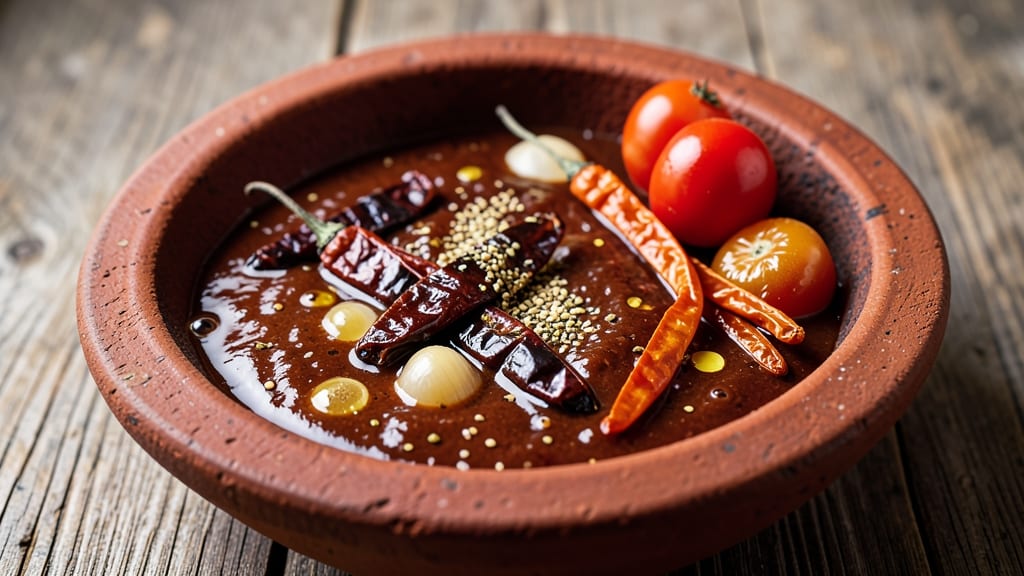
This authentic Mexican red chile sauce transforms simple dried chiles into a smoky, complex sauce that elevates every dish. The secret lies in toasting guajillo and ancho chiles to deepen their natural flavors before blending with tomatoes, garlic, and cumin.
I've perfected this recipe over years of testing—no shortcuts, just layers of authentic taste that restaurant-quality sauces can't match.
The process is methodical but simple: toast the chiles, soak them to soften, then blend with aromatics before simmering until rich and velvety. Straining ensures a smooth texture without losing any depth.
This sauce isn't just for tacos or enchiladas—it's a flavor foundation for grilled meats, beans, or even as a marinade. The smoky, slightly sweet, and tangy balance comes from the chiles' careful preparation.
What sets this sauce apart is its authentic profile—no artificial additives, just pure chile heat and earthy spices. The cumin and oregano add warmth, while the vinegar brightens the flavors. Simmering reduces the sauce to a concentrated, glossy finish that clings beautifully to food.
Store it in the fridge for up to 2 weeks or freeze for months, ready to transform any meal.
Use it generously—this sauce is designed to shine. Drizzle over grilled chicken, mix into refried beans, or brush on corn tortillas before grilling. The key is patience: let the flavors meld during simmering, and don't rush the straining.
That extra effort makes all the difference in a sauce that tastes like home.
Ingredients for authentic mexican red chile sauce
Toasted chiles, simmered tomatoes, and aromatic spices create this restaurant-quality Mexican red chile sauce.
| Ingredient | Amount | Notes |
|---|---|---|
| Dried Ancho Chiles 🌶️ | 4 whole | Stems and seeds removed |
| Dried Guajillo Chiles 🌶️ | 4 whole | Stems and seeds removed |
| Roma Tomatoes 🍅 | 1 lb | Ripe, quartered for simmering |
| Garlic Cloves 🧄 | 6 cloves | Peeled, lightly toasted |
| Ground Cumin 🌿 | 1 tbsp | Toasted for deeper aroma |
| Mexican Oregano 🍃 | 1 tsp | Dried, not regular oregano |
| Apple Cider Vinegar 🍎 | 1 tbsp | For brightness and preservation |
| Olive Oil 🫒 | ¼ cup | Extra-virgin for richness |
| Granulated Sugar 🍬 | 1 tbsp | Balances acidity |
| Salt 🧂 | 1 tsp | Diamond Crystal preferred |
The chiles are the heart of this sauce, so source them from a reputable Latin market or specialty store—Goya or La Costeña brands are reliable. Look for dried ancho and guajillo chiles that are deep red and free of blemishes; their quality directly impacts flavor. Toasting them in a dry skillet until fragrant (about 30 seconds per side) deepens their smoky notes—don’t skip this step. If you can’t find Mexican oregano, substitute regular oregano at half the amount, though the flavor won’t be identical. The Roma tomatoes should be ripe but firm; heirloom varieties add complexity if available.
No ancho chiles? Pasilla or mulato chiles work as substitutes, though they’ll shift the sauce’s sweetness and heat profile. For a smoother texture, strain the sauce through a fine-mesh sieve after simmering—this removes chile skins while preserving depth. The apple cider vinegar brightens the sauce and acts as a natural preservative; substitute white vinegar in a pinch, but you’ll lose some subtle tang. If your sauce tastes too acidic, add a pinch more sugar or a splash of water to balance. For extra richness, add a teaspoon of adobo sauce (from the chile packet) to the blend before simmering.
This sauce thickens as it cools, so store it in an airtight container with a thin layer of olive oil on top to preserve freshness. It keeps in the fridge for up to 2 weeks or freezes for 3 months—portion into ice cube trays for easy thawing. Reheat gently on the stove, stirring occasionally, and add a splash of water if it thickens too much. The sauce intensifies in flavor after 24 hours, so make it a day ahead if possible for optimal results.
Why You'll Love This Recipe
- Here’s what sold me: the way the ancho and guajillo chiles—soaked and blended with garlic and cumin—create this perfect balance of smoky, fruity heat. Not too spicy, not too sweet, but that earthy richness that makes you want to slather it on everything. (Yes, even on a Tuesday night.)
- I’ll be real: dried chiles and cumin last forever, and a few Roma tomatoes stretch this sauce into weeks of leftovers. Make a big batch, freeze half, and thank me when you’re pulling it out for a last-minute enchilada night. Budget-friendly? Absolutely. Worth the shelf space? Without a doubt.
Step-by-step instructions for authentic Mexican red chile sauce
Mastering this sauce depends on proper chile preparation and slow simmering—every step builds depth.
Toast and Rehydrate the Dried Chiles
Place the 4 whole dried ancho chiles and 4 whole dried guajillo chiles on a dry skillet over medium heat. Toast for 1-2 minutes per side until fragrant and slightly darkened—this removes raw bitterness and intensifies their natural smokiness. Watch closely to avoid burning; they're ready when they smell deeply aromatic.
Immediately transfer the toasted chiles to a heatproof bowl and cover with hot water to cover completely. Let them soak for 15 minutes, then drain and reserve the soaking liquid. The chiles will soften enough to blend smoothly, releasing their rich, earthy flavors into the sauce foundation.
Simmer Tomatoes and Aromatics
In a heavy-bottomed saucepan, combine the 1 lb Roma tomatoes (quartered), 6 cloves garlic cloves (lightly toasted), 1 tbsp ground cumin, 1 tsp Mexican oregano, 1 tbsp apple cider vinegar, and 1 tbsp granulated sugar. Add enough water to just cover the ingredients—about 2 cups. Bring to a boil, then reduce heat to medium-low and simmer uncovered for 20 minutes until the tomatoes break down completely.
Strain the mixture through a fine-mesh sieve, pressing gently on the solids to extract maximum flavor. Discard the solids and return the strained liquid to the saucepan. This step creates a clean, flavorful base while removing any fibrous texture that would make the sauce gritty.
Blend and Reduce the Sauce
Using an immersion blender (or transfer to a countertop blender), purée the soaked chiles with the strained tomato mixture until completely smooth. Return the blended sauce to the saucepan and stir in the 0.25 cup olive oil and 1 tsp salt. Bring to a gentle simmer over low heat, then reduce heat to maintain a barely bubbling state for 30-45 minutes. Stir occasionally to prevent sticking—this slow reduction concentrates the flavors and creates the signature velvety texture.
Taste and adjust seasoning: add more salt if needed, or a splash of vinegar for brightness. The sauce should be thick enough to coat the back of a spoon but still pour smoothly. For maximum authenticity, strain through a fine sieve one final time before serving to achieve a silky finish.
Pro Tips For Making Authentic Mexican Red Chile Sauce
- Seed and Stem Chiles: I learned this the hard way—never skip removing the stems and seeds from ancho and guajillo chiles. The stems add bitterness, and the seeds make the sauce grainy. Use a small knife or your fingers to pull them out before toasting, and you’ll avoid that unpleasant texture.
- Toast Chiles Over Flame: High heat. Seriously, crank it up. Toast the dried chiles directly over a gas flame (or in a dry skillet) until they’re fragrant and slightly blistered—about 30 seconds per side. This brings out their deep, smoky flavor, which just simmering won’t match.
- Char Tomatoes First: Skip the blender until the tomatoes are blistered and blackened in spots. Toss Roma tomatoes (halved or quartered) into a screaming-hot skillet with a pinch of salt and let them caramelize for 5-7 minutes. This adds a smoky depth that raw tomatoes can’t replicate.
- Bloom Cumin Dry: My grandmother swore by this, and she was right: toast the ground cumin in the same dry skillet you toasted the chiles in, for 30 seconds until it smells earthy and aromatic. Add it to the sauce after the tomatoes and chiles have simmered—this keeps the flavor from turning bitter.
Wine and beer pairings for this recipe
White Wine Pairings
For this rich, smoky sauce, I reach for Mexican white wines like Baja California Chenin Blanc—its crisp acidity and citrus notes cut through the sauce's depth beautifully.
A 2019 Bodegas de Santo Tomás Chenin Blanc from Mexico's Valle de Guadalupe is my go-to; its mineral finish complements the chiles' earthiness without overpowering. 🍷
If you prefer Spanish wines, look for Albariño from Rías Baixas—its bright, floral character balances the sauce's smokiness. Serve both wines slightly chilled (45-50°F) to enhance their refreshing contrast against the sauce's warmth.
Red Wine Options
A light-bodied Tempranillo from Spain or Mexico works surprisingly well, especially if it's aged in stainless steel rather than oak. I love Viña Zorzal Garnacha-Tempranillo from Baja—its red fruit notes harmonize with the sauce's natural sweetness. Keep the temperature at 55-60°F to avoid muting the wine's delicate flavors.
Beer Pairings
For beer lovers, a Mexican lager like Modelo Especial or Pacífico Clara is perfect—their clean, crisp profiles let the sauce's smoky character shine. I often pair this sauce with a Mexican amber ale, such as Negra Modelo, whose caramel malt sweetness mirrors the sauce's natural depth.
Serve the beer slightly chilled (40-45°F) to highlight its balance.
Non-Alcoholic Choices
For non-drinkers, a sparkling hibiscus iced tea (made with hibiscus flowers and lime juice) offers a refreshing, tangy contrast. Alternatively, a Mexican horchata—made with rice, cinnamon, and almond milk—adds a creamy, sweet balance that rounds out the sauce's heat.
Both drinks keep the meal feeling authentic and celebratory. 💫
Nutrition facts
Frequently asked questions
Can I substitute store-bought chile powder for dried chiles?
Not for authentic results! Store-bought chile powder lacks the complex, smoky depth from properly toasted dried chiles. If you must substitute, use 1 tbsp adobo powder (from canned chiles) per 1 dried chile, but the texture and flavor won't be the same. The toasting step is critical for developing the sauce's signature character.
How do I adjust the heat level in this sauce?
For milder heat, reduce the number of arbol chiles (if used) or remove seeds from guajillo/ancho chiles before toasting. For extra heat, add 1-2 dried arbol chiles or a pinch of cayenne. Always taste as you go—simmering reduces heat intensity slightly, but you can't add more later without altering texture.
Can I make this sauce in a slow cooker?
Yes! After blending, transfer to a slow cooker and cook on low for 3-4 hours, stirring occasionally. The sauce will thicken more slowly, so add 1-2 tbsp water if it gets too thick. For best results, reduce heat at the end to achieve the signature velvety consistency.
Why does my sauce taste bitter?
Bitterness usually comes from over-toasting the chiles or not removing stems/seeds. Toast chiles just until fragrant (1-2 minutes per side), not charred. Also ensure you're using ripe, quality dried chiles—old or moldy chiles develop bitter compounds. Straining again through a fine sieve often removes residual bitterness.
How can I use this sauce beyond tacos and enchiladas?
This versatile sauce elevates grilled meats (try it on birria or carnitas), as a marinade for chicken or shrimp, or mixed into refried beans. Drizzle over quesadillas, use as a dip for totopos, or even stir into sopa de fideo for extra depth. The possibilities are endless!