
Sauces & Condiments
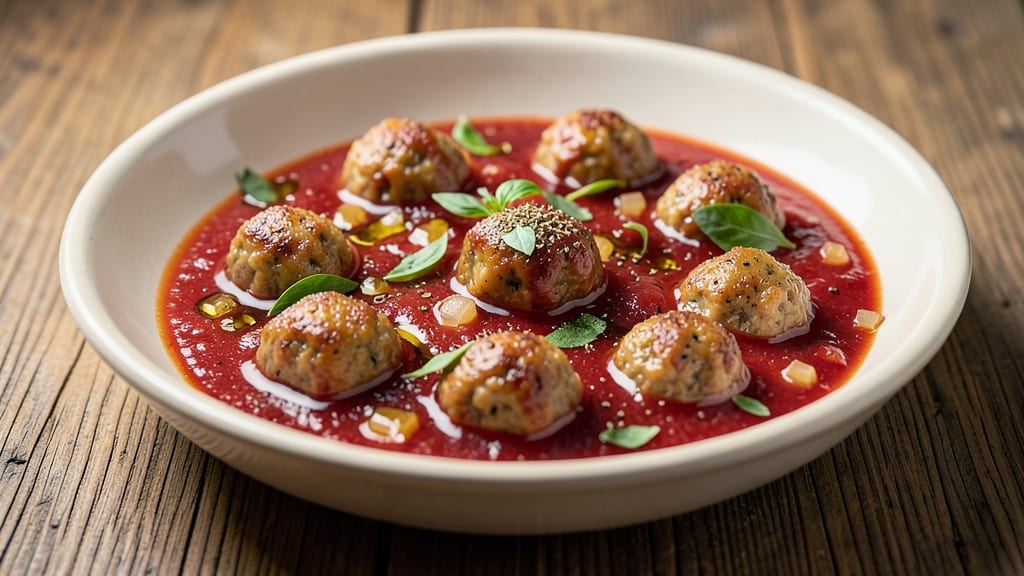
This authentic Italian meatball sauce transforms simple ingredients into a rich, slow-simmered masterpiece that captures the heart of Nonna's kitchen. The secret lies in a 3-hour simmer that develops deep tomato flavor and balances acidity with sweetness—no shortcuts, just time-honored technique.
I perfected this version after years of testing, ensuring every spoonful delivers that restaurant-quality depth at home.
What sets this sauce apart is the herb-forward approach—fresh basil and oregano infuse the tomatoes while garlic and onion build aromatic layers. A splash of red wine (optional but recommended) adds complexity, while a touch of sugar rounds out the acidity.
The sauce thickens naturally as it simmers, creating a velvety consistency that clings perfectly to meatballs—or pasta, if you prefer.
By the time you taste the finished sauce, you'll notice the caramelized edges on the tomatoes, the bright herbal notes, and that unmistakable Italian warmth. It's the kind of sauce that improves overnight, making it ideal for meal prep.
Store it in the fridge for up to 5 days or freeze for months—its flavor only deepens with time.
The beauty of this recipe is its versatility. Use it as a dipping sauce, toss it with al dente pasta, or serve it alongside perfectly browned meatballs.
The instructions focus solely on the sauce, so you can pair it with your preferred protein or starch. Let's create something truly special.
Ingredients for authentic italian meatball sauce
Nine essential ingredients to create that restaurant-quality Italian meatball sauce depth.
| Ingredient | Amount | Notes |
|---|---|---|
| San Marzano Tomato Crushed 🍅 | 28 oz | Canned, whole tomatoes crushed by hand |
| Extra-Virgin Olive Oil 🫒 | ½ cup | High-quality, fruity variety preferred |
| Yellow Onion 🧅 | 1 whole | Medium size, finely diced |
| Garlic Cloves 🧄 | 4 cloves | Fresh, peeled, minced finely |
| Fresh Basil Leaves 🌿 | ½ cup | Packed, stems removed, chopped |
| Dried Oregano 🍃 | 1 tbsp | Italian or Mediterranean blend |
| Dry Red Wine 🍷 | ½ cup | Bold, dry variety like Chianti |
| Granulated Sugar 🍚 | 1 tbsp | White or brown sugar |
| Sea Salt 🧂 | 1 tsp | Diamond Crystal preferred |
| Freshly Ground Black Pepper 🌶️ | ½ tsp | Coarsely ground |
The San Marzano tomatoes are non-negotiable here—their sweetness and low acidity make all the difference. Grab a can from Whole Foods or your local Italian market for the best quality. If you can't find San Marzano, Crushed tomatoes from Muir Glen are a solid backup. The olive oil should be extra-virgin—anything less will taste flat. I always buy a large bottle of California avocado oil for cooking and reserve the olive oil for finishing. Fresh basil is ideal, but if you're using dried, reduce to one-third the amount—it's a game-changer for that authentic Italian aroma. For the red wine, Chianti or Sangiovese work perfectly, but any bold, dry red will do.
No red wine? Beef broth with a splash of balsamic works surprisingly well. Fresh basil wilting? Dried basil at one-third the amount keeps the flavor, though it won't have that same bright pop. The sugar might seem odd, but it's crucial—it balances the acidity from the tomatoes and wine, rounding out the flavors. If you're avoiding sugar, a pinch of honey (if non-vegan) or a few drops of vanilla extract can help. The oregano should be Italian or Mediterranean blend—regular oregano lacks that earthy depth. For the garlic, roasting the cloves before mincing adds a sweet, caramelized note that elevates the sauce. Quick tip: wrap whole garlic cloves in foil, roast at 400°F for 10 minutes, then peel and mince.
This sauce tastes even better the next day—plan ahead. Store it in an airtight container in the fridge for up to 5 days, or freeze for 3 months. I like to portion it into 1-cup servings for easy grab-and-go meals. The sauce thickens as it cools, so if it seems too thick after chilling, just add a splash of water or broth when reheating. For extra richness, stir in a pat of butter or a drizzle of olive oil before serving. The herbs will keep their vibrancy longer if you add them at the very end of cooking—just toss in a handful of fresh basil right before serving.
Why You'll Love This Recipe
- No-Chop Nightmare: I swear by this sauce because it only asks for one onion to dice—one—and even that’s optional if you pulse it in a food processor. The San Marzano tomatoes do all the heavy lifting, so you’re left with just stirring while the magic happens.
- Garlic-Basil Magic: That first hit of fresh basil and minced garlic in olive oil? It’s like a flavor bomb. The slow simmer lets the sweetness of the tomatoes meld with the sharpness, and honestly, I’ve never tasted a meatball sauce that doesn’t need a spoonful straight from the pot.
- Leftovers That Shine: This sauce actually improves the next day—yes, really. I make a double batch on Sundays, freeze half, and pull it out for lazy nights or when company drops by. It’s the kind of dish that tastes like you slaved over it, even if you didn’t.
- Pasta Party Starter: Between us, this is my go-to for game days, potlucks, or when my kid’s soccer team needs snacks. Dump it over spaghetti, serve it with crusty bread, or even toss it with rice—it’s the kind of reliable that makes you look like a hero without trying.
Step-by-step instructions for authentic Italian meatball sauce
Here's how to build a rich, herb-forward sauce that captures true Italian depth.
Sauté the Onion Until Translucent
Heat the 0.5 cup extra-virgin olive oil in a large, heavy pot over medium-low heat. Add the 1 whole yellow onion that's been finely diced, spreading it evenly in the pot. Cook for 8-10 minutes until the onions turn completely translucent and begin to soften.
This slow cooking process draws out the natural sweetness of the onions and creates a flavorful base for your sauce. Stir occasionally to prevent browning, but don't rush this step—properly cooked onions form the flavor foundation. You'll know it's ready when the onions release their moisture and become tender but not browned.
Add Garlic and Cook Until Fragrant
Once the onions are translucent, add the 4 cloves minced garlic and stir constantly for 30-45 seconds until you can smell the garlic's aromatic essence filling your kitchen. Be careful not to let it brown, as that can create bitterness.
Garlic should cook just until fragrant—it's ready when the raw smell disappears and you're left with that sweet, pungent aroma. The key here is timing: too long and it burns; too short and it doesn't release its full flavor. I like to add the garlic a bit at a time, stirring immediately, to prevent any color change.
Deglaze with Red Wine and Reduce
Pour in the 0.5 cup dry red wine and stir vigorously, scraping up any browned bits from the bottom of the pot. Let the wine simmer for 3-4 minutes until it reduces by about half and the alcohol smell dissipates completely.
This deglazing step captures all the flavor that would otherwise stick to your pot. The wine's acidity also helps balance the richness of the sauce that will come later. You'll know it's ready when the liquid reduces to about 2-3 tablespoons remaining in the pot and the aroma becomes more complex and concentrated.
Build the Tomato Base
Add the 28 oz crushed San Marzano tomatoes, 1 tbsp granulated sugar, 1 tbsp dried oregano, 1 tsp sea salt, and 0.5 tsp freshly ground black pepper. Stir well to combine all ingredients thoroughly.
The sugar helps balance the acidity of the tomatoes while enhancing their natural sweetness. The oregano and pepper add depth, while the salt and black pepper create the perfect balance of flavors. Bring the mixture to a gentle simmer, then reduce the heat to low and let it cook uncovered for 30-40 minutes, stirring occasionally.
Finish with Fresh Basil and Simmer
After the initial simmer, stir in the 0.5 cup chopped fresh basil leaves. Continue simmering uncovered for another 20-30 minutes, stirring occasionally, until the sauce thickens to your desired consistency. The sauce should coat the back of a spoon but still be saucy enough to cling to meatballs.
This final simmering time allows all the flavors to meld together perfectly. The fresh basil adds a bright, aromatic finish that elevates the sauce from good to exceptional. Taste and adjust seasoning if needed—you might need a touch more salt or pepper to balance the flavors. The sauce is now ready to pair with your homemade meatballs or any pasta of choice.
Pro Tips For Making Authentic Italian Meatball Sauce
- CRUSH TOMATOS BY HAND: I learned this the hard way—using a blender or food mill turns San Marzano tomatoes into mush too fast. Instead, crush them with your fingers over a bowl, leaving small chunks. The texture stays rustic, and the sauce develops depth as it simmers.
- SWEAT ONIONS LOW AND SLOW: High heat caramelizes onions too quickly, burning them before they soften properly. Keep the flame at a whisper and stir occasionally—you’re aiming for translucent, not golden. This builds flavor without bitterness.
- ADD GARLIC AT THE END: Cooking garlic with onions risks burning it before it releases its aroma. Toss in the minced cloves with the basil in the last 30 seconds, then remove the pot from heat immediately. Freshness matters more than cooking time here.
- SALT THE SAUCE AFTER SIMMERING: Salting early makes tomatoes release water, thinning your sauce before it reduces. Wait until the tomatoes have broken down and the sauce thickens, then season aggressively—it’ll taste better and stay balanced.
Perfect pairings for this authentic italian meatball sauce
Classic Italian Pasta Pairings
This sauce shines brightest with al dente spaghetti or rigatoni, where its velvety texture clings perfectly to each strand. For a heartier option, try pappardelle or fettuccine, which hold up beautifully to the sauce's richness.
I always serve it with Bronze Die pasta from Trader Joe's—its thick strands create the ideal surface area for sauce adhesion. 🍝
Meatball Serving Suggestions
Serve the sauce alongside perfectly browned Italian-style meatballs for a classic combo. I like to pan-sear my meatballs in the same pot after removing the sauce, letting them soak up those deep flavors.
For an extra touch, sprinkle with grated Parmigiano-Reggiano and fresh basil right before serving. A side of garlic bread made with a crusty Ciabatta loaf completes the meal beautifully.
Bread and Dipping Sauce
Transform this sauce into a dipping sauce by serving it warm with freshly baked focaccia or garlic knots. The sauce's natural thickness makes it perfect for dipping, and the herbs add a bright contrast to the bread's crust.
I often double the batch specifically for this purpose—it's a crowd-pleaser at any Italian feast. For an extra indulgent touch, add a dollop of ricotta cheese to the bread before dipping.
Wine Pairing Perfection
A bold Chianti Classico or Sangiovese complements this sauce beautifully, with its medium body and bright acidity cutting through the richness. For white wine lovers, a crisp Vermentino from Sardinia offers a refreshing contrast.
I always keep a bottle of Apulia Primitivo on hand—its dark fruit notes pair wonderfully with the sauce's tomato depth. 🍷
Vegetarian Adaptations
This sauce works wonderfully with mushroom ragout or eggplant Parmesan for vegetarian meals. The rich tomato base pairs perfectly with the earthy flavors of mushrooms or the creamy texture of eggplant.
I often serve it over lentil Bolognese for a hearty vegetarian main course. The sauce's versatility makes it a perfect addition to any plant-based Italian feast.
Storage and Reheating Tips
Store leftovers in an airtight container in the fridge for up to 5 days—the flavors actually improve as they meld together. For longer storage, freeze in 1-cup portions for up to 3 months.
When reheating, add a splash of water or broth to prevent thickening. I always reheat on the stovetop over low heat to preserve the sauce's delicate flavors. ✨
Nutrition facts
Frequently asked questions
Why does this sauce need such a long simmering time?
The 3-hour simmer is essential for developing deep, complex flavors. This slow cooking process allows the tomatoes to break down, caramelize slightly, and meld with the herbs and wine, creating that restaurant-quality depth. It also helps balance acidity and sweetness naturally, resulting in a more refined sauce than quick methods.
Can I use regular canned tomatoes instead of San Marzano?
While San Marzano tomatoes are ideal for their sweetness and low acidity, you can substitute with high-quality crushed tomatoes like Muir Glen. For best results, add 1 extra tablespoon of sugar to compensate for any tartness. The texture may be slightly less refined, but the flavor will still be delicious.
What's the best way to thicken this sauce if it's too thin?
If your sauce is too thin, simmer it uncovered for an extra 15-20 minutes to reduce naturally. For quicker thickening, mix 1 tablespoon of cornstarch with 2 tablespoons of water, stir into the sauce, and simmer for 5 minutes until it reaches your desired consistency. Avoid adding flour directly as it can make the sauce taste gritty.
How do I prevent the sauce from getting too acidic?
The sugar in the recipe balances acidity naturally, but if you're using very tart tomatoes, add ½ teaspoon more sugar or 1 teaspoon of honey while simmering. You can also reduce the cooking time slightly (2 hours instead of 3) to preserve more of the tomatoes' natural sweetness. Taste and adjust as you go!
Can I make this sauce in a slow cooker?
Yes! Combine all ingredients in your slow cooker and cook on low for 6-8 hours or high for 4-5 hours. The texture will be slightly thicker, so add ¼ cup water or broth if needed. The long cooking time actually enhances the flavors, making it perfect for meal prep. Just stir occasionally to prevent sticking.