
Sauces & Condiments
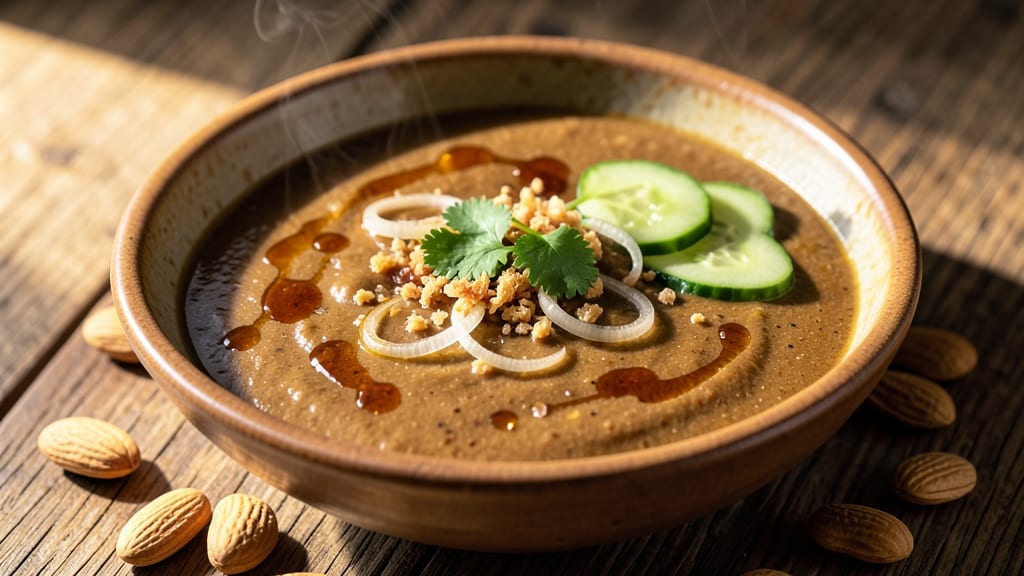
This authentic Indonesian peanut sauce recipe transforms simple stir-fries and satay into bold, flavor-packed masterpieces with just a few key ingredients. The magic lies in balancing rich peanut butter with tangy tamarind, aromatic spices, and coconut milk for a sauce that's creamy yet vibrant.
I've perfected this recipe through years of testing—it's the kind of sauce that elevates any dish with its nutty-spiced depth.
The foundation starts with toasted peanuts and a blend of warm spices like coriander and cumin, which develop complex aromas when simmered in coconut milk. Tamarind paste adds that essential tangy brightness that cuts through the richness, while a touch of palm sugar balances the flavors.
The sauce thickens beautifully as it reduces, creating the perfect consistency for dipping, marinating, or drizzling over grilled meats and vegetables.
What makes this sauce truly special is its versatility—it works as a marinade for satay skewers, a dipping sauce for spring rolls, or a flavorful glaze for stir-fried tofu and vegetables.
The nutty aroma alone will have everyone asking for seconds, and the balance of sweet, tangy, and spicy flavors makes it irresistibly addictive. Once you try this authentic version, store-bought peanut sauces won't compare.
Ready in just 30 minutes with minimal prep, this sauce delivers restaurant-quality results at home. The key is patience during simmering to let the flavors meld perfectly. Let's get started—your taste buds will thank you.
Ingredients for authentic indonesian peanut sauce
Nine essential ingredients transform into restaurant-quality Indonesian peanut sauce.
| Ingredient | Amount | Notes |
|---|---|---|
| Natural Peanut Butter 🥜 | ½ cup | Creamy, unsweetened variety |
| Coconut Milk 🥥 | 1 can | Full-fat, 13.5 oz can |
| Tamarind Paste 🍯 | 2 tbsp | Thick, block form preferred |
| Palm Sugar 🍯 | 2 tbsp | Or light brown sugar |
| Toasted Peanuts 🥜 | ¼ cup | Crushed, for texture |
| Ground Coriander 🌿 | 1 tsp | Freshly ground preferred |
| Ground Cumin 🌿 | ½ tsp | Toasted for depth |
| Turmeric Powder 🌶️ | ¼ tsp | For vibrant color |
| Red Chili Flakes 🌶️ | ½ tsp | Adjust for heat |
| Fish Sauce 🍶 | 1 tbsp | Red Boat preferred |
| Lime Juice 🍋 | 1 tbsp | Freshly squeezed |
The peanut butter is non-negotiable—natural, unsweetened gives the richest base. Trader Joe's or Whole Foods carry the best brands, but any creamy peanut butter works in a pinch. Toasted peanuts add texture and depth, so don't skip crushing them—a coffee grinder works perfectly. Tamarind paste is the secret weapon here; Asian markets usually have it in block form, which is easier to measure. Palm sugar gives that authentic sweetness, but light brown sugar is a solid swap if you're in a hurry. The spices need to be fresh—Penzeys or Spicewalla are my go-tos for quality ground spices.
No tamarind? Lemon juice plus 1 tsp sugar mimics the tang, though it won't be identical. Running out of fish sauce? Soy sauce at half the amount works, but you'll lose some umami depth. The coconut milk can be swapped for light coconut milk if you're watching calories, though it'll be slightly thinner. For extra richness, stir in 1 tbsp of coconut cream at the end. The lime juice is critical—Mexican Key limes have more punch, but regular limes work fine. If you're feeling adventurous, add 1 tsp of shrimp paste for an authentic Indonesian kick, but it's optional.
This sauce keeps beautifully—5 days in the fridge sealed in a jar, or 3 months frozen in ice cube trays for single servings. The flavor actually improves after a day or two as everything melds. I always make a double batch because it disappears fast—perfect for drizzling over satay, tossing with stir-fries, or using as a dipping sauce. If it thickens too much, just stir in 1 tbsp of warm water. Trust me, the leftovers are worth it.
Why You'll Love This Recipe
- No-Fuss Pantry Magic: I swear by this sauce because it’s that easy—just blend, simmer, and let the tamarind and palm sugar do their thing. Honestly, I’ve made it while microwaving leftovers in the same kitchen.
- Tangy-Sweet Crunch: That tamarind paste? It’s the secret weapon—cuts through the richness of peanut butter and coconut milk while keeping it balanced. The toasted peanuts on top add a crunch that makes every bite feel like a little celebration.
- Weeknight to Party Fix: Slather it on grilled chicken for a quick dinner, drizzle it over rice for a lazy lunch, or serve it with satay sticks at your next gathering. Between us, it’s the one sauce that never lets me down, whether I’m feeding myself or a crowd.
- Budget-Friendly Leftovers: A single batch stretches for days—toss it in stir-fries, use it as a dip, or freeze half for next month. I’ll be real: my wallet thanks me every time I reach for peanut butter and coconut milk instead of pricey sauces.
Step-by-step instructions for authentic Indonesian peanut sauce
Here's how to craft this bold, nutty masterpiece that's perfect for satay or stir-fries.
Bloom the Spices in Coconut Milk
Pour the 1 can coconut milk into a medium saucepan and place over medium heat. Let it warm through for 3-4 minutes until small bubbles form around the edges. This step prevents curdling when you add the peanut butter later.
Add the 1 teaspoon ground coriander, 0.5 teaspoon ground cumin, and 0.25 teaspoon turmeric powder. Stir constantly for 1-2 minutes until the spices bloom and fill your kitchen with that warm, earthy aroma. You'll see the mixture turn a beautiful golden-yellow color—this is your signal the spices are properly infused. Don't let it boil yet; we want to preserve those delicate flavors.
Incorporate Tamarind and Palm Sugar
Reduce heat to low and add the 2 tablespoons tamarind paste and 2 tablespoons palm sugar. Stir vigorously for 2-3 minutes until the tamarind dissolves completely—it should create a smooth, slightly tangy base. If you notice any lumps, strain the mixture through a fine-mesh sieve for a silky texture.
Here's where it gets interesting: the tamarind's acidity will make the coconut milk separate slightly. This is normal! Keep stirring gently as we'll fix this in the next step. The sauce should now have a rich, caramel-like aroma with a hint of citrus from the tamarind.
Create the Peanut Base
Remove the pan from heat and let it cool for 1 minute. This prevents the peanut butter from seizing up when added. Gradually whisk in the 0.5 cup natural peanut butter until completely smooth. Return to low heat and stir continuously for 3-4 minutes until the mixture thickens and becomes glossy.
Watch closely as the peanut butter emulsifies with the coconut milk. You'll know it's working when the sauce pulls away from the sides of the pan and becomes velvety. If it looks too thick, add 1-2 tablespoons hot water to loosen it. The final texture should be like thick peanut butter—smooth enough to coat the back of a spoon but not watery.
Build Depth with Aromatics and Seasoning
Add the 1 tablespoon fish sauce and 1 tablespoon lime juice, stirring well to combine. The fish sauce will deepen the umami, while the lime brightens the whole sauce. Return to low heat and let it simmer for 2-3 minutes to meld the flavors. Taste and adjust seasoning—you might want to add more fish sauce for saltiness or lime for acidity.
Now stir in the 0.5 teaspoon red chili flakes and 0.25 cup toasted peanuts. The chili adds heat while the peanuts contribute texture. Let the sauce cook for another 1 minute just to warm through. Remove from heat immediately—we don't want to cook out the chili's heat or burn the peanuts. The final sauce should be vibrant, aromatic, and ready to transform your dishes.
Pro Tips For Making Authentic Indonesian Peanut Sauce
- Bloom the Tamarind: Dissolve the tamarind paste in warm water first—about ¼ cup per 1 tablespoon paste—then strain out the fibrous bits. I learned this the hard way after scraping my teeth on undissolved pulp in my first batch. The sauce should be smooth, not gritty.
- Sweat the Peanut Butter: Cook the natural peanut butter on medium-low heat for 5–7 minutes before adding coconut milk. This prevents a greasy, unbalanced sauce later. (Yes, it’ll look weirdly solid at first—it’s supposed to.) Skipping this step makes the sauce taste raw.
- Balance the Heat: Taste the sauce before adding palm sugar—it’s easier to fix acidity than over-sweetness. If it’s too sharp, a pinch of salt or a splash of coconut milk (not more sugar) saves it. I’ve ruined three batches by ignoring this.
- Toast Peanuts Last: Save the toasted peanuts for the very end—sprinkle them in while the sauce is still hot but off the heat. This keeps them crispy, not soggy. (Pro move: Toast them in a dry pan for 2 minutes first if you’re impatient.)
Make-ahead tips for this recipe
Batch Prep Essentials
This sauce is a make-ahead champion—I always double the recipe because it disappears fast. Store it in a glass jar with a tight-sealing lid in the fridge for up to 5 days.
The flavors actually deepen over time, so making it a day ahead lets all the spices and aromas meld beautifully. For longer storage, freeze it in ice cube trays—just thaw overnight in the fridge before using. 🥫
Freezing for Convenience
Freezing works best when the sauce is completely cooled. Portion it into silicone molds or small jars, leaving ½-inch headspace for expansion. Label each container with the date and "peanut sauce"—trust me, you'll forget what it is after a few months!
When ready to use, thaw in the fridge overnight or microwave for 30 seconds on low power, then stir to restore that creamy texture. 🍃
Reheating Like a Pro
For the best results, reheat on the stovetop over low heat with 1 tablespoon of water to prevent burning. Stir constantly for 2-3 minutes until warmed through—this helps restore the sauce's silky consistency.
If it thickens too much, thin with warm water or coconut milk. Microwaving works in a pinch (30-second intervals), but you'll lose some texture control. Always taste and adjust seasoning after reheating. 🔥
Texture Preservation
The crushed peanuts and chili flakes can separate during storage. Before using, give the sauce a gentle stir and let it sit at room temperature for 5 minutes to re-emulsify. If needed, blend briefly with an immersion blender for 10 seconds to restore that velvety finish.
For extra richness, stir in 1 teaspoon of coconut cream when reheating—it brings back that authentic Indonesian body. 🥄
Versatile Portioning
Use this sauce in 3 ways: as a dipping sauce (2 tbsp per serving), marinade (¼ cup for 1 lb protein), or stir-fry glaze (⅓ cup). For satay, brush on skewers 30 minutes before grilling—the peanut sauce caramelizes beautifully.
For stir-fries, add 1-2 tablespoons during the last 2 minutes of cooking. The key is balance: use it as a finishing touch, not the main flavor. ✨
Flavor Boost Hacks
Want to elevate your sauce? Add ½ teaspoon of shrimp paste (like belacan) for deep umami, or a pinch of white pepper for complexity. For a smoky twist, stir in ¼ teaspoon of smoked paprika before serving.
If you love heat, blend in 1 chopped Thai chili for fresh, fiery bites. These tweaks turn good sauce into restaurant-quality magic. 🌶️
Nutrition facts
Frequently asked questions
Can I make this sauce without tamarind paste?
Yes! If you can't find tamarind, mix 1 tbsp lemon juice with 1 tsp sugar to mimic the tangy brightness. For deeper authenticity, use 1 tbsp lime juice plus ½ tsp sugar instead. The sauce will still taste great, though tamarind's complex sourness is hard to fully replicate.
How do I adjust the spice level for kids?
Simply omit the red chili flakes or reduce to ¼ tsp for mild heat. For extra safety, blend in 1 tsp of honey or maple syrup at the end to balance any remaining spiciness. The peanut butter and coconut milk will still provide rich, kid-friendly flavors. Always taste first!
What's the best way to use leftover sauce?
This sauce is incredibly versatile! Use it as a marinade for grilled chicken or tofu (coat and refrigerate for 2 hours before cooking), a dipping sauce for spring rolls or veggie sticks, or a glaze for stir-fries. For extra richness, stir in 1 tbsp of coconut cream when reheating.
Why did my sauce separate?
Separation happens when the peanut butter and coconut milk aren't properly emulsified. Stir in 1 tbsp hot water and blend with an immersion blender for 10-15 seconds to restore smoothness. For prevention, always add peanut butter to warm (not boiling) coconut milk and stir constantly.
Can I make this sauce oil-free?
The natural fats in peanut butter and coconut milk provide all the richness needed. For extra creaminess, blend in 2 tbsp of unsweetened almond milk if the sauce seems too thick. The texture will still be luscious without any added oil.