
Sauces & Condiments
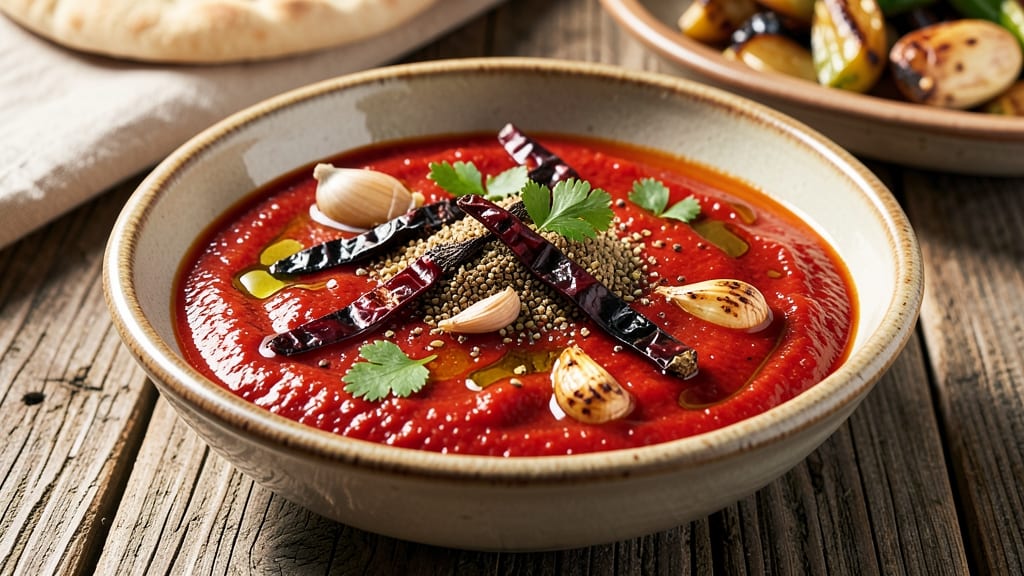
This authentic harissa sauce delivers the perfect balance of smoky heat, nutty coriander depth, and vibrant North African flavor—just like the version you'd find at a Tunisian market stall. 🌶️ The secret lies in roasting the red peppers and chili peppers over an open flame (or under a broiler) to develop that signature smoky complexity, while toasted spices like cumin and coriander add warmth and earthiness.
What sets this recipe apart is its versatility—whether you want a fruity variation with preserved lemons, a smoky version with extra roasted garlic, or a spicy kick from additional cayenne.
Every batch starts with the same foundational blend of olive oil, garlic, and spices, ensuring authenticity while allowing room for personalization. The sauce keeps beautifully in the fridge for up to two weeks or can be preserved in oil for months.
Perfect for drizzling over grilled meats, roasted vegetables, or fresh flatbread, this harissa transforms simple dishes into restaurant-quality meals. The texture is smooth yet slightly textured, with a depth of flavor that builds with every bite.
It’s also completely vegan-friendly, making it an ideal pantry staple for any home cook.
Once you make this sauce, you’ll never go back to store-bought versions—it’s that good. Let’s get started on creating your own batch of this essential North African condiment.
Ingredients for authentic harissa sauce
Nine essential ingredients transform into this vibrant, smoky North African condiment.
| Ingredient | Amount | Notes |
|---|---|---|
| Extra-Virgin Olive Oil 🫒 | ¾ cup | High-quality, fruity variety |
| Roasted Red Peppers 🍅 | 1 cup | Jarred or homemade, no liquid |
| Dried Chili Peppers 🌶️ | 2 tbsp | Arbol or guajillo preferred |
| Garlic Cloves 🧄 | 6 cloves | Fresh, roasted for depth |
| Ground Cumin 🌿 | 1 ½ tbsp | Toasted for aromatic punch |
| Ground Coriander 🌿 | 1 ½ tbsp | Freshly ground preferred |
| Smoked Paprika 🌶️ | 1 tbsp | For authentic smoky flavor |
| Cayenne Pepper 🔥 | ½ tsp | Adjust for desired heat |
| Preserved Lemons 🍋 | 2 tbsp | Paste or finely chopped rind |
| Sea Salt 🧂 | ½ tsp | Diamond Crystal preferred |
The foundation starts with extra-virgin olive oil—use something with fruity notes and low acidity. Whole Foods or Trader Joe's carry excellent options. For the peppers, jarred roasted red peppers work in a pinch, but homemade roasted ones (charred over an open flame) add unmatched depth. Dried chili peppers should be toasted lightly in a dry pan before blending to enhance their smoky qualities. The garlic? Roast it whole first—peel when still warm for maximum flavor. Toast your spices too: cumin and coriander release their essential oils when warmed gently in a dry skillet.
No smoked paprika? Regular paprika plus a pinch of liquid smoke gets you close. Short on preserved lemons? Fresh lemon zest plus extra salt mimics the tang. The cayenne is where you can play—start with half a teaspoon if you're sensitive to heat. For texture, add toasted pine nuts or almonds at the end. If you're making a fruity variation, boost the preserved lemons to 3 tablespoons and add 1 tablespoon of honey (or maple syrup for vegan). The sauce should be smooth but with just a hint of texture—blend until creamy, then pulse briefly for that signature North African mouthfeel.
Harissa keeps beautifully in the fridge for 2 weeks when stored in an airtight jar with a thin layer of olive oil on top. For longer storage, preserve in oil: sterilize jars, pack sauce tightly, then cover completely with fresh olive oil. This method keeps it fresh for 6-12 months. The sauce tastes even better after a few days as the flavors meld. I always make a double batch—one for immediate use and one to stash in the pantry for when I crave that smoky North African kick on flatbread or grilled veggies.
Why You'll Love This Recipe
- No-Fuss Blend: I swear by this recipe because it’s the kind of sauce that forgives mistakes—just toss the roasted red peppers, dried chilis, and cumin into a food processor with a splash of olive oil, and boom. No peeling, no dicing, no stress. The garlic gets pulverized right in, so you don’t even have to smell it raw (win for anyone who cries at chopped onions).
- Smoky Depth Magic: Here’s what sold me—the way the toasted cumin and dried chilis mellow into this rich, smoky base while the roasted red peppers add a sweet, jammy counterpoint. It’s not just heat; it’s layers. Drizzle it over grilled chicken, and suddenly you’ve got restaurant-quality flavor without the takeout price tag.
- Weeknight Superstar: This sauce is my secret weapon for lazy nights. Stir it into a pot of lentils for a 10-minute dinner, slather it on toast with feta, or toss it with roasted veggies while you scroll through your phone. It’s the kind of thing that turns a sad Tuesday into something memorable—no fancy prep required.
- Lasts All Week: Honestly, I make a big batch and keep it in the fridge for weeks. The flavors only get better as it sits, deepening into something complex and irresistible. And since it’s mostly pantry staples (plus a jar of roasted peppers), it’s one of those recipes where you’re not scrambling for ingredients. Just open, blend, and enjoy.
Step-by-step instructions for authentic harissa sauce
Here's how to craft a vibrant, balanced harissa with layers of smoky depth and bright heat.
🍳 Step 1: Toast the Spices for Maximum Flavor
Heat the 0.75 cup extra-virgin olive oil in a medium saucepan over medium-low heat. Add the 2 tbsp dried chili peppers and toast them for 1-2 minutes until fragrant—you'll smell their earthy, slightly sweet aroma. This step awakens their natural oils and intensifies their heat.
Next, add the 6 cloves garlic and toast them for another 30 seconds until they turn golden and smell irresistible. Remove the pan from heat immediately—garlic burns quickly, and you want to preserve that delicate, sweet aroma rather than bitter char. Let everything cool for 5 minutes while you prepare the remaining ingredients.
🍳 Step 2: Blend the Base Ingredients
Transfer the toasted chili peppers, garlic, and oil to a food processor or high-powered blender. Add the 1 cup roasted red peppers (drained if jarred), 2 tbsp preserved lemons, 1.5 tbsp ground cumin, 1.5 tbsp ground coriander, 1 tbsp smoked paprika, and 0.5 tsp cayenne pepper. Pulse until everything is finely chopped but not completely smooth—you want some texture to maintain authenticity.
Here's the thing—authentic harissa has a rustic quality. Don't stress about a perfectly smooth sauce. The slight graininess from the roasted peppers and preserved lemons adds depth that blended sauces miss. Taste the mixture now—you should detect smoky warmth from the paprika, bright citrus from the preserved lemons, and a gradual build of heat from the chili peppers.
🥘 Step 3: Simmer and Develop the Sauce
Return the blended mixture to the saucepan and add 0.5 tsp sea salt. Cook over low heat for 10-15 minutes, stirring occasionally, until the sauce thickens slightly and the flavors meld. You're looking for a consistency between a loose paste and a thick sauce—it should coat the back of a spoon but still be spreadable.
This simmering step is crucial. It allows the spices to bloom fully and the acidity from the preserved lemons to integrate smoothly. Taste as you go—if the heat feels too intense, add a splash of water to balance it. The sauce should finish with a complex harmony: smoky from the paprika, bright from the roasted peppers, and a gradual warmth from the chili peppers. It's okay if it's not perfectly smooth—authentic harissa embraces its rustic character.
⏰ Step 4: Rest and Adjust for Perfect Balance
Remove the sauce from heat and let it cool completely for 20 minutes. This resting period allows the flavors to settle and the heat to mellow slightly. Once cooled, give it a final taste and adjust the balance if needed—add a pinch more salt if it's too mild, or a tiny bit more cayenne if you want more heat.
Authentic harissa should have layers: an initial bright acidity from the roasted peppers and preserved lemons, followed by the warm, earthy notes of cumin and coriander, and finally a gradual build of heat from the chili peppers. The sauce should be vibrant, not overwhelming. If it's too thick, thin it with a splash of water or the reserved liquid from the roasted red peppers. Store in an airtight container in the refrigerator for up to 2 weeks**—the flavors will deepen over time.
Pro Tips For Making Authentic Harissa Sauce
- CHAR THE PEPPERS LOW: I learned this the hard way—blasting dried chilies on high turns them to ash. Simmer them in a dry pan over medium-low for 5-7 minutes, stirring often, until they darken but don’t burn. The smoke flavor is what builds depth, not char.
- SOAK CHILIS IN OIL: Skip the water soak—toss dried chilies directly into warm olive oil (about ¼ cup) for 10 minutes before blending. This softens them and infuses the oil with heat upfront, so your sauce doesn’t turn grainy later. (Yes, even if you’re impatient like me.)
- BLOOM CUMIN DRY: Add ground cumin to the oil before heat hits—let it sizzle for 30 seconds until fragrant. This stops it from cooking raw and turning bitter. I used to add it later and wondered why my harissa tasted medicinal.
- PULSE ROASTED PEPPERS: Blend roasted red peppers last, in short bursts, not continuously. You want texture—tiny flecks of skin and seeds add body. Over-blending turns harissa into soup. (Your future self will notice.)
Make-ahead tips for leftovers
Batch Prep Basics
Harissa sauce is one of those magical condiments that tastes even better after a few days, so I always make at least 2 cups at a time. The extra effort pays off when you can pull it straight from the fridge to drizzle over grilled lamb chops or roasted eggplant.
Use a high-quality food processor like the Ninja BN601 for smooth blending, but don’t over-blend—authentic harissa has a rustic texture that store-bought versions lack. 🌶️
Fridge Storage Secrets
Store your harissa in a clean, airtight glass jar (I love Le Parfait 16-ounce jars) and keep it in the fridge for up to 2 weeks. The sauce’s flavors deepen over time, so the second week is often the best.
Before storing, press a piece of plastic wrap directly onto the sauce’s surface to minimize exposure to air, which can dull the flavors. Label your jar with the date—trust me, you’ll forget how long it’s been sitting there!
Long-Term Preservation
For extended storage, preserve your harissa in olive oil—a method that keeps it fresh for 6-12 months. Sterilize your jars (I use a Lagostina oven-safe dish rack in the dishwasher), pack the sauce tightly, then cover completely with fresh extra-virgin olive oil.
The oil acts as a natural preservative while adding another layer of flavor. This technique works especially well for gifting—just pour a small amount into a decorative bottle for a stunning present. ✨
Freezing for Convenience
While not ideal for texture, you can freeze harissa in ice cube trays for quick portions. Once frozen, transfer the cubes to a freezer bag and flatten to save space. Thaw overnight in the fridge before using—never microwave, as it can make the sauce watery.
I freeze my fruity harissa variation this way, so I always have a quick way to add bright citrus notes to dishes like couscous or grilled halloumi.
Reviving Stale Sauce
If your harissa has lost some of its vibrancy after a few weeks, don’t toss it! Warm it gently in a small saucepan with 1 tablespoon of olive oil and a pinch of salt.
Simmer for 5 minutes to revive the flavors, then adjust the seasoning. This trick works wonders for harissa that’s been sitting too long—it’s like giving it a second chance at life. 💫
Nutrition facts
Frequently asked questions
Can I make harissa without a food processor?
For a rustic texture, finely chop all ingredients by hand or use a mortar and pestle. Toast the spices and garlic first, then mix everything together with a fork or spoon. The texture will be chunkier, but it'll still taste authentic—just like traditional North African versions. For smoother results, pulse in a blender after chopping.
How do I adjust the heat level?
Start with the 0.5 tsp cayenne pepper as written, then taste as you go. For milder heat, reduce the cayenne to ¼ tsp—or omit it entirely and use only the dried chili peppers. If you want extra kick, add ½ tsp more cayenne or a pinch of crushed red pepper flakes. The roasted red peppers naturally balance the heat with their sweetness.
What can I use if I don't have preserved lemons?
No problem! Substitute with 1 tbsp fresh lemon juice plus 1 tsp lemon zest for brightness. For a deeper flavor, add ½ tsp white wine vinegar to mimic the tangy complexity of preserved lemons. The sauce will still taste vibrant, though slightly less nuanced.
Can I make harissa with fresh chili peppers?
Yes, but you'll need 2-3 fresh red or jalapeño peppers (seeds removed for milder heat). Roast them first (skin-on) over an open flame or under a broiler until charred. Peel, then blend with the other ingredients. Fresh peppers add juiciness but require more salt to balance their moisture. For extra smokiness, char the peppers directly over a gas flame.
Why does my harissa taste bitter?
Bitterness usually comes from over-toasting the spices or using too much cayenne. To fix it, stir in ½ tsp sugar or 1 tsp honey (for non-vegan versions) while simmering. For a vegan fix, add 1 tsp maple syrup** or a splash of fresh lemon juice. Always taste as you go—authentic harissa should be complex, not bitter.