
Sauces & Condiments
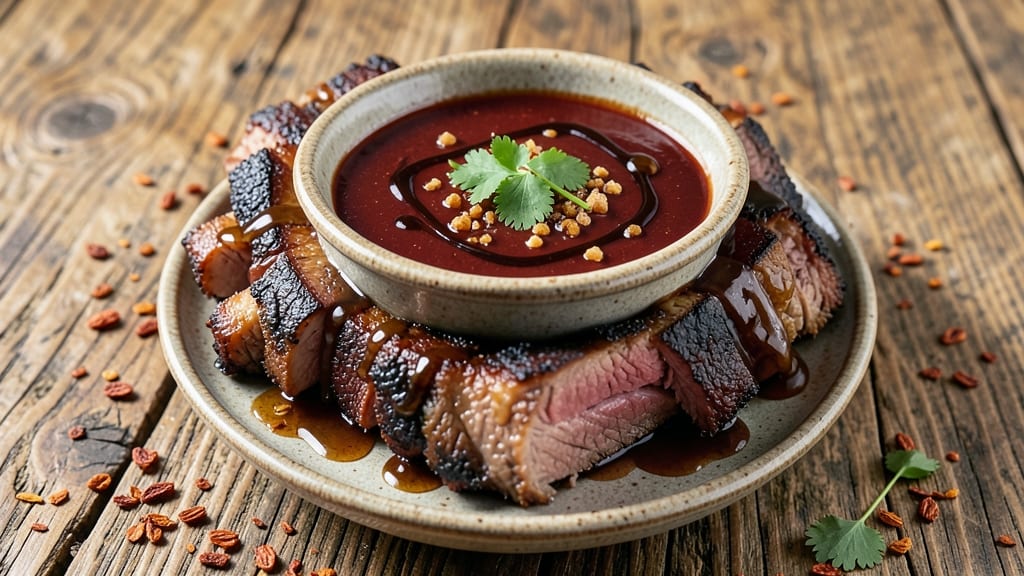
Austin BBQ sauce transforms brisket from good to legendary—this recipe captures the city's signature smoky-sweet heat with a tamarind zing that cuts through rich meat. I developed it after years of perfecting the balance between Texas-style boldness and the subtle tang that makes Central Texas BBQ stand out. The secret lies in simmering tomato paste, molasses, and vinegar until the flavors meld into a glossy, sticky sauce that clings perfectly to ribs or chicken.
What sets this sauce apart is the tamarind, which adds that signature Austin tang without overpowering the sweetness. I use a blend of spices—smoked paprika for depth, garlic powder for warmth, and a touch of cayenne for controlled heat—that builds complexity as it simmers.
The sauce thickens naturally as it reduces, creating a perfect consistency for basting or dipping. This isn't just another BBQ sauce; it's the kind that makes people ask for seconds.
By the time you're done, you'll have a sauce that's rich enough to stand up to slow-smoked brisket but bright enough to cut through fatty ribs. The molasses adds caramelized depth, while the vinegar keeps it from being too heavy.
Store it in the fridge for up to two weeks, and trust me—you'll want to make a double batch. This is the sauce that turns weekend cookouts into legendary gatherings.
The beauty of this recipe is its versatility. Use it to baste ribs during the final hours of smoking, as a dipping sauce for pulled pork sandwiches, or even as a glaze for grilled chicken.
The balance of sweet, tangy, and smoky flavors makes it adaptable to any BBQ application. Let's get cooking—your taste buds will thank you.
Ingredients for austin bbq sauce
Seven spices, three tangy liquids, and a touch of sweetness—this Austin BBQ sauce is all about balance.
| Ingredient | Amount | Notes |
|---|---|---|
| Tomato Paste 🍅 | ½ cup | High-quality, unsweetened preferred |
| Molasses 🍯 | ¼ cup | Unsulphured for best flavor |
| Apple Cider Vinegar 🍶 | ¼ cup | Balsamic vinegar works too |
| Tamarind Paste 🍈 | ¼ cup | Or tamarind concentrate |
| Brown Sugar 🍚 | ½ cup | Light or dark works fine |
| Smoked Paprika 🌶️ | 2 tbsp | For that signature smoky depth |
| Garlic Powder 🧄 | 1 tbsp | Fresh garlic is better but powder works |
| Onion Powder 🧅 | 1 tbsp | Adds sweet, savory base |
| Cayenne Pepper 🔥 | ½ tsp | Adjust for heat preference |
| Salt 🧂 | 1 tsp | Kosher or sea salt preferred |
| Ground Black Pepper 🌶️ | ½ tsp | Freshly ground for best flavor |
| Water 💧 | ½ cup | Or apple juice for extra sweetness |
The tamarind is non-negotiable here—it’s what gives Austin BBQ its signature tang. Trader Joe’s carries it in paste form, or grab tamarind concentrate at Latin markets. If you can’t find it, a mix of lime juice and brown sugar (half the amount) gets you close. The smoked paprika is key too—Penzeys or the bulk bins at Whole Foods have the best quality. For the tomato paste, San Marzano is ideal, but any good-quality paste works. The molasses should be unsulphured for that deep, caramelized flavor that makes this sauce sing.
No tamarind? Lime juice plus extra brown sugar mimics the tang, though it won’t be identical. Running short on molasses? Maple syrup at half the amount adds sweetness without overpowering. The vinegar can be swapped for balsamic if you’ve got it—it adds a richer depth. For the spices, if you’re feeling adventurous, toast the smoked paprika in a dry pan for 30 seconds to deepen its flavor. The water can be swapped for apple juice if you want to reduce the sauce faster and add a hint of fruitiness.
This sauce thickens as it simmers, so don’t rush it. Store it in a clean glass jar in the fridge for up to 2 weeks, or freeze it for 6 months in ice cube trays for single-use portions. Double the batch—you’ll want it for everything from ribs to grilled chicken. The sauce gets even better the next day as the flavors meld, so make it ahead if you can. Trust me, you’ll reach for this more than store-bought any day.
Why You'll Love This Recipe
- Pantry Magic: This sauce comes together with stuff you already have—no fancy shopping trips. I’ll bet you’ve got tomato paste and brown sugar sitting in your cupboard right now, and the tamarind paste (the real star here) adds that tangy depth without extra effort.
- Sweet-Tart Balance: That molasses and apple cider vinegar combo? It’s the perfect push-pull of flavors—rich and sticky one minute, bright and zesty the next. Honestly, it’s the kind of sauce that makes you want to slather it on everything, not just ribs.
- Weeknight Workhorse: I’ve used this on grilled chicken for a Tuesday dinner, as a glaze for baked potatoes on game day, and even drizzled it over deviled eggs for a brunch crowd. It’s that adaptable—no need for a fancy menu to make it shine.
- Budget-Friendly Staple: A small bottle of tamarind paste lasts forever, and the rest of the ingredients cost pennies. Between us, I’ve made gallons of this for under $10, and it still tastes like I spent hours perfecting it. (Spoiler: I didn’t.)
Step-by-step instructions for Austin BBQ sauce
Let's create this iconic Texas sauce with its perfect balance of smoky, sweet, and tangy flavors.
Warm the Tomato Paste and Molasses
Place a medium saucepan over medium heat and add the 0.5 cup tomato paste and 0.25 cup molasses. Stir constantly with a wooden spoon for 3-4 minutes until the mixture begins to bubble gently. The molasses will dissolve completely and the paste will lose its raw, grainy texture.
Here's the thing—don't walk away. The tomato paste can burn easily, so keep your eye on it. You're looking for a smooth, thick consistency that coats the back of your spoon. If you notice any browned bits forming, stir more vigorously to prevent scorching. This foundational step builds the sauce's rich, velvety texture.
Add Vinegar, Tamarind, and Sweetener
Pour in the 0.25 cup apple cider vinegar and 0.25 cup tamarind paste, stirring continuously to incorporate them into the warm mixture. Then add the 0.5 cup brown sugar and 0.5 cup water, bringing everything together with a wooden spoon. Let the mixture simmer gently for 5 minutes on medium-low heat.
This is where the sauce starts to come together. The vinegar adds that signature tang while the tamarind brings the unique zing that sets Austin BBQ sauce apart. The sugar helps balance the acidity and creates that perfect sweetness. You'll notice the sauce thickening slightly as it simmers—this is normal and exactly what we want.
Incorporate Spices for Depth
Reduce the heat to low and stir in the 2 tbsp smoked paprika, 1 tbsp garlic powder, 1 tbsp onion powder, 0.5 tsp cayenne pepper, 1 tsp salt, and 0.5 tsp ground black pepper. Let the sauce simmer uncovered for 10-12 minutes, stirring occasionally. The spices will bloom and infuse their flavors into the sauce.
I like to taste the sauce at this stage to check the balance. It should be sweet, tangy, and just starting to develop that smoky character. If you find it needs more heat, you can add a pinch more cayenne. If it needs more depth, a splash of apple cider vinegar or a teaspoon more smoked paprika works wonders. Remember, you can always adjust, but you can't take out what's already there.
Simmer to Perfect Consistency
Continue simmering the sauce for another 15-20 minutes until it reaches your desired thickness. You're aiming for a consistency that coats the back of a spoon but isn't so thick it can't be poured. The sauce should reduce by about one-third from its original volume.
To test the consistency, take a spoonful and let it cool slightly. Run your finger through it—it should leave a clean line without being too runny. If it's still too thin, simmer uncovered for another 5 minutes. If it's too thick, add 1-2 tablespoons of water and stir well. This final reduction step is crucial for achieving that perfect balance of flavors and texture that makes Austin BBQ sauce so special.
Pro Tips For Making Austin Bbq Sauce
- Bloom the Tomato Paste: Heat your tomato paste in a dry pan for 3-4 minutes before adding liquids—this breaks down the starches and deepens the flavor. I used to skip this, and the sauce always tasted flat until I realized how much difference this simple step makes.
- Whisk in the Molasses Slowly: Stir in the molasses a little at a time while simmering, or you’ll end up with a gloppy mess. I learned this the hard way when I dumped it all in at once and had to strain out lumps later.
- Use Real Tamarind Paste: Skip the powdered tamarind concentrate—it’s hit-or-miss. A block of tamarind paste (or pods if you’re ambitious) dissolves smoothly and gives that signature tangy depth. Yes, it’s messier, but the flavor is worth it.
- Simmer Low and Long: Don’t rush the reduction—let it bubble gently for at least 45 minutes. The longer it cooks, the richer the caramelized notes become. I used to rush it, and the sauce always tasted thin and underdeveloped.
Essential equipment for this recipe
Essential Saucepan
You'll need a medium-sized stainless steel saucepan—I swear by All-Clad for even heat distribution and durability. A 3-quart pan works perfectly for this recipe. Avoid non-stick pans here; stainless steel handles high heat better and won't scratch when stirring with a wooden spoon.
If you're making a double batch, move up to a 4-quart pan for better control. 🔥
Wooden Spoon
A heat-resistant wooden spoon (like Oxo Good Grips) is non-negotiable for stirring this sauce. Wood prevents scorching better than metal and won't react with the acidic ingredients. I keep mine in my saucepan drawer for quick access—it's my most-used tool when making sauces.
If you don't have one, a silicone spatula works in a pinch, but it won't give you the same control.
Fine-Mesh Strainer
For when you want ultra-smooth sauce, a fine-mesh strainer (like OXO Good Grips) removes any lumps or sediment after simmering. I use it when making this sauce for competitions—it gives that restaurant-quality finish.
If you're okay with a slightly rustic texture, skip this step, but trust me, the difference is noticeable. Store your strainer in a dry place to prevent rust.
Digital Kitchen Scale
While this recipe uses volume measurements, a digital kitchen scale (I love the Escali Primo) helps when measuring spices like smoked paprika and cayenne. For instance, 2 tbsp smoked paprika can vary by brand—some are denser than others.
Weighing ensures consistency. It's especially useful if you're scaling the recipe up or down. Keep it on your counter for all your sauce-making adventures.
Glass Jars for Storage
Store your finished sauce in amber glass jars (like Ball Mason jars) to preserve its rich color and prevent light degradation. The dark glass blocks UV rays that can alter flavors over time.
I label mine with the date and recipe name—it's a game-changer for meal prep. If you're freezing, use freezer-safe glass containers with tight lids to prevent freezer burn. 💫
Immersion Blender (Optional)
If you prefer your sauce completely smooth, an immersion blender (like Ninja) lets you blend directly in the pan after simmering. This is my go-to when I want that ultra-silky texture for dipping sauces.
Just pulse for 10-15 seconds—no need to over-blend. For extra flavor, blend in a splash of the cooking liquid from your brisket or ribs. It adds depth you won't find in store-bought sauces.
Nutrition facts
Frequently asked questions about Austin BBQ sauce
Why does this sauce use tamarind instead of just vinegar?
Tamarind adds that signature Austin tang without overpowering the sweetness. It creates a unique balance that regular vinegar can't match—think of it as the secret weapon that makes this sauce stand out from other Texas-style BBQ recipes. The paste dissolves completely during simmering, leaving behind that bright, citrusy zing.
Can I make this sauce without molasses?
Yes, but it won't have the same depth. Substitute with maple syrup (half the amount) or honey (reduce other liquids by 2 tbsp). The molasses adds caramelized richness that balances the tangy tamarind and vinegar perfectly. If you're avoiding sugar, try date syrup instead—it's less sweet but still adds complexity.
How spicy should this sauce be?
The 0.5 tsp cayenne gives a mild kick, but you can adjust to taste. For extra heat, add ¼ tsp more cayenne** or a pinch of red pepper flakes. If you prefer no heat, simply omit the cayenne entirely—the sauce will still have great depth from the smoked paprika and garlic. Always taste as you go!
Can I use this sauce on non-meat dishes?
This sauce works beautifully on grilled vegetables, tofu, or even as a marinade for chicken wings. The balance of sweet, tangy, and smoky flavors makes it versatile. For vegetables, reduce the cayenne slightly to avoid overpowering delicate flavors like zucchini or bell peppers.
What's the best way to store leftover sauce?
Transfer to a clean glass jar and refrigerate for up to 2 weeks. For longer storage, freeze in ice cube trays for single-use portions or in airtight containers for up to 6 months. The sauce actually improves with time as flavors meld—just reheat gently before using.