
Sauces & Condiments
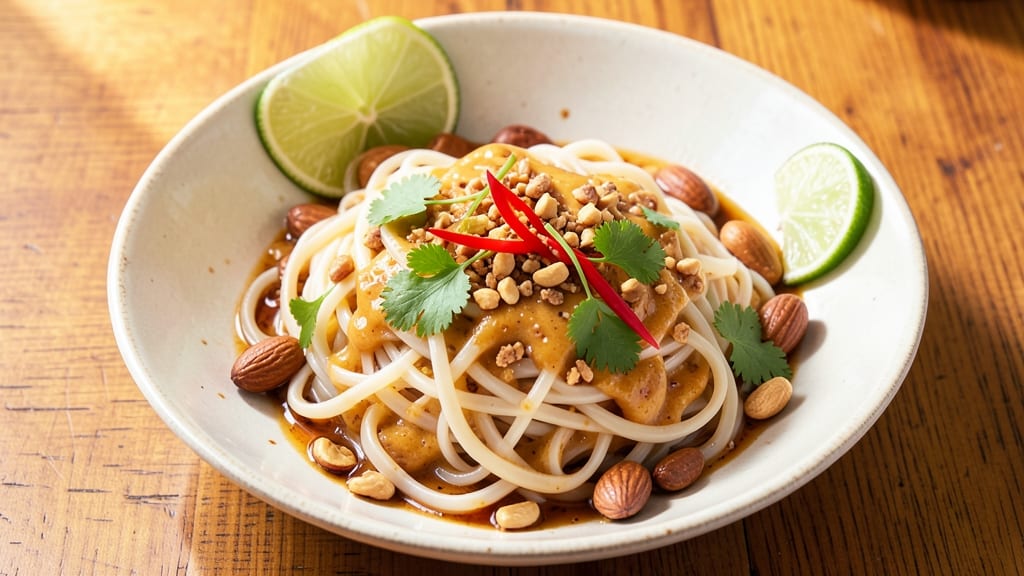
This Asian noodles with peanut sauce recipe delivers the perfect harmony of nutty, sweet, and savory flavors in every bite, inspired by Thai street food traditions. The rich peanut sauce—thick, creamy, and packed with umami—clings to chewy rice noodles while crispy toppings add satisfying texture.
I've perfected this balance over years of testing, ensuring the sauce isn't too sweet or overly greasy, and the noodles stay perfectly al dente.
The foundation is a smooth peanut sauce made with roasted peanuts, coconut milk, and a blend of soy sauce, lime juice, and brown sugar for depth. Stir-frying the sauce with garlic and chili flakes while simmering creates layers of flavor that transform simple ingredients into something restaurant-worthy.
This dish comes together in under 30 minutes, making it ideal for weeknight dinners or meal prep.
What makes this recipe stand out is the crunchy topping—a mix of crushed peanuts, fried shallots, and fresh cilantro—that adds texture and freshness. Serve it over wide rice noodles with optional protein like grilled chicken or pan-seared tofu for a complete meal.
The sauce's nutty richness pairs beautifully with the noodles' chewiness, while the toppings keep every bite exciting.
For extra authenticity, garnish with lime wedges and sliced chili peppers. This dish is versatile enough for spicy or mild preferences—simply adjust the chili level to taste.
Whether you're feeding a crowd or treating yourself, this recipe delivers bold, satisfying flavors that taste like a trip to your favorite Asian eatery.
Ingredients for asian noodles with peanut sauce
Chewy noodles, nutty sauce, and crispy toppings—this recipe balances textures and flavors perfectly.
| Ingredient | Amount | Notes |
|---|---|---|
| Rice Noodles 🍜 | 8 oz | Wide rice noodles, uncooked |
| Peanuts 🥜 | 1 cup | Raw, unsalted, for sauce |
| Crushed Peanuts 🥜 | ¼ cup | For crunchy topping |
| Coconut Milk 🥥 | ½ cup | Full-fat, canned |
| Soy Sauce 🍶 | 2 tbsp | Light or regular |
| Lime Juice 🍋 | 2 tbsp | Freshly squeezed |
| Brown Sugar 🍯 | 2 tbsp | Packed, light or dark |
| Garlic Cloves 🧄 | 4 cloves | Minced for sauce |
| Chili Flakes 🌶️ | 1 tsp | Adjust for spice level |
| Vegetable Oil 🫒 | 2 tbsp | For stir-frying |
| Shallots 🧅 | 2 whole | Thinly sliced, for frying |
| Fresh Cilantro 🌿 | ¼ cup | Chopped, for garnish |
| Lime Wedges 🍋 | 2 whole | For serving |
| Red Chili Peppers 🌶️ | 2 whole | Thinly sliced, optional |
| Salt 🧂 | ½ tsp | Kosher or sea salt |
The peanut sauce is where the magic happens. Raw, unsalted peanuts (not the roasted kind from the snack aisle) give the best flavor when toasted fresh. Trader Joe's and Costco usually have good bulk options. For the coconut milk, full-fat canned is a must—light versions won't give that creamy texture. The rice noodles? Look for wide, flat ones—they hold up better to the sauce. If you can't find them, egg noodles in a pinch, but they'll be less authentic.
No fresh shallots? Substitute red onion—just slice it extra thin. Short on peanuts? Almond butter works in a bind, but the flavor won't be quite the same. The chili flakes can be swapped for fresh red chili or cayenne, but go easy—this sauce packs heat. For extra richness, add a splash of peanut butter (about 1 tbsp) to the sauce. The lime juice needs to be fresh—bottled won't cut it. If you're making this ahead, add the lime juice last to keep the sauce vibrant.
The sauce keeps for 3 days in the fridge—just stir before using. The noodles? Cook them al dente and rinse with cold water to stop cooking. For meal prep, store sauce and noodles separately—toss them together when ready to eat. The toppings (crushed peanuts and fried shallots) are best added fresh, but you can store them separately for up to 2 weeks. Garnish with lime wedges and chili peppers right before serving—they keep everything bright and fresh.
Why You'll Love This Recipe
- Pantry Magic: I swear by this one—no specialty ingredients, just rice noodles, a handful of peanuts, and coconut milk you probably already have. Honestly, the sauce comes together in one bowl while the noodles soak, so it’s basically a set-it-and-forget-it win.
- Creamy Crunch Fix: That peanut sauce? It’s the star—smooth from coconut milk, nutty from the peanuts, and the crushed ones on top add this perfect textural bite. The soy sauce ties it all together with that umami punch I can’t resist.
- Lunchbox Hero: Between us, this is my go-to for packed lunches or quick dinners. The noodles hold up for days in the fridge, and I just reheat the sauce separately—no soggy mess. My college-aged kid even asks for it now, and I’ll take that as a success.
- Budget Blowout: Peanut sauce for a fraction of the cost of takeout? Yes, please. A single can of coconut milk and a bag of peanuts stretch across multiple meals, and I’ve made this for date nights, family dinners, and even a last-minute office potluck. Solid every time.
Step-by-step instructions for Asian noodles with peanut sauce
Here's how to create a perfectly balanced dish with rich peanut sauce and crispy toppings.
Prepare the Rice Noodles
Bring a large pot of water to a rolling boil. Add the 8 oz rice noodles and cook for 5-7 minutes until they're tender but still slightly firm to the bite. The noodles should float to the surface when done—this means they've absorbed just enough water without becoming mushy.
Drain the noodles immediately and rinse under cold water for 10 seconds to stop the cooking process. Toss them gently with 1 tablespoon of the vegetable oil to prevent sticking. Set aside and keep covered until ready to use. Overcooking makes them gummy, so timing is everything here.
Make the Peanut Sauce
In a small bowl, combine the 1 cup peanuts, 0.5 cup coconut milk, 2 tbsp soy sauce, 2 tbsp lime juice, 2 tbsp brown sugar, 4 cloves minced garlic cloves, 1 tsp chili flakes, and 0.5 tsp salt. Using a fork or potato masher, crush the peanuts until you have a thick, chunky paste with some whole peanuts remaining for texture.
Transfer the mixture to a blender or food processor and blend until completely smooth, about 30-45 seconds. The sauce should be thick but pourable. Taste and adjust seasoning—add more lime juice for brightness or brown sugar for sweetness if needed. This sauce is the heart of your dish, so balance is key.
Stir-Fry the Shallots and Chili Peppers
Heat 1 tablespoon of the vegetable oil in a large skillet over medium-high heat. Add the 2 whole thinly sliced shallots and 2 whole thinly sliced red chili peppers (if using). Cook for 2-3 minutes until the shallots are golden brown and slightly crispy, and the chili peppers soften but still retain their shape.
Remove the skillet from heat and set aside. These aromatics will add depth to your dish, but don't overcook them or they'll turn bitter. The shallots should be tender-crisp, and the chili peppers should add a gentle heat without overpowering the peanut sauce.
Assemble and Toss with Sauce
Return the skillet to medium heat and add the peanut sauce. Stir for 1-2 minutes until it's heated through and slightly thickened. Add the drained rice noodles and toss gently to coat evenly. Cook for an additional 1-2 minutes, just until the noodles absorb the sauce and become glossy.
Divide the noodles among 4 plates and garnish each serving with 1 tablespoon of the crushed peanuts and 1 tablespoon of the chopped fresh cilantro. The crushed peanuts should add a delightful crunch contrast to the creamy sauce, while the cilantro adds freshness.
Serve with Lime Wedges
Serve immediately with the 2 whole lime wedges on the side. The acidity from the lime brightens the rich peanut sauce and balances the dish. Each bite should deliver a harmonious blend of nutty sweetness, savory depth, and subtle spice.
For extra freshness, squeeze a little lime juice over each serving just before eating. The noodles are best enjoyed warm, so don't let them sit too long after tossing. This dish comes together quickly but delivers restaurant-quality results with the right balance of textures and flavors.
Pro Tips For Making Asian Noodles With Peanut Sauce
- Soak Noodles Separately: Split your rice noodles into two batches—one for the sauce and one for the final dish. Soak half in hot water for 3-4 minutes (they’ll soften but stay firm), then drain and set aside. The rest go straight into the sauce to thicken it naturally. I learned this the hard way when my first batch turned into mush before hitting the pan.
- Toast Peanuts Low: Dry-toast your whole peanuts in a skillet over medium-low heat for 5-7 minutes, stirring constantly. Watch them like a hawk—they burn fast and turn bitter. Once golden, crush half while warm (they’ll stay fragrant longer). Skip the high heat; you’re not searing steak here.
- Simmer, Don’t Boil: When combining coconut milk, soy sauce, and other sauce ingredients, keep the heat gentle. A rolling boil will split the coconut milk, turning your sauce grainy and separating. A bare simmer—tiny bubbles, occasional swirl—keeps it silky. Yes, it takes longer, but the texture makes all the difference.
- Reserve Crushed Peanuts: Sprinkle crushed peanuts last—right before serving. This keeps them crunchy and prevents them from turning into peanut dust in the sauce. Save a handful for garnish; they’re the dish’s crowning glory, not just a garnish afterthought. (Your future self will notice the difference.)
Pro cooking tips for perfect results
Peanut Sauce Perfection
For a truly restaurant-quality peanut sauce, roast the peanuts first before blending. Spread 1 cup raw peanuts on a baking sheet and toast at 350°F for 8-10 minutes until fragrant and lightly golden.
This step deepens their flavor and prevents the sauce from tasting raw. Let them cool slightly before crushing—hot peanuts release more oil, which can make the sauce greasy. 🥜
Noodle Texture Secrets
Rice noodles cook in a flash—watch them like a hawk! They're done when they float to the surface (5-7 minutes), but remove them immediately to prevent mushiness.
Rinse with cold water for 10 seconds to stop cooking, then toss with 1 tbsp vegetable oil to prevent sticking. Pro tip: If using dried rice noodles, soak them in warm water for 15-20 minutes instead of boiling for even better texture.
Sauce Consistency Control
Your peanut sauce should be thick but pourable—like a cross between a glaze and a dip. If it's too thin after blending, simmer it in a small saucepan over low heat for 3-5 minutes to thicken.
For extra richness, whisk in 1 tbsp peanut butter at the end. Taste as you go: balance the sweetness (brown sugar), savory (soy sauce), and heat (chili flakes) like a pro. 🌶️
Crispy Topping Hacks
For extra-crispy shallots, fry them in neutral oil (like vegetable or avocado) until deep golden brown. Drain on a paper towel and sprinkle with a pinch of salt while still hot. Store-bought fried shallots work in a pinch, but homemade adds that restaurant-quality crunch.
Keep them separate until serving—adding them too early makes the sauce soggy. A quick alternative? Toast ½ cup crushed peanuts in a dry pan for 2 minutes until fragrant.
Protein Pairings
Want to add protein? Pan-sear chicken thighs or tofu until golden, then slice and toss with the noodles. For chicken, marinate in 1 tbsp soy sauce + 1 tbsp lime juice for 15 minutes before cooking.
For tofu, press and pan-fry in sesame oil until crispy. Add protein after tossing with the sauce to keep it warm and prevent overcooking. 🍗
Make-Ahead Magic
Prep the sauce and noodles a day ahead to save time. Store the sauce in an airtight container in the fridge for up to 3 days—stir before using. Cook noodles fresh or refrigerate for 1 day (rinse with cold water to refresh).
Reheat sauce gently in a saucepan, then toss with noodles and toppings just before serving. For extra freshness, toast crushed peanuts and fry shallots the day of serving. ✨
Nutrition facts
Frequently asked questions
Can I substitute peanut butter for raw peanuts in the sauce?
You can use 2 tablespoons smooth peanut butter as a shortcut, but the flavor won't be as authentic. For best results, always toast raw peanuts—they develop deeper, nuttier notes that store-bought peanut butter lacks. If substituting, add 1 teaspoon of peanut oil to compensate for lost richness.
How do I make this dish spicier?
Add ½ teaspoon of cayenne pepper or 1 fresh Thai chili (minced) to the sauce. For extra heat, sprinkle crushed red pepper flakes on top before serving. Remember, the sauce thickens when heated, so adjust spice levels before blending. Start small—you can always add more!
What if my peanut sauce is too thick or too thin?
For a thin sauce, whisk in 1 tablespoon of warm water or coconut milk. For a thicker sauce, simmer uncovered over low heat for 3-5 minutes to reduce. The ideal consistency should coat the back of a spoon but still drizzle lightly. If using peanut butter, expect a slightly thicker result.
Can I use other types of noodles?
Rice noodles are traditional, but you can use udon or soba noodles for a different texture. For best results, choose flat, wide noodles (like chow mein) that hold up to the sauce. Avoid thin vermicelli—it gets lost in the peanut sauce. If substituting, adjust cooking time (udon needs 2-3 minutes, soba 4-5 minutes).
How do I store leftovers?
Store the sauce and noodles separately in airtight containers for up to 3 days. Reheat the sauce gently in a saucepan, then toss with noodles and fresh toppings. For extra freshness, toast crushed peanuts and fry shallots fresh when reheating. Never refrigerate the finished dish—it loses texture and crunch.