
Sauces & Condiments
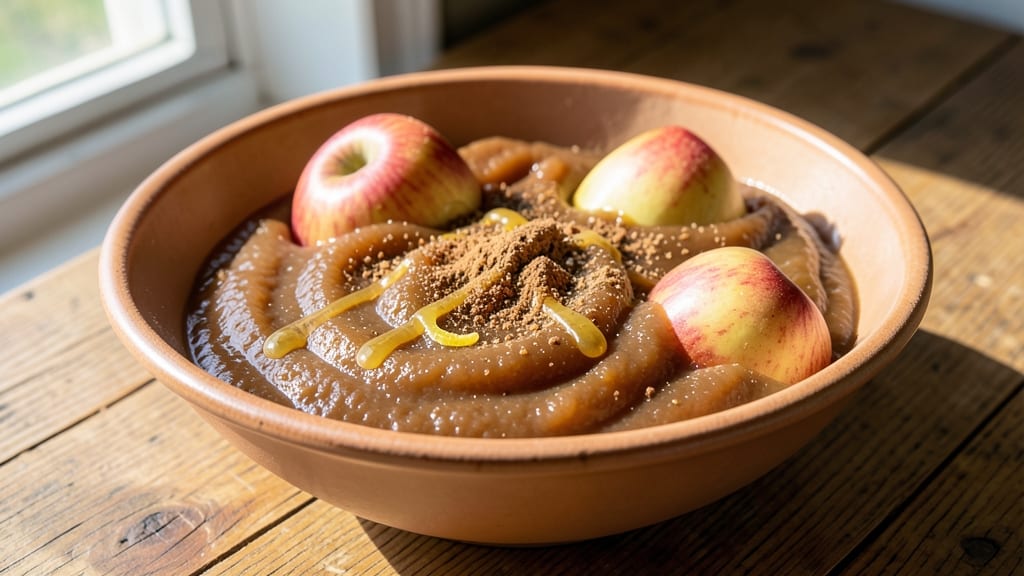
This applesauce recipe with Honeycrisp apples transforms ordinary fruit into velvety, naturally sweetened perfection that caramelizes beautifully. Honeycrisp apples bring the ideal balance of crisp sweetness and subtle tartness, creating a texture that's smooth yet retains just enough bite.
The secret lies in slow cooking to develop deep, caramelized flavors without added sugar—though a touch of honey enhances the natural sweetness.
The process is simpler than you'd think, requiring just a few standard kitchen tools and about 30 minutes of active time.
We'll peel, core, and simmer the apples until they break down into a luscious, chunky sauce, then adjust the texture to your preference—whether you like it smooth or with visible apple pieces.
The spices (cinnamon is classic, but nutmeg or cardamom work beautifully) infuse warmth that complements the apples' natural sweetness.
What you'll end up with is homemade applesauce that tastes nothing like the canned version—rich, aromatic, and with a depth of flavor that comes from fresh fruit and careful cooking.
It's the kind of sauce that pairs perfectly with pork chops, chicken, or even pancakes, and it keeps beautifully in the refrigerator for up to a week. The best part? You control every ingredient, from the sweetness to the spice level.
For those who love customization, we'll explore variations like adding lemon zest for brightness, a pinch of ginger for warmth, or even a splash of vanilla for complexity.
Whether you're making it for a holiday meal or just want a healthier alternative to store-bought, this recipe delivers restaurant-quality results at home.
Ingredients for applesauce recipe with honeycrisp apples
Four Honeycrisp apples and a handful of pantry staples create velvety, caramelized applesauce with restaurant-quality depth.
| Ingredient | Amount | Notes |
|---|---|---|
| Honeycrisp Apples 🍎 | 4 large | Peeled, cored, sliced into even pieces |
| Granulated White Sugar 🍚 | ¼ cup | Adjust to taste for sweetness |
| Local Honey 🍯 | 2 tbsp | Wildflower or clover variety preferred |
| Ground Cinnamon 🌿 | 1 ½ tsp | Freshly ground for best flavor |
| Ground Nutmeg 🌿 | ¼ tsp | Freshly grated preferred |
| Fresh Lemon Juice 🍋 | 1 tbsp | Brightens the flavor profile |
| Extra-Virgin Olive Oil 🫒 | 1 tsp | Prevents sticking during cooking |
| Fresh Ginger 🌿 | 1 tsp | Finely grated for subtle warmth |
| Vanilla Extract 🥄 | ½ tsp | Pure vanilla for depth |
| Water 💧 | ½ cup | For even cooking consistency |
| Sea Salt 🧂 | ½ tsp | Kosher or fine grain preferred |
Honeycrisp apples are the star here—their crisp sweetness and subtle tartness caramelize beautifully. Shop for firm, vibrant apples with no soft spots, and grab them at Whole Foods or Trader Joe's for the freshest selection. If you can't find Honeycrisp, Fuji or Gala work well too, though they'll be slightly less tart. The key is to peel and slice them evenly—about 1/4-inch thick pieces cook perfectly. For extra convenience, Costco's bulk apple bins are a great deal if you're making this often.
No local honey? Maple syrup or agave nectar work in a pinch, though honey's floral notes are ideal. Want more warmth? Add a pinch of cardamom or swap the nutmeg for allspice. The lemon juice can be bottled, but fresh is brighter—just use organic lemons to avoid bitterness. Ginger is optional but adds a lovely complexity; if you skip it, boost the cinnamon to 2 teaspoons. For texture lovers, leave some apple pieces slightly larger—they'll soften just enough to stay visible but still have bite.
This sauce keeps beautifully in the fridge for up to 1 week in an airtight container, or 6 months frozen in ice cube trays for single servings. For best texture, reheat gently on the stove with a splash of water. I always make a double batch—one for breakfast pancakes and one to freeze for holiday meals. The spices intensify as it sits, so the second day is often even better. Store the honey separately if you prefer to adjust sweetness later—just stir it in before serving.
Why You'll Love This Recipe
- No Peel Required: I’ll be honest—peeling apples is my least favorite part of cooking. Honeycrisp’s thick skin stays put when simmered, so you skip that step entirely. Just core, chop, and toss them in the pot. Done.
- Honey-Sweetened Magic: That first spoonful of warm applesauce with local honey? It’s like autumn in a jar. The Honeycrisp’s natural sweetness means you need less sugar—just enough to balance the nutmeg’s cozy bite. (My kids dip toast in it like it’s dessert.)
- Weeknight to Holiday: Same recipe works for breakfast (with yogurt) or dessert (topped with whipped cream). Make a big batch on Sunday—it’s the perfect side for roast chicken, a potluck, or even a quick lunch when you’re too tired to think.
- Zero-Waste Leftovers: Applesauce keeps for weeks in the fridge, and it’s the ultimate lazy-day meal. Freeze extras in ice cube trays for smoothies later. Plus, using Honeycrisp means no bruised apples go to waste—they’re sweeter when slightly soft.
Step-by-step instructions for homemade applesauce with Honeycrisp apples
Transform sweet Honeycrisp apples into velvety, naturally caramelized applesauce with perfect spice balance.
Prepare and Cook the Apples
In a large, heavy-bottomed pot, combine the 4 large Honeycrisp Apples (already peeled, cored, and sliced), 0.5 cup Water, and 1 tsp Extra-Virgin Olive Oil. The oil prevents sticking and adds subtle richness. Bring the mixture to a gentle boil over medium-high heat, then immediately reduce to medium-low heat. You want a steady simmer—not a rolling boil—that cooks the apples evenly without breaking them down too quickly.
Let the apples cook uncovered for 15-20 minutes, stirring occasionally. You'll notice the slices soften and begin to release their juices, creating a fragrant, sweet aroma. The apples are ready when they're fork-tender but still hold their shape—press one gently with a fork to test. If they resist slightly, they need 5 more minutes of cooking. This step is crucial for developing that natural caramelized sweetness without turning the sauce mushy.
Add Sweetness and Spices
Once the apples are tender, stir in the 0.25 cup Granulated White Sugar, 2 tbsp Local Honey, 1.5 tsp Ground Cinnamon, 0.25 tsp Ground Nutmeg, and 0.5 tsp Sea Salt. The sugar and honey will dissolve quickly, creating a glossy, syrupy base. The spices should bloom immediately, filling your kitchen with warm, comforting aromatics. Let the mixture simmer uncovered for another 5-7 minutes, stirring frequently, until the sauce thickens slightly and coats the back of a spoon.
Here's the thing—don't rush this step. The spices need time to meld with the apples' natural sweetness. You'll see the sauce darken slightly and develop a beautiful sheen. If it looks too thick, add 1-2 tablespoons of water to loosen it. The goal is a smooth, velvety texture that's neither too thin nor gluey. Taste and adjust sweetness if needed—Honeycrisp apples are naturally sweet, so you might not need all the sugar.
Finish with Bright, Warm Flavors
Remove the pot from heat and stir in the 1 tbsp Fresh Lemon Juice, 1 tsp Fresh Ginger (finely grated), and 0.5 tsp Vanilla Extract. The lemon juice brightens the flavors, cutting through the sweetness just enough to create balance. The ginger adds a subtle, warm kick that complements the cinnamon and nutmeg beautifully. The vanilla extract deepens the overall flavor profile, giving the applesauce a complex, almost dessert-like quality.
Let the sauce sit off the heat for 5 minutes to allow the flavors to fully integrate. This resting period is often overlooked but makes a noticeable difference in the final result. The sauce will thicken slightly as it cools, so don't worry if it looks a bit looser while still hot. For the smoothest texture, use an immersion blender to blend the sauce directly in the pot, or carefully transfer it to a blender and pulse until completely smooth. If you prefer a rustic texture, skip blending entirely.
Serve Warm or Store Properly
Transfer the applesauce to serving bowls or jars. For the best experience, serve it warm—this highlights the caramelized notes and spiced sweetness. If storing, let it cool completely before refrigerating. The sauce will keep in the fridge for up to 1 week or can be frozen for 3 months. When reheating, warm it gently on the stove over low heat, stirring occasionally, until heated through. Avoid microwaving to prevent a skin from forming on the surface.
This applesauce is incredibly versatile. Use it as a topping for oatmeal or yogurt, a filling for pies, or even as a natural sweetener in smoothies. The perfect balance of sweet, tart, and spiced flavors makes it a standout in any dish. And because it's made with fresh Honeycrisp apples, you'll taste that signature crisp, juicy quality in every spoonful.
Pro Tips For Making Applesauce Recipe With Honeycrisp Apples
- PEEL THE CORES FIRST: Honeycrisp apples are dense—peeling the skin and cutting out the cores before dicing saves you from chasing stray seeds and uneven cooking later. I learned this the hard way when a core slipped into my pot and turned my applesauce into a science experiment.
- USE A SPLASH OF WATER: Skip the dry pot. Add 2 tablespoons of water when sautéing the apples—it keeps them from sticking to the bottom like glue and speeds up the softening process. Yes, even with Honeycrisp’s natural juiciness, this small step makes all the difference.
- STIR THE HONEY LAST: Mixing in the honey too early turns your applesauce into a thin syrup. Wait until the apples are fully tender and the sugar has dissolved, then stir it in off the heat—this keeps the texture smooth and the honey’s flavor bright.
- SIEVE ONLY IF YOU WANT IT SILKY: Honeycrisp breaks down into a thick, rustic mash—if you prefer a smoother texture, strain it. But if you love that chunky, old-fashioned feel, skip it. (I do, and my family always asks why I don’t make it "fancy.")
Regional styles of these flavors
Midwest Classic
In the heartland, applesauce is often a homestyle staple with a touch of warmth. I remember my grandmother’s version from Minnesota, where she’d add a generous pinch of allspice instead of nutmeg and a splash of apple cider instead of water.
The result? A deeper, almost spiced-cider flavor that pairs perfectly with turkey dinner. For this regional twist, swap the vanilla for ½ tsp ground cloves—trust me, it adds a cozy depth that’s pure Midwest comfort. 🌾
New England Tart
Up north, where apples grow crisp and tart, the focus is on balancing sweetness with bright acidity. In Vermont, I’ve seen locals add 1 extra tbsp of lemon juice and a pinch of black pepper (yes, pepper!) to cut through the natural sweetness of Honeycrisp apples.
The pepper might sound odd, but it enhances the apples’ floral notes. For a true New England touch, serve it with brown butter toast—the nutty richness is a match made in heaven. ❄️
Southern Spiced
Down South, applesauce gets a smoky, bold twist. In Georgia, I’ve watched chefs incorporate ½ tsp smoked paprika and a dash of cayenne pepper for a subtle kick. The heat balances the apples’ sweetness beautifully, and it’s a great pairing with pork chops or fried chicken.
For an extra layer, add 1 tsp bourbon (like Maker’s Mark) at the end—it caramelizes the flavors and adds a warm, smoky note that’s pure Southern charm. 🍖
Pacific Northwest Rustic
Out West, where applesauce is often a side for hearty meals, the focus is on simplicity with a local twist. In Washington state, I’ve seen families use local pear slices (about ½ cup diced Bosc pears) mixed in for texture and a hint of floral sweetness.
The pears soften during cooking, creating a beautiful contrast. For a true Pacific Northwest touch, finish with crushed hazelnuts—they add crunch and a buttery richness that ties everything together. 🌲
German-Inspired
German immigrants brought their love for spiced applesauce to America, and it’s still a favorite in communities with deep roots. For an authentic touch, add ½ tsp ground ginger (instead of fresh) and ¼ tsp ground coriander to the spice mix.
The coriander adds a citrusy brightness that complements the apples beautifully. Serve it warm with sausage or pretzels for a taste of tradition that’s both comforting and nostalgic. 🇩🇪
Nutrition facts
Frequently asked questions
How do I know when Honeycrisp apples are perfectly ripe for applesauce?
Look for apples that are firm but yield slightly when gently pressed, with a bright, vibrant color and no soft spots. The skin should be smooth with no wrinkles. Honeycrisp apples are typically ready for harvest in late September, so check your local farmers' market or grocery store around that time for the freshest fruit. If you're buying earlier, store them at room temperature until they ripen.
Can I make this applesauce without a blender for a rustic texture?
Simply mash the cooked apples with a potato masher or fork after simmering. For a slightly smoother texture, use a wooden spoon to press against the pot's sides. The result will have visible apple pieces with a chunky, hearty texture that many people prefer—it's especially nice for serving with meats or as a pie filling.
What's the best way to store leftover applesauce?
Transfer cooled applesauce to airtight containers and refrigerate for up to 1 week. For longer storage, freeze in ice cube trays or small containers for 3 months. When reheating, warm gently on the stove with a splash of water to restore the original texture. Never microwave—it creates a skin on the surface that's unpleasant to eat.
How can I adjust the sweetness if my apples are extra tart?
Start by tasting the cooked apples before adding sugar. Honeycrisp apples are naturally sweet, but if yours taste tart, reduce the sugar to 1/4 cup and increase the honey to 3 tbsp. For extra brightness, add 1 extra tbsp lemon juice—it enhances the apples' natural flavors while balancing tartness. You can always add more sweetener later if needed.
Can I substitute Honeycrisp apples with other varieties?
Yes! Fuji, Gala, or Pink Lady apples work well—they're sweet and hold their shape nicely. For more tartness, try Granny Smith, but you'll need to add 1 extra tbsp of honey to balance the flavor. Avoid mealy varieties like Red Delicious, as they break down too much during cooking.