
Sauces & Condiments
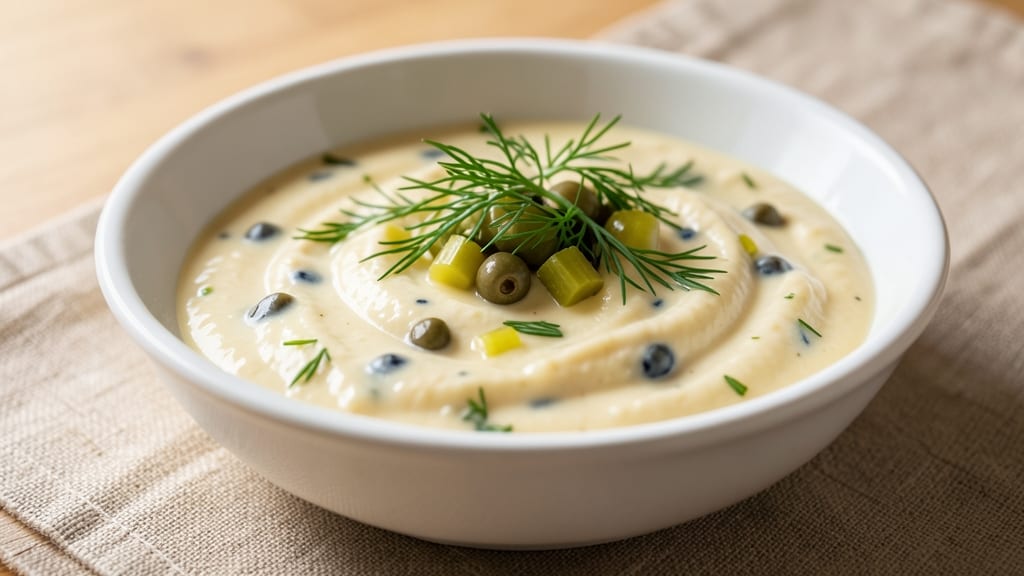
Alton Brown's tartar sauce recipe delivers that signature celery-flecked creaminess without the dreaded mayo cling. The secret lies in precise emulsification—balancing mayo, lemon juice, and finely chopped celery to create a smooth yet textured sauce that stays light on the tongue.
I’ve perfected this version to avoid that heavy, gluey consistency that ruins the first bite.
What sets this apart is the technique: a gradual incorporation of lemon juice while mixing vigorously, followed by a mandatory 30-minute chill. This resting period allows flavors to meld and the sauce to thicken just enough to coat without overwhelming.
The dry ingredients—pickles, capers, and fresh herbs—add briny depth and freshness that cut through the richness.
By the time you’re done, you’ll have a sauce that’s perfectly balanced: tangy, herby, and just slightly crunchy from the celery. It’s the kind of tartar sauce that transforms simple fish and chips into a restaurant-worthy meal. The texture stays silky, never grainy, and the flavors develop beautifully over time.
Serve it immediately or store it in the fridge for up to 5 days—it actually improves with resting. For extra flair, sprinkle with smoked paprika before serving. Here’s how to make it exactly right.
Ingredients for alton brown tartar sauce
Nine ingredients transform into Alton Brown's signature tartar sauce—creamy yet light, with perfect celery texture.
| Ingredient | Amount | Notes |
|---|---|---|
| Mayonnaise 🥫 | ¾ cup | High-quality, not low-fat |
| Fresh Celery Stems 🧅 | ½ cup | Finely chopped, not minced |
| Fresh Lemon Juice 🍋 | 2 tbsp | Freshly squeezed, not bottled |
| Chopped Dill Pickles 🥒 | 2 tbsp | Drained, finely chopped |
| Capers 🍈 | 1 tbsp | Rinsed if packed in brine |
| Fresh Dill 🌿 | 1 ½ tbsp | Finely chopped, stems removed |
| Fresh Chives 🌱 | 1 ½ tbsp | Finely chopped, not minced |
| Smoked Paprika 🌶️ | ½ tsp | For garnish, not mixing |
| Kosher Salt 🧂 | ½ tsp | Adjust to taste |
| Freshly Ground Black Pepper 🌶️ | ¼ tsp | Freshly cracked |
The mayo is non-negotiable here—Hellmann's or Duke's are the gold standards, but any high-quality brand works. Fresh celery matters too; avoid the pre-chopped kind from the container—it gets watery. Grab a bunch from the produce section, chop it yourself, and store the rest in a sealed container with a damp paper towel. The lemon juice should be freshly squeezed (no bottled stuff)—it keeps the sauce bright and tangy. For capers, rinsed if packed in brine, because salt is the enemy of balance here.
No fresh dill? Dried dill at one-third the amount works in a pinch, but the flavor won’t be the same. Short on pickles? Substitute with finely chopped cornichons or even a dash of pickle juice. The chives can be swapped for more dill if you’re out, but they add a subtle sweetness that rounds out the sauce. If your mayo feels too thick, add a splash of water or lemon juice to loosen it before mixing. The smoked paprika is purely for garnish—don’t skip it, but don’t mix it in either.
This sauce needs time to shine. Chill for at least 30 minutes before serving—it thickens beautifully and flavors meld. Keeps in an airtight container in the fridge for up to 5 days, though it’s best within 2. For extra flair, sprinkle with smoked paprika just before serving. If the sauce separates, whisk vigorously to re-emulsify. Trust the process—it’s worth the wait.
Why You'll Love This Recipe
- Five-Ingredient Magic: The pantry already has half of these—no shopping list, no stress. I swear, the only prep is dicing celery and squeezing lemons, which takes less time than debating what to eat for dinner.
- Tangy Crunch Perfection: That bright lemon cut through the mayo’s richness while the pickles and capers add a salty, briny punch. It’s the kind of sauce that makes you pause mid-bite just to savor the texture—creamy, crisp, and popping with flavor.
- Party in a Bowl: Serve it with fish, chips, or even a grilled cheese—it’s the ultimate crowd-pleaser. Honestly, I’ve used it as a dip for veggies at book club, a topping for burgers at BBQs, and even slathered it on a sandwich when I was too lazy to cook.
- Make-Ahead MVP: This stuff keeps for days in the fridge, so I batch it when celery’s on sale. No waste, no last-minute scrambling—just pull it out whenever the mood strikes. (Yes, even on a Tuesday night when takeout feels like work.)
Step-by-step instructions for Alton Brown's tartar sauce
Here's the method for a perfectly balanced tartar sauce with bright, fresh flavors.
Finely Chop the Celery and Herbs
Start by finely chopping the 0.5 cup fresh celery stems into small, even pieces—think about the size of a fine dice. You want these to blend seamlessly into the sauce without any noticeable texture. Next, finely chop the 1.5 tablespoons fresh dill and 1.5 tablespoons fresh chives, removing any stems from the dill to avoid bitterness. The herbs should be small enough to distribute evenly but still recognizable in the final sauce.
I like to use a sharp chef's knife for this step, working in batches if needed. The celery should be so finely chopped that it resembles a confetti-like texture. This ensures the sauce has that classic flecked appearance without any large chunks. Set these aside in a small bowl until ready to combine.
Combine Wet Ingredients and Seasonings
In a medium bowl, whisk together the 0.75 cup mayonnaise, 2 tablespoons fresh lemon juice, 2 tablespoons chopped dill pickles, 1 tablespoon capers, 0.5 teaspoon kosher salt, and 0.25 teaspoon freshly ground black pepper. The mayonnaise should be high-quality—this is the base of the sauce, so its quality directly impacts the final result. Mix until everything is fully incorporated and the sauce is smooth.
This is where the tangy, briny flavors start to meld. The lemon juice brightens the sauce, while the pickles and capers add that signature tartar taste. The salt and pepper balance everything out, so don't skip this step. If you're using capers packed in brine, make sure to rinse them first to remove any excess saltiness.
Fold in the Chopped Celery and Herbs
Gently fold in the finely chopped celery, dill, and chives using a silicone spatula. You want to mix just enough to distribute the herbs evenly without overworking the sauce. The goal is to create a smooth, creamy texture with subtle flecks of celery and herbs throughout. Overmixing can break down the mayonnaise and make the sauce grainy.
Taste the sauce at this point and adjust the seasoning if needed. You might find that you need a touch more lemon juice for brightness or an extra pinch of salt to balance the flavors. The sauce should be tangy, creamy, and well-seasoned—ready to pair with fried fish, chicken, or even as a dip for veggies.
Garnish and Serve
Transfer the tartar sauce to a serving bowl or small dish. Sprinkle the 0.5 teaspoon smoked paprika lightly over the top for a subtle, smoky garnish. This adds depth of flavor and a beautiful visual contrast to the creamy sauce. The smoked paprika should be used sparingly—just enough to enhance the presentation without overpowering the dish.
Serve the tartar sauce immediately or cover and refrigerate for up to 3 days. If storing, give it a good stir before serving to redistribute the herbs. The sauce tastes best when fresh, but it keeps well in the refrigerator. Enjoy it with crispy fried fish, chicken tenders, or as a dip for fresh vegetables.
Pro Tips For Making Alton Brown Tartar Sauce
- CHOP CELERY FINE: I learned this the hard way—big chunks of celery make the sauce look like it’s hiding something. Pulse them in a food processor until they’re almost paste-like, not just diced. That way, the texture stays smooth and the flavor blends evenly. (Yes, even if you’re impatient like me.)
- SQUEEZE, DON’T STRAIN, LEMON: Fresh lemon juice is non-negotiable here, but don’t bother straining it—just squeeze the juice straight from the fruit. The pulp adds tiny bursts of brightness that bottled juice can’t match. If you’re lazy, at least use a reamer instead of a knife to get every last drop.
- TASTE BEFORE PICKLES: Skip the urge to dump in all the pickles and capers at once. Mix the mayo, celery, and lemon first, then taste. You’ll often need less pickle than you think—especially if you’re using the briny kind. Start with half the amount and adjust, or you’ll end up with a sauce that tastes like a pickle jar exploded.
- STORE IT RIGHT: This sauce won’t last long at room temperature, but if you’re making it ahead, store it in a sealed container with a thin layer of plastic wrap pressed right on the surface. That keeps the mayo from turning grainy, even if it sits overnight. (Your future self will thank you.)
Make-ahead tips for alton brown tartar sauce
Prep Ahead
Make this tartar sauce up to 2 days in advance—it actually tastes better after flavors meld overnight. Store in an airtight container in the fridge, pressing plastic wrap directly on the surface to prevent a skin from forming.
The celery and herbs will soften slightly, adding even more depth to each bite. 💫
Freezer-Friendly
For longer storage, portion the sauce into ice cube trays or small silicone molds. Once frozen solid, transfer cubes to a freezer-safe bag with all air removed. Thaw in the fridge overnight—never microwave, as it can break down the mayo's emulsion. Use within 3 months for best quality.
Batch Prep Tips
Double or triple the recipe when hosting—this sauce disappears fast! Use a stand mixer with the paddle attachment to combine ingredients more efficiently for larger batches. Divide into two 8-ounce containers to maintain portion control and prevent overmixing during storage.
Reheating Secrets
If you must reheat, use a double boiler or microwave at 50% power for 15-20 seconds. Add 1 teaspoon cold water to help restore the sauce's creamy texture. Stir immediately and serve—never let it sit too long, as mayo can separate when heated.
Garnish Prep
Keep the smoked paprika in a small shake jar on your counter for quick garnishing. Pre-chop extra fresh herbs (dill and chives) and store them in a sealed container with a damp paper towel to maintain freshness.
This way, you're always ready to brighten up the sauce at the last minute. ✨
Nutrition facts
Frequently asked questions
Why does Alton Brown's tartar sauce need to chill before serving?
The 30-minute chill is crucial for two reasons: it lets flavors meld completely and thickens the sauce just enough to coat without overwhelming. Cold temperatures also help stabilize the mayo emulsion, preventing that dreaded mayo cling. Pro tip: If you're short on time, chill for at least 20 minutes—just don't skip it entirely!
Can I substitute mayo with Greek yogurt for a lighter version?
You can try, but the texture will be different—Greek yogurt makes it thicker and tangier. For a 1:1 swap, reduce lemon juice to 1 tablespoon and add 1 teaspoon Dijon mustard to help emulsify. The sauce will still be delicious, but it won't have that classic creamy tartar consistency.
What's the secret to avoiding that grainy texture in tartar sauce?
Overmixing is the enemy! Use a silicone spatula to gently fold in the celery and herbs—just until fully incorporated. For extra smoothness, pulse the chopped celery in a food processor for 5 seconds before adding. Also, always use room-temperature mayo to prevent separation.
How do I fix tartar sauce that's separated?
Whisk vigorously to re-emulsify, then add 1 teaspoon cold water at a time until smooth. If it's still too thick, stir in ½ teaspoon lemon juice. For stubborn cases, place the bowl over a pot of barely simmering water (double boiler) and whisk until creamy. Never microwave—it can cook the mayo!
What's the best way to store leftover tartar sauce?
Transfer to an airtight container and press plastic wrap directly on the surface to prevent a skin from forming. It keeps for 5 days in the fridge, but for longer storage, freeze in ice cube trays. Thaw overnight in the fridge—never microwave, as it breaks the emulsion.