
Sauces & Condiments
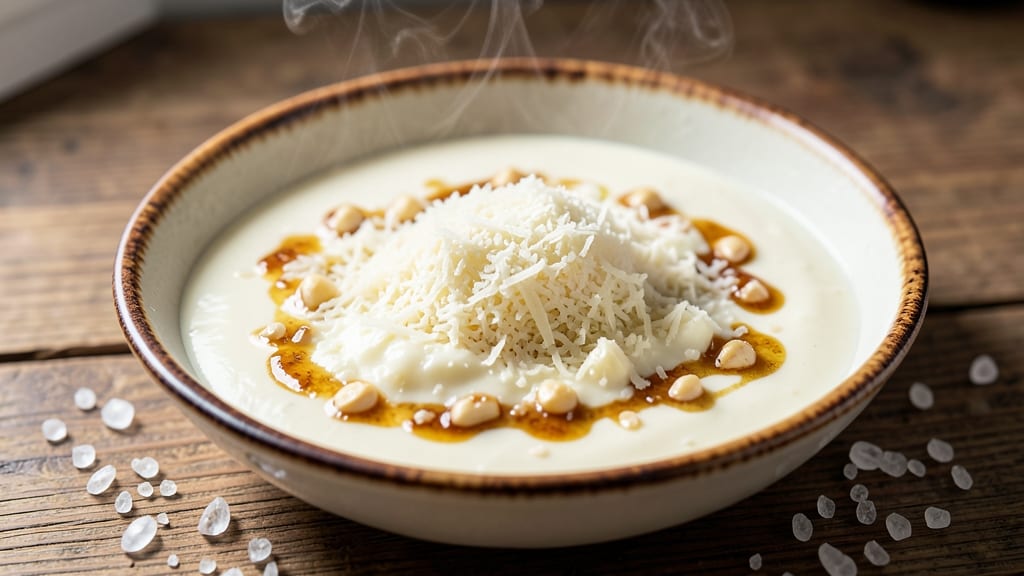
This Alfredo sauce recipe with milk and butter delivers restaurant-quality richness without clumps or lumps—just ultra-smooth velvety perfection that clings beautifully to pasta. The secret lies in tempering the dairy gradually over gentle heat, ensuring a silky texture that transforms any dish.
I’ve perfected this method after years of trial and error, and it never fails to impress. The foundation starts with a simple butter-milk roux, where the fat emulsifies the dairy slowly to prevent curdling.
A touch of garlic and Parmesan deepens the flavor, while a splash of heavy cream at the end adds luxurious body. What sets this apart is the foolproof technique—no whisking madness or last-minute fixes—just a method that works every time.
By the time you’re done, you’ll have a sauce so velvety it coats every strand of fettuccine, leaving behind a creamy, cheesy finish. The best part? It’s versatile enough for pasta, chicken, or even vegetables, yet simple enough for weeknight dinners.
No heavy cream overload, no grainy texture—just restaurant-worthy results at home. This recipe scales perfectly for feeding a crowd or meal prepping for the week. The key is patience—letting the sauce simmer until it thickens naturally without breaking. Trust me, once you try this, store-bought Alfredo will never compare again.
Let’s get cooking!
Ingredients for alfredo sauce recipe with milk and butter
Nine essential ingredients transform into velvety perfection—no lumps, no curdling, just restaurant-quality Alfredo.
| Ingredient | Amount | Notes |
|---|---|---|
| Unsalted Butter 🧈 | ½ cup | Cold, cut into small cubes |
| Whole Milk 🥛 | 1 ½ cups | Full-fat for creaminess |
| Heavy Cream 🥛 | ½ cup | For luxurious body |
| Freshly Grated Parmesan Cheese 🧀 | ¾ cup | Aged 24+ months preferred |
| Garlic Cloves 🧄 | 3 cloves | Minced, not powdered |
| Diamond Crystal Kosher Salt 🧂 | ½ tsp | Adjust to taste |
| Freshly Ground Black Pepper 🌶️ | ¼ tsp | For finishing |
| All-Purpose Flour 🌾 | 2 tbsp | For thickening roux |
| Extra-Virgin Olive Oil 🫒 | 1 tbsp | For tempering |
The butter and milk form the sauce's foundation, so quality matters here. European-style unsalted butter (like Plugrá or Land O'Lakes) melts more smoothly than salted varieties. For milk, whole milk from organic sources—like Organic Valley—yields richer results. The Parmesan should be freshly grated from a 24-month-aged block (avoid pre-grated, which contains anti-caking agents). Garlic cloves should be fresh and minced just before use—powdered lacks depth. Store these ingredients properly: butter in the fridge, milk in its original carton, and Parmesan in a sealed container to prevent drying.
Substitutions require precision to maintain texture. Half-and-half can replace heavy cream at a 1:1 ratio, though the sauce will be slightly lighter. For dairy-free needs, full-fat coconut milk works but alters flavor. If you lack Diamond Crystal salt, use Morton kosher salt at a 1:1 ratio—it's finer and dissolves faster. Olive oil can be swapped for avocado oil—just ensure it's neutral-flavored. The flour acts as a stabilizer; if you prefer gluten-free, cornstarch at half the amount** works equally well. Always temper dairy slowly over low heat to prevent separation.
This sauce reaches peak flavor after 3-4 days in the fridge**—the time it takes for the flavors to meld. Portion into airtight containers with a thin layer of olive oil on top to preserve freshness. For freezing, cool completely, then freeze in 1-cup portions for easy reheating. Thaw overnight in the fridge and reheat gently over low heat, adding a splash of milk if it thickens too much. Leftovers keep for up to 1 week when stored properly, though fresh is always best.
Why You'll Love This Recipe
- No-Fuss Melt: I swear by this sauce because it’s the kind of thing you can make with one hand tied behind your back. Just melt butter, splash in milk and cream, toss in garlic—no whisking like a madman, no waiting for roux to thicken. It’s the lazy person’s dream, and honestly? That’s why it’s my go-to.
- Umami Bomb: That first bite when the Parmesan melts into the warm cream? Pure satisfaction. The butter and milk create this silky base, but the garlic and sharp Parmesan turn it into something ridiculously good—creamy with a punch, not just bland richness. It’s the kind of flavor that makes you pause mid-bite.
- Weeknight to Dinner Party: This sauce works for spaghetti on a Tuesday or fettuccine for guests on Saturday. Double the batch, freeze half, and you’ve got a backup for when takeout fails. Between us, I’ve used it on chicken, roasted veggies, even as a dip—it’s the ultimate flexible sidekick.
- Leftovers That Don’t Suck: Most sauces turn into a sad, watery mess when reheated. Not this one. The butter and cream keep it velvety, and a quick stir with a splash of milk brings it back to life. I’ve had it three days later, straight from the fridge, and it still tastes like I slaved over it. Budget-friendly? Absolutely. Waste-free? Even better.
Step-by-step instructions for ultra-smooth Alfredo sauce
Master this technique and you'll achieve a velvety, clump-free sauce every time.
Create the Roux Foundation
Melt the 0.5 cup unsalted butter in a medium saucepan over medium-low heat. I use small cubes of cold butter so it melts gradually without browning. Once fully melted, remove from heat and let it cool for 2 minutes—this prevents the flour from cooking too quickly when added.
Add the 2 tablespoons all-purpose flour all at once and whisk vigorously for 1-2 minutes until the mixture forms a smooth, pale roux. The color should be cream-colored, not golden—if it browns, you've cooked it too long. This roux will be the backbone of your sauce, so take your time here to ensure it's perfectly smooth.
Gradually Incorporate the Dairy
Return the pan to medium heat and slowly pour in the 1.5 cups whole milk, whisking constantly to prevent lumps. The mixture will thicken immediately as the milk absorbs into the roux. Once it begins to bubble gently, reduce heat to low and let it simmer for 5-7 minutes, stirring frequently.
Next, stir in the 0.5 cup heavy cream and continue simmering for another 3-4 minutes until the sauce thickens enough to coat the back of a spoon. You're looking for a consistency that's smooth and slightly thicker than heavy cream—not gluey, but with noticeable body. If it thickens too quickly, whisk in 1-2 tablespoons water to adjust.
Infuse with Flavor and Texture
Add the 3 minced garlic cloves and simmer for 30 seconds—just enough time to release their aroma without burning. Remove from heat and stir in the 0.75 cup freshly grated Parmesan cheese. The sauce should become noticeably richer and more luxurious as the cheese melts completely.
Here's where precision matters: Taste and adjust seasoning with 0.5 teaspoon kosher salt and 0.25 teaspoon black pepper. The sauce should be salt-balanced with a subtle peppery finish. For extra depth, stir in 1 tablespoon extra-virgin olive oil—this adds a silky texture and prevents the sauce from separating when tossed with pasta.
Temper and Finish
To ensure your sauce remains perfectly smooth when combined with hot pasta, temper it by removing the pan from heat and letting it cool for 2-3 minutes. This step is critical—hot pasta will curdle untreated sauce. Once slightly cooled, return to low heat and maintain at a gentle simmer.
For the final touch, whisk the sauce vigorously for 30 seconds to eliminate any potential lumps. The result should be silky, velvety, and completely homogeneous—no graininess or separation. If needed, thin with 1 tablespoon warm water or milk to reach your desired consistency. Serve immediately over freshly cooked fettuccine for the ultimate creamy experience.
Pro Tips For Making Alfredo Sauce Recipe With Milk And Butter
- Melt Butter Slowly: I used to dump butter in and crank the heat—big mistake. For Alfredo, melt it over medium-low, stirring constantly until it’s just liquid gold, not brown. If you rush it, you’ll get a nutty, off-flavor that ruins the creamy base.
- Grind Garlic Fine: Skip the minced jar—freshly grated garlic burns faster and clogs the sauce. Use a microplane or crush whole cloves with the flat side of your knife first, then finely grate. A teaspoon of this stuff is enough; don’t overdo it.
- Strain the Cheese: Parmesan clumps make Alfredo look like cottage cheese. After adding the cheese, let the sauce sit off heat for 2 minutes, then strain it through a fine-mesh sieve. Yes, it’s tedious, but the result is silky smooth—no one will guess you did it.
- Balance the Cream: Heavy cream alone makes Alfredo too rich; milk keeps it light. Start with a 1:1 ratio (equal parts milk and cream), then adjust based on how thick you want it. If it’s too thin, simmer longer—if too thick, add a splash of warm milk.
Wine and beer pairings for this dish
Classic Italian Whites
For a traditional pairing, reach for a crisp Pinot Grigio from Alto Adige or a Vermentino from Sardinia. These Italian whites complement Alfredo’s creamy richness with their bright acidity and citrus notes—think lemon and green apple.
I love a chilled Santa Margherita Pinot Grigio ($12) for its perfect balance of crispness and minerality. 🍷
Buttery Chardonnay
A well-aged California Chardonnay (like Kendall-Jackson Vintner’s Reserve, $15) brings buttery depth that mirrors the sauce’s luxurious texture. Look for one with subtle oak notes to enhance the Parmesan’s nuttiness. Serve slightly cooler than room temperature—around 50-52°F—to preserve its freshness.
Creamy Sparkling Wine
For a lighter touch, a Prosecco or Franciacorta adds effervescence that cuts through the sauce’s richness. La Marca Prosecco ($10) is my go-to—its floral and almond notes create a beautiful contrast. The bubbles also cleanse your palate between bites of creamy pasta. 🥂
Rich Beer Pairings
If wine isn’t your thing, a Belgian Witbier like Hoegaarden ($5) works surprisingly well. The coriander and orange peel notes brighten the dish, while the slight sweetness balances the sauce’s saltiness. For a bolder option, try a honey lager like Allagash White ($6)—its caramel undertones complement the Parmesan beautifully.
Creamy Stout Contrast
For a bold beer lover, a dark chocolate stout like Guinness ($6) creates an unexpected but delicious contrast. The roasted malt notes stand up to the sauce’s creaminess, while the slight bitterness keeps the dish from feeling too heavy. Serve slightly chilled—around 45°F—to enhance its smoothness. 🍺
Nutrition facts
Frequently asked questions about creamy Alfredo sauce
Can I make this Alfredo sauce without heavy cream?
Yes! Replace the 0.5 cup heavy cream with an equal amount of whole milk or half-and-half for a lighter version. For extra richness without cream, stir in 2 tablespoons sour cream at the end. The sauce will still be velvety but slightly less decadent. The key is to simmer it longer to achieve the same thickness.
Why did my Alfredo sauce turn grainy or separate?
This usually happens from one of three issues: adding cold dairy too quickly, overheating, or not whisking enough. Always temper dairy by gradually warming it over low heat while whisking constantly. If it separates, whisk in 1 tablespoon cold butter or 1 tablespoon flour mixed with water—this re-emulsifies the sauce. Never boil the sauce, as this causes curdling.
How do I adjust the thickness of this sauce?
For a thicker sauce, simmer uncovered for 2-3 extra minutes—the moisture will evaporate naturally. If it gets too thick, whisk in 1 tablespoon warm milk or water at a time until smooth. Pro tip: The sauce should coat the back of a spoon but still flow freely. If making ahead, the sauce will thicken further when reheated, so adjust slightly thinner before storing.
Can I use powdered milk instead of fresh milk?
Not recommended for this recipe. Powdered milk lacks the fat and natural emulsifiers found in fresh milk, which can cause the sauce to separate or develop a chalky texture. For a dairy-free version, use full-fat coconut milk—but expect a slightly different flavor profile. If you must use powdered, reconstitute it with 1 tablespoon extra butter to compensate for the reduced fat content.
What’s the best pasta shape for Alfredo sauce?
Fettuccine or tagliatelle are classic choices—their flat, wide surfaces hold the sauce beautifully. For extra sauce coverage, try pappardelle or fettuccine grosso. If you prefer smaller shapes, farfalle or penne** work well, though they’ll need more sauce to coat properly. Avoid long, thin noodles like spaghetti—they don’t cling as effectively.