
Sauces & Condiments
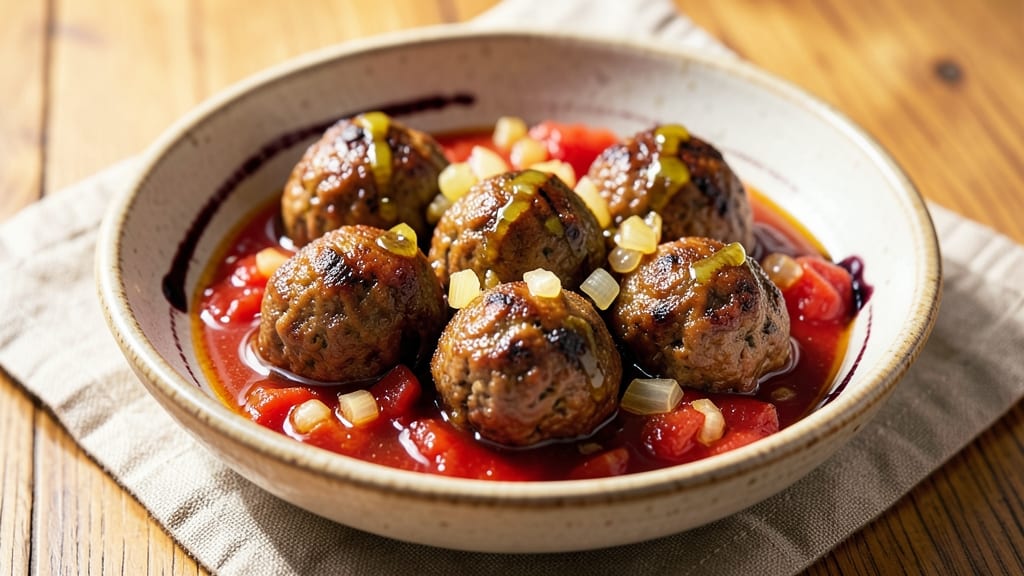
This basic meatball sauce recipe delivers restaurant-quality richness with just six ingredients and a simple simmering process. The secret lies in San Marzano tomatoes—sweet, low-acid varieties that create a velvety texture without overpowering the meatballs.
I developed this sauce to cut prep time while maximizing flavor, perfect for busy weeknights when you still want that homemade taste.
What sets this sauce apart is the balance of aromatics and acidity—garlic, onion, and a splash of red wine reduce into a deep, savory base, while crushed tomatoes and broth create that signature meatball sauce consistency.
The key technique? Simmering uncovered for 20 minutes to develop concentrated flavor without burning. This isn't just a sauce; it's the foundation for meals that taste like they've been simmering all day.
By the time you're done, you'll have a smooth, velvety sauce with just the right balance of tang and sweetness—ideal for tossing with meatballs, pasta, or even as a pizza topping. The best part?
It tastes even better the next day, making it perfect for meal prep. Store it in the fridge for up to 5 days or freeze for 3 months without losing quality.
While this recipe works beautifully with store-bought meatballs, the real magic happens when you use homemade versions. The sauce clings perfectly to their exterior, creating every bite into a flavorful experience. Whether you're feeding a family or prepping for the week, this sauce delivers consistent, professional results with minimal effort.
Ingredients for basic meatball sauce
Six ingredients transform into velvety, restaurant-quality meatball sauce with minimal effort.
| Ingredient | Amount | Notes |
|---|---|---|
| San Marzano Crushed Tomatoes 🍅 | 2 cups | High-quality, low-acid preferred |
| Yellow Onion 🧅 | 1 whole | Finely diced, about 1 cup |
| Garlic Cloves 🧄 | 4 cloves | Minced for aromatic depth |
| Dry Red Wine 🍷 | ½ cup | Bold variety like Cabernet |
| Beef Broth 💧 | 1 cup | Low-sodium preferred |
| Extra-Virgin Olive Oil 🫒 | 2 tbsp | For rich, fruity flavor |
| Salt 🧂 | 1 tsp | Diamond Crystal preferred |
| Black Pepper 🌶️ | ½ tsp | Freshly ground preferred |
| Sugar 🍚 | ¼ tsp | Balances acidity |
The San Marzano tomatoes are non-negotiable here—their sweet, low-acid profile creates that signature velvety texture without overpowering. Trader Joe's and Whole Foods carry them canned, but if you can't find them, any high-quality crushed tomatoes will work. The onion and garlic form the aromatic base, so don't skip mincing them finely—smaller pieces mean more flavor infusion. For the red wine, any bold variety like Cabernet or Merlot works; just avoid sweet wines. The beef broth adds depth, so low-sodium versions prevent over-salting later.
No red wine? Dry white wine or extra beef broth works in a pinch, though the flavor profile will differ slightly. Fresh garlic is ideal, but dried garlic powder at half the amount gets you close if needed. The sugar might seem odd, but it's essential for balancing the tomatoes' acidity—skip it only if your tomatoes are naturally sweet. For extra richness, some cooks add a splash of balsamic vinegar, but I find it unnecessary with these ingredients. The olive oil is your friend here—use a fruity, extra-virgin variety to enhance the sauce's complexity.
This sauce tastes even better the next day as flavors meld. Store in an airtight container in the fridge for up to 5 days or freeze for 3 months—portion into ice cube trays for easy use. Double the batch if you're prepping for the week; it reheats beautifully. The sauce thickens as it cools, so add a splash of water or broth when reheating if needed. Trust me, this will become your go-to pantry staple.
Why You'll Love This Recipe
- No-Fuss Pantry Staples: I swear by this recipe because it uses what’s already in my cupboard—no special shopping trips needed. That San Marzano tomato can? The one collecting dust? Perfect. Same with the red wine you’ve had since last Christmas (don’t judge). Just chop an onion, crush some garlic, and let the broth do the heavy lifting.
- Wine-Infused Depth: Between us, the dry red wine isn’t just for flavor—it’s the secret weapon. A splash cuts through the richness of the tomatoes and beef broth, adding this je ne sais quoi that makes it taste like you simmered it for hours (even though you didn’t). The garlic? Oh, it’s there, but it’s right—no overpowering, just a warm, lingering note.
- Leftovers That Beg for More: This sauce actually improves the next day. I’ll be real: I make a double batch on Sundays just so I can reheat it midweek when I’m too tired to cook. Freeze half for those nights when takeout feels like a crime against your budget. (Yes, even on a Tuesday night.)
- Weeknight Crowd-Pleaser: Honestly, this is my go-to when friends drop by unannounced. Meatballs? Store-bought. Sauce? Homemade in 20 minutes. Everyone raves about how “restaurant-quality” it is, and I just smile while secretly thinking, “I didn’t even measure the wine.” Works for date nights, game days, or when your kid’s soccer team needs snacks.
Step-by-step instructions for simmered San Marzano tomato sauce
This sauce builds flavor layer by layer—let's create a rich, balanced base perfect for meatballs.
Sauté Onion and Garlic for Aromatic Foundation
Heat the 2 tablespoons extra-virgin olive oil in a heavy-bottomed saucepan over medium heat. Add the finely diced yellow onion and cook for 5-6 minutes, stirring occasionally, until softened and translucent. You're building flavor here—the onions should release their natural sweetness without browning.
Push the onions to one side of the pan and add the minced garlic cloves. Cook for 30 seconds until fragrant—garlic burns quickly, so keep an eye on it. The aroma should fill your kitchen, signaling these aromatics are ready to release their full potential into the sauce. This step is non-negotiable for depth of flavor.
Deglaze with Wine and Reduce
Pour in the ½ cup dry red wine and scrape up any browned bits from the bottom of the pan with a wooden spoon. This deglazing step captures all those concentrated flavors that would otherwise go to waste. Let the wine simmer for 3-4 minutes until reduced by half—you'll see the liquid transform from ruby red to a deep, syrupy consistency.
The alcohol will cook off, leaving behind just the wine's rich fruit notes. If you taste it now, you'll notice how the wine's acidity brightens the onions and garlic. This reduction creates the perfect balance for what's coming next—the tomatoes. Don't rush this step; patience here pays off in flavor.
Build the Tomato Base
Add the 2 cups San Marzano crushed tomatoes, 1 cup beef broth, 1 teaspoon salt, ½ teaspoon black pepper, and ¼ teaspoon sugar. Stir well to combine, then bring the mixture to a gentle simmer over medium-low heat. The sugar here isn't about sweetness—it's about balancing the natural acidity of the tomatoes, creating a more rounded flavor profile.
Let the sauce simmer uncovered for 15-20 minutes, stirring occasionally. You're looking for the sauce to thicken slightly and develop a glossy sheen. The tomatoes will break down, releasing their natural sweetness and creating a velvety texture. This is where the magic happens—the sauce transforms from a simple tomato mixture into something complex and layered.
Simmer to Perfection
Continue simmering for another 10-15 minutes until the sauce reaches your desired consistency. For a thicker sauce, simmer longer; for a thinner, more fluid sauce, add a splash of water or broth. The sauce should coat the back of a spoon but still be pourable—this is ideal for coating meatballs.
Taste and adjust seasoning if needed. The sauce should be well-balanced: the acidity of the tomatoes shouldn't overpower, the wine's fruitiness should shine through, and the herbs should add depth. If it needs more salt, add it gradually—you can always add more, but you can't take it out. This sauce is now ready to pair with perfectly cooked meatballs, absorbing their flavors and creating a harmonious dish.
Pro Tips For Making Basic Meatball Sauce
- DEGLAZE THE PAN: I learned this the hard way—after browning onions and garlic, don’t just toss in the wine and call it a day. Scrape up those stuck-on bits with a wooden spoon while the wine’s hot; those caramelized bits are where the flavor hides. (Yes, even if you’re impatient like me.)
- SALT THE TOMATOES: San Marzano tomatoes are sweet but still need a wake-up call. Sprinkle ½ teaspoon of salt over the crushed tomatoes before adding them to the pan—let it sit for 5 minutes while you finish the base. It softens the acidity and makes the sauce taste deeper from the start.
- COOK THE WINE OFF: Don’t rush the wine reduction—simmer it until it’s almost gone, just a thin glaze clinging to the pan. If you add the tomatoes too soon, the sauce will taste raw and alcoholic. (I used to skip this, and the wine always tasted like it was fighting the tomatoes.)
- STIR THE BROTH IN: After adding beef broth, give the sauce a quick stir before letting it simmer. The broth mixes unevenly at first, and if you don’t, you’ll end up with pockets of thin, watery sauce. A quick swirl ensures everything melds smoothly—no one likes a lumpy sauce.
Make-ahead tips for this recipe
Sauce Prep Timeline
Start your sauce prep while meatballs cook or brown—this parallel timing saves 20-30 minutes overall. I like to begin sautéing onions right after forming meatballs to maximize kitchen efficiency. The sauce simmers passively while you handle other components, making it ideal for busy weeknight meals. 🌡️
Freezer-Friendly Portioning
Divide cooled sauce into 1-cup portions in glass freezer-safe containers. Leave ½-inch headspace for expansion, then seal tightly. Label with the date—these portions thaw perfectly in 24 hours in the fridge or 3 hours in a warm water bath.
I keep a stash of these in my freezer for quick weeknight dinners.
Fridge Storage Secrets
Transfer sauce to an airtight container and press plastic wrap directly on the surface to prevent a skin from forming. Store in the fridge for up to 5 days, but taste it after 24 hours—the flavors deepen as the acidity mellows.
The sauce thickens as it cools, so add 1-2 tablespoons water or broth when reheating for perfect consistency.
Double-Batch Advantage
Make twice the recipe when you have time—this sauce freezes beautifully for 3 months without quality loss. Use half for meatballs and save the rest for pasta, pizza, or even lasagna.
I often prep a double batch on Sundays so I always have sauce ready for spontaneous dinners during the week. 💡
Sauce Consistency Fixes
If your sauce turns out too thick after cooling, whisk in 1-2 tablespoons beef broth to loosen it. For a thicker sauce, simmer uncovered for 5-10 extra minutes to reduce. I find the sauce thickens beautifully overnight in the fridge—just add a splash of water when reheating for ideal texture.
Meal Prep Integration
Combine cooked meatballs and sauce in a large baking dish, then refrigerate for up to 3 days. Reheat covered at 350°F for 20 minutes for a complete one-pan meal.
This approach lets you prep everything ahead and assemble when ready to eat, saving valuable time during busy evenings. The flavors meld perfectly during storage, creating even more depth.
Nutrition facts
Frequently asked questions
Why does this sauce use red wine instead of broth?
The red wine adds depth and complexity that plain broth can't match. The alcohol cooks off, leaving behind rich fruit notes that balance the tomatoes' acidity. For a similar effect without wine, substitute with an extra ¼ cup beef broth plus ½ teaspoon balsamic vinegar.
Can I make this sauce without San Marzano tomatoes?
Yes, but the texture and flavor will differ slightly. Use high-quality crushed tomatoes with lower acidity, like Muir Glen Organic or Rao's. For extra richness, add 1 teaspoon tomato paste to the onion mixture before deglazing with wine.
How do I adjust the thickness of the sauce?
For a thicker sauce, simmer uncovered for 5-10 extra minutes to reduce the liquid. If it's too thick after cooling, whisk in 1-2 tablespoons beef broth or water. The sauce naturally thickens as it cools, so plan accordingly when reheating.
What if I don't have red wine?
No problem! Use ½ cup dry white wine or substitute with ½ cup beef broth plus 1 teaspoon apple cider vinegar. The flavor will be slightly different but still delicious. The key is maintaining the acidity balance to complement the tomatoes.
Can I add herbs to this sauce?
Add 1 teaspoon dried basil or oregano with the tomatoes, or 2 sprigs fresh basil at the end. For a meatier flavor, stir in 1 teaspoon Worcestershire sauce when deglazing with wine. Just