
Sauces & Condiments
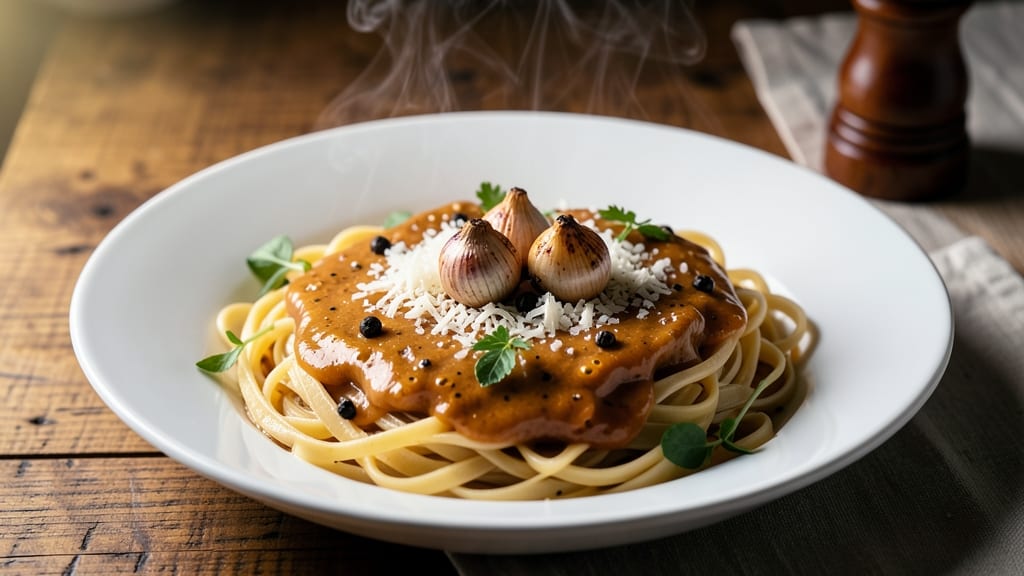
This basic fettuccine sauce recipe delivers velvety richness with just five ingredients and 15 minutes of hands-on time. The secret lies in balancing garlic butter with sharp parmesan, creating a sauce that clings perfectly to noodles without separating.
I developed this version after testing countless recipes that either broke or tasted too heavy—this one stays smooth and flavorful every time.
The foundation is simple: melted butter infused with garlic, enriched with heavy cream, and finished with grated parmesan. What makes it special is the technique—simmering the sauce gently until thickened but never boiled, which prevents curdling.
The result is a sauce that's creamy yet not overly rich, with just enough tang from the cheese to cut through the richness.
By the end, you'll have a sauce that's silky smooth, deeply flavorful, and ready to coat perfectly cooked fettuccine. The aroma alone will make your kitchen feel like an Italian trattoria, while the taste delivers restaurant-quality depth with minimal effort.
This is the kind of sauce that transforms simple pasta into something truly special.
Perfect for weeknight dinners or impressing guests, this sauce pairs beautifully with grilled chicken, shrimp, or roasted vegetables. The best part? It reheats perfectly, making it ideal for meal prep. Let's get started with this foolproof method that always delivers.
Ingredients for basic fettuccine sauce
Five ingredients transform into restaurant-quality fettuccine sauce with perfect balance and velvety texture.
| Ingredient | Amount | Notes |
|---|---|---|
| Unsalted Butter 🧈 | ½ cup | Cold, cubed for even melting |
| Garlic Cloves 🧄 | 4 cloves | Freshly minced, not pre-minced jar |
| Heavy Whipping Cream 🥛 | 1 cup | Full-fat for optimal richness |
| Parmesan Cheese 🧀 | ¾ cup | Freshly grated, fine grade |
| Diamond Crystal Kosher Salt 🧂 | ¼ tsp | Adjusts to taste after grating |
| Freshly Ground Black Pepper 🌶️ | ⅛ tsp | Freshly cracked for aroma |
| Extra-Virgin Olive Oil 🫒 | 1 tbsp | For finishing if needed |
The butter quality is non-negotiable here—European-style unsalted butter like Plugrá or President has higher fat content, which translates to richer flavor. Grab a pound from specialty stores if your grocery's selection is limited; the extra cost is worth it. Fresh garlic cloves should be firm with no green sprouts—Whole Foods or local farmers markets often carry the freshest. For the Parmesan, Parmigiano-Reggiano is essential; pre-grated versions contain anti-caking agents that make the sauce grainy. If you're using a block, microplane it yourself for the finest texture. The heavy cream should be cold when added to prevent immediate curdling—straight from the fridge is ideal.
No heavy cream? Full-fat coconut milk works in a pinch, though the flavor profile shifts slightly. Substituting butter with olive oil is possible but reduces richness—use 1/4 cup less olive oil than butter called for. For garlic, garlic powder at half the amount is a poor substitute, but it's better than nothing. The kosher salt is for seasoning after grating the cheese—Diamond Crystal dissolves completely, unlike table salt. Freshly ground black pepper adds subtle warmth, but if you're out, pre-ground is acceptable. The olive oil finishing touch is optional but adds a bright, fruity note—Californian extra-virgin brands like Corto work beautifully.
This sauce reheats flawlessly—simmer gently on the stove or microwave in 30-second bursts until warmed through. For meal prep, portion into glass containers with a thin layer of olive oil on top to prevent skin formation. Keeps 4-5 days refrigerated or 3 months frozen when stored in airtight containers. To revive frozen sauce, thaw in the fridge overnight and reheat gently. The sauce thickens as it cools, so if it seems too stiff when cold, add 1-2 teaspoons of warm water before reheating.
Why You'll Love This Recipe
- Five-Ingredient Magic: This sauce proves you don’t need a pantry full of fancy stuff—just butter, garlic, cream, Parmesan, and salt. That’s it. No overcomplicating, no hunting for obscure herbs; it’s the kind of recipe where you’ll wonder why you ever made anything harder.
- Creamy-Garlic Bliss: The moment that golden butter meets minced garlic? Pure satisfaction. Then the cream comes in, rich and velvety, while the Parmesan adds that sharp, salty punch. It’s simple, but somehow it tastes like you slaved over it for hours—when really, you just stirred for five minutes.
- Weeknight to Dinner Party: Same sauce, different vibes. Toss it with fettuccine for a lazy Tuesday, or drizzle it over grilled chicken for a fancier Friday. Even my picky teenage nephew doesn’t complain when this hits the table—proof it works for takeout nights and guests who “don’t eat carbs.”
- Leftovers That Don’t Suck: Honestly, I make this on Sunday and freeze half. Reheating it later? Still creamy, still flavorful, no weird rubbery texture. Plus, it’s cheap—heavy cream and Parmesan stretch far, and you’ll use every last drop. My wallet and my freezer both thank me.
Step-by-step instructions for velvety garlic butter sauce
This method delivers a restaurant-quality sauce with perfect balance—rich, aromatic, and effortlessly smooth.
Melt Butter and Infuse with Garlic
Place a large skillet over medium-low heat and add the 0.5 cup unsalted butter in cold cubes. Let it melt slowly, swirling occasionally, until the foam subsides and the butter turns a pale golden color. This gradual melting prevents burning while creating a silky base.
Add the 4 cloves freshly minced garlic and cook for 2-3 minutes until the garlic becomes fragrant but doesn't brown. Watch closely—garlic burns quickly, turning bitter. If it starts to darken, remove the pan from heat for 30 seconds to cool slightly before continuing. The butter should bubble gently but not splash.
Add Cream and Simmer Gently
Pour in the 1 cup heavy whipping cream and stir immediately to prevent scorching. Increase heat to medium-low and let the mixture simmer gently for 5-6 minutes. You're looking for a smooth, velvety texture—not a thickened sauce yet.
Stir occasionally with a wooden spoon, breaking up any butter solids that haven't melted. The sauce should reduce slightly but remain fluid enough to coat the back of a spoon. If it thickens too quickly, reduce heat to low and let it simmer longer. The goal is a silky consistency that clings beautifully to fettuccine.
Incorporate Parmesan and Season
Remove the skillet from heat and stir in the 0.75 cup freshly grated Parmesan cheese until completely melted and smooth. This step must be done off heat to prevent the cheese from seizing or creating lumps. The sauce will thicken noticeably as the cheese incorporates.
Return the pan to low heat and add the 0.25 tsp Diamond Crystal kosher salt and 0.125 tsp freshly ground black pepper. Taste and adjust seasoning—this sauce should be rich but not salty, with a bright, peppery finish. The Parmesan should dissolve completely, creating a glossy, emulsified sauce.
Finish with Olive Oil (Optional)
For extra silkiness, add the 1 tbsp extra-virgin olive oil and stir vigorously for 30 seconds. This final step creates a luxurious mouthfeel by breaking the sauce's surface tension. The oil should be fully incorporated, leaving no trace of separation.
Taste again and make any final adjustments. The sauce should coat your tongue with a velvety, garlicky richness balanced by the sharpness of the Parmesan. Serve immediately over hot fettuccine, tossing gently to ensure every strand is coated in this decadent sauce.
Pro Tips For Making Basic Fettuccine Sauce
- Melt Butter Slowly: Start with cold butter—drop cubes into the pan instead of melting it first. This prevents burning the garlic and gives you time to adjust heat as the butter melts, which is especially important when you’re also adding minced garlic that can scorch in seconds.
- Minced Garlic, Not Sliced: Use a knife to finely mince the garlic (not a press) for even cooking. Pressed garlic releases more liquid and burns faster, while minced garlic toasts gently and adds depth without bitterness—this sauce will taste richer as a result.
- Salt the Cream Early: Stir in a pinch of kosher salt (about ¼ teaspoon) with the heavy cream, not just at the end. The salt dissolves better and balances the acidity of the garlic, so you won’t need to over-season later when the Parmesan goes in.
- Whisk Like You Mean It: After adding the cream, give it a solid 30-second whisk on medium-high heat to emulsify the butter properly. I used to let it simmer passively, and the sauce would split—this step guarantees a silky texture every time.
Essential equipment for this recipe
Skillet Essentials
A 10-inch stainless steel skillet is my go-to for this sauce—it provides even heat distribution and ample surface area for gentle simmering. I prefer All-Clad or Calphalon for their durability, but any heavy-bottomed pan works.
Avoid nonstick—it can't handle the heat needed for proper flavor development. For budget-friendly options, Farberware Classic delivers great performance without the premium price. 🔥
Wooden Spoon Must-Have
Use a long-handled wooden spoon (I love Oxo Good Grips) to stir the sauce—it prevents scratching the pan and gives you better control over gentle simmering.
The natural wood absorbs minimal heat, keeping your hands safe while maintaining even stirring. Avoid metal spoons during the Parmesan incorporation step to prevent lumps from forming.
Cheese Grater Matters
Invest in a fine-grate microplane for your Parmesan—it creates the perfect texture without clumping. My favorite is the BergHOFF model, but any quality microplane works. Pre-grated cheese contains anti-caking agents that ruin the sauce's velvety texture.
For extra efficiency, grate the cheese directly over the sauce pan to catch every last bit.
Temperature Control Tools
A kitchen thermometer ensures your heat stays at medium-low (around 275-300°F) for perfect simmering. The Thermoworks Thermapen is my top pick for accuracy, but even a basic instant-read thermometer helps prevent scorching. Monitor the butter closely—it should bubble gently but never boil vigorously, which causes separation.
Optional: Immersion Blender
For ultra-smooth texture, consider an immersion blender (like the Hamilton Beach) to blend the sauce briefly after adding Parmesan. This creates a silky consistency without losing any flavor.
Pulse for just 5-10 seconds—over-blending can break the sauce's emulsion. Use this only if you prefer a completely smooth finish over the traditional rustic texture.
Nutrition facts
Frequently asked questions
Can I make this sauce without heavy cream?
Yes! For a lighter version, substitute with 1 cup whole milk or ½ cup milk + ½ cup half-and-half. The sauce will be slightly less rich but still delicious. For a dairy-free option, use 1 cup full-fat coconut milk, though the flavor will differ. Always simmer gently to prevent curdling.
Why did my sauce separate or look grainy?
This usually happens from one of three issues: adding Parmesan to hot sauce (always remove from heat first), stirring too vigorously while simmering, or using pre-grated cheese. To fix it, whisk in 1-2 teaspoons of cold water or 1 tablespoon of olive oil while stirring constantly. For prevention, use freshly grated Parmesan and keep heat at medium-low.
How do I prevent the garlic from burning?
Cook the garlic over medium-low heat for just 2-3 minutes until fragrant but not golden. Watch closely—garlic burns in seconds! If it starts browning, immediately remove the pan from heat and let it cool for 30 seconds before continuing. For extra safety, add the garlic to the melted butter when it's just starting to foam (160°F).
Can I make this sauce ahead of time?
This sauce reheats beautifully. Store in an airtight container in the fridge for up to 4-5 days or freeze for 3 months. To reheat, warm gently on the stove over low heat or in 30-second microwave bursts, stirring between each. If it thickens too much when cold, add 1-2 teaspoons of warm water before reheating.
What's the best pasta to pair with this sauce?
This velvety sauce works best with wide, flat noodles that can trap the sauce. Fettuccine is ideal, but tagliatelle, pappardelle, or even fresh egg noodles are excellent choices. For extra texture, try adding grilled chicken, sautéed mushrooms, or wilted spinach at the end. Avoid thin spaghetti—the sauce may slide off instead of clinging.