
Sauces & Condiments
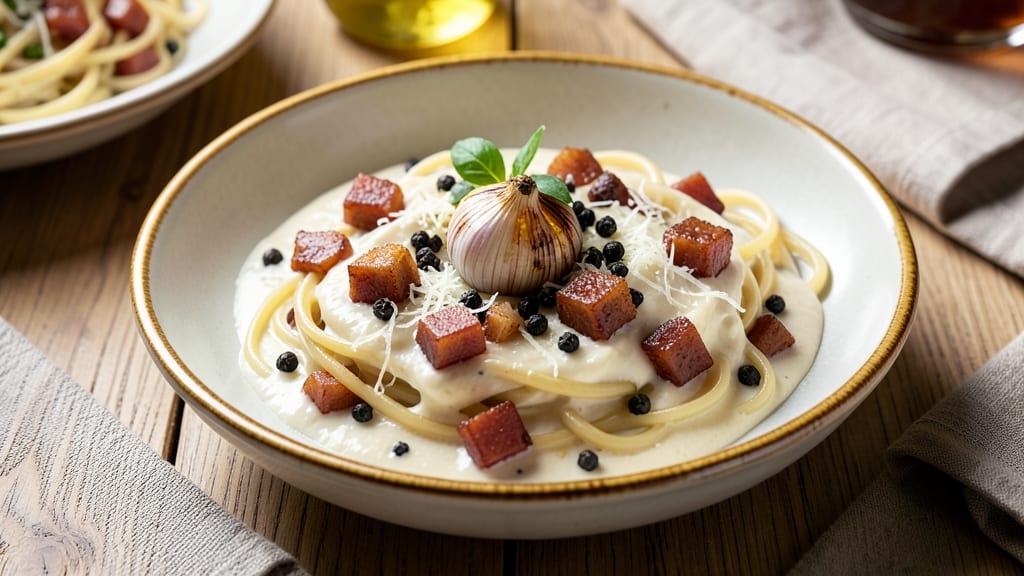
This authentic Italian carbonara sauce recipe delivers the creamy, egg-emulsified richness that defines Rome's classic dish—without a single curdle in sight.
The secret lies in precise ratios of eggs, pecorino romano, and pancetta (or guanciale), combined with a technique that transforms simple ingredients into a velvety sauce that clings perfectly to pasta. I've perfected this method over years of testing, ensuring the emulsion stays smooth and luxurious every time.
The foundation of great carbonara is the emulsion: warm pasta water incorporated gradually into beaten eggs and grated cheese creates a silky, cohesive sauce that coats each strand.
Unlike creamy sauces that rely on heavy cream, this version gets its luxurious texture from the eggs themselves, tempered just enough to prevent scrambling. Pancetta adds salty depth, while black pepper and garlic elevate the flavor profile beyond basic cheese sauce.
What sets this sauce apart is its balance—rich yet not heavy, creamy yet not greasy, with a perfect harmony of salty, peppery, and umami notes. The technique is straightforward but requires attention to temperature control, which I'll walk you through step by step.
Once mastered, you'll have a sauce that rivals any Roman trattoria's, ready to transform simple spaghetti into a restaurant-worthy dish.
This sauce keeps beautifully in the refrigerator for up to 3 days, making it perfect for meal prep. The key is reheating it gently over low heat, stirring constantly to maintain that signature velvety consistency.
Whether you're serving it over fresh pasta or storing it for later, this carbonara sauce delivers authentic Italian flavor in every bite.
Ingredients for authentic italian carbonara sauce
Eight essential ingredients transform into Rome's velvety carbonara sauce, where technique matters more than quantity.
| Ingredient | Amount | Notes |
|---|---|---|
| Large Egg Yolks 🥚 | 4 whole | Fresh, room temperature preferred |
| Pecorino Romano Cheese 🧀 | 1 ½ cups | Freshly grated, fine texture |
| Pancetta Cubes 🥓 | 4 oz | Or guanciale, diced small |
| Fresh Black Peppercorns 🌶️ | 1 tsp | Coarsely cracked, not ground |
| Garlic Cloves 🧄 | 2 cloves | Minced, not powdered |
| Extra-Virgin Olive Oil 🫒 | ½ cup | High quality, fruity |
| Freshly Cooked Spaghetti Water 🍝 | 1 ½ cups | Reserved from pasta cooking |
| Diamond Crystal Kosher Salt 🧂 | ½ tsp | For seasoning pasta water |
The cheese is non-negotiable—Pecorino Romano delivers that sharp, salty bite authentic to Roman carbonara. Grab a wedge from your local Italian specialty store or a high-quality deli counter, then grate it yourself with a fine microplane. Pre-grated cheese contains anti-caking agents that ruin the sauce's texture. Pancetta should be thinly sliced and lightly toasted before dicing to render its fat without cooking it fully. The eggs must be fresh and separated—room temperature yolks emulsify better, while cold eggs risk curdling. For garlic, mince it finely to distribute flavor evenly without bitterness.
No pancetta? Guanciale works perfectly, though it's pricier. Substitute with thick-cut bacon in a pinch, but it lacks the authentic umami. For the olive oil, avoid light or refined varieties—look for extra-virgin with fruity notes like California Early Harvest or Italian DOP. If you can't find fresh black peppercorns, coarsely grind them yourself for better flavor than pre-ground. The pasta water is critical—reserve 1.5 cups while cooking spaghetti, seasoning it generously with Diamond Crystal kosher salt (it dissolves completely). Never use salted pasta water or the sauce will become too salty.
This sauce must be used immediately after preparation—it doesn't reheat well. For meal prep, cook pasta separately and toss with cooled sauce just before serving. Store components separately: cheese in an airtight container, pancetta in the fridge, and eggs at room temperature. The sauce itself should be made fresh, but you can prep all ingredients the night before for a 10-minute assembly. If you must reheat, do so over low heat with constant stirring, adding a splash of pasta water to maintain silkiness.
Why You'll Love This Recipe
- No-Fuss Technique: I swear by this method—just toss pancetta in a pan until crispy, then whisk yolks with grated Pecorino until the sauce comes together like magic. No blenders, no straining, just pure simplicity.
- Umami Bomb: That crispy pancetta and sharp Pecorino? It’s like a flavor explosion in your mouth. The garlic adds a subtle kick, but the real star is the creamy, peppery egg yolk sauce—rich without being heavy.
- Weeknight Hero: Between us, this is my go-to when I need dinner on the table fast. Double the batch, toss it with pasta, and boom—you’ve got leftovers for lunch tomorrow. (Yes, even on a Tuesday night.)
- Budget-Friendly Luxury: Pancetta is cheaper than bacon, and Pecorino stretches further than Parmesan. I make this for date nights and lazy Sundays, and it always feels special—without breaking the bank.
Step-by-step instructions for authentic Italian carbonara sauce
Master this classic Roman technique for velvety, egg-based sauce without a trace of curdling.
Render Pancetta Until Golden and Crisp
Place the 4 oz pancetta cubes in a cold, dry skillet over medium-low heat. Let them render slowly without stirring for 5 minutes—this allows the fat to pool and crisp evenly. Once the fat begins to bubble and the pancetta turns golden brown and crispy, stir occasionally for another 3-4 minutes until fully cooked. Remove from heat and set aside, leaving the rendered fat in the pan.
This slow rendering creates crispy pancetta bits that add texture to your sauce while infusing flavor. If the fat smells acrid, reduce the heat slightly—the pancetta should sizzle gently, not smoke. The residual fat in the pan will form the base of your sauce, so don't drain it.
Prepare the Egg-Cheese Emulsion
In a medium bowl, whisk together the 4 whole large egg yolks, 1.5 cups freshly grated Pecorino Romano cheese, and 1 tsp coarsely cracked black peppercorns until smooth. The mixture should be pale yellow and slightly thickened. Set this aside near your stovetop—it will cook off heat, so keep it within reach.
Using freshly grated Pecorino Romano is non-negotiable for authentic flavor. The cheese should be finely grated so it dissolves completely into the egg mixture. If you're using pre-shredded cheese, pulse it in a food processor to mimic a fine grating. This emulsion is the heart of your sauce, so don't rush the whisking—aim for a homogeneous, lump-free consistency.
Cook Spaghetti and Reserve Starchy Water
Cook 1 pound spaghetti in a large pot of generously salted water (using the 0.5 tsp Diamond Crystal kosher salt) until 1 minute before al dente. Reserve 1.5 cups of the starchy pasta water before draining—this liquid is essential for emulsifying the sauce. Drain the pasta and return it immediately to the pot, shaking to break up any clumps.
The starchy water acts as a natural emulsifier, preventing the egg mixture from curdling when combined with hot pasta. If you don't have enough reserved water, your sauce will separate. Keep the pasta warm and ready to combine with the sauce components.
Combine Off Heat for Perfect Emulsion
Working quickly, remove the skillet with rendered pancetta from heat and let it cool slightly for 1 minute. Add the drained spaghetti to the skillet, tossing to coat in the fat. Pour in ½ cup of the reserved pasta water and toss vigorously for 30 seconds to heat the pasta evenly. Remove the skillet from heat completely.
Now, pour the egg-cheese mixture into the skillet in a thin, steady stream while tossing the pasta continuously with tongs. The residual heat from the pasta will gently cook the eggs into a silky sauce. If the sauce thickens too much, add 1-2 tablespoons of reserved pasta water at a time until it reaches a creamy, coating consistency. The sauce should cling to the pasta strands without being watery.
Finish and Serve Immediately
Return the skillet to low heat and toss for an additional 1-2 minutes until the sauce is fully emulsified and coats the pasta evenly. The sauce should be rich, glossy, and smooth, with no visible lumps of egg or cheese. Taste and adjust seasoning with additional Pecorino Romano or black pepper if needed.
Carbonara is best served immediately, straight from the pan. The sauce continues to thicken as it cools, so don't let it sit. Plate the pasta, top with extra crispy pancetta and freshly cracked black pepper, and serve with a side of garlic bread to soak up any remaining sauce. The key to authentic Italian carbonara lies in the technique—never add cream, and always cook the eggs off heat to maintain their silky texture.
Pro Tips For Making Authentic Italian Carbonara Sauce
- CRANK THE PANCETTA HIGH: I learned this the hard way—low heat makes pancetta render like molasses. Get it sizzling over medium-high until the edges crisp and the fat pools like liquid gold. That fat is the sauce’s backbone, so don’t skimp on the heat.
- GRATE CHEESE FRESH: Pre-shredded pecorino is a crime in carbonara. The starches in it make the sauce gluey. Grate it yourself just before mixing—it’ll dissolve silky into the yolks instead of turning your pasta into a clump.
- OFF THE HEAT ONLY: The second your pasta hits the pan, remove it from heat. The residual warmth will gently cook the yolks into a creamy emulsion without scrambling them. I know, it feels counterintuitive—but trust the process.
- PEPPERCRUSH LIKE YOU MEAN IT: Freshly cracked black peppercorns are non-negotiable. Use a mortar and pestle or a heavy pan lid to smash them into tiny fragments before adding. Whole peppercorns just sit there like decorative rocks.
Common mistakes when making great authentic italian carbonara sauce
Overcooking Eggs
Heating the egg-cheese mixture directly on the stove is the fastest way to ruin your sauce. The yolks will scramble into curdled lumps instead of creating a silky emulsion. I've seen this happen when people try to "thicken" the sauce by adding it to hot pasta too soon.
The trick is to let the residual heat from the pasta gently cook the eggs off the heat—this keeps them creamy. If you notice the sauce starting to look grainy, immediately add a splash of starchy pasta water to cool it down. 🥚
Skipping Starchy Water
This is the most common mistake that turns carbonara into a sad, separated mess. The starchy water from pasta acts as a natural emulsifier, helping the eggs and cheese blend smoothly. I can't stress enough how critical this is—if you don't reserve enough, your sauce will curdle.
Keep a separate bowl of that golden liquid while cooking, and don't be afraid to add it gradually as you combine everything. Even if it seems like too much, trust the process.
Using Pre-Ground Cheese
Pre-shredded cheese contains anti-caking agents that prevent it from melting properly, leading to grainy texture in your sauce. I've made this mistake myself—using store-bought shredded Pecorino Romano results in a sauce that looks like it's full of tiny plastic beads.
Always grate your own cheese using a fine microplane or box grater. If you're in a pinch, pulse pre-shredded cheese in a food processor to break up those anti-caking agents, but freshly grated is always best. 🧀
Adding Cream
This is a cardinal sin in authentic Italian carbonara. Adding cream changes the entire character of the sauce, making it heavier and less authentic. The richness comes from the eggs, cheese, and pancetta fat—not from dairy.
I've seen many Americanized versions that include cream, but true Roman carbonara relies on the perfect balance of these ingredients without any extra fat. If your sauce seems too thin, add more cheese or reserved pasta water instead of reaching for cream.
Not Using Enough Cheese
Many recipes call for Parmesan, but authentic Roman carbonara requires Pecorino Romano for its sharp, salty flavor. Using too little cheese makes the sauce taste bland and watery. I recommend starting with the full 1.5 cups and adjusting to taste—you can always add more if needed.
The cheese should be the dominant flavor after the pancetta and black pepper. If you're worried about saltiness, use a high-quality Pecorino Romano that's been aged properly.
Over-Mixing After Combining
Once you've combined the egg-cheese mixture with the pasta, resist the urge to keep stirring vigorously. Over-mixing can break the emulsion and cause the sauce to separate. Instead, toss gently and let the residual heat work its magic.
I find that using tongs to flip the pasta helps distribute the sauce evenly without overworking it. The sauce should coat the pasta naturally—if it's not happening, add more starchy water by the tablespoon until it reaches the perfect consistency. ⚡
Nutrition facts
Frequently asked questions
Why does authentic carbonara sauce never include cream?
The rich texture comes from the eggs and cheese emulsion, not dairy. Adding cream changes the sauce's character, making it heavier and less authentic. The traditional Roman version relies on the perfect balance of egg yolks, Pecorino Romano, and pancetta fat for its signature velvety consistency.
Can I make this sauce ahead of time?
Fresh is best, but you can prep components in advance. Grate the cheese, dice pancetta, and whisk eggs the night before. Store separately in airtight containers. When ready to serve, cook pasta fresh, render pancetta, then combine everything quickly off heat for that perfect emulsion.
What's the secret to preventing curdled eggs?
Work quickly and off heat! The residual warmth from the pasta gently cooks the eggs into a silky sauce. If it starts looking grainy, immediately add starchy pasta water to cool it down. Never heat the egg mixture directly—this is the #1 cause of curdling in homemade carbonara.
Can I substitute guanciale for pancetta?
Guanciale (cured pork cheek) is the traditional choice in Rome and adds even more depth of flavor. If using pancetta, opt for thick-cut pieces that crisp well. Both work beautifully—they're just different levels of umami intensity.
How do I fix a sauce that's too thick?
Add reserved starchy pasta water, 1 tablespoon at a time, while stirring gently. The water helps re-emulsify the sauce without thinning it too much. If it's already separated, whisk in a splash of warm water while off heat to bring it back together.